
The question of which luxury watch brand can claim the title of “oldest” depends on how you define it. Blancpain is one of the oldest, founded in 1735. It is the oldest registered watchmaking company but it did go through a period of dormancy before being revived in 1983. On the other hand, Vacheron Constantin was established in 1755 and maintains the most impressive credential of all: an unbroken chain of production spanning nearly 270 years without a single day of interruption. Rather than declaring a single winner, we’ll take a look at how those claims are defined, where the lines blur and which historic brands also shaped the foundations of modern watchmaking.
Key Takeaways:
- The Oldest Registered Brand (Revived): Blancpain (1735)
- The Oldest Continuously Operating Brand: Vacheron Constantin (1755)
- The Oldest Clockmaker Claim: Gallet (1466), though its history is fragmented and predates modern watchmaking
- The “Holy Trinity” Oldest: Vacheron Constantin, Patek Philippe (1839), and Audemars Piguet (1875)
- Brands Older Than Rolex: Nearly every brand on this list (Rolex was founded in 1905)
We have to look at three factors to determine which brands belong on this list: direct lineage from the original founder, verifiable founding dates, and lasting impact on the industry. Some brands have changed ownership multiple times or closed shop. Others have maintained family control or independent status for centuries. Read on as we learn more about brands that have survived wars, economic collapses, and the Quartz Crisis, and, in doing so, helped define what fine watchmaking looks like today.
The Two Titles: Oldest Registered vs. Oldest Continuous

Here’s how the top contenders stack up in the debate over the oldest watch brand:
| Brand | Founding Year | Title/Distinction | Status | Key Collection |
| Blancpain | 1735 | Oldest Registered Watchmaking Company | Active (Revived in 1983) | Fifty Fathoms, Villeret |
| Favre-Leuba | 1737 | Second Oldest Registered Brand | Active (Revived most recently in 2024) | Raider, Chief |
| Vacheron Constantin | 1755 | Oldest Continuously Operating Watch Brand | Active (Uninterrupted) | Overseas, Patrimony |
Blancpain’s claim rests on the registration of Jehan-Jacques Blancpain’s workshop in Villeret, Switzerland, making it the earliest documented watchmaking establishment. However, the brand ceased operations in the 1970s during the Quartz Crisis before Jean-Claude Biver famously revived it in 1983 with the bold statement, “Since 1735 there has never been a quartz Blancpain watch. And there never will be.”
Vacheron Constantin’s advantage is continuity. Since Jean-Marc Vacheron opened his Geneva workshop in 1755, the company has produced watches every single year without exception, even during the world wars and economic depressions that shuttered many competitors. This unbroken heritage makes it the living link to 18th-century watchmaking traditions.
The Oldest Watch Brands Still in Production

Each of these brands left a distinct mark on watchmaking by means of technical breakthroughs or simply by outlasting their peers. What follows is a closer look at how those reputations were built.
1. Blancpain (1735)
Jehan-Jacques Blancpain registered his watchmaking workshop in the village of Villeret in 1735, establishing what would become the oldest name in Swiss watchmaking. The brand remained in family hands for over 200 years. Eventually, it passed through various owners and went dormant during the quartz revolution of the 1970s. Jean-Claude Biver and Jacques Piguet resurrected the name in 1983.After that, it positioned as the anti-quartz, tradition-first alternative in a market flooded with battery-powered watches.
Blancpain’s modern reputation rests heavily on the Fifty Fathoms, introduced in 1953 for the French Navy’s combat swimmers. While Rolex always gets credit for inventing the dive watch category, the Fifty Fathoms actually predated the Submariner by several months. In fact, it established many features now considered standard, including the unidirectional rotating bezel. The Villeret collection represents the brand’s classical dress watch offerings. These watches have slim profiles and elegant finishing that characterize 18th-century pocket watches.
Key Achievements:
- Pioneered the modern dive watch with the Fifty Fathoms in 1953
- Maintains a strict no-quartz policy across all collections
- Revived the traditional Villeret watchmaking district’s reputation
2. Favre-Leuba (1737)
Abraham Favre established his workshop in Le Locle just two years after Blancpain, starting a family dynasty that would control the company for eight generations. The Favre family’s commitment to functional watchmaking led them to create some of the first wristwatches designed specifically for extreme environments, including timepieces for mountaineers, divers, and explorers.
The brand’s most notable innovation came in 1962 with the Bivouac, the first mechanical wristwatch to incorporate a functional altimeter and barometer. It allowed mountaineers to track altitude changes and weather patterns directly from their wrists, a genuinely useful complication in an era when many brands focused purely on aesthetic refinements. Despite its innovations, Favre-Leuba struggled financially in the late 20th century and changed hands several times before being revived in 2011 and more recently in 2024.
Key Achievements:
- Eight consecutive generations of family ownership and management
- Created the first mechanical wristwatch with a built-in altimeter (Bivouac, 1962)
- Specialized in tool watches for professional use in extreme conditions
3. Jaquet Droz (1738)
Pierre Jaquet-Droz started his watchmaking career in La Chaux-de-Fonds, but his fame extended far beyond traditional timekeeping. He became legendary for his automata, mechanical figures that could write, draw, and play music, which he demonstrated at royal courts across Europe and even in China. These mechanical marvels showcased the precision engineering capabilities that would later be applied to increasingly complex watch movements.
While Jaquet-Droz died in 1790, his workshop continued under family management before eventually fading. The brand was resurrected in 2000 by the Swatch Group, which positioned it as a showcase for artistic watchmaking and miniature painting on dials. Today’s Jaquet Droz watches emphasize decorative arts and complications that echo the automata tradition. They are among the most visually distinctive watches in haute horlogerie.
Key Achievements:
- Created famous 18th-century automata that demonstrated advanced mechanical engineering
- Pioneered enamel work and miniature painting on watch dials
- Successfully exported Swiss watchmaking to Asia, including China, in the 1700s
4. Vacheron Constantin (1755)
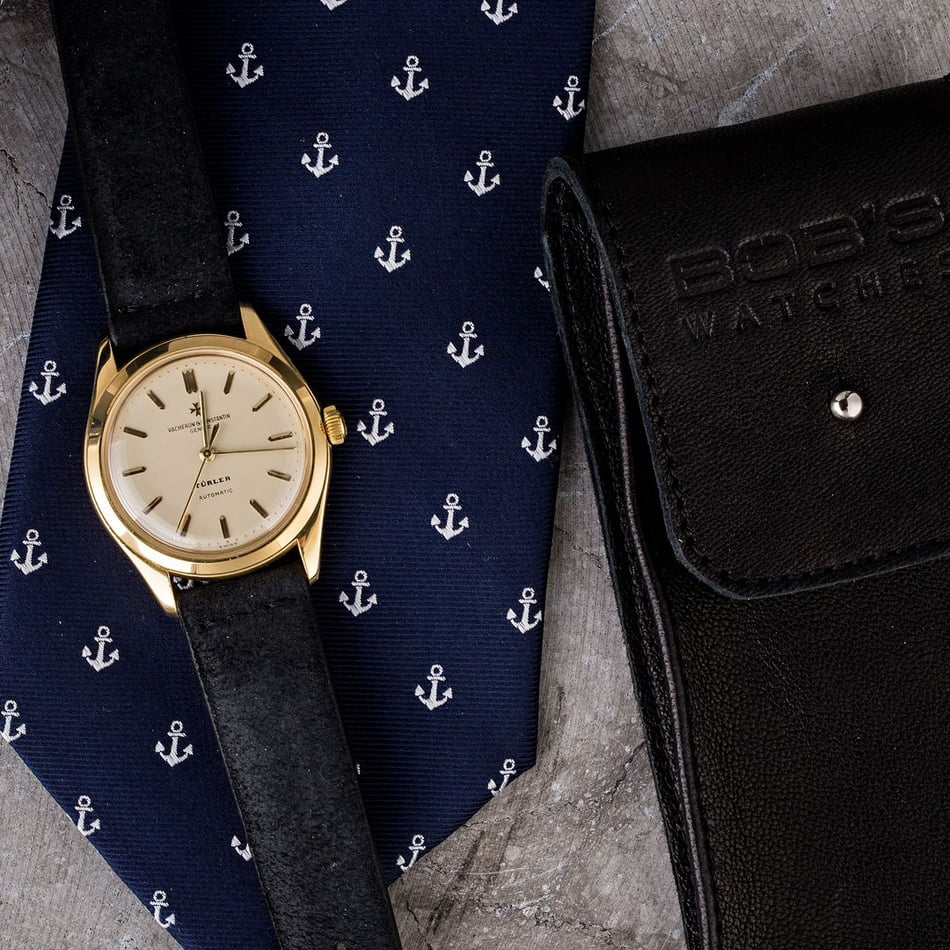
Jean-Marc Vacheron opened his Geneva atelier at age 24. It would become the longest uninterrupted run of watch production in history. Even during Napoleon’s wars, two World Wars, the Great Depression and the Quartz Crisis, Vacheron Constantin never stopped making watches. Because the company stayed active, it was able to keep its techniques and knowledge, while other manufacturers had to find or create them again after closing up shop.
The Vacheron Constantin brand’s technical ambition is perhaps best exemplified by the Reference 57260 pocket watch. It was commissioned for a private collector and completed in 2015 after eight years of development. It is one of the most complex timepieces ever created with 57 complications, including a Hebrew perpetual calendar and a multiple axis tourbillon. Vacheron Constantin is an original member of the “Holy Trinity” of watches alongside Patek Philippe and Audemars Piguet and occupies the top tier of Swiss luxury watches.
Key Achievements:
- Uninterrupted production since 1755, verified by company archives
- Member of the prestigious “Holy Trinity” of Swiss watchmaking
- Created the Reference 57260, one of the most complicated watches ever made
5. Longines (1832)
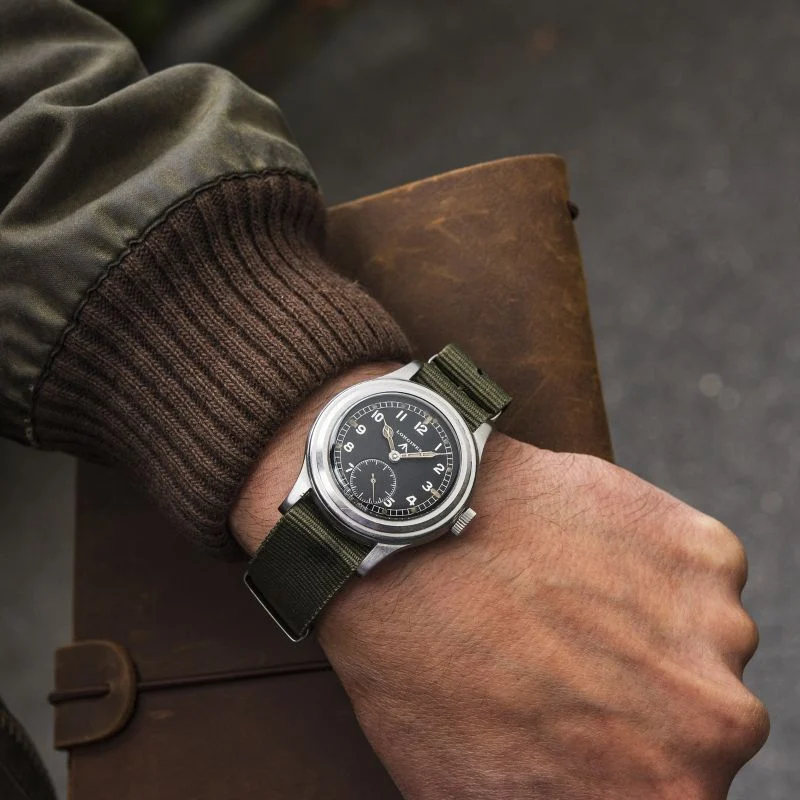
Auguste Agassiz established his watch company in Saint-Imier, eventually passing it to his nephew Ernest Francillon, who in 1867 built an integrated factory that brought all aspects of watch production under one roof. This vertical integration allowed Longines to maintain quality control and produce movements more efficiently than competitors who relied on networks of outside suppliers. The company’s winged hourglass logo, registered in 1889, became one of the most recognized symbols in Swiss watchmaking.
Longines is famous for precision timing, becoming the official timekeeper for numerous Olympic Games, World Championships, and aviation records. Charles Lindbergh worked with Longines to design a navigation watch for his transatlantic flights, and the brand supplied timepieces for early polar expeditions. This focus on functional, reliable timekeeping rather than pure luxury has kept Longines relevant across economic shifts and changing consumer tastes.
Key Achievements:
- Created one of the first chronograph movements in 1878
- Official timekeeper for 30+ World Championships and Olympic Games
- Collaborated with Charles Lindbergh on aviation navigation watches
6. Patek Philippe (1839)

Antoni Patek and Franciszek Czapek founded their Geneva workshop, though Czapek left in 1844 and was replaced by French watchmaker Jean Adrien Philippe, who had invented the keyless winding system using a crown. This innovation eliminated the need for a separate key to wind pocket watches, making them more practical for daily use. The partnership between Patek’s business skills and Philippe’s technical innovations drove the company to the top tier of Swiss watchmaking.
Patek Philippe’s reputation rests on technical complexity and exclusivity, with annual production deliberately kept low to maintain scarcity. The brand makes some of the most complicated watches ever, including the Henry Graves Supercomplication pocket watch, which held the record for most complications for decades. Patek Philippe watches are also known for breaking records on the pre-owned market, with some selling for over $30 million. They are both timepieces and investment-grade collectibles.
Key Achievements:
- Invented the perpetual calendar mechanism for wristwatches
- Holds numerous auction records for most expensive watches sold
- Maintains one of the most rigorous quality standards in Swiss watchmaking
7. Cartier (1847)
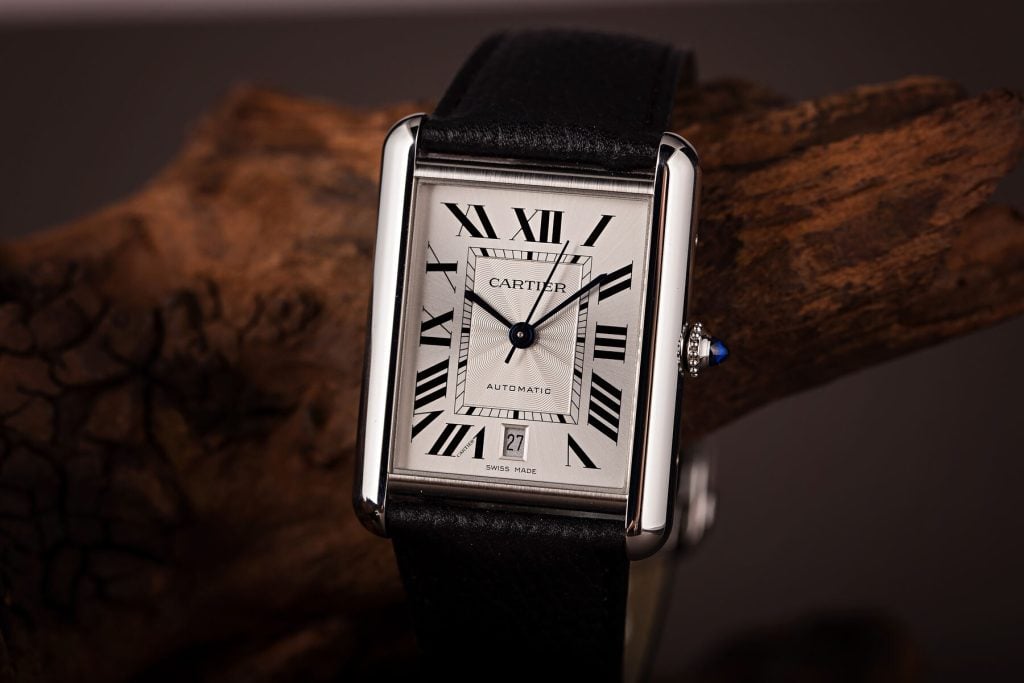
Louis-François Cartier founded his Paris jewelry workshop in 1847. But the brand’s legacy really began when his grandson Louis created the Santos wristwatch in 1904 for Brazilian aviator Alberto Santos-Dumont. It was one of the first purpose-built wristwatches for men, at a time when wristwatches were considered feminine accessories and men carried pocket watches. The Santos’s squared case with exposed screws established a design language that influenced luxury sports watches for generations.
Cartier followed the Santos with the Tank in 1917, inspired by the top-down view of military tanks crossing the Western Front during World War I. These two designs, along with the Ballon Bleu introduced much later, form the core of the Cartier watch collection. Cartier began as a jeweler. But its watches have become equally important to the brand identity by integrating haute joaillerie techniques with Swiss movement manufacturing.
Key Achievements:
- Created one of the first modern men’s wristwatches (Santos, 1904)
- Designed the iconic Tank watch in 1917
- Pioneered the luxury jeweler-watchmaker business model
Rounding Out the List (1848 – 1888)
Omega (1848)
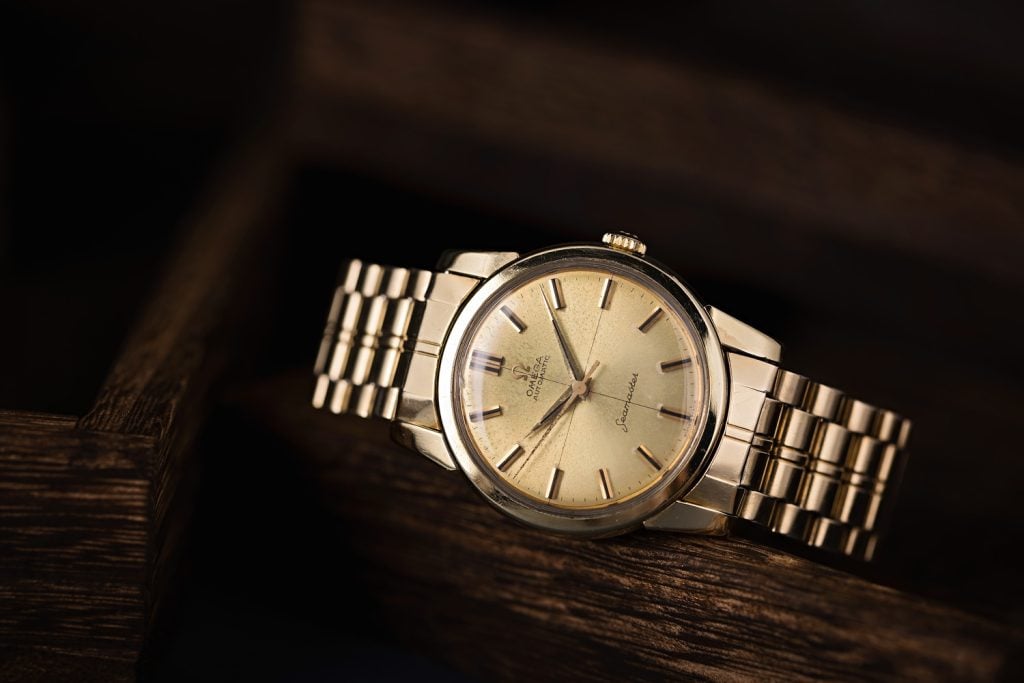
Louis Brandt established his watch assembly workshop in La Chaux-de-Fonds, which eventually became Omega after the company launched its 19-ligne “Omega” caliber in 1894, a movement so advanced that the company renamed itself after it. Omega watches defining moment came in 1969 when NASA selected the Speedmaster as the official watch for the Apollo 11 mission, making it the first watch worn on the moon. The brand also pioneered the co-axial escapement, invented by George Daniels and introduced by Omega in 1999. That component reduced friction and extended service intervals and has become a staple of the brand’s current portfolio.
Key Collections: Speedmaster, Seamaster, Constellation
TAG Heuer (1860)

Edouard Heuer founded his workshop in Saint-Imier with a focus on chronographs and timing instruments. The company’s innovations included the oscillating pinion (1887), which made chronograph operation more reliable, and the Mikrograph (1916), the first mechanical stopwatch accurate to 1/100th of a second. TAG Heuer built its modern identity around motorsports, with the Monaco becoming iconic after Steve McQueen wore it in the film “Le Mans.”
Key Collections: Carrera, Monaco, Autavia
IWC Schaffhausen (1868)

American watchmaker Florentine Ariosto Jones founded the International Watch Company in Schaffhausen. It coupled American industrial manufacturing methods with Swiss craftsmanship. IWC watches became known for their Pilot’s Watches, developed initially for military aviators, and the Portugieser, a precision timepiece originally created for Portuguese businessmen who wanted marine chronometer accuracy in a wristwatch format. IWC maintains its own movement manufacturing and specializes in complicated annual calendars and perpetual calendars.
Key Collections: Pilot’s Watch, Portugieser, Aquatimer
Audemars Piguet (1875)

Childhood friends Jules Louis Audemars and Edward Auguste Piguet founded their company in Le Brassus, specializing in complicated watches and high-grade movements. Audemars Piguet completed the Holy Trinity of Swiss watchmaking alongside Vacheron Constantin and Patek Philippe. The brand’s most important contribution was the Royal Oak, designed by Gérald Genta in 1972, which established the luxury sports watch category by offering a stainless steel watch at gold watch prices, a concept that seemed absurd at the time but became industry standard.
Key Collections: Royal Oak, Royal Oak Offshore, Code 11.59
Seiko (1881)
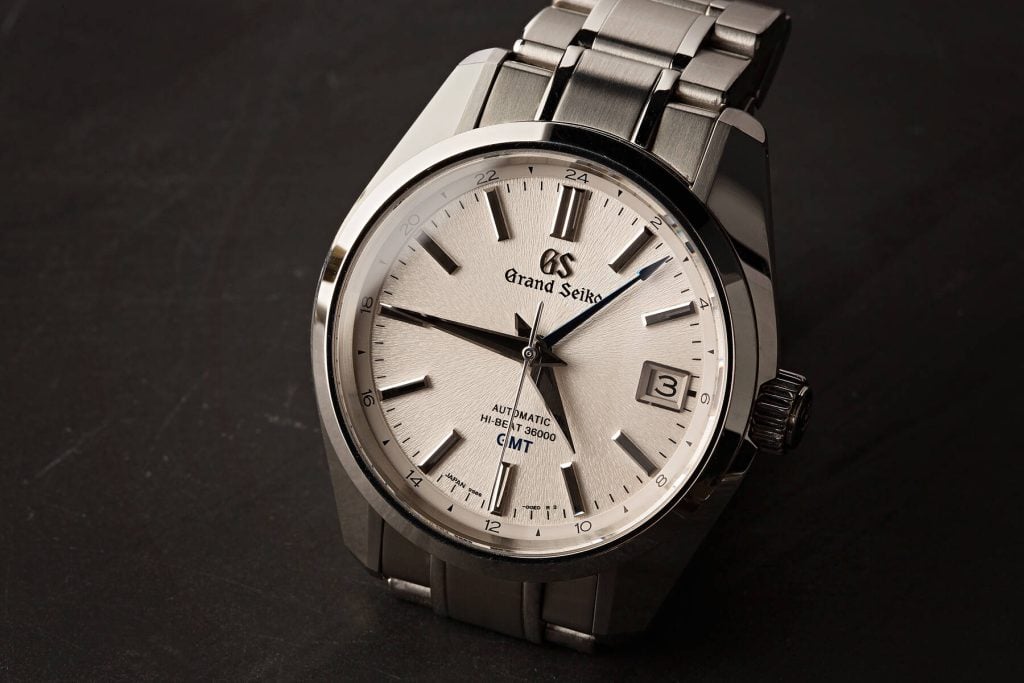
Kintaro Hattori opened his watch shop in Tokyo, beginning Japan’s entry into serious watchmaking. Seiko’s most significant achievement was introducing the Astron in 1969, the first quartz wristwatch, which triggered the Quartz Crisis that nearly destroyed the Swiss watch industry. Seiko is known for affordable watches but also produces another brand called Grand Seiko, which competes directly with Swiss luxury brands on finishing and accuracy, and Credor, which showcases traditional Japanese decorative arts like maki-e lacquer.
Key Collections: Grand Seiko, Prospex, Presage
Breitling (1884)

Léon Breitling opened his workshop in Saint-Imier with a focus on chronographs and precision timing instruments. The company became closely associated with aviation, developing cockpit instruments and pilot’s chronographs that included features like the slide rule bezel (Navitimer, 1952) for flight calculations. Breitling was the first watchmaker to produce chronograph wristwatches with independent pushers (1915) and a reset function (1934), innovations that established the modern chronograph layout.
Key Collections: Navitimer, Chronomat, Superocean
The Enduring Legacy of Historic Watchmaking
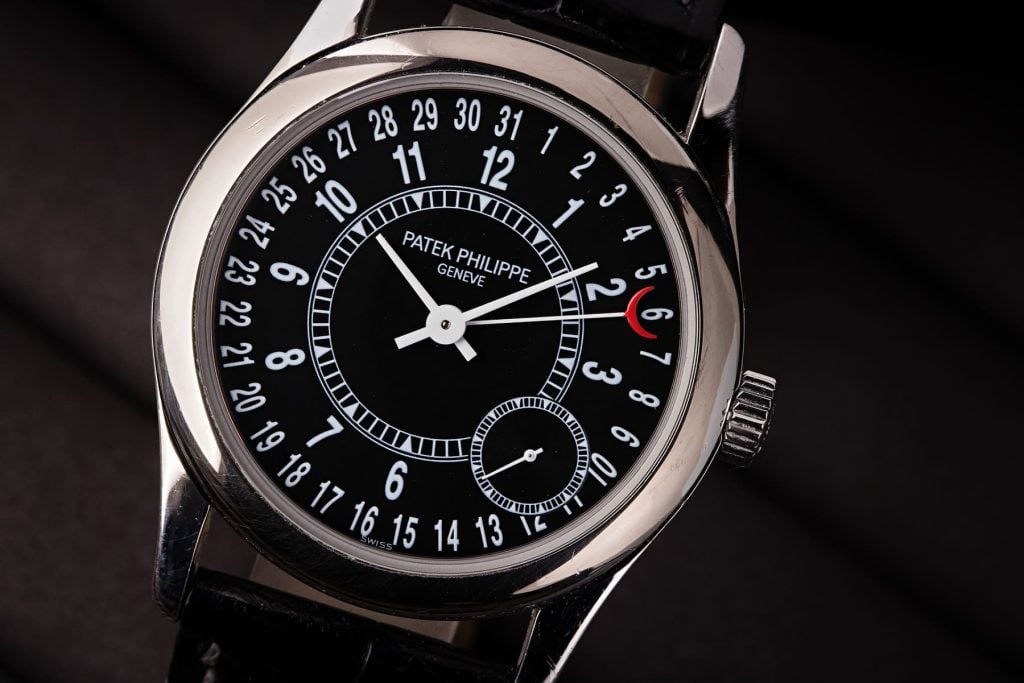
Blancpain was founded in 1735, and Vacheron Constantin has produced watches without interruption since 1755. These examples show that there is more than one way to define legacy in watchmaking. Every brand on this list, from Favre-Leuba to Patek Philippe, survived world wars, the Great Depression, and the Quartz Crisis by balancing tradition with innovation. They preserved centuries-old hand-finishing techniques while adopting new materials, movements, and manufacturing methods that kept them competitive against cheaper alternatives.
is less about nostalgia and more about continuity. These watches weren’t designed to chase trends. They evolved slowly, shaped by real-world use, mechanical problem-solving and generations of refinement. If it’s Blancpain’s dive watches, Vacheron Constantin’s grand complications, or Breguet’s classical elegance, getting to know these collections means discovering which piece of watchmaking history speaks to your own sense of style and values.