
Selling a Rolex to a Pawn Shop: What You'll Actually Get
Pawning a Rolex gets you cash the same day, but a pawn shop's offer reflects its expected resale value and risk, not your watch's full market price. Industry guides commonly cite 40% to 60% of pre-owned value for outright purchases. Before accepting, compare a specialist's offer through our sell Rolex watch page.
Key Takeaways
- Pawn shops base offers on expected resale value and risk; industry guides commonly cite roughly 40% to 60% of a Rolex's pre-owned value for outright purchases, with loan offers typically lower.
- Pawning and selling are different transactions: a pawn is a collateral loan with interest and fees, while a sale is a permanent transfer for a one-time payout.
- Pawn loan interest, fees, maturity dates, and grace periods vary significantly by state; review the written disclosure before signing.
- Bob's Watches sold pre-owned Submariner ref. 124060 examples at a median price of about $14,200 across the 12 months ending July 2026; the commonly cited pawn formula applied to that figure suggests an offer between roughly $5,700 and $8,500.
- A pawn loan can make sense for short-term cash when you intend to keep the watch; for maximum sale value, a specialized dealer generally prices closer to the watch's pre-owned market.
The sections below break down how pawn shops arrive at their numbers, how a pawn loan actually works, and what the same watch brings at a dealer that trades Rolex watches every day.
How Much Will a Pawn Shop Give You for a Rolex?
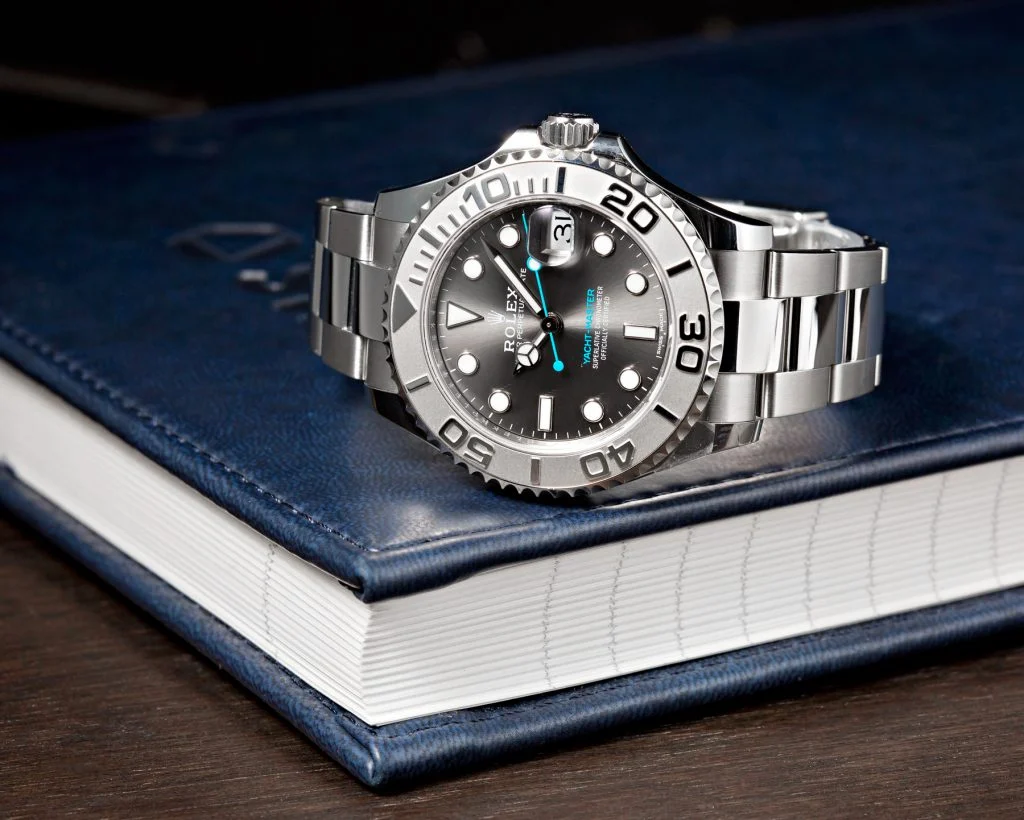
A pawn shop bases its offer on the watch's expected resale value and its own risk, not on the watch's full market price. Industry guides commonly cite outright purchase offers of roughly 40% to 60% of a Rolex's current pre-owned value, with loan offers typically lower because the watch is being valued as collateral. On a Rolex worth $10,000 on the pre-owned market, that guideline points to a purchase offer in the $4,000 to $6,000 range, though actual offers vary widely by shop, state, and watch.
The discount exists because the shop prices for the scenario where it must resell the watch: it estimates the resale figure, subtracts a margin for holding time, authentication risk, and overhead, and offers the remainder. A shop that specializes in luxury watches, knows the specific reference, and sees strong local demand can offer more; a generalist shop pricing an unfamiliar reference will usually offer less. Four factors move the number most:
- Model and demand. High-demand sports models such as the Submariner, GMT-Master II, and Daytona tend to draw stronger offers than dress models because they resell faster.
- Condition. An unpolished case, a healthy movement, and a bracelet without stretch support the offer; deep scratches, moisture damage, or a non-running movement reduce it sharply.
- Box and papers. The original warranty card and box can support a stronger offer by making the watch easier to identify, authenticate, and resell. The effect varies considerably by reference, age, and completeness.
- Authenticity confidence. A buyer who cannot fully verify the movement and serial number will price that uncertainty into a more conservative offer, or decline the watch.
Pawning vs. Selling: They're Different Transactions

Pawning a Rolex and selling a Rolex are two separate transactions with different money, different paperwork, and different endings. A pawn is a collateral loan: you leave the watch with the shop, receive a loan amount, and reclaim the watch when you repay the principal plus interest and any fees. A sale is permanent: the shop buys the watch outright, usually for somewhat more than it would lend against it, and you walk away with no repayment obligation.
Pawn-loan costs vary by state and may include interest, service charges, storage fees, or other permitted charges, with maturity dates, grace periods, and renewal rules that also differ by jurisdiction. Pawn transactions in the United States are subject to federal statutes including the Truth in Lending Act of 1968, which requires the finance charges and terms of the loan to be disclosed in writing before you sign. Read that disclosure carefully and check the APR, maturity date, grace period, and renewal terms. As a clearly illustrative example: a $6,000 loan carrying a 10% monthly charge costs $600 for every month it remains open, so a loan held five months would cost half its principal in charges alone. If the loan is not repaid or renewed by the applicable deadline and any grace period expires, the shop may acquire the right to sell the watch.
Real Numbers: Pawn Offer vs. Bob's Offer

An example on one specific reference shows the gap in dollars. The Submariner is the Rolex model Bob's Watches sold most often over the past year, and the ref. 124060, the current-production no-date Submariner in Oystersteel, gives a clean like-for-like comparison. Across the 12 months ending July 2026, completed Bob's Watches sales of the ref. 124060 had a median price of about $14,200, with most examples selling between roughly $13,500 and $14,900 depending on year, condition, and whether box and papers were included. Applying the commonly cited pawn guideline of 40% to 60% of pre-owned value to that median produces an illustrative purchase offer between roughly $5,700 and $8,500, with a loan offer typically below that.
|
Price Point (Submariner ref. 124060) |
Amount |
Basis |
|
Bob's median completed sale price |
About $14,200 (typical range $13,500 to $14,900) |
Bob's Watches sales, 12 months ending July 2026 |
|
Bob's current listed sell prices |
About $13,400 to $15,800 |
Bob's published buy pricing |
|
Bob's published buy price |
About $10,500 |
Bob's published buy pricing |
|
Illustrative pawn-shop purchase offer |
Roughly $5,700 to $8,500 |
40% to 60% guideline applied to the median above; actual offers vary |
|
Illustrative pawn-loan offer |
Typically below the purchase offer |
Watch valued as collateral; varies by shop and state |
Methodology: Bob's Watches pricing data reflects completed sales during the 12 months ending July 2026. Prices vary by reference, condition, age, and included accessories. Pawn figures are illustrative applications of a commonly cited industry guideline, not a survey of actual pawn offers.
Bob's Watches publishes both its buy and sell prices, so a seller can see the actual spread on a specific reference rather than guessing at it. According to Paul Altieri, Founder & CEO at Bob's Watches: "Pawn shops deal in everything from electronics to jewelry, so they might lack the specialized expertise to accurately evaluate the complex secondary market for luxury timepieces. It's important that the place you sell your Rolex to uses live market data to guarantee you get the exact, fair market value for your watch." You can check what your specific reference currently brings using published used Rolex prices, updated from actual sold data.
The Risks of Pawning a Rolex

The risks of pawning a Rolex go beyond the discounted price. Three deserve attention before you hand over the watch:
- Valuation gaps. Generalist pawn shops trade in many categories and may have less reference-specific data than a specialist watch dealer, which can result in a more conservative valuation. An appraiser unfamiliar with a reference can also miss details, such as an aftermarket dial or bezel, that materially change the watch's value in either direction.
- Negotiation pressure. Sellers who need money quickly are negotiating from a weak position. Compare more than one offer and ask how the buyer calculated the value before committing.
- Limited recourse. Once a sale is complete, or a redemption deadline and any grace period pass on a loan, the transaction is generally final. There is no return window and no price adjustment if the watch was undervalued.
A specialized dealer authenticates the watch itself and prices from reference-level sold data, papers or not. The protections that come with that route are covered in why sellers choose Bob's Watches.