
IWC Serial Number Lookup: How to Find, Decode, and Date Your Watch
Our IWC serial number lookup lets you estimate the production year of your IWC watches by matching its engraved serial number against IWC's historical production records, which the brand has kept in sequence since 1868. The number appears on the case back, the movement, or the warranty card, and once you locate it, dating your watch takes less than a minute with the chart below. This guide walks you through the full process: where to find the serial number, how to read the production year chart, how a serial differs from a reference number, and how to use both to confirm that an IWC is genuine.
What Is an IWC Serial Number?

An IWC serial number is a unique production number assigned to each watch that leaves the Schaffhausen manufacture. Unlike the reference number, which is shared by every example of a given model, the serial belongs to one watch only. IWC uses it to track production, log service history, and verify warranty claims. For owners and collectors, it serves a second purpose: because IWC has issued serial numbers in a continuous sequence since 1868, the number doubles as a timestamp that places your watch within a specific production window.
That unbroken record is unusual in the watch industry. Many brands changed numbering systems over the decades, restarted sequences, or lost early records entirely, which leaves collectors guessing. IWC's ledgers stretch back to the company's founding, so a serial number from a pocket watch made in the 1890s can be dated with the same method used for a Portofino produced last year. This consistency is a large part of why experts consider IWC's dating chart one of the most dependable tools in horology.
Where to Find the Serial Number on an IWC Watch
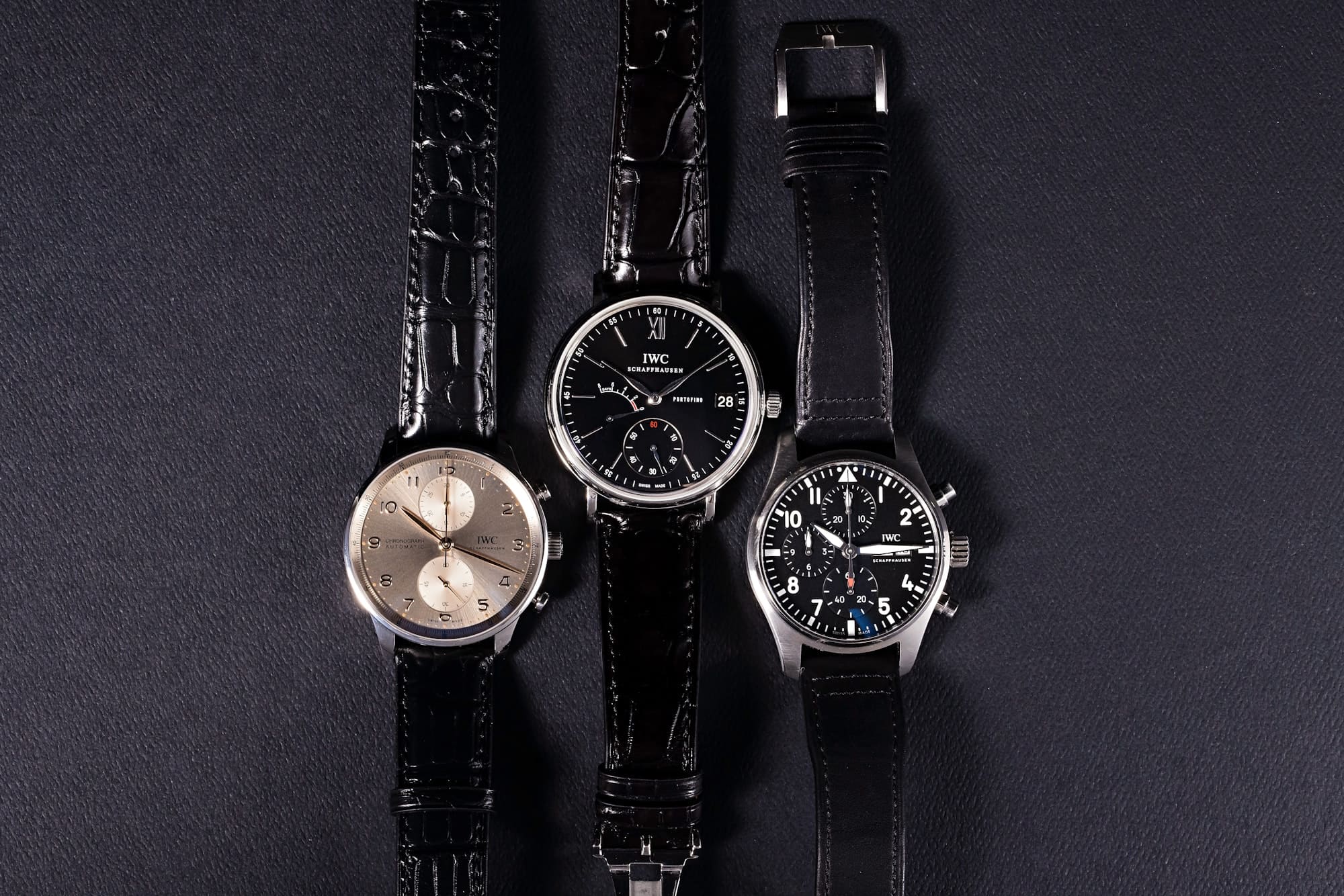
Before you can run a lookup, you need the number itself. IWC engraves or prints the serial in up to three places, and where you should look first depends on the age of your watch. Modern pieces make it easy, while some vintage models require a closer inspection. Check each location below in order.
On the Case Back
On most modern IWC watches, the serial number is engraved on the exterior of the case back, usually alongside the reference number. Turn the watch over and look for a string of six or seven digits, often near the edge of the case back. The engraving should be crisp, even, and cleanly cut, since IWC finishes these markings to the same standard as the rest of the case.
Some vintage models carry the serial on the interior of the case back instead. If you own an older piece and see no number on the outside, do not attempt to open the case yourself. Prying open a case back without the proper tools can scratch the case, damage the gaskets, and compromise water resistance. A qualified watchmaker can open it safely and record the number for you.
On the Movement
Vintage IWC watches, and especially the pocket watches that built the brand's early reputation, often carry the serial number on the movement itself. As I've noted on my IWC watches buying guide, the number is typically engraved on one of the bridges or plates and is visible once the case back is removed. As with interior case markings, this is a job for a watchmaker rather than a kitchen table project.
One detail worth knowing: on some vintage pieces, the movement serial and the case serial are two different numbers. IWC numbered movements and cases separately during certain production eras, so a mismatch on an older watch is not automatically a red flag. For dating purposes, the movement serial is the number that corresponds to IWC's production records.
On the Warranty Card and Papers
Every modern IWC ships with an International Warranty card, and the watch's serial number is printed on the back of it as a seven digit figure. If you have the original box and papers, this is the fastest place to find the number without handling the watch at all.
The card matters for more than convenience. When buying a pre-owned IWC, always compare the serial on the warranty card against the serial on the case. The two should match exactly. A card that lists a different number may simply be the wrong card, but it can also signal that papers from one watch are being used to dress up another.
A few practical tips while you search:
- Use a loupe or your phone camera's zoom, since the engravings are small and shallow enough to miss in poor light.
- Photograph the serial once you find it, so you have a record for insurance and resale.
- Never let a polisher buff over the engraved area, because repeated polishing can wear the number down.
- Treat a mismatch between the card and the case as a reason to pause and ask questions.
IWC Serial Number Lookup: Production Year Chart
With the serial number in hand, dating your watch is a matter of finding which range it falls into. IWC has maintained sequential records since 1868, which makes this one of the most reliable serial dating charts in horology. Find the row that contains your serial number, then read across to see the approximate period when the movement was produced.
|
Production Period |
Serial Range |
|
1868 – 1885 |
1 – 20,000 |
|
1885 – 1895 |
20,001 – 100,000 |
|
1895 – 1905 |
100,001 – 250,000 |
|
1905 – 1915 |
250,001 – 500,000 |
|
1915 – 1925 |
500,001 – 700,000 |
|
1925 – 1935 |
700,001 – 900,000 |
|
1935 – 1945 |
900,001 – 1,200,000 |
|
1945 – 1955 |
1,200,001 – 1,500,000 |
|
1955 – 1965 |
1,500,001 – 1,900,000 |
|
1965 – 1975 |
1,900,001 – 2,300,000 |
|
1975 – 1985 |
2,300,001 – 2,900,000 |
|
1985 – 1995 |
2,900,001 – 3,500,000 |
|
1995 – 2005 |
3,500,001 – 4,200,000 |
|
2005 – 2015 |
4,200,001 – 5,000,000 |
|
2015+ |
5,000,001+ |
All figures are approximate movement production periods. For a confirmed date on a specific watch, contact IWC directly.
How to Use the Chart
The lookup itself takes four steps:
- Locate your serial number on the case back, the movement, or the warranty card.
- Find the row in the chart whose range contains your number.
- Read across to the production period, which gives you the approximate decade of manufacture.
- If you need a confirmed date for insurance, sale, or documentation, request verification from IWC.
A Worked Example
Suppose the case back of your watch reads 1,750,000. That figure falls within the 1,500,001 to 1,900,000 range, which places production between roughly 1955 and 1965. If the watch in question is a model IWC introduced in the 1990s, that mismatch tells you something is wrong, either with the watch or with the story attached to it. The chart works both ways: it dates genuine watches and exposes numbers that do not belong.
IWC Serial Number vs. Reference Number: What Is the Difference?
The serial number identifies your individual watch, while the reference number identifies the model and its specific configuration. Both appear on the case back of most modern IWC watches, and buyers often confuse the two. The reference is the number you use when researching a model or comparing prices. The serial is the number you use when dating, registering, or authenticating one particular watch.
|
Serial Number |
Reference Number |
|
|
Identifies |
The individual watch |
The model and variant |
|
Format |
Six or seven digits, unique to one watch |
"IW" followed by digits, such as IW371446 |
|
Location |
Case back, movement, warranty card |
Case back and papers |
|
Used for |
Dating, authentication, service records |
Model research, parts, pricing |
A quick illustration makes the distinction clear. Every Portugieser Chronograph with a blue dial and steel case from a given generation shares one reference number. Each of those watches carries its own serial. When you sell or insure a watch, both numbers matter, since the reference proves what the watch is and the serial proves which one it is.
How to Verify an IWC Watch Is Authentic
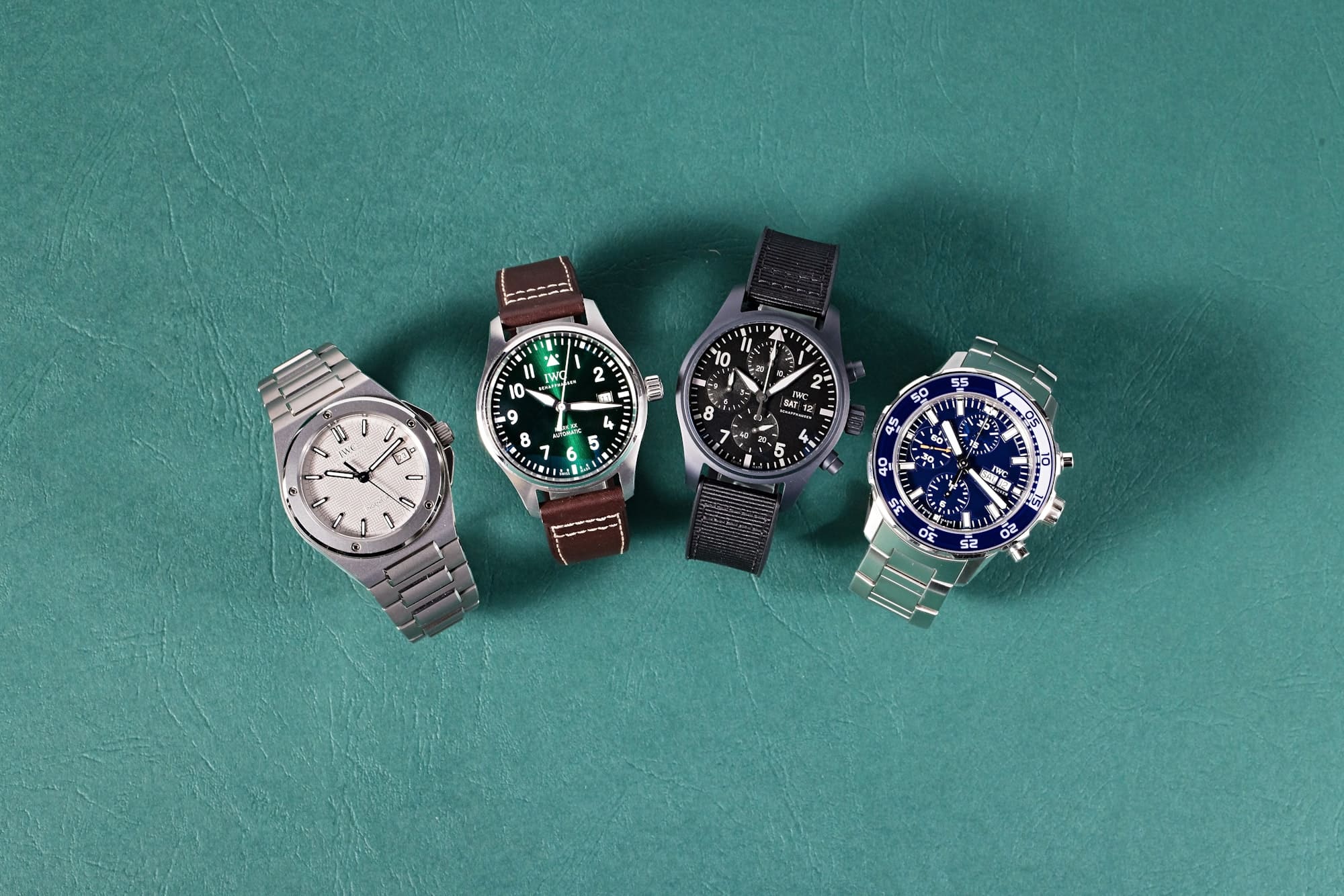
A serial number lookup is the starting point for authentication, not the finish line. Counterfeiters have learned to copy genuine serial numbers onto fake watches, so a number that appears in the correct range proves very little on its own. Real verification combines the serial with official records, physical inspection, and, when the stakes are high, professional review. The steps below move from the most authoritative option to the checks you can perform yourself.
Request an IWC Certificate of Authenticity
IWC offers a Certificate of Authenticity program for owners who want formal confirmation from the manufacture. Unlike some brands that issue archive extracts based on records alone, IWC physically examines the watch at its Schaffhausen headquarters before issuing the certificate. Watches are submitted through an IWC boutique or authorized retailer, and the resulting document confirms details such as the case, the movement, and the watch's key characteristics.
This is the strongest form of verification available for an IWC, since it comes from the company that built the watch and reflects a hands on inspection rather than a database check. The process takes time and carries a fee, so it makes the most sense for vintage pieces, valuable models, and watches missing their original papers.
Register Your Watch on MyIWC
IWC operates an online owner portal called MyIWC where you can register your watch using its serial number. Registration links the watch to your ownership record in IWC's system, and the brand currently offers extended warranty coverage for registered watches beyond the standard international warranty. Terms change over time, so confirm the current coverage details with IWC when you register.
Registration also serves as a soft authenticity check. The portal validates the serial number against IWC's records during the process, so a number that fails to register cleanly is worth investigating further. Keep in mind that successful registration confirms the number exists in IWC's system, not that the watch in your hand is the one it was issued to.
Physical Red Flags to Check
Alongside the paperwork, the watch itself will tell you a great deal. Counterfeits have improved, but they still tend to fail on the details that IWC executes at a very high level. Inspect the following:
- Dial printing that looks uneven, smudged, or slightly off center, since genuine IWC dials are printed with sharp, consistent text.
- Subdials that sit out of alignment or use fonts that differ from the main dial.
- Date windows with thick, poorly shaped numerals or a misaligned date wheel.
- Sapphire crystal that produces heavy glare, which can indicate a missing anti-reflective coating.
- Serial engravings that look shallow, grainy, or acid etched rather than cleanly cut.
- A serial number that does not match the model's era on the production chart above, such as a 1960s range number on a model launched in 2010.
When to Get a Professional Appraisal
Some situations call for expert eyes regardless of what the paperwork says. Vintage watches with long ownership histories, pieces missing their box and papers, and serials that fall outside expected ranges all justify a professional appraisal before money changes hands. An experienced appraiser can open the case, verify that the movement matches the model, and spot replaced parts that a surface inspection would miss.
Appraisals also protect sellers. Documentation from a trusted source supports your asking price and gives buyers confidence, which tends to shorten the sale and reduce negotiation friction. For any IWC worth a meaningful sum, the cost of an appraisal is small next to the value it protects.
What a Serial Number Lookup Can and Cannot Tell You

It helps to be clear about the limits of this tool, since online communities are full of buyers who treated a serial check as a guarantee and learned otherwise. A lookup is one piece of evidence among several.
A serial number lookup can tell you:
- The approximate production period of the watch, usually within a decade.
- Whether the serial is consistent with the era of the model it appears on.
- Whether the number on the case matches the number on the warranty card and papers.
A serial number lookup cannot tell you:
- Whether the watch is genuine, since real numbers can be copied onto fakes.
- The watch's ownership or service history.
- Whether the dial, hands, and movement parts are original to the watch.
- An exact production date, because the chart reflects approximate ranges.
What If the Serial Number Is Missing or Worn?

A missing serial is common on vintage IWC watches and is not always cause for alarm. Decades of polishing can soften an exterior engraving until it becomes hard to read, and watches serviced many times may show wear around the case back. Before assuming the worst, work through the alternatives:
- Check the movement, since vintage pieces often carry a separate serial there that survives even when the case is worn.
- Check the original warranty card or any service paperwork, which may record the number.
- Submit the watch to IWC through a boutique for examination, since the manufacture can identify a piece from its movement and construction.
- Have an independent appraiser inspect the watch and document what remains legible.
One caution applies. A serial that appears to have been ground off deliberately, rather than worn down gradually, is a serious warning sign. Removed serials are associated with stolen watches, and no legitimate seller has a reason to erase one. Walk away from any watch showing that kind of alteration.
Dating Your IWC Serial Number: From Lookup to Peace of Mind
Running an IWC serial number lookup comes down to a simple sequence. Find the number on the case back, movement, or warranty card, match it against the production year chart, and confirm that the date range makes sense for the model in front of you. When the serial, the reference, and the paperwork all point in the same direction, you can be reasonably confident about what you own and when it was made.
For watches where more is at stake, treat the lookup as step one rather than the whole answer. IWC's Certificate of Authenticity provides confirmation straight from Schaffhausen, and a professional appraisal adds an expert layer of protection for vintage or valuable pieces. If you are thinking about buying a pre-owned IWC or selling one from your collection, Bob's Watches can verify, appraise, and value your watch so that every number tells the story it should.
Frequently Asked Questions
