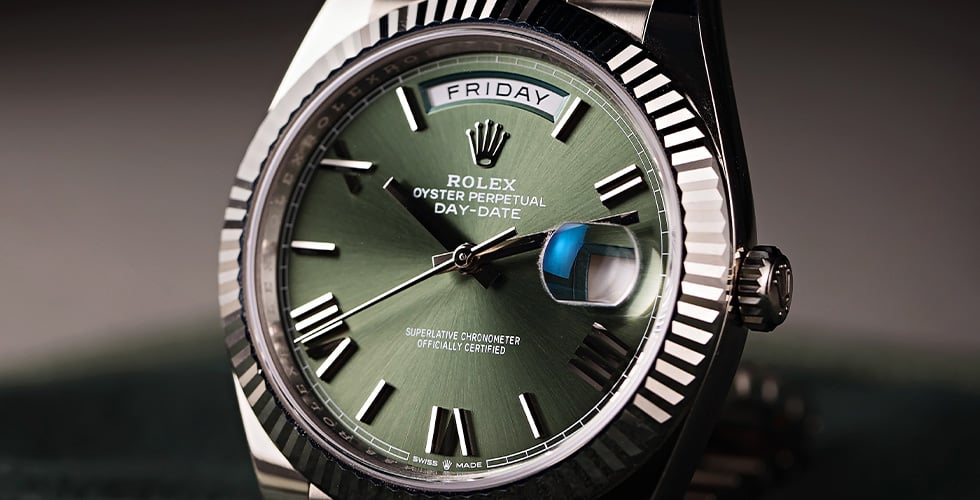
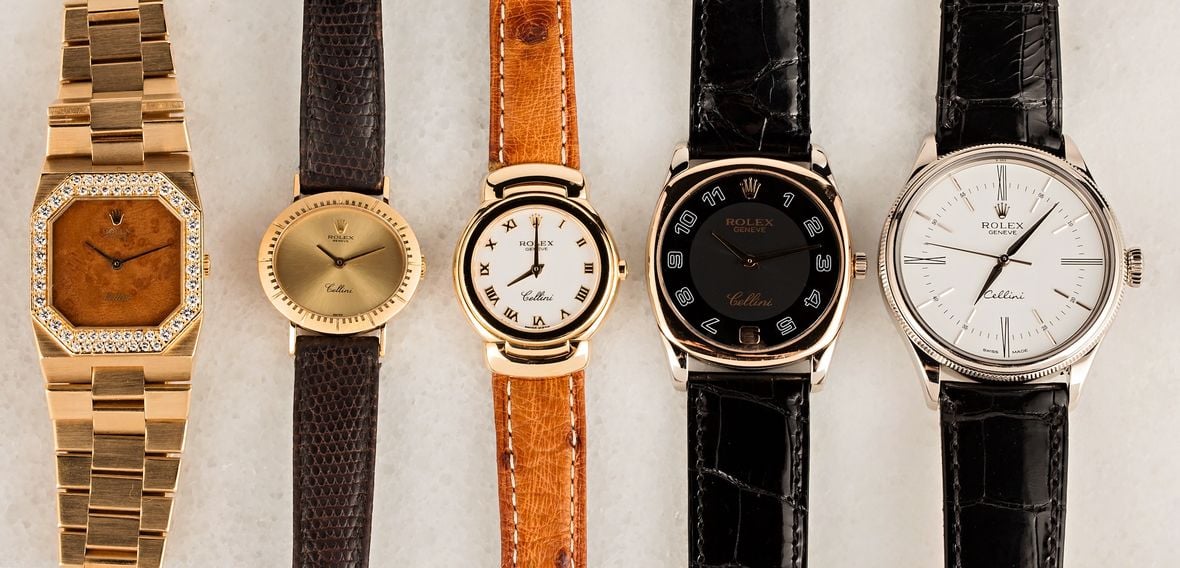
The cost to service a Rolex ranges from $800 to $1,600 for a complete overhaul at a Rolex Service Center, and complex chronographs or precious metal references can exceed $2,800 once worn parts are replaced. Two variables set the price on any given Rolex: the mechanical complexity of the movement and the condition of the watch when it arrives.
Key Takeaways:
- Standard Rolex service ranges from $800 to $1,600, and complex references can exceed $2,800 when parts are replaced.
- Service cost is driven by movement complexity, case material, and condition, not by what the watch is worth.
- Rolex recommends servicing approximately every 10 years, though watches worn daily benefit from attention every 5 to 7 years.
- A full overhaul is a complete disassembly, cleaning, re-lubrication, regulation, and pressure test, not a cleaning.
- A service costs roughly the same on a Datejust 36 as on a Cosmograph Daytona, but represents a far larger share of the Datejust’s pre-owned market value.
Pricing in this guide reflects figures quoted by Rolex Service Centers and independent specialists, plus the condition and repair costs our watchmakers assess on the Rolex watches we purchase, authenticate, and warranty. Bob’s Watches services watches covered by its own warranty and does not offer Rolex servicing to the public, so the guidance below is written to help owners choose between a Rolex Service Center and a qualified independent watchmaker. For scheduling guidance rather than pricing, see our guide on how often you should service your Rolex.
A Rolex service costs between $800 and $1,600 for a complete movement overhaul at a Rolex Service Center. Time-only references such as the Oyster Perpetual and Datejust sit at the lower end of that range, while the Cosmograph Daytona and Sky-Dweller sit at the upper end because their chronograph and annual calendar mechanisms require significantly more labor. Independent watchmakers typically quote 30% to 50% less than a Rolex Service Center, though only Rolex can issue the official service guarantee.
Rolex Service Cost by Model: 2026 Price Guide

Rolex service cost varies by model because service pricing tracks mechanical complexity rather than the price of the watch. A time-only Oyster Perpetual contains a straightforward Rolex movement with a single gear train, while a Daytona carries a chronograph with a column wheel and vertical clutch that must be disassembled, cleaned, and reassembled to tolerances measured in hundredths of a millimeter. A GMT-Master II requires attention to its independently adjustable hour hand, and a Sky-Dweller carries an annual calendar that adds another layer of components. The table below gives realistic starting figures for the most frequently serviced Rolex models.
| Rolex Model | Estimated Starting Service Cost | Potential Cost Range With Common Part Replacement |
| Oyster Perpetual | $800 to $1,000 | $1,100 to $1,400 |
| Datejust (36 / 41) | $800 to $1,000 | $1,200 to $1,600 |
| Submariner (Date / No-Date) | $800 to $1,100 | $1,300 to $1,700 |
| Explorer (I / II) | $875 to $1,050 | $1,250 to $1,650 |
| Sea-Dweller / Deepsea | $950 to $1,200 | $1,300 to $1,700 |
| GMT-Master II | $1,000 to $1,200 | $1,400 to $1,900 |
| Yacht-Master | $1,000 to $1,200 | $1,350 to $1,800 |
| Day-Date (President) | $1,000 to $1,300 | $1,500 to $2,100 |
| Cosmograph Daytona | $1,300 to $1,600 | $1,800 to $2,500 and up |
| Sky-Dweller | $1,400 to $1,600 | $1,900 to $2,800 and up |
These figures represent estimated market pricing for a standard movement overhaul, not an official Rolex price list. Rolex does not publish service pricing publicly, and a final quote always follows diagnosis. A watch that has been worn hard, stored unworn for a decade, or exposed to moisture will require more work and more components than one serviced on schedule.
What Drives the Cost of a Rolex Service
Five variables account for nearly all of the spread between an $800 quote and a $2,800 quote.
- Movement complexity. Time-only calibers require the fewest hours on the bench, while chronographs, dual-time movements, and annual calendars each add components, adjustment steps, and testing time.
- Case material. Refinishing a gold or platinum case takes more skill and more time than refinishing steel, because precious metals are softer and less forgiving of correction.
- Condition on arrival. Corrosion, a seized crown, a stretched bracelet, or a movement run dry of lubricant all move a watch from a routine overhaul into repair work.
- Parts availability. Components for current production calibers are readily available. Components for discontinued calibers must be sourced, and sourcing time and scarcity both affect price.
- Water intrusion. Moisture inside the case is the most expensive single finding, because it can damage the dial, the hands, and the movement at once.
Common Additional Costs
Parts fall outside the base overhaul price and are quoted separately after diagnosis.
| Component | Typical Cost Range | When It Is Needed |
| Sapphire crystal | $300 to $600 | Chipped, cracked, or heavily scratched |
| Acrylic crystal (vintage) | $200 to $300 and up for the part, plus labor | Crazing, deep scratches, or a poor seal |
| Crown and tube | $250 and up | Stripped threads or a crown that no longer seals |
Official Rolex Service Center (RSC) vs. Independent Watchmaker: Which is Right for You?
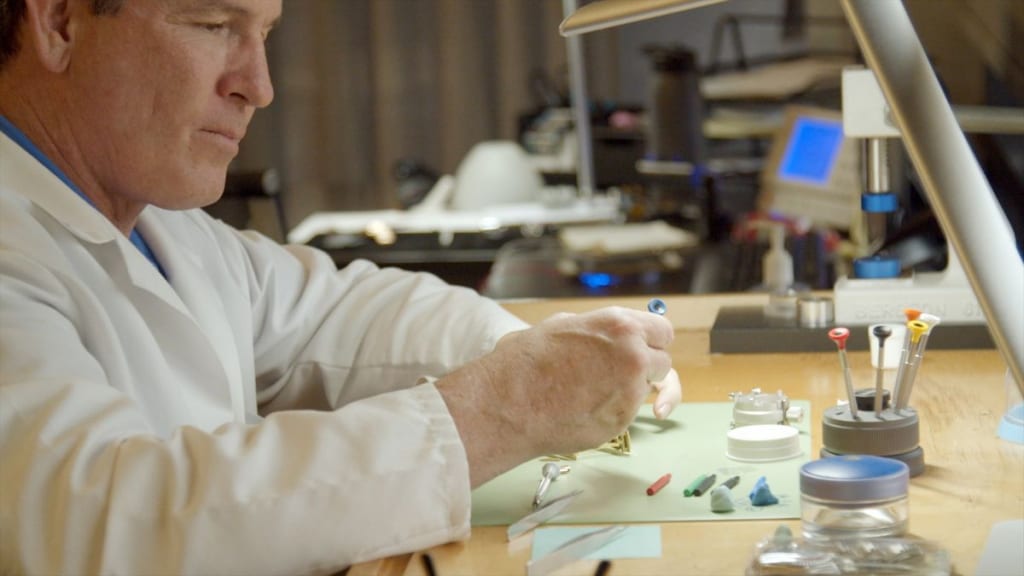
The choice between an official Rolex Service Center and an independent watchmaker comes down to three variables: cost, turnaround, and how the shop handles vintage parts. Both paths can return a watch to correct running order. They differ in what they charge, how long they take, and what they do with original components that no longer meet factory specification.
| Factor | Official Rolex Service Center | Reputable Independent |
| Cost | Full quoted price for the model, as listed above | Typically 30% to 50% below a Rolex Service Center quote |
| Turnaround | 4 to 8 weeks or longer | 2 to 4 weeks at many shops |
| Parts used | Genuine Rolex parts in all cases | Genuine parts where available |
| Warranty | Two-year international service guarantee | One to two years, varying by shop |
| Vintage handling | Replacement policy can affect originality | Greater flexibility in preserving original parts |
| Communication | Limited direct contact with the watchmaker | Direct contact with the watchmaker in most cases |
An owner sending a current production Submariner for routine maintenance benefits clearly from the Rolex Service Center, which uses factory parts, tests to factory standards, and backs the work with the official guarantee. Authorized facilities are listed in the Rolex service center locator.
An owner sending a 1970s Datejust with an original dial faces a different calculation, and this is where a qualified independent earns consideration. When evaluating one, look for verifiable Rolex-specific experience rather than general watch repair, access to genuine parts, a written warranty on the work performed, a written estimate before any work begins, and a willingness to return every part removed from the watch. A shop that hesitates on the last two points is telling you something useful.
How Often Should You Service a Rolex?

Rolex recommends servicing a modern watch approximately every 10 years under normal wearing conditions, and that recommendation is published on Rolex’s own watch care and service pages. The interval reflects improvements in lubricants, materials, and manufacturing tolerances that allow contemporary movements to run far longer between overhauls than their predecessors could.
The 10-year guideline describes an average, and few watches are worn in an average way. Wear pattern matters more than the calendar.
- Daily wear. A Rolex worn every day benefits from service every 5 to 7 years. Constant motion keeps the movement running and gradually breaks down lubricants and stresses the gaskets that maintain water resistance.
- Active use. A Submariner used for diving, a GMT-Master II carried through frequent travel, or a Daytona used for timing all encounter moisture, temperature swings, and shock that accelerate wear.
- Vintage watches .Vintage Rolex watches built before 1990 benefit from service every 3 to 5 years. Older movements used different lubricants and different alloys, and vintage components cannot be replaced once damaged.
Signs Your Rolex Needs Service
Mechanical symptoms override any interval. A watch showing any of the following should be seen by a watchmaker regardless of when it was last serviced.
- The watch consistently gains or loses more than 10 seconds per day.
- Condensation or moisture appears under the crystal.
- The power reserve runs short of its rated duration, which is between 48 and 70 hours depending on the caliber.
- The crown feels gritty or resists turning when winding or setting.
- The seconds hand stutters or jumps rather than sweeping evenly.
- The movement makes an unusual sound when the watch is gently shaken.
Catching these early is the difference between a routine overhaul and a parts-heavy repair. Moisture does progressive damage, and the cost of ignoring it climbs week by week.
What’s Included in a Full Rolex Overhaul? (A Step-by-Step Breakdown)
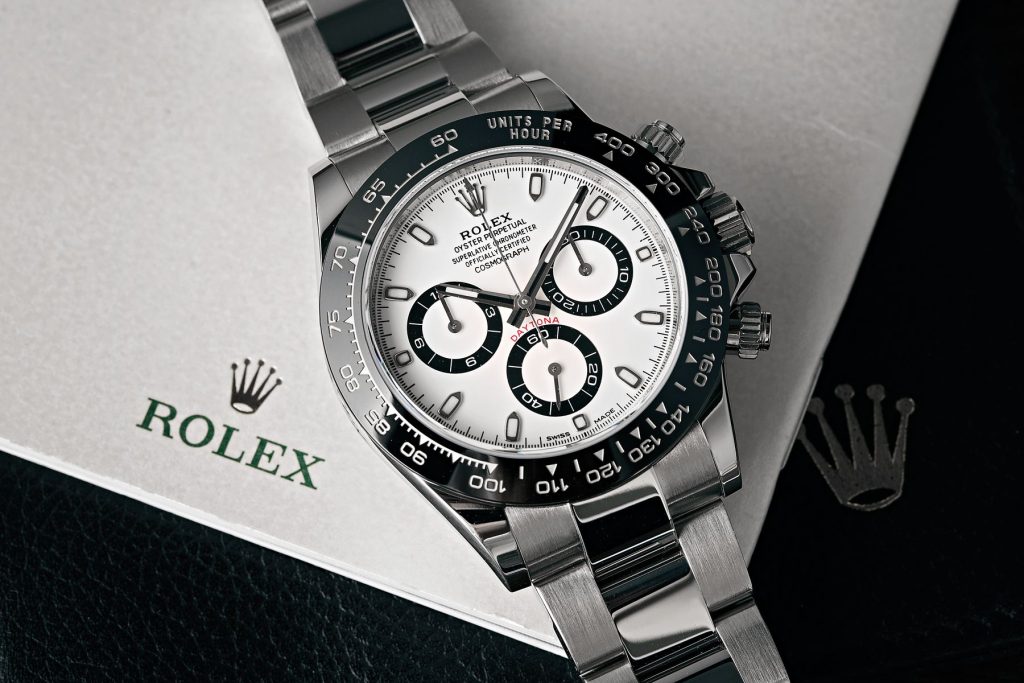
A full Rolex overhaul is a complete disassembly and rebuild of the movement, not a cleaning. Every component is separated, inspected, cleaned, and either reinstalled or replaced, and the assembled watch is then regulated and pressure tested before it returns to its owner. Labor is the single largest line item in any service quote, which is why a $900 figure that looks steep for a cleaning is reasonable for the work performed.
- Diagnosis and estimate. A watchmaker examines the watch, identifies faults, assesses the condition of critical components, and issues a written quote before any work begins.
- Complete disassembly. The movement is dismantled entirely. Each part is examined against Rolex specification, and parts that fall outside it are set aside for replacement.
- Ultrasonic cleaning. Every component passes through an ultrasonic cleaner that removes degraded oils, dust, and microscopic debris from surfaces a brush cannot reach.
- Part replacement. Worn gaskets, springs, jewels, and gear train components are replaced. The mainspring and case gaskets are routine replacements on most overhauls.
- Reassembly and lubrication. The dried components are reassembled and lubricated with the specific oils and greases each contact point requires, applied in quantities measured in fractions of a milligram.
- Timing and calibration. The watchmaker regulates the movement in multiple positions against the brand’s own criteria for Rolex accuracy. Superlative Chronometer certification requires performance of minus 2 to plus 2 seconds per day after casing, which is a tighter standard than COSC chronometer certification.
- Case and bracelet refinishing (optional). The case is disassembled and the middle case, bezel, caseback, and bracelet are polished or satin finished according to their original surfaces. This step can be declined.
- Water resistance testing. Seals are replaced, the case is reassembled, and the watch is pressure tested to confirm the Oyster case still seals as designed.
- Final quality control. The cased movement is measured again for chronometric precision against Rolex quality standards, then run through a multi-day timing and power reserve test before it is returned.
Steps four and five are where the difference between a proper overhaul and a superficial one becomes measurable. The Rolex caliber 3235 is a self-winding mechanical movement introduced in 2015 that uses the Chronergy escapement and a blue Parachrom hairspring, and it carries a power reserve of approximately 70 hours. Rebuilding a movement of that specification requires the correct lubricant in the correct quantity at every contact point, because a watch reassembled with the wrong oil at the escapement will still run, will still look correct on the wrist, and will drift outside its rated tolerance within months.
What to Expect When You Send a Rolex for Service
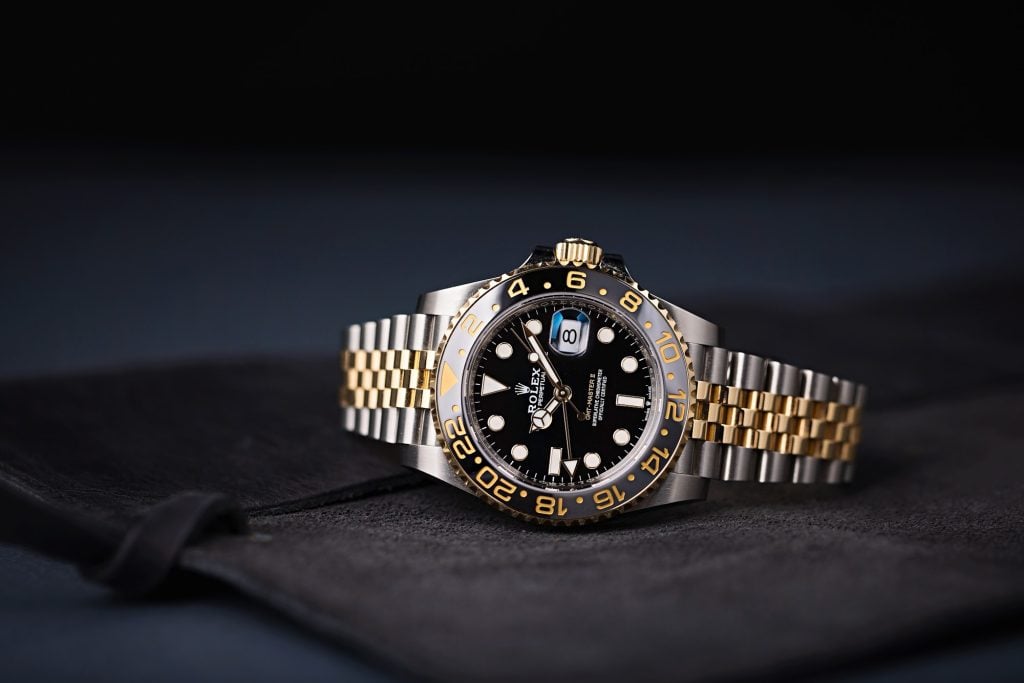
A Rolex service follows the same basic sequence at every authorized facility and at any competent independent shop, and the sequence exists so that the owner approves the cost before any work begins. No reputable watchmaker starts an overhaul without a signed or written approval, and any shop that does should be avoided.
- Intake. The watch is received in person or by insured, tracked shipping, and logged with a condition report.
- Diagnosis and written estimate. The watchmaker opens the case, evaluates the movement, and quotes the overhaul plus any parts required.
- Owner approval. Nothing proceeds until the owner accepts the quote. Owners can approve part of the work and decline the rest.
- The overhaul. The nine-step process above is carried out.
- Quality control. Timing, power reserve, and water resistance are verified over several days.
- Return with documentation. The watch is returned with its service paperwork and warranty terms.
Turnaround at a Rolex Service Center generally runs 4 to 8 weeks, and longer when a complication or a discontinued part is involved. Many independents complete routine work in 2 to 4 weeks. The single most consequential choice in this whole sequence is whether to accept the polish. Case and bracelet refinishing is optional, it can be declined in writing, and declining it preserves the original lug shape, case proportions, and factory bevels that collectors value. Polishing removes metal permanently, and no subsequent service can put it back.
Two other requests are worth making at intake. Ask for replaced parts to be returned, which matters most on vintage watches where an original bezel insert, dial, or hands carry real value. Second, confirm what documentation comes back. A paid Rolex Service Center overhaul carries a two-year international service guarantee, which is separate from the five-year international guarantee that comes with a watch purchased at retail. Keep that paperwork, because it becomes part of the watch’s history and it is the evidence a future buyer will ask for.
Is It Worth Servicing a Rolex? Service Cost Compared to Market Value

Servicing a Rolex is worth the cost in most cases, because a standard overhaul typically represents a single-digit to low-double-digit percentage of the watch’s pre-owned market value while restoring function that would otherwise continue to decline. The reason that percentage varies so widely between models has nothing to do with the quality of the service and everything to do with how the two prices are set.
Service pricing tracks movement complexity. Market value tracks demand. Those two forces do not move together, which is why the same $900 overhaul is a modest expense on one reference and a significant one on another. The table below compares standard service estimates against median pre-owned sold prices at Bob’s Watches over the 12 months ending July 2026. The percentage column is the standard service estimate from the pricing table above divided by that median. Time-only references such as the Rolex Date and Air-King carry the same $800 to $1,000 baseline as the Oyster Perpetual.
| Rolex Model | Median Pre-Owned Sold Price | Standard Service as Share of Value |
| Rolex Date | $5,495 | 15% to 18% |
| Oyster Perpetual | $5,995 | 13% to 17% |
| Air-King | $6,495 | 12% to 15% |
| Datejust 36 | $7,507 | 11% to 13% |
| Explorer II | $10,949 | 8% to 10% |
| Submariner | $14,495 | 6% to 8% |
| GMT-Master II | $18,595 | 5% to 6% |
| Day-Date 36 | $21,395 | 5% to 6% |
| Cosmograph Daytona | $30,595 | 4% to 5% |
Four observations follow from that comparison.
- On higher-value references such as the Cosmograph Daytona and GMT-Master II, a standard overhaul represents roughly 4% to 6% of market value, which is a routine maintenance expense on an asset in that range.
- On entry-level and older references such as the Rolex Date and Oyster Perpetual, the identical service can represent 13% to 18% of market value, which deserves a longer conversation before you commit.
- The median sold price across all Rolex references at Bob’s Watches was $12,495 over the 12 months ending July 2026, with the middle half of sales falling between $8,070 and $17,670.
- The Submariner and Datejust 36 are the two most requested Rolex references at Bob’s Watches, and both sit in the middle of the service-to-value range.
A properly maintained watch is generally considered more desirable on the secondary market than an identical example of unknown mechanical history, and documented service records can support value when the time comes to sell. Servicing does not guarantee appreciation, and no reference guarantees a profit. The honest limit on the case for service is this: a neglected watch needing a dial, hands, a crystal, and extensive movement parts can cost more to restore than the restoration adds to its value, particularly at the lower end of the range above. Check current pre-owned Rolex market prices for your reference before approving a large quote, and let the two numbers inform each other.
Servicing a Vintage Rolex: Will Rolex Service a 40-Year-Old Watch?

Rolex Service Centers will accept most 40-year-old watches, and the practical limit is parts availability for the specific caliber rather than the age of the watch itself. A 1985 Datejust with a caliber 3035 is straightforward work. A 1955 Oyster with an obsolete caliber may be declined or returned unrepaired if the components required no longer exist in the supply chain, and that outcome is a sourcing constraint, not a judgment about the watch.
Servicing exists in its current form because of a specific engineering decision. Rolex introduced the Oyster case in 1926 as the first waterproof wristwatch case, sealed by a screw-down caseback, bezel, and winding crown. Every gasket replacement and every pressure test in a modern overhaul exists to restore that seal. The Oyster case is also why a service on a vintage watch is not optional maintenance. A failed gasket on a 40-year-old Submariner admits moisture, and moisture destroys a dial that cannot be replaced with an original.
Reference format is a fast way to place your own watch in the right era and the right value bracket.
| Reference Format | Approximate Era | Median Pre-Owned Sold Price |
| 4-digit (1601, 1675, 5513) | 1950s to 1970s | $5,995 |
| 5-digit (16610, 16233) | 1980s to early 2000s | $8,370 |
| 6-digit (116610, 126334) | 2000s to present | $15,295 |
Era ranges are approximate and overlap at the transitions. Median prices are Bob’s Watches sold data for the 12 months ending July 2026.
The originality question is where vintage servicing diverges sharply from modern servicing. Four decisions carry lasting consequences.
- Dials and hands. A Rolex Service Center may replace an aged tritium dial and its matching hands with modern equivalents that meet current specification. The original patina is not recoverable once the parts are gone.
- Crystals. Acrylic crystal replacement is routine and generally uncontroversial, though collectors preserve original crystals on the rarest references.
- Bezel inserts and bracelets. Replacement restores appearance and removes originality at the same time. A faded insert is often worth more than a correct one.
- Case refinishing. Polishing removes metal and softens the lug shape permanently. On a collectible vintage reference, declining the polish is usually the correct decision.
Originality is one of several factors that support value on vintage references, alongside condition, provenance, and the presence of the original box and papers. Owners weighing a full factory service against a more conservative independent overhaul should understand how a full service can affect a vintage Rolex’s value before making the call, because the mechanical outcome and the collectible outcome are not the same question.
Your Rolex Service Cost Investment: Final Thoughts

A Rolex service costs $800 to $1,600 for a standard overhaul and can exceed $2,800 on complex or precious metal references once parts enter the quote. That figure is set by movement complexity, case material, and condition on arrival, not by what the watch is worth. Rolex recommends attention approximately every 10 years, daily wear may justify every 5 to 7, and vintage pieces could benefit from every 3 to 5. Owners who understand those variables approve the right work at the right price, and decline the polish when declining it is the better decision.
Bob’s Watches buys, authenticates, and warranties Rolex watches, and our watchmakers inspect every one that comes through the door. That volume of examination is what informs the condition and pricing guidance above, because a watch’s service history is visible on the bench in ways it never is in a listing. Owners who conclude that a repair estimate outweighs what the piece is worth can sell Rolex watches to us directly rather than restore them, and owners still weighing the decision can request a valuation and see both numbers side by side.