
The best Rolex Explorer alternatives include the Tudor Ranger, Hamilton Khaki Field Murph, Seiko Prospex Alpinist, and OMEGA Railmaster, all of which capture the iconic Rolex Explorer 3-6-9 dial, black dial aesthetic, and versatile tool watch character at a fraction of the $7,900+ retail price. In this guide, we cover over a dozen picks across every budget tier, from very affordable to Swiss heritage names near the Explorer’s own price point, along with a full comparison table, a case size guide, and a framework to help you find the right fit.
Key Takeaways
- The Rolex Explorer retails at $7,900 and is notoriously difficult to find at an authorized dealer, making well-chosen alternatives a respected path for many collectors.
- The Tudor Ranger is the most spiritually connected alternative, sharing Rolex family DNA and a COSC-certified movement at around $3,475.
- The core specs to match: black dial, Arabic numerals at 3, 6, and 9, a 36 to 40mm case, 100m or better water resistance, and a reliable automatic movement.
- No alternative replicates the Rolex brand name or its long-term resale value, but many have good technical specs at their price point.
Whether you are drawn to the Explorer’s understated elegance, The Rolex Explorer history on the slopes of Everest, or simply the idea of owning a truly versatile everyday watch, the options available today are better than ever. The sections below walk through everything you need to make a confident, informed decision.
Why the Rolex Explorer Is So Hard to Replace
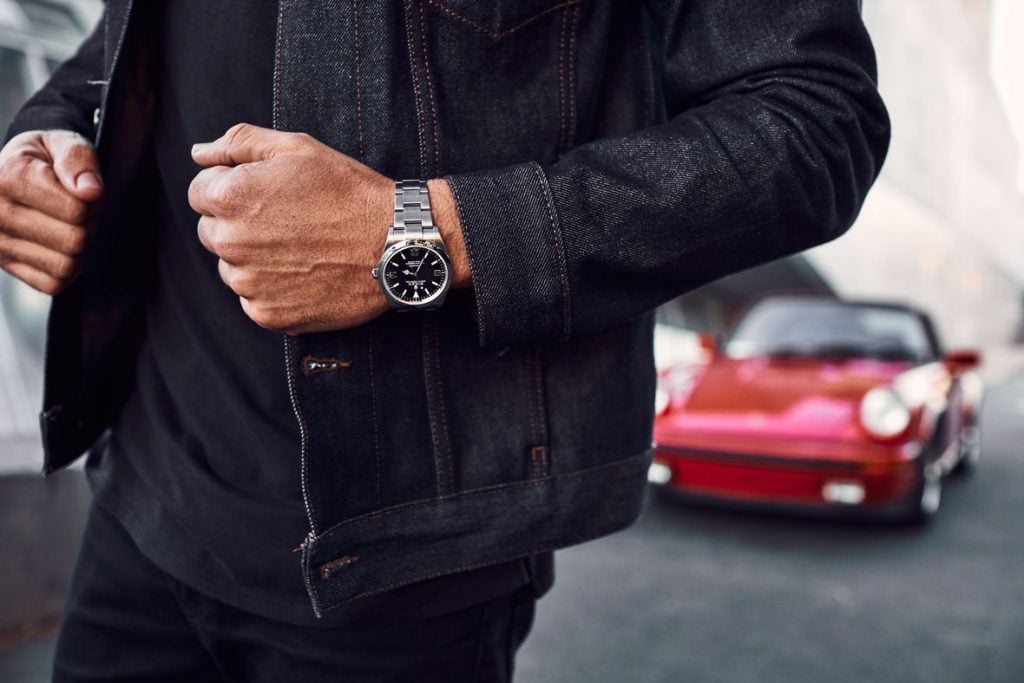
The Rolex Explorer has one of the most compelling origin stories in all of watchmaking. In 1953, a modified Rolex Oyster Perpetual accompanied the British expedition to Mount Everest, reaching the summit with Tenzing Norgay. That same year, Rolex formally introduced the Explorer to commemorate the climb, establishing it as the go-to watch for adventurers worldwide. Over the following decades, the design barely changed. The 3, 6, and 9 Arabic numerals stayed. The clean black dial stayed. The brushed steel Rolex Oyster case stayed. That consistency is part of what makes the Explorer so difficult to replace: it is not a watch that relies on trends. It is a watch that was designed for a specific purpose and has never needed to be anything else.
The Explorer also holds a unique cultural position. Author Ian Fleming, creator of James Bond, wore a Rolex Explorer reference 1016, and many watch enthusiasts point to descriptions in the early Bond novels as the first literary reference to the model. Beyond fiction, the Explorer has been worn by scientists, cave explorers, mountaineers, and everyday collectors who simply want one watch that works everywhere. That last point, the “go anywhere, do anything” quality, is often described in the watch community as GADA versatility. The Explorer is clean enough to wear under a dress shirt cuff, tough enough to take on a hiking trail, and timeless enough to hold its appeal for decades. Replacing all of that with a single watch from another brand is genuinely difficult. But there are options that come remarkably close.
What Makes a Watch a True Rolex Explorer Alternative?
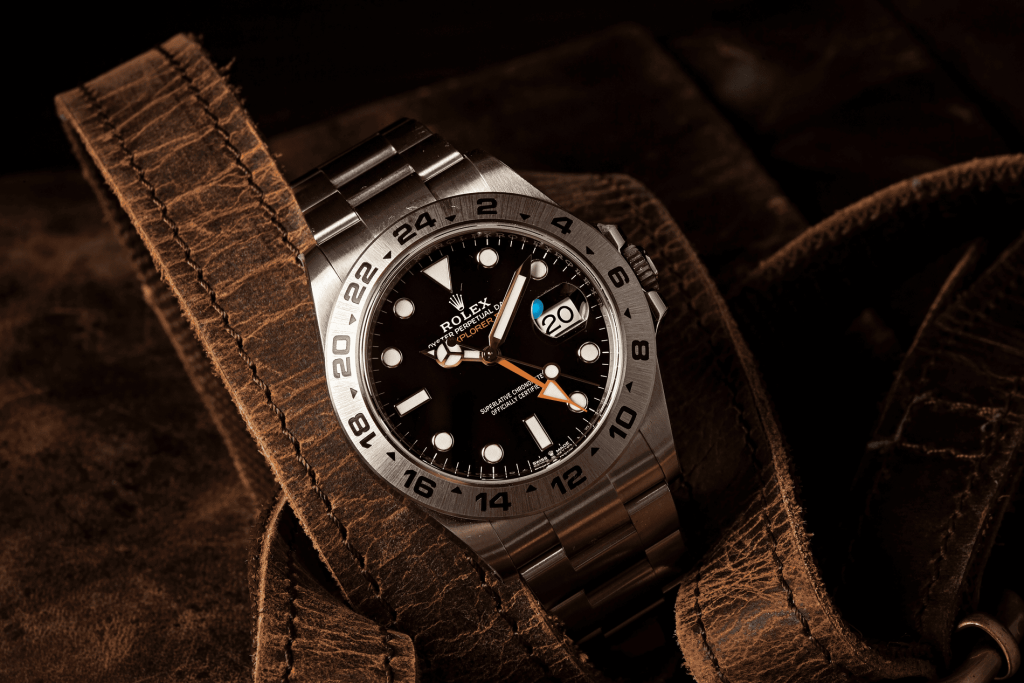
Not every black-dial tool watch earns the title of a proper Explorer alternative. The Explorer has a specific set of qualities that define it, and the best alternatives share most of those qualities while bringing something meaningful of their own. When evaluating watches in this category, there are four areas worth examining closely.
Design DNA
The visual identity of the Explorer is one of the most copied in watchmaking, but few alternatives get all of it right. The elements that matter most are:
- A black dial with high contrast between the hands and the background
- Arabic numerals at 3, 6, and 9 o’clock, ideally filled with luminous material
- A brushed stainless steel case with minimal polished surfaces
- A case diameter between 36mm and 40mm, consistent with the Explorer’s historical sizing
- Clean, uncluttered layout with no unnecessary complications
Movement and Technical Specs
The Explorer’s movement is in-house, COSC-certified, and built to Rolex’s own standards for accuracy and reliability. A strong alternative should not fall dramatically short on the mechanical side. The benchmarks to look for include:
- A reliable automatic movement from a known manufacturer (Seiko, Miyota, ETA, Sellita, or in-house)
- A power reserve of at least 38 hours, with 70 or more hours representing a genuine advantage
- Water resistance of 100m or better
- Reasonable regulation accuracy, ideally within plus or minus 15 seconds per day
- Shock protection and, where possible, some level of magnetic resistance
Tool Watch Philosophy
A genuine Explorer alternative is not just a watch that looks the part. The Explorer was built on the philosophy that a watch should be reliable, legible, and ready for actual use in demanding conditions. The most satisfying alternatives come from brands or designers that share that mindset. A watch with beautiful finishing but poor bracelet quality, or an impressive Rolex movement behind a fragile crystal, misses the point. The spirit of the Explorer is about substance over show. Brands with genuine heritage in the field, military, aviation, or exploration space tend to produce the most honest alternatives, because their design decisions come from the same place Rolex’s did: function first.
Value and Long-Term Ownership
Value here means more than price. A great Explorer alternative should make sense as a long-term investment in wearable quality. The factors that matter are:
- Movement serviceability and the availability of qualified watchmakers
- Bracelet quality and clasp construction, since a watch worn daily lives and dies on its bracelet
- Brand warranty support and customer service reputation
- Honest resale expectations (most alternatives do not hold value the way Rolex does, and that should be a known trade-off rather than a surprise)
The Definitive Rolex Explorer Alternatives Comparison Table
The table below covers the top picks in this guide across all price tiers. Use it as a quick reference when narrowing your options.
| Watch | Price | Case Size | Water Resistance | Movement | Power Reserve | Best For |
| Christopher Ward C63 Sealander | ~$900 | 36mm / 39mm | 150m | Sellita SW200-1 | 38 hrs | Most direct Explorer style |
| Seiko Prospex Alpinist SPB117 | $750 | 39.5mm | 200m | Seiko 6R35 auto | 70 hrs | Best heritage under $1K |
| Longines Spirit | ~$2,250 | 37 / 40 / 42mm | 100m | L888.4 auto (COSC) | 72 hrs | Best mid-tier Swiss value |
| Oris Big Crown ProPilot | ~$2,200 | 41mm | 100m | Oris 733 auto | 38 hrs | Best aviation character |
| IWC Pilot’s Watch Mark XX | ~$5,500 | 40mm | 60m | IWC 32111 auto | 120 hrs | Best power reserve |
| Tudor Ranger | ~$3,475 | 39mm | 100m | MT5402 (COSC) | 70 hrs | Closest Explorer DNA |
| Tudor Black Bay 36 | ~$4,050-$4,925 | 36mm | 200m | MT5400 (COSC) | 70 hrs | Best classic sizing tribute |
| OMEGA Railmaster | ~$5,400 | 40mm | 150m | METAS 8806 | 60 hrs | Best movement technology |
Prices may vary by retailer, region, and configuration. Pre-owned pricing will differ.
Best Rolex Explorer Alternatives for Every Budget

The picks below are organized by price tier. Each watch was selected based on how well it captures the Explorer’s design philosophy, the quality of its movement and construction, and the overall ownership experience relative to its cost.
$750 to $1,000: Best Mid-Range Rolex Explorer Alternatives
This is the most competitive tier in the Explorer alternative market and the one where value is most concentrated. The watches below represent the best of what is available today for under $1,000.
Seiko Prospex Alpinist SPB117, $750
The Seiko Prospex Alpinist has its own legitimate claim to exploration history. The Alpinist line dates back to 1959 as Seiko’s first dedicated sports watch, originally designed for Japanese mountaineers. The SPB117, specifically, earns its place on this list because its black dial configuration is the most Explorer-adjacent in the Alpinist lineup, while the watch retains the design character and quirks that make it distinctly its own. At 39.5mm, it sits close to the Explorer’s current 40mm reference, and its 200m water resistance is double what the Explorer offers. The rotating inner compass bezel, controlled by the crown at 4 o’clock, is a genuine functional feature for outdoor use rather than decoration.
The 6R35 movement inside delivers a 70-hour power reserve, nearly double what you find in most other movements at this price range. The exhibition caseback lets you view the movement, which is a nice touch for a tool-rated watch. There are trade-offs. The case wears slightly larger than its dimensions suggest due to its 13.2mm height, and the date magnifier window is a divisive feature. The lume application is limited to the handset and small circles at each hour index, which can make reading in low light more challenging than watches with larger lume footprints. Those are honest limitations, and buyers who accept them will find a watch with genuine heritage, excellent specs, and strong long-term value.
Specs: 316L stainless steel, 39.5mm, 200m water resistance, Seiko 6R35 automatic, 70-hour power reserve, $750
Christopher Ward C63 Sealander, ~$995
Christopher Ward, the British independent brand, designed the C63 Sealander with the Explorer’s design principles in mind, and they do not shy away from that connection. The brand even describes it as a “sports-explorer” watch. The 36mm version in particular is the right choice for buyers who want the classic Explorer proportions, and the black lacquered dial with large applied markers and a strong hour hand creates a legible, clean face that holds up to the comparison. The Sellita SW200-1 movement is Swiss, reliable, and widely serviced. The articulated bracelet includes on-the-fly micro-adjustment, a detail that the Explorer’s own bracelet did not offer until relatively recently.
At around $900, the Sealander competes directly with the Traska and Hamilton picks on this list, and which one wins depends on what you prioritize. The Sealander has the strongest Swiss movement pedigree and the best bracelet adjustment system. The Traska beats it on case hardness and dial depth. The Hamilton beats it on power reserve. For buyers who want a genuine Swiss movement in a 36mm Explorer-adjacent case without paying Tudor money, the Sealander is an exceptionally strong answer.
Specs: Marine-grade stainless steel, 36mm or 39mm, 150m water resistance, Sellita SW200-1 automatic, 38-hour power reserve, ~$900
$1,000 to $3,500: Best Swiss Alternatives
Buyers in this range expect Swiss movements, refined finishing, and brand names that carry weight in the watch community. The watches here deliver on all three counts while still representing strong value relative to the Explorer’s price.
Longines Spirit, ~$2,550

Longines has been making watches since 1832, and the Longines Spirit collection draws specifically on the brand’s long history in precision timekeeping and aviation. The case is available in 37mm, 40mm, and 42mm, giving buyers a size option that most other alternatives cannot match. The movement, the L888.4, holds COSC chronometer certification, includes a silicon hairspring for improved temperature stability and shock resistance, and delivers a 72-hour power reserve. On pure technical specifications, the Spirit outperforms the Rolex Explorer in several measurable areas while costing roughly a third of the price.
The aesthetic is slightly dressier than a pure tool watch, with more polished surfaces and a refined bracelet design that some buyers will prefer and others will find less rugged than the Explorer’s utilitarian feel. That distinction matters depending on how you plan to wear the watch. For buyers who want Swiss quality, COSC certification, a genuine range of size options, and impressive movement performance at a mid-tier price, the Longines Spirit is one of the strongest overall values in this guide.
Specs: Stainless steel, 37 / 40 / 42mm, 100m water resistance, Longines L888.4 automatic (COSC), 72-hour power reserve, ~$2,550
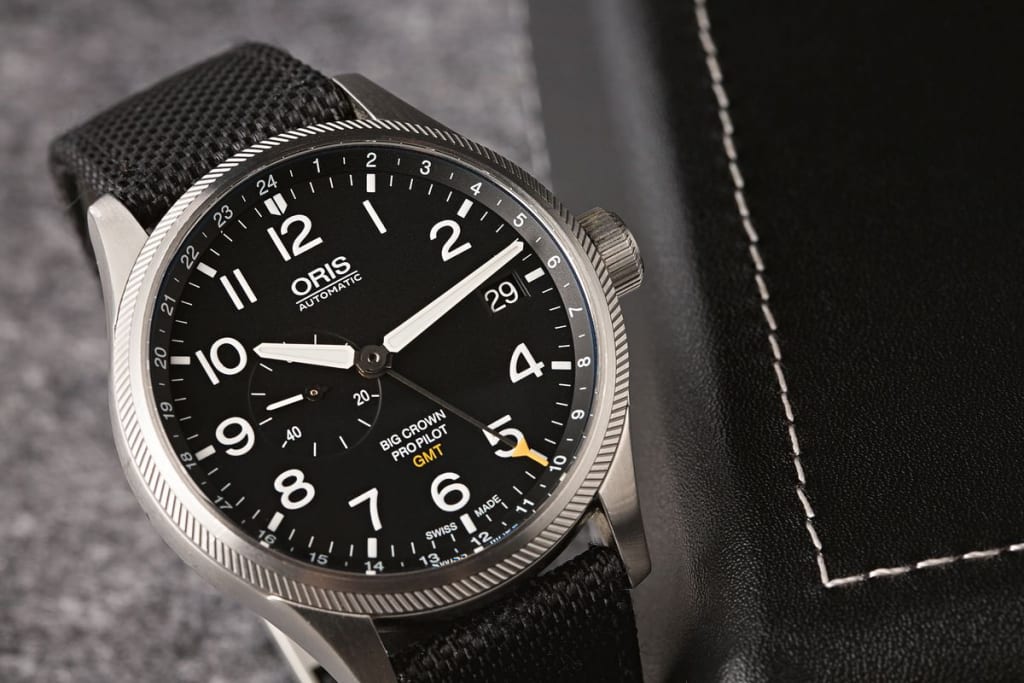
Oris ProPilot, ~$2,200
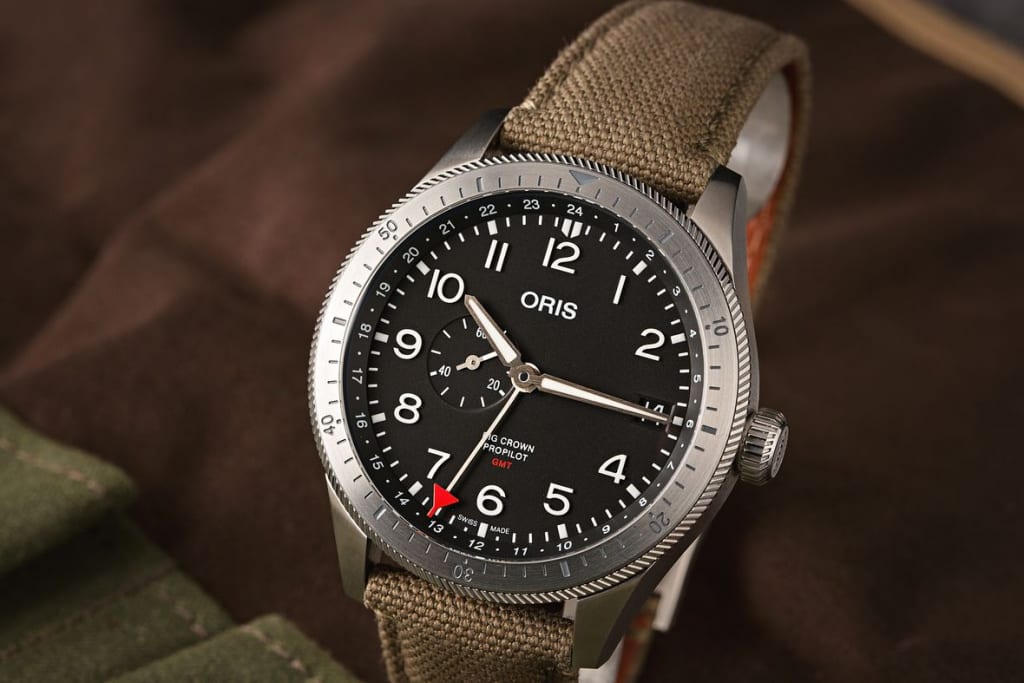
Oris is one of the few Swiss watchmakers that remains fully independent, with no ownership ties to any larger group. The Oris ProPilot carries the brand’s aviation heritage into a watch that, despite its pilot-specific roots, reads well in the Explorer alternative conversation. The clean matte dial, fixed steel bezel, large Arabic numerals, and polished hands check most of the core boxes. The knurled bezel adds a textural detail that distinguishes it from the Explorer without departing from the tool watch category. At 41mm, it wears larger than the Explorer’s 40mm current reference, which suits buyers who prefer a more substantial wrist presence.
The Oris 733 automatic movement is a reliable Swiss caliber with a 38-hour power reserve, which is the modest end of what is on offer across this list. For buyers prioritizing movement reserve, the Longines Spirit is the stronger choice in this price range. For buyers who want Swiss independence, a distinct aviation character, and a watch that carries its own heritage into the Explorer aesthetic, the ProPilot is a genuinely satisfying option.
Specs: Stainless steel, 41mm, 100m water resistance, Oris 733 automatic, 38-hour power reserve, ~$2,200
$3,500 to $7,000: Best Mid Tier Explorer Alternatives
At this price level, buyers are approaching Explorer territory on the secondary market. The case for each watch here has to be clear and specific.
Tudor Ranger, ~$3,550

The Tudor Ranger is the most spiritually connected watch on this list. Tudor and Rolex share a parent company and a manufacturing heritage, and the Ranger was designed with the Explorer’s philosophy directly in mind. The original 1960s Oyster Prince Ranger was, in many ways, the Explorer alternative of its era. The current version keeps that spirit alive with a 39mm case, a clean black dial with Arabic numerals at 12, 3, 6, and 9, and the MT5402 in-house movement, which is COSC-certified and delivers a 70-hour power reserve. The T-Fit clasp allows easy on-the-fly length adjustment without tools, a thoughtful practical feature. The satin-brushed case finishing is close to the Explorer’s aesthetic without being a copy of it.
The honest trade-off is finishing refinement. At its price, the Ranger does not match the Explorer’s level of case and bracelet polish. The lug transitions are slightly less precise, and the overall build, while solid, reflects the price difference when the two are placed side by side. That said, the movement quality and overall value proposition are exceptional. For a buyer who wants the closest possible experience to owning a Rolex Explorer at a price that leaves room in the budget, the Tudor Ranger is the answer.
Specs: Stainless steel, 39mm, 100m water resistance, Tudor MT5402 automatic (COSC), 70-hour power reserve, ~$3,550
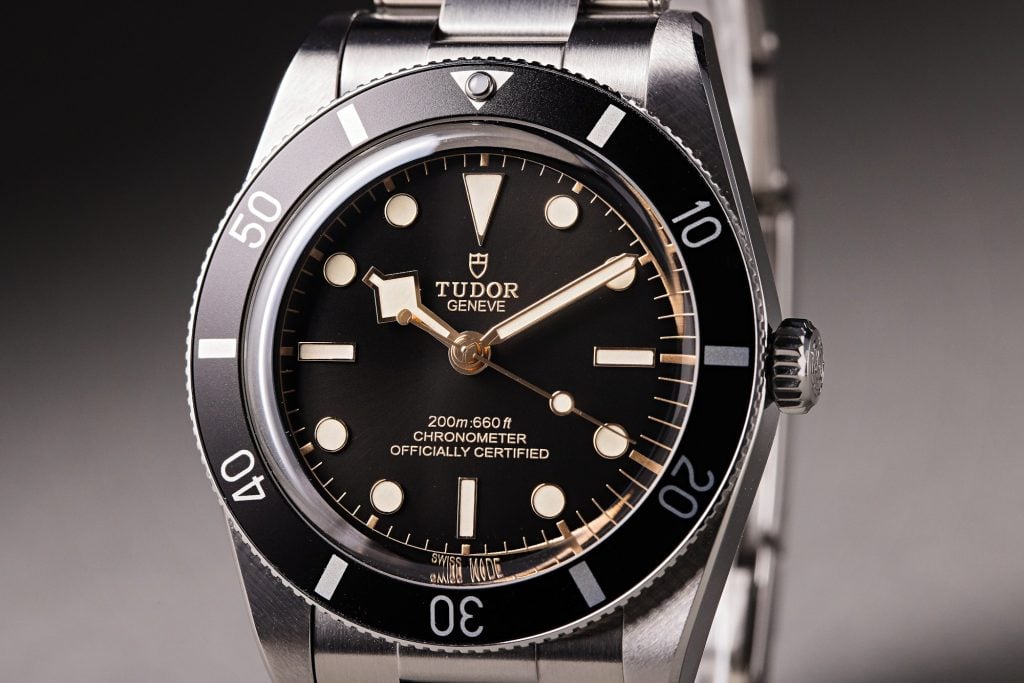
Tudor Black Bay 36, ~$4,050 to $4,925

The Tudor Black Bay 36 is the right pick for buyers who want to honor the Explorer’s classic 36mm proportions with a watch that carries genuine Swiss pedigree. At 36mm, it is one of the only watches at this price tier built around the sizing that made the original Explorer a legend. The COSC-certified movement, 200m water resistance (double the Explorer’s 100m), and solid bracelet construction make the technical case clearly. The clean black dial with Tudor’s signature snowflake hands and large hour markers is immediately recognizable, though it does not reproduce the Explorer’s Arabic numerals. For some buyers that is a departure that matters. For others, the overall design of this Tudor Black Bay is close enough.
The Black Bay 36 transitions comfortably from casual to formal environments, which is the same versatility the Explorer is known for. Pre-owned examples are accessible in the $2,300 to $3,500 range, which opens a meaningful window for budget-conscious buyers who want Tudor quality. As an in-production modern watch with strong brand support, serviceability and parts availability are not concerns.
Specs: Stainless steel, 36mm, 200m water resistance, Tudor MT5400 automatic (COSC), 70-hour power reserve, ~$4,050 to $4,925
IWC Pilot’s Watch Mark XX, ~$5,800

The IWC Pilot’s Watch Mark XX is not a direct Explorer alternative in the traditional sense, but it earns serious consideration for buyers who value functional performance above all else. The ValFleurier-manufactured caliber 32111 inside offers a 120-hour power reserve, the best on this entire list by a wide margin. Set it down on a Friday and it will still be running Thursday. The clean black dial with the signature inverted triangle indicator at 12 o’clock provides instant legibility, and manufacturing quality on this IWC Pilot’s Watch is beyond question. The 40mm case and pilot’s watch proportions sit comfortably on most wrists.
The trade-offs are specific: the aesthetic is pilot-first rather than field or adventure-first, which will feel right to some buyers and slightly off to others when comparing it directly to Explorer DNA. Water resistance is rated at 60m, the lowest in the premium tier. For buyers who want Swiss prestige, an extraordinary power reserve, and superb legibility in a clean black-dial package, the Mark XX competes very well at its price. IWC also offers the Pilot’s Watch Automatic 36 at around $6,300 for buyers who want the classic Explorer sizing in a pilot-inspired format.
Specs: Stainless steel, 40mm, 60m water resistance, IWC caliber 32111 automatic, 120-hour power reserve, ~$5,800
OMEGA Railmaster, ~$5,800

The OMEGA Railmaster is the most technically advanced watch on this list. Originally introduced in 1957 alongside the Seamaster 300 and Speedmaster as part of OMEGA’s “Professional Trilogy,” the Railmaster was designed for scientists and engineers working in environments with strong magnetic fields. The current version carries that legacy forward with a Co-Axial Master Chronometer movement certified to METAS standards, which includes verified resistance to magnetic fields of 15,000 gauss. For context, the Rolex Explorer offers magnetic resistance to 1,600 A/m (roughly equivalent to around 20 gauss). The Railmaster is, by any technical measurement, the superior instrument in this regard.
The distinctive crosshair dial, matte texture, and pencil-shaped hands give the Railmaster a look that is recognizably field-watch adjacent without directly copying anyone. The METAS Master Chronometer certification guarantees accuracy within 0 to plus 5 seconds per day across eight different positions and tests, the most rigorous certification standard in the industry today. At $5,400, it is approaching Explorer territory on the secondary market, which makes the buying decision a genuine one. For buyers who prioritize movement quality and technical performance above brand prestige, the Railmaster is the most intellectually honest choice on this list.
Specs: Stainless steel, 40mm, 150m water resistance, OMEGA Co-Axial Master Chronometer 8806 automatic, 60-hour power reserve, ~$5,800
Rolex Explorer Alternatives by Case Size: A Guide for Every Wrist
Case size is one of the most practical factors in choosing a watch, and it is also one of the most underserved topics in the Explorer alternative space. The Explorer is currently produced in 36mm and 40mm references, and the 36mm in particular has generated significant demand for alternatives that few brands have addressed directly. The sections below organize the picks in this guide by case size so you can narrow your options based on what actually fits your wrist.
Best 36mm Rolex Explorer Alternatives
The 36mm is the historically significant Explorer size, and online watch communities frequently point out how few genuine alternatives exist in this dimension. The best current options are:
- Christopher Ward C63 Sealander (36mm option): Swiss Sellita movement, articulated bracelet, 150m WR, clean Explorer-adjacent design
- Tudor Black Bay 36 (36mm): COSC-certified in-house movement, 200m WR, premium finishing, the strongest 36mm option by a significant margin
Best 38 to 39mm Rolex Explorer Alternatives

The 38 to 39mm range is the sweet spot for most wrists and the most competitive bracket in the Explorer alternative market. The picks here offer the best selection and the strongest overall value.
- Tudor Ranger (39mm): COSC-certified in-house movement, closest Explorer DNA available, 70-hour power reserve
Best 40mm Plus Rolex Explorer Alternatives
Buyers who prefer a more substantial wrist presence, or who simply have larger wrists, have strong options in this range.
- Seiko Prospex Alpinist SPB117 (39.5mm): 200m WR, 70-hour power reserve, genuine mountaineering heritage, compass bezel
- Oris Big Crown ProPilot (41mm): Swiss independent brand, aviation heritage, matte dial, 100m WR
- Longines Spirit (40mm option): COSC-certified, silicon hairspring, 72-hour power reserve, available in multiple sizes
- OMEGA Railmaster (40mm): METAS certification, 15,000 gauss magnetic resistance, most technically advanced pick on the list
- IWC Pilot’s Watch Mark XX (40mm): 120-hour power reserve, clean legible dial, Swiss prestige
Should You Buy a Rolex Explorer Alternative or the Real Thing?
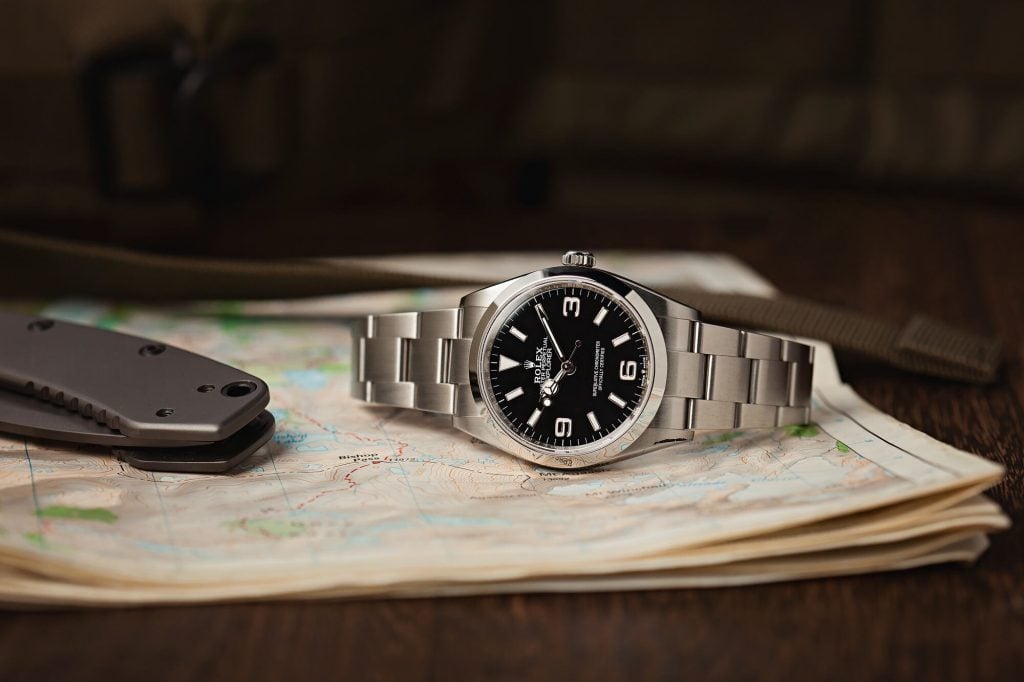
This is a question worth asking seriously before spending significant money on an alternative. The Rolex Explorer at $7,900 retail carries something that no alternative on this list can replicate: the Rolex name, the resale liquidity, and the long-term value retention that comes with it. Pre-owned examples of the current reference 124270 typically trade at or above retail on the secondary market. Certified pre-owned examples from reputable dealers can often be found in the $7,000 to $9,000 range depending on condition and documentation. Vintage references, particularly the reference 1016 that ran from 1963 to 1989, have become serious collector pieces with prices that reflect decades of market appreciation. If brand equity, long-term resale value, and the specific prestige of wearing a Rolex are priorities for you, the honest advice is to save for the real thing or explore the pre-owned market rather than settling for an alternative.
That said, the alternatives in this guide are not consolation prizes. Several of them surpass the Explorer on specific technical merits, including power reserve (Hamilton, IWC), magnetic resistance (OMEGA), water resistance (Tudor Black Bay 36, Seiko Alpinist), and movement certification standards (OMEGA METAS). For a buyer whose primary goal is a daily-wear tool watch that looks the part, performs reliably, and does not create anxiety when it gets scratched or rained on, an alternative at a fraction of the price is a completely rational and well-supported choice. The watch community has embraced this reality for years. The decision comes down to what you are actually optimizing for.
How to Choose the Right Rolex Explorer Alternative
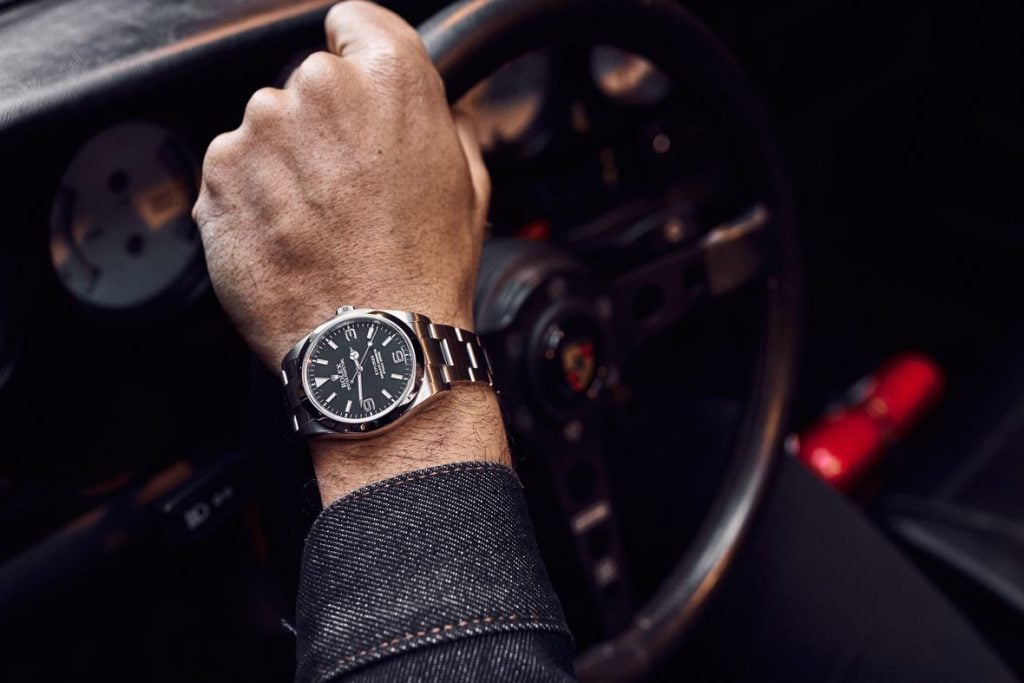
Choosing the right watch from this list is easier when you define your priorities before you start browsing. The framework below breaks the decision into four practical questions.
Set Your Budget First
The budget tiers in this guide reflect real differences in build quality, finishing, movement caliber, and brand heritage. Under $1,000 offers excellent value with some compromise on movement source and finishing refinement. The $2,000 to $3,500 range is where Swiss movements, COSC certification, and recognizable brand heritage enter the picture. Above $3,500, the differences between alternatives become more incremental, and at that point the pre-owned Rolex market becomes a legitimate comparison.
- Are you buying for daily wear where scratches are acceptable, or for a more careful use case?
- Is Swiss movement origin a requirement, or is Japanese or regulated microbrand quality acceptable?
- Does pre-owned access to Tudor or Rolex change your budget calculation?
Prioritize Case Size for Your Wrist
The 36mm versus 40mm debate in the Explorer community is a genuine one, and the availability of alternatives varies significantly between the two sizes. The 36mm market is genuinely thin, which makes the Christopher Ward C63, and Tudor Black Bay 36 the clearest options in that dimension.
- Measure your lug-to-lug tolerance, not just case diameter, since a 38mm watch with long lugs can wear larger than a 40mm watch with a compact design
- Consider how the watch will wear under a suit or dress shirt cuff if that is part of your daily life
- If buying online without a try-on, check the lug-to-lug measurement against a watch you already own and wear comfortably
Define Your Explorer DNA Priority
Not every buyer wants the same things from an Explorer alternative. For some, the 3-6-9 Arabic numerals are non-negotiable. For others, the no-date configuration is the defining feature. Some buyers care primarily about the black dial, while others are open to dark slate or deep green options.
- Is a black dial essential, or are you open to closely related alternatives?
- How important is the absence of a date window to your purchase decision?
- Are you looking for a direct visual tribute to the Explorer, or simply a watch with the same GADA versatility and tool watch spirit?
Match the Watch to Your Use Case
The Explorer’s appeal is that it works everywhere. The same should be true of its alternative.
- For actual outdoor use with water exposure, prioritize 100m or better water resistance and a screw-down crown
- For everyday office and casual wear, dial aesthetics and bracelet comfort will matter more than water resistance specs
- If this is intended to be your only watch, power reserve matters practically, since you will not always be wearing it and having to reset the time regularly gets old quickly
The Best Explorer Alternative Is the One That Works for You

The Rolex Explorer’s legacy is built on the idea that a great watch does not need to be complicated. It needs to be readable, reliable, and ready for whatever the day brings. That philosophy is alive in every pick in this guide. No single alternative wins on every dimension, and that is exactly the point. The right watch is the one that aligns with your budget, fits your wrist, matches your daily reality, and holds your attention long enough to make it to the wrist every morning.
Use the comparison table and the size guide in this article as your starting points. Then narrow to the two or three picks in your budget that genuinely appeal to you. The Explorer alternatives market in 2026 is deeper and more capable than it has ever been, and the watches available today are not asking you to compromise. They are asking you to choose.