A Rolex movement is the high-precision, in-house mechanical engine that was designed by the brand to power every Rolex watch in their collection. Today’s workhorses are the 32xx family (Calibers 3230, 3235, 3285) and the chronograph Caliber 4131, all certified as Superlative Chronometers accurate to −2/+2 seconds per day after casing. I’ve spent my career buying, timing, and certifying these movements, and this is the complete guide that i’ve been wanting to create for years. Every significant caliber, its specs, what that volume of hands-on experience tells us about each one, and because you’re getting me and not a spec sheet, my honest opinions about which ones I’d put my own money on.
Key Takeaways
- Every modern Rolex is powered by an in-house automatic caliber. Current production centers on the 32xx family (3230, 3235, 3285), the 4131 chronograph, the 3255, the 9001, and the new high-beat 7135, all Superlative Chronometers certified to −2/+2 seconds per day after casing.
- The spec holds up in the real world. Healthy movements routinely keep chronometer-level time even decades after leaving the factory.
- The 3135 is my personal favorite with three decades of proven, boring reliability, but if you’re buying a daily wearer for the next twenty years, the 3235’s 70-hour reserve and modern escapement make it the smarter pick, in my opinion.
- The 3230 and 3235 are mechanically the same generation; choosing between them is choosing whether you want a date on the dial, nothing more.
- Watch the 7135. The Land-Dweller’s Dynapulse escapement is, in my opinion, the most exciting thing Rolex has done mechanically since the 4130.
The Complete Rolex Caliber Reference Table
| Caliber | Years | Watches that use it | Power reserve | Frequency | Key traits | Successor |
|---|---|---|---|---|---|---|
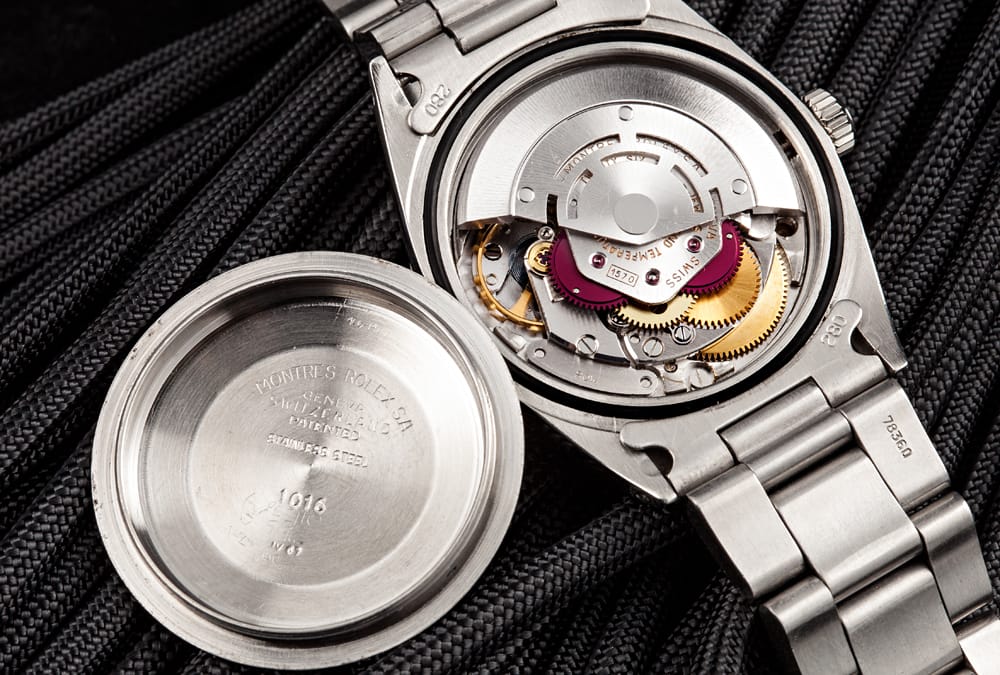
| 1570 / 1575 | Late 1950s–1980s | Submariner 5513, GMT-Master 1675, Datejust 1601, Explorer 1016 | ~48 hrs | 19,800 vph | Non-quickset date (1575); hacking added c. 1972 | 3035 |
| 3035 | 1977–1988 | Submariner 16800, Datejust 16013 | ~42 hrs | 28,800 vph | First high-beat Rolex with quickset date | 3135 |
| 3135 | 1988–c. 2018 | Submariner 16610/116610, Datejust 36, Sea-Dweller 16600, Yacht-Master | ~48 hrs | 28,800 vph | Instantaneous date, full balance bridge; Parachrom hairspring on later examples | 3235 |
| 3130 | 2001–2020 | Submariner 14060M/114060, Explorer 114270 | ~48 hrs | 28,800 vph | No-date 3135 architecture | 3230 |
| 3230 | 2020–present | Submariner 124060, Oyster Perpetual, Air-King 126900 | ~70 hrs | 28,800 vph | Chronergy escapement, no date | Current |
| 3235 | 2015–present | Submariner Date 126610, Datejust 41/36, Sea-Dweller 126600 | ~70 hrs | 28,800 vph | Chronergy escapement, instantaneous date | Current |
| 3185 / 3186 | 1999–2018 | GMT-Master II 16710/116710, Explorer II 16570/216570 | ~48 hrs | 28,800 vph | Independently adjustable local hour hand; Parachrom on the 3186 | 3285 |
| 3285 | 2018–present | GMT-Master II 126710, Explorer II 226570 | ~70 hrs | 28,800 vph | Chronergy + GMT complication | Current |
| 2235 / 2236 | 1999–present | Lady-Datejust, Datejust 31, Yacht-Master 37 | ~48 / ~55 hrs | 28,800 vph | Compact architecture; 2236 adds Syloxi silicon hairspring | Current |
| 4130 | 2000–2023 | Cosmograph Daytona 116500 series | ~72 hrs | 28,800 vph | Vertical clutch, column wheel, first fully in-house Rolex chronograph | 4131 |
| 4131 | 2023–present | Cosmograph Daytona 126500 series | ~72 hrs | 28,800 vph | Chronergy escapement, Paraflex, openworked rotor on precious-metal models | Current |
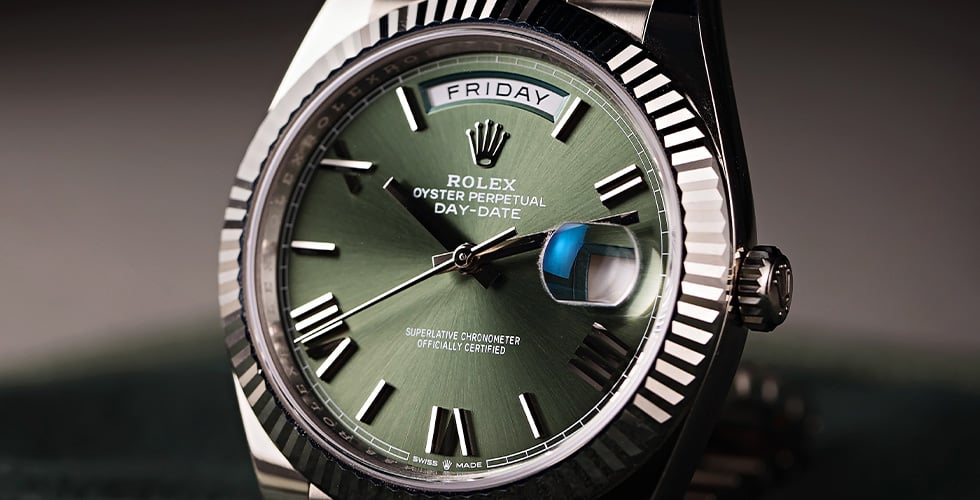
| 3255 | 2015–present | Day-Date 40/36 | ~70 hrs | 28,800 vph | Chronergy, instantaneous day and date | Current |
| 9001 | 2012–present | Sky-Dweller | ~72 hrs | 28,800 vph | Annual calendar (Saros system), Ring Command bezel interface | Current |
| 7135 | 2025–present | Land-Dweller | ~66 hrs | 36,000 vph (5 Hz) | Dynapulse sequential-distribution escapement, high-beat | Current |
Specs verified against Rolex’s published documentation at time of writing. Rolex revises calibers without announcement; where our bench observations differ from the printed spec, I say so in the caliber entries below.
How Accurate Is a Rolex, Really? What 58,000 Certified Watches Tell Us
Rolex publishes a specification: −2/+2 seconds per day, Superlative Chronometer, tested after casing. What nobody outside Geneva publishes is how these movements behave in the field, years or decades into their lives. We’re in a position to speak to that, because every watch we certify goes across a timegrapher before it’s listed, and our certification records now cover tens of thousands of Rolex watches sold between December 2015 and August 2026. No caliber database, no forum, no aggregator has handled these movements at that scale.
What that experience tells you as a buyer: a healthy 3135 that’s decades old still times inside chronometer tolerance as-received, and a 3235 in good order typically sits within the Superlative window even second-hand. When a watch we buy doesn’t, it goes to a watchmaker’s bench before it goes anywhere near our inventory.
“The −2/+2 number gets treated like marketing, but it’s real, and what impresses me after this many watches on my timegrapher is how long they hold it. I have seen a 3135 from the nineties, never serviced as far as I can tell, still running within four or five seconds a day. I don’t know of too many other watches that ages like that.”
Carol Altieri, COO at Bob’s Watches
The Calibers, One by One

What follows is the full reference, in rough chronological order. For each family: what it powers, what changed from its predecessor, and how it holds up on our bench.
Calibers 1570 & 1575: The Vintage Standard (Late 1950s – 1980s)
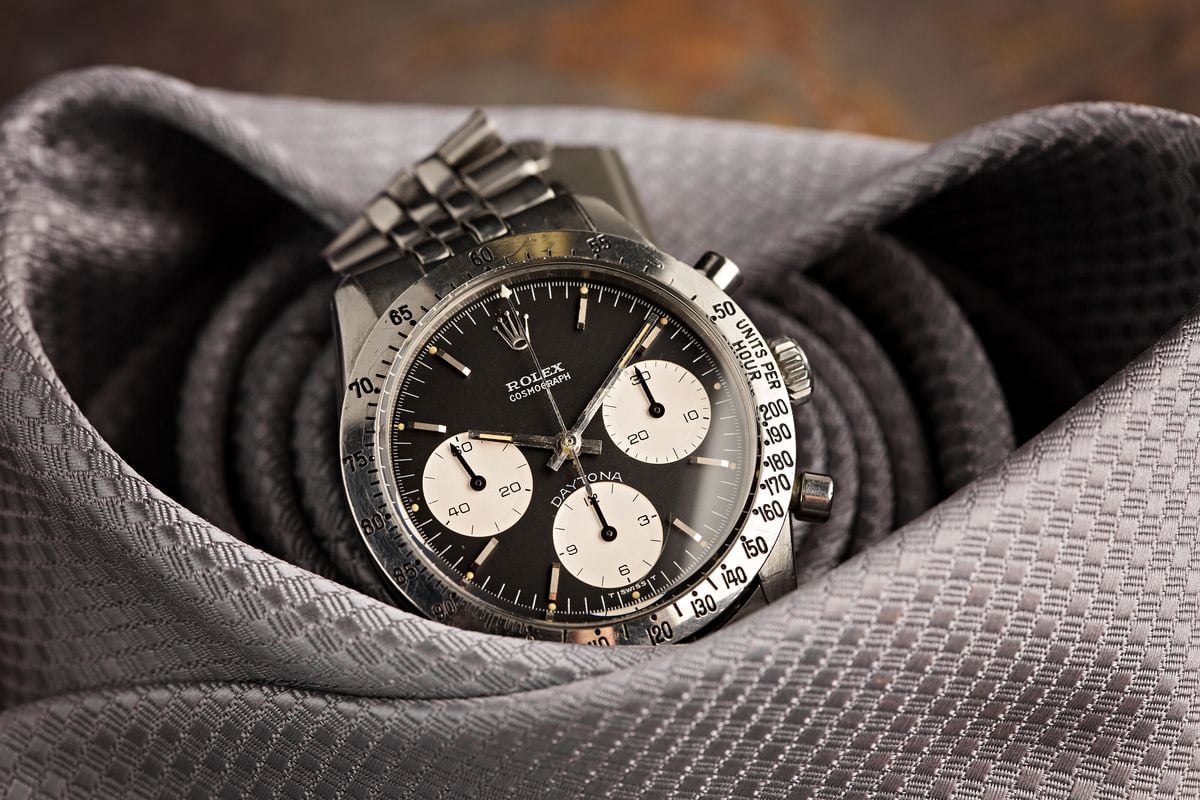
These are the movements that built Rolex’s tool-watch reputation, and they’re the reason I fell in love with vintage Rolex in the first place. In my opinion, the 1570 is the greatest tool-watch movement ever made, not the most advanced, but the most honest. The 1570 is the no-date version; the 1575 adds the date, non-quickset, so you set it by cycling the hands, which surprises first-time vintage buyers. Both run at 19,800 vph with roughly 48 hours of reserve, and hacking seconds arrived around 1972. You’ll find them in the Submariner 5513 collection, GMT-Master 1675, Explorer 1016, and Datejust 1601.
We’ve certified more than 3,600 watches from this era, and on our bench they are the most over-engineered movements Rolex ever made, Joe’s team has received 1570s that haven’t seen a watchmaker in many years and still run within chronometer tolerance. For owners, parts availability is the long-term question, not durability. Browse our vintage watch inventory to see what’s currently on hand.
Caliber 3035: The Bridge Generation (1977 – 1988)
I’ve always had a soft spot for the 3035, and I think the market undervalues the watches that carry it. It gets overlooked, but it introduced two things every modern Rolex owner takes for granted: the 28,800 vph high-beat rate and the quickset date. It powered transitional references like the Submariner 16800 and Datejust 16013, with a modest ~42-hour reserve. Across the 2,700-plus watches of this era we’ve handled, it’s a solid movement but the shortest-lived flagship caliber Rolex made, which is exactly why its successor mattered so much.
Caliber 3135: The Legend (1988 – 2018)
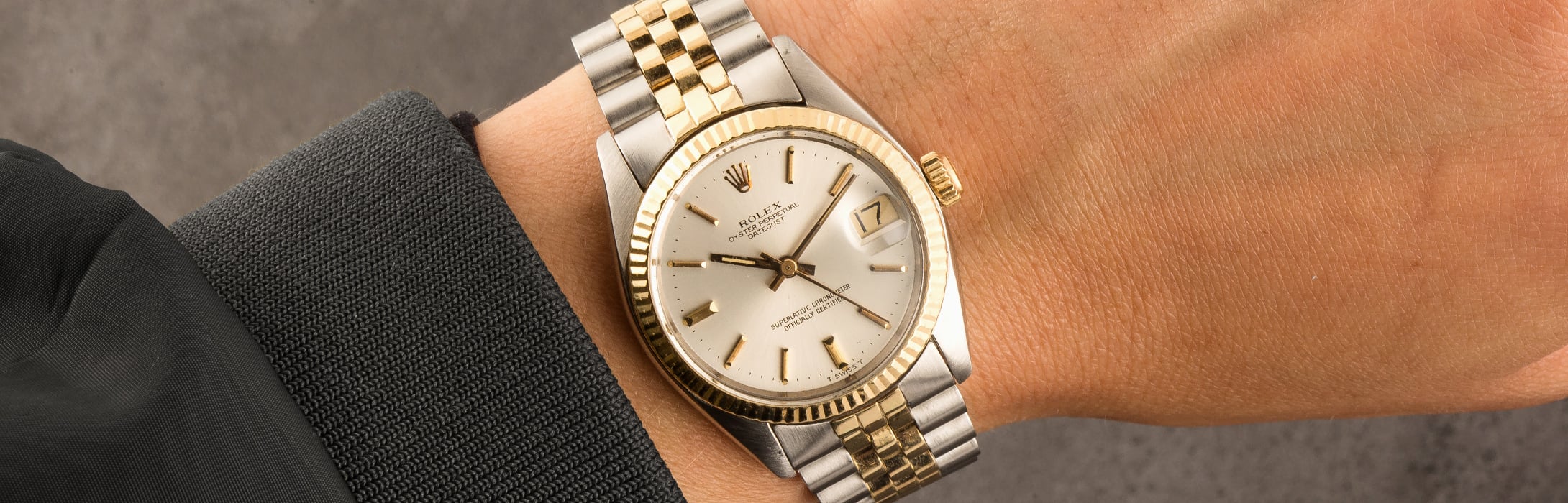
Let me just say it: the 3135 is my personal favorite Rolex movement, and if I could only recommend one caliber to a first-time pre-owned buyer, this is it. We have certified more than 13,700 watches carrying the 3135 and its close variants by far the largest share of everything we’ve ever sold, across three decades of the Submariner 16610 and 116610, Datejust, Sea-Dweller, and Yacht-Master line-up. Full balance bridge, instantaneous date, ~48-hour reserve, Parachrom hairspring on later examples. It’s the most serviceable, most parts-available, most predictable movement in our entire workflow; our watchmakers can practically assemble one blindfolded, and that institutional familiarity is worth something to you as an owner, services are straightforward and outcomes are consistent.
Calibers 3130 & 3230, and the 3235: The Current Workhorses
The 3130 (2001) was the no-date sibling of the 3135, powering the Submariner 14060M/114060 and Explorer we’ve handled more than 3,750 watches from this no-date family. In 2020 the 3230 replaced it, bringing the Chronergy escapement, Rolex’s skeletonized nickel-phosphorus escapement, about 15% more efficient, and a ~70-hour reserve to the no-date Submariner 124060, Oyster Perpetual, and Air-King.
The 3235 (introduced 2015 in the Datejust 41, now in the Submariner Date 126610 and Sea-Dweller 126600) is the date version and the highest-volume current Rolex movement. Chronergy escapement, optimized barrel, ~70 hours, Superlative Chronometer. With more than 4,750 already through our certification process, it’s the fastest-growing caliber in our records.
3230 vs 3235: Mechanically these are the same generation, same escapement, same reserve, same rate. The 3235 adds the instantaneous date module. Your choice isn’t really about the movement; it’s about whether you want a date on the dial. Neither has shown a durability edge on our bench. For what it’s worth, I like the no-date Submariner models, the cleaner dial suits the watch’s tool-diver origins, but that’s taste, not engineering.
3135 vs 3235: This is the comparison buyers actually agonize over, because it’s the old Submariner Date versus the new one. The 3235 wins on paper: 70 hours versus 48, a more efficient escapement, longer stated service intervals. The 3135 wins on track record, thirty years of proven, boring reliability and universal parts availability. Early 3235 production generated collector chatter about amplitude drop-off, and I address that honestly in Joe’s verdicts below rather than pretending the conversation doesn’t exist. My opinion, since you’re here for it: if you’re buying a watch to wear every day for the next twenty years, take the 3235 and enjoy the weekend-proof power reserve. If you’re buying a watch because the 16610 is the Submariner of your memory, and I get it, it’s mine too, the 3135 will not let you down. For the full breakdown, see our dedicated Rolex 3135 vs 3235 movement comparison.
Calibers 3185, 3186 & 3285: The Travelers
The 3185 (1999) and refined 3186 (2005, with Parachrom hairspring) gave the entire GMT-Master II collection its modern trick: an independently adjustable local hour hand, so you jump time zones without stopping the watch. The 3285 (2018) carried that into the Chronergy era with a ~70-hour reserve, powering the current GMT-Master II 126710 line and Explorer II 226570. Between the 3185/3186 generation and the 3285, we’ve certified more than 5,400 GMT-equipped watches. On the bench, GMT calibers see slightly more setting-mechanism wear than three-handers, frequent flyers actually use the complication, but both generations are robust. Personally, a GMT-Master II is the watch I reach for when I travel, in my opinion the independent hour hand is the single most useful complication Rolex makes, and the 3285’s 70-hour reserve means it’s still running when I get home.
Calibers 2235 & 2236: The Compact Family
Rolex’s smaller-cased watches, Lady-Datejust, Datejust 31, Yacht-Master 37, run the 2235 (1999) and its successor the 2236, which introduced the Syloxi silicon hairspring in 2014. We’ve certified more than thousands of them. Don’t read “ladies’ movement” as “lesser movement,” in my opinion these are the most underrated calibers Rolex makes. The 2235 holds chronometer tolerance just as stubbornly as the Caliber 3135. Carol has worn a 2235-powered Datejust for years, and I like that it’s never once given our bench a reason to open it.
Calibers 4130 & 4131: The Daytona’s Engine
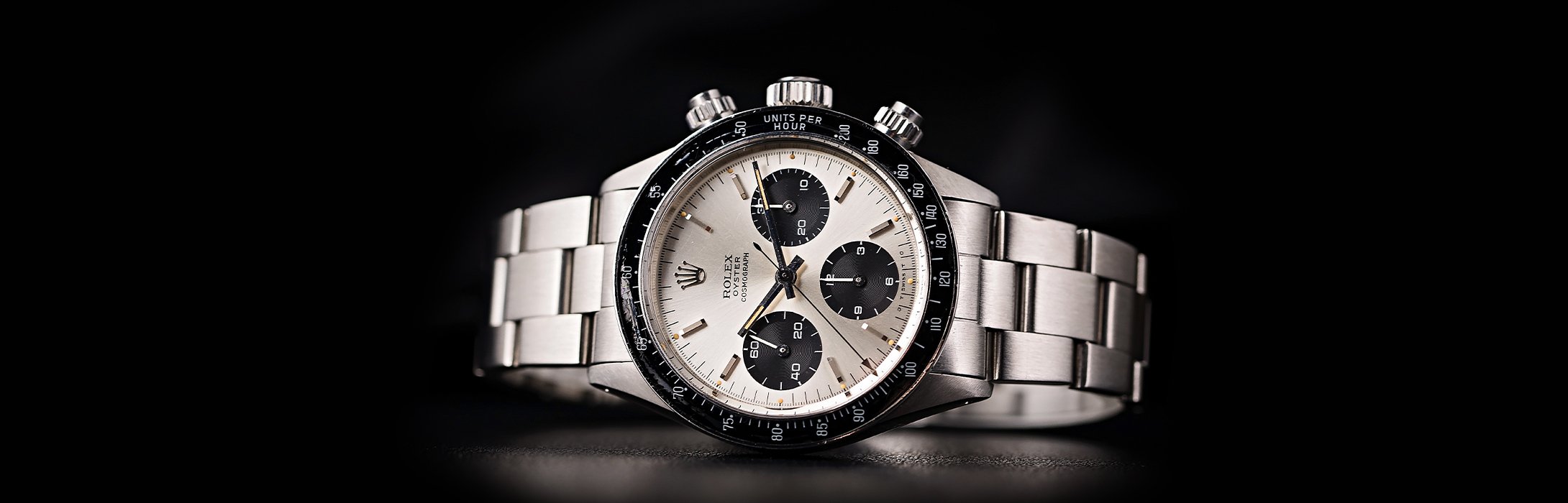
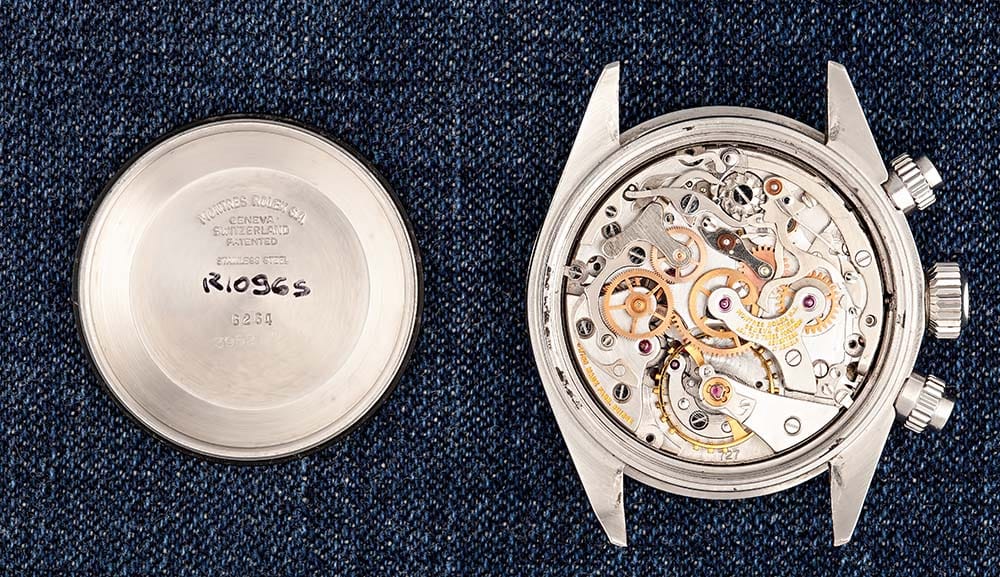
The 4130 (2000) was the watershed: Rolex’s first fully in-house automatic chronograph, replacing the Zenith El Primero-based 4030. Vertical clutch for a stutter-free chronograph start, column wheel, ~72-hour reserve, and fewer components than competing chronographs, which matters at service time. The 4131 (2023, current Daytona 126500 series) adds the Chronergy escapement and Paraflex. Having certified more than 2,200 Daytonas across both generations, I’ll say it plainly: in my opinion the 4130 is the most reliable automatic chronograph movement made by anyone, any brand, full stop. It’s also my pick for the single greatest engineering achievement in modern Rolex history, chronographs are hard, and Rolex made theirs boring in the best possible way.
Caliber 3255: The Day-Date’s Movement
Introduced in 2015 for the Day-Date, the 3255 does everything the 3235 does plus an instantaneous day change, both calendar displays snap over together at midnight. It carried 14 patents at launch and remains the flagship non-complicated caliber, and I’ll admit that dual midnight snap is my favorite party trick in the lineup; watch it happen once and you’ll understand. Its predecessor, the 3155, powered the 118xxx Day-Date generation, more than 1,000 of those have crossed our bench.
The 9001 and the New 7135: Where Rolex Is Headed
The 9001 (2012, Sky-Dweller) is among the most complex movements Rolex has made, an annual calendar driven by the Saros system, commanded through the rotating Ring Command bezel. Thus far, the complication has proven far more robust than its complexity suggests.
The 7135 (2025, Land-Dweller) signals the next era: a 5 Hz high-beat rate and the Dynapulse escapement, a sequential-distribution design that departs from the Swiss lever entirely. In my opinion, the Dynapulse is the most exciting thing Rolex has done mechanically since the 4130, a company famous for evolution just committed a genuine revolution. The first Land-Dwellers have only just begun reaching the secondary market, exactly five have crossed our desk so far. Here is the Rolex Land-Dweller review I wrote when we received our first one. Ask me again in five years whether the excitement was justified; I suspect it will be.
What is a Watch Movement? The Basics for Beginners
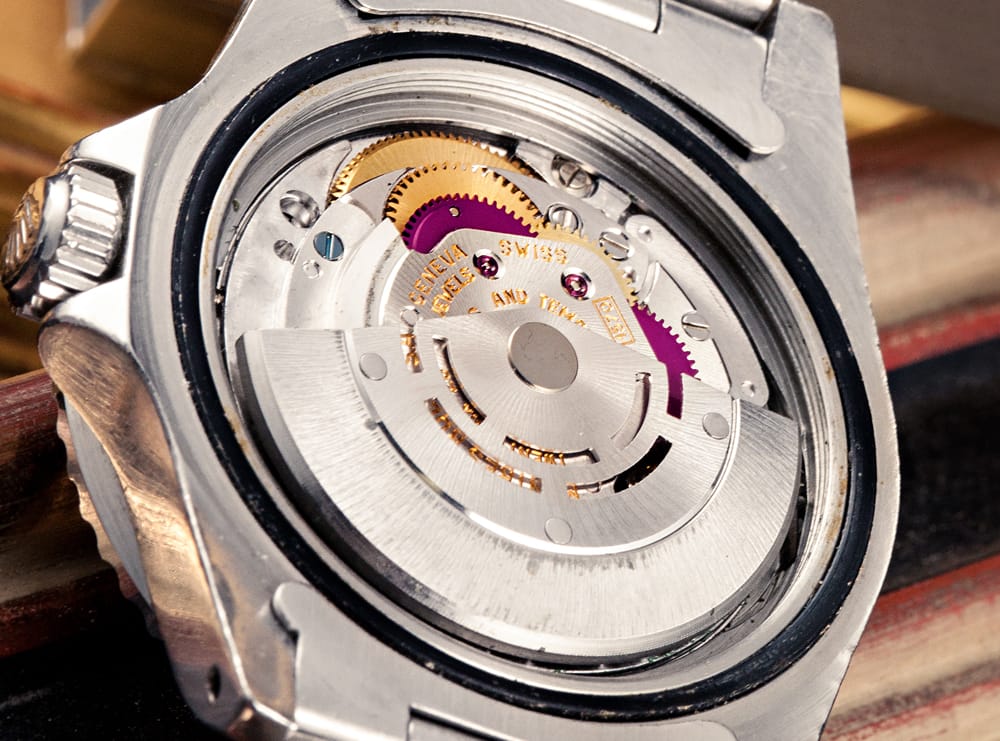
I like to think of a watch movement like a car engine. It’s the mechanical powerhouse that makes everything work. A mechanical movement consists of several key components working in perfect harmony: the mainspring acts as the power source (like a car’s fuel tank), the gear train transfers that energy throughout the watch, the escapement creates the familiar “ticking” sound while regulating energy release, and the balance wheel serves as the precision regulator that keeps time accurate.
A mechanical movement consists of four essential components:
- Mainspring: The coiled spring that stores and provides the power for the watch.
- Gear Train: A series of gears that transmits power from the mainspring to the escapement.
- Escapement: The “brain” of the movement that provides regular impulses to the balance wheel, creating the iconic “ticking” sound.
- Balance Wheel: The timekeeping element that oscillates back and forth, regulating the watch’s accuracy.

Modern Rolex watches exclusively use automatic movements, which means they wind themselves through the natural motion of your wrist. Unlike manual-wind movements that require daily winding, automatic movements feature a rotor that spins with wrist movement, continuously winding the mainspring.
The second-hand movement on a Rolex is distinctively smooth, sweeping eight times per second rather than the jerky tick of quartz watches. This smooth sweep is one of the hallmarks of a quality mechanical movement and a key identifier of an authentic Rolex.
A Compact History: Aegler, the ETA Question, and Going In-House
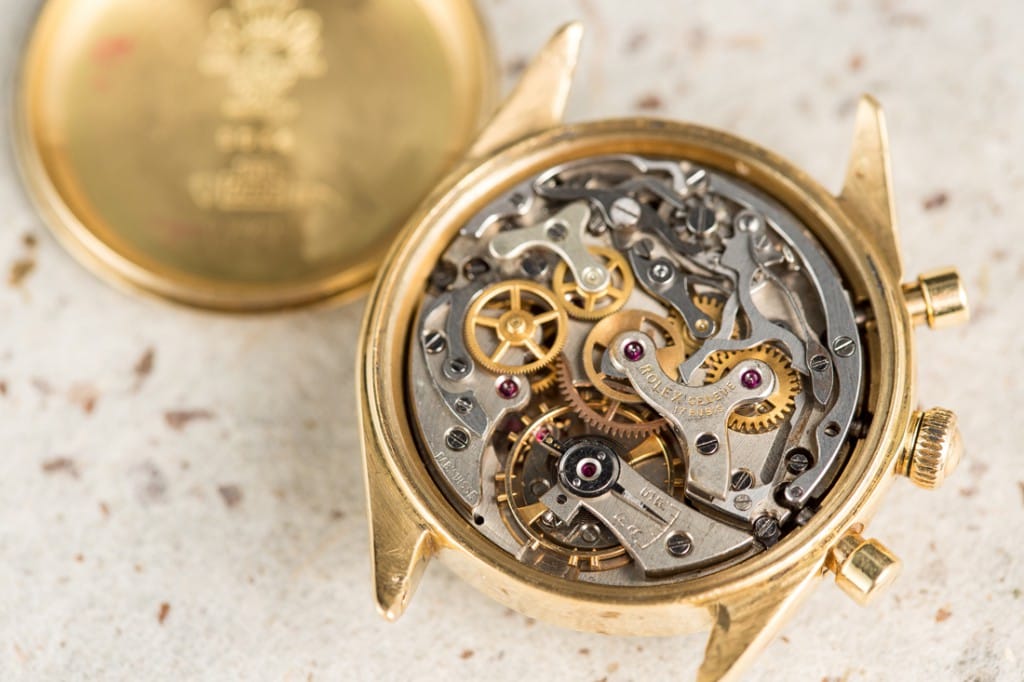
Rolex never made its early movements in Geneva, they came from Aegler in Bienne, Rolex’s movement partner from 1905, a relationship so close that Rolex formally absorbed the company in 2004 to become the fully integrated manufacture it is today. In my opinion, that patient, decades-long march to full vertical integration, rather than a splashy acquisition spree, is the single smartest strategic decision in the company’s history, and it’s why the movements in this article exist at all. Along the way: the 1931 patent on the self-winding Perpetual rotor that every automatic watch descends from, the 1945 Datejust’s automatic date, the 1956 Day-Date, and the steady evolution of chronometer certification that culminated in today’s in-house −2/+2 Superlative standard, tested after casing since 2015.
Rolex’s movement evolution follows these key milestones:
- 1931: Rolex patents the world’s first self-winding mechanism with a “Perpetual” rotor, setting the standard for all modern automatic watches.
- 1945: Introduction of Caliber 740 brings the first automatic date-changing complication in the Rolex Datejust.
- 1956: Launch of the Rolex Day-Date with simultaneous day and date complications.
- 2000: Rolex becomes a true manufacturer with the release of Caliber 4130, its first fully in-house automatic chronograph movement.
- 2015: Rolex begins rolling out the next-generation 32xx series, featuring the Chronergy escapement and 70-hour power reserve
The transition from externally-supplied movements to complete in-house manufacture marks the most significant chapter in this evolution. While the brand famously used Zenith’s “El Primero” chronograph movement for early Daytona models, Rolex’s development of the in-house Caliber 4130 marked their complete independence as a manufacturer. Our COO, Carol Altieri has final say over what we certify and sell, and she’s the reason this page exists in the form it does:
“Paul and I built this company on the idea that the pre-owned buyer deserves more information than the retail buyer gets, not less. Publishing our certification data is the same principle. If we examine and time every watch anyway, the customer should see what we see.”
Carol Altieri, Co-Founder & COO, Bob’s Watches
The Rolex Quartz Story: The Oysterquartz Exception

During the “Quartz Crisis” of the 1970s, when electronic watches threatened to destroy the mechanical watch industry, Rolex responded with characteristic precision and over-engineering. Rather than simply adopting standard quartz technology, Rolex developed the Caliber 5035 (Date) and 5055 (Day-Date) quartz movements.
These weren’t ordinary quartz movements. They were finished and regulated to standards far beyond typical electronic watches, housed in distinctive angular Oysterquartz cases that became icons of 1970s design. While Rolex eventually returned its focus to mechanical movements, the Oysterquartz period demonstrated the brand’s ability to excel in any technological direction they chose to pursue.
What Makes a Rolex Movement a “Superlative Chronometer”?

The “Superlative Chronometer” designation represents Rolex’s most stringent accuracy standard. While many Swiss watches earn “Chronometer” certification from COSC (the official Swiss chronometer testing institute), Rolex goes further by performing additional tests after the movement is cased.
Key technologies that enable this exceptional performance include:
- Parachrom Hairspring: A patented blue hairspring made from a niobium and zirconium alloy, offering superior resistance to magnetism, temperature variations, and shocks.
- Chronergy Escapement: Rolex’s optimized escapement that provides a 15% increase in energy efficiency, contributing to the 70-hour power reserve in 32xx series movements.
- Paraflex Shock Absorbers: The proprietary shock absorption system that increases a movement’s shock resistance by up to 50% compared to traditional systems.
These innovations work together to ensure Rolex movements maintain accuracy within negative 2 to positive 2 seconds per day, which is twice as precise as standard chronometer requirements.
The Future of Rolex Calibers: Engineering Excellence Continues
Rolex movements represent far more than mere timekeeping mechanisms. They embody the brand’s unwavering commitment to in-house production, constant innovation, and extreme reliability. From the pioneering Perpetual rotor of 1931 to today’s cutting-edge Chronergy escapement, each advancement builds upon decades of horological mastery.
I’ve always been a firm believer that the movement truly is the core of Rolex’s identity and the foundation of its reputation as a maker of “perpetual” timepieces. Understanding these mechanical marvels deepens appreciation for why Rolex continues to set the standard for luxury watchmaking excellence.
Whether you’re drawn to the proven reliability of a vintage Caliber 1570 or the advanced technology of a modern 3235, each Rolex movement tells a story of mechanical perfection. At Bob’s Watches, we understand that choosing the right Rolex means understanding what powers it.
Ready to experience this engineering firsthand? Browse our curated collection of pre-owned Rolex watches for sale and discover the movement that speaks to your passion for horological excellence.