For the majority of us the most shocking watch-world news to emerge in the past week might not be how Rolex now uses AI to help produce its iconic luxury watches; but the fact that the storied Swiss brand uses AI at all. The revelation came about courtesy of an extremely rare interview given by Rolex CEO Jean-Frédéric Dufour during Dubai Watch Week, offering insights we can all learn from.
At first, the idea of Rolex using AI might seem totally at odds with the brand’s core values: heritage, craftsmanship, and meticulous handwork. But when you consider that Rolex produces about one million watches per year, with a total retail value near $10 billion, it makes sense that the company would employ cutting-edge technology to ensure that every Submariner, Daytona, or GMT meets the brand’s exacting standards.
Where Rolex Actually Uses AI in Watchmaking
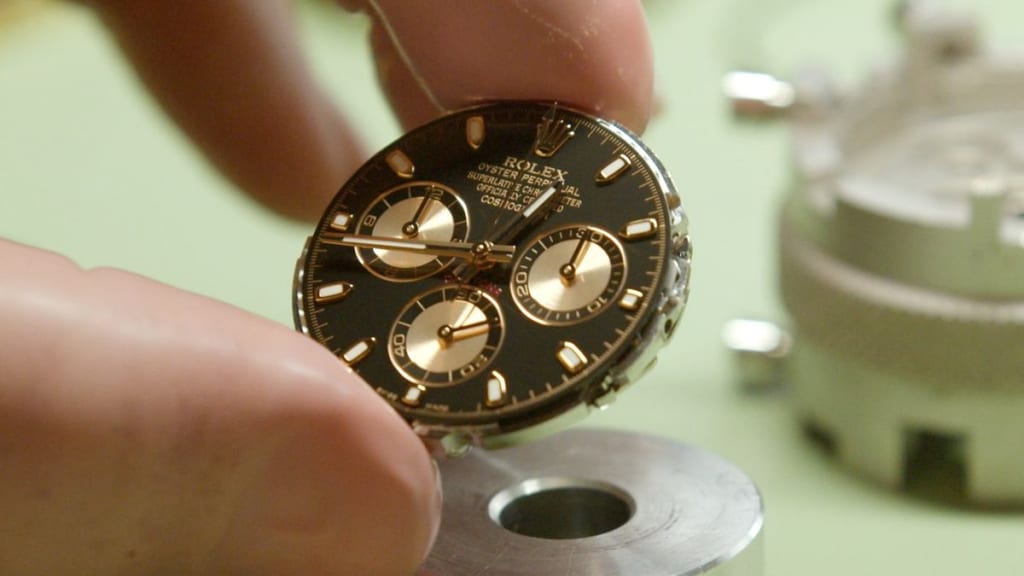
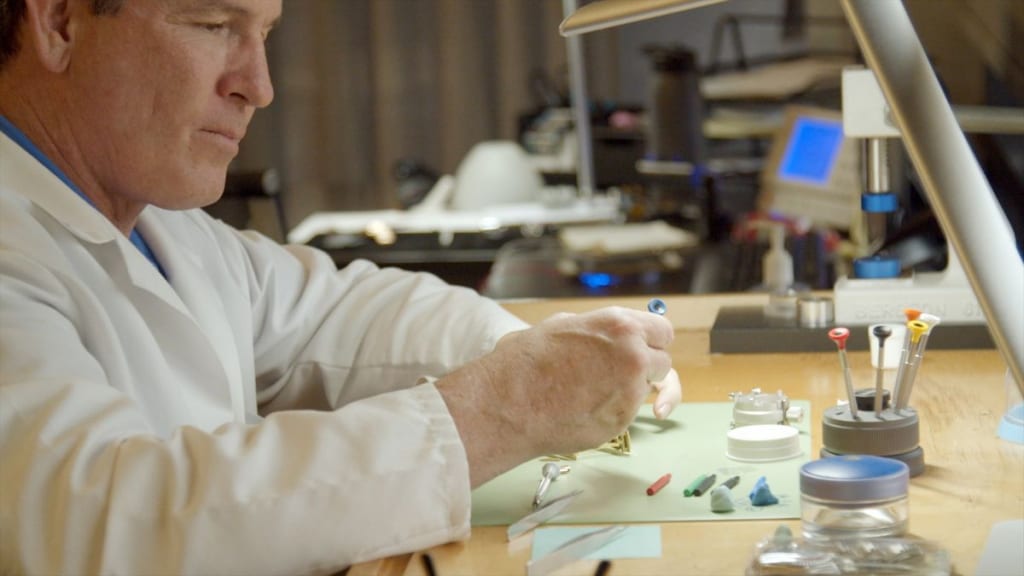
“We use AI for many aspects,” Dufour explained. “It helps you program the machines. It helps you maintain the machines. But we’re not using it when it comes to human interaction. If you call after-sales service, it won’t be AI answering. AI can also help with the final quality test. But you cannot replace human eyes with AI. We’re watchmakers. We can’t do everything using robots.”
While the history of Rolex is filled with innovation, it isn’t always a priority for the brand, the company isn’t focused on chasing the latest tech trends. Instead, it aims to advance mechanical watchmaking, improving capability, accuracy, and efficiency without losing the human touch. Dufour describes the process as a delicate balancing act.
Pushing Watchmaking Forward While Respecting Tradition
“Watchmaking is an industry that carries so much tradition that sometimes it can be hard to find a way forward,” he said in Dubai. “With the Land‑Dweller, we invented a new escapement, which hasn’t been done in Switzerland since 1999, in a watch that still has ties to the past. It’s a mix – taking some DNA of the brand and taking it somewhere new.”
There are certain innovations Rolex simply won’t pursue. “It’s very hard to invent a Rolex,” Dufour says. “You don’t want to make a square Rolex, or a ‘normal’ Rolex. It has to stay a Rolex. It’s a little like walking a tightrope between tradition and the future.” So, don’t expect a Rolex smartwatch anytime soon.
Competition, Talent, and the Future of Rolex
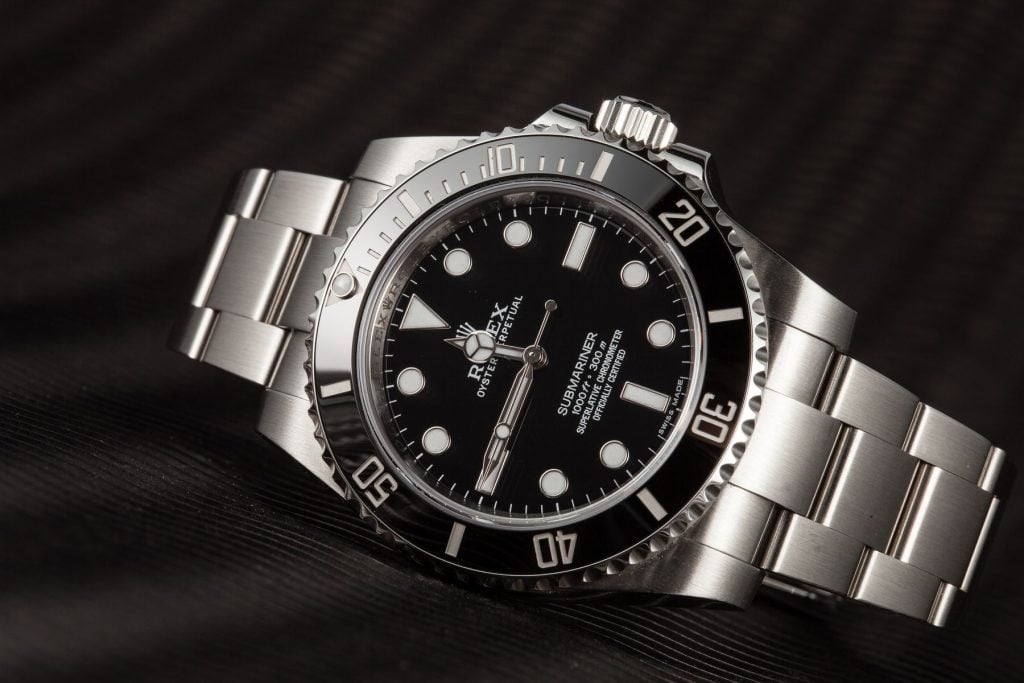
Dufour acknowledges that competition drives innovation. “[Independent brands] push us. We need young people to challenge the established players. An industry without newcomers is a dying one. We have 85 doctors in R&D and more than 2,000 engineers at Rolex, all at the highest level. To attract that talent, you must offer something inspiring.”
“They don’t want a boring industry – they want one that makes them dream about their future,” he continues. “A profession needs a certain sense of pride and excitement. At Rolex, we have more than 500 apprentices across 26 fields of expertise. Not all of them will stay with us forever; some will move to other brands. That’s fine. It’s an investment in the future.” A stint at Rolex, of course, remains a golden ticket in the industry.
Why Watchmaking Will Always Be Part Art, Part Mystery

“It’s hard to explain why people love watches,” Dufour sums up. “We don’t have the kind of studies you see in industries like food. You can’t ask someone on the street, ‘Should this watch have a white, black, or blue dial?’ We are driving on a highway at 200 kilometers an hour in the fog. That’s what makes our industry so complex – and so fascinating.”
The Takeaway: Technology in Service of Tradition

What the brand shows here isn’t a shift away from traditional Rolex watchmaking, but a refinement of it. AI is treated as a tool, not a replacement, used to support precision, consistency, and quality at a scale few brands operate at. The craft still lives in the hands and eyes of watchmakers, where judgment and experience matter most. In that sense, Rolex’s approach feels very on brand, cautious, deliberate, and focused on protecting what makes its watches timeless while quietly preparing for what comes next.