Choosing between the Rolex Submariner and the Tudor Black Bay often comes down to a choice between the world’s most iconic luxury status symbol and the best value-driven enthusiast diver on the market. While the Submariner offers unparalleled prestige and the industry-standard Glidelock clasp, the Black Bay provides vintage-inspired aesthetics, METAS-certified movements, and a significantly more accessible price point. This guide compares their technical specs, on-wrist feel, and long-term value to help you decide which diver deserves a spot in your collection.
Key Takeaways:
- Movement: Rolex uses the COSC-certified Caliber 3230/3235, while newer Black Bays feature METAS-certified Master Chronometer movements.
- Materials: Rolex features 904L steel and ceramic (Cerachrom) bezels. Most Black Bays use 316L steel and traditional aluminum bezel inserts.
- Price: A pre-owned Submariner typically commands 2 to 4 times the price of a pre-owned Black Bay, and that gap has widened over the past decade.
- Dimensions: The Submariner is strictly 41mm, whereas the Black Bay offers 37mm (BB54), 39mm (BB58), and 41mm (Monochrome) options.
Whether you are a first-time buyer looking for a one-watch collection or a seasoned enthusiast debating the “Submariner killer” title of the new Monochrome, the nuances matter. Let’s break down the history, the hardware, and the heritage that define these two titans of the sea.
The Shared DNA of Rolex and Tudor Divers

The story of the Submariner and the Black Bay begins with the same man. Hans Wilsdorf, the founder of Rolex, created Tudor in 1926 with a clear mission: offer Rolex-level reliability and build quality at a more accessible price. For decades, Tudor divers used Rolex-signed crowns, cases, and even bracelets. Vintage Tudor Submariners from the 1960s and 1970s are a testament to this shared lineage, often wearing Rolex cases with Tudor-signed dials and movements sourced from third-party makers like ETA.
That relationship began to shift in the 2010s. When Tudor launched the Heritage Black Bay in 2012, it marked the beginning of a new chapter. Rather than simply rebadging Rolex components, Tudor leaned into its own identity, drawing design cues from its archived dive watches while developing in-house movements through its partnership with Kenissi. Today, the two brands share a parent company but occupy very different positions in the market, and the Black Bay has evolved from a budget alternative into a legitimate rival.
Submariner vs. Black Bay: Technical Comparison

Before getting into the finer design details, it helps to see how these luxury watches stack up on paper. Below is a head-to-head comparison of the current no-date Submariner (Ref. 124060) and the Tudor Black Bay Monochrome (Ref. 7941A1A0NU), the two models that invite the most direct comparison.
| Feature | Rolex Submariner (124060) | Tudor Black Bay Mono. |
| Case Diameter | 41mm | 41mm |
| Case Thickness | 13mm | 13.6mm |
| Lug-to-Lug | 48mm | 50mm |
| Water Resistance | 300m (1,000 ft) | 200m (660 ft) |
| Bezel Material | Ceramic (Cerachrom) | Aluminum |
| Movement | Cal. 3230 (COSC) | Cal. MT5602-U (COSC + METAS) |
| Power Reserve | Approx. 70 hours | Approx. 70 hours |
| Clasp Type | Glidelock | T-Fit |
| Case Material | 904L Oystersteel | 316L Stainless Steel |
| Retail Price | ~$10,050 | ~$4,425 to $4,550 |
A few things stand out. The power reserves are effectively identical, and Tudor’s METAS certification actually exceeds the testing standards of COSC alone. However, the Submariner takes the edge in water resistance and uses Rolex’s proprietary 904L steel, a harder, more corrosion-resistant alloy than the industry-standard 316L found in most Tudor models. These differences are small on paper, but they add up to a different experience on the wrist.
Comparing the Visual Identity
Both of these watches are unmistakably dive watches, but their design philosophies pull in different directions. The Submariner is a study in modern refinement, with sharp lines, polished surfaces, and a ceramic bezel that looks the same on day one as it will ten years later. The Black Bay, by contrast, leans into its vintage roots, using materials and shapes that develop character over time. Understanding these differences is key to choosing between them.
The Bezel: Ceramic vs. Aluminum
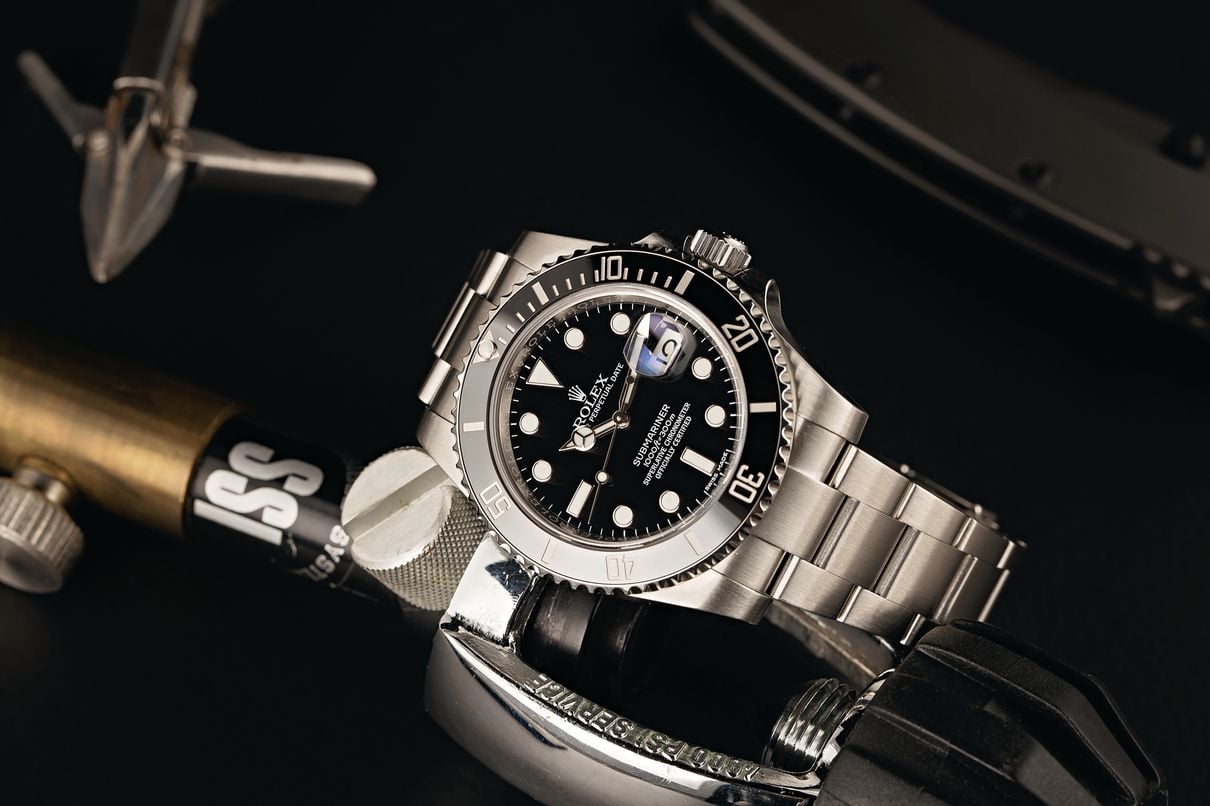
The bezel is one of the most visible and important differences between these two watches. Rolex uses its proprietary Cerachrom ceramic insert, which is virtually scratch-proof and resistant to UV fading. The color is molded into the ceramic itself, so it will not fade, chip, or lose its luster. The result is a bezel that looks crisp and glossy for the life of the watch.
Tudor’s Black Bay lineup primarily uses anodized aluminum bezel inserts. Aluminum has a matte, understated look that many enthusiasts prefer for its vintage watch feel. Over time, an aluminum bezel can develop a subtle fade or patina, which some collectors view as a positive. It is a softer material, though, and more prone to scratches and dings. For buyers who value the “tool watch” aesthetic and enjoy the way a watch ages, aluminum wins. For those who want a bezel that stays factory-fresh, ceramic is the clear choice.
The Dial and Hands: Mercedes vs. Snowflake

The hand shapes on these two watches are among the easiest ways to tell them apart. Rolex uses its signature Mercedes hour hands, a design that dates back to the 1950s and has become one of the most recognized elements in all of watchmaking. The hour markers are simple geometric shapes, triangles, circles, and rectangles, all filled with Chromalight luminescent material that glows blue in the dark.
Tudor’s Black Bay features the Snowflake hour hand, a bold, angular design borrowed from Tudor’s military-issued dive watches of the 1970s. It is a polarizing shape. Some collectors love its distinctiveness, while others find it too chunky. The markers and hands are filled with Super-LumiNova, which typically glows green. Both lume systems are effective, though Rolex’s Chromalight is widely regarded as having a longer glow duration. In everyday use, both are more than adequate.
Case Profiles and Wearability

The Submariner’s case has been refined over decades to achieve a slim, tapered profile. At 13mm thick, with gently curved lugs, it sits close to the wrist and slides easily under a shirt cuff. The overall silhouette is compact and balanced for a 41mm watch.
The Black Bay Monochrome, at 13.6mm, is slightly thicker, and its case shape has historically been one of the most discussed topics in online watch communities. Earlier generations of the 41mm Black Bay were notably thick, pushing close to 15mm, which gave them a “slab-sided” appearance that drew criticism. Tudor addressed this with the third-generation redesign, trimming the thickness and reshaping the flanks for a more tapered look. The improvement is significant, but the Submariner still wears a touch more refined on the wrist. For buyers with smaller wrists, the Black Bay 58 (39mm, 11.9mm thick) may be the better fit.
On-the-Fly Adjustment: Rolex Glidelock vs. Tudor T-Fit
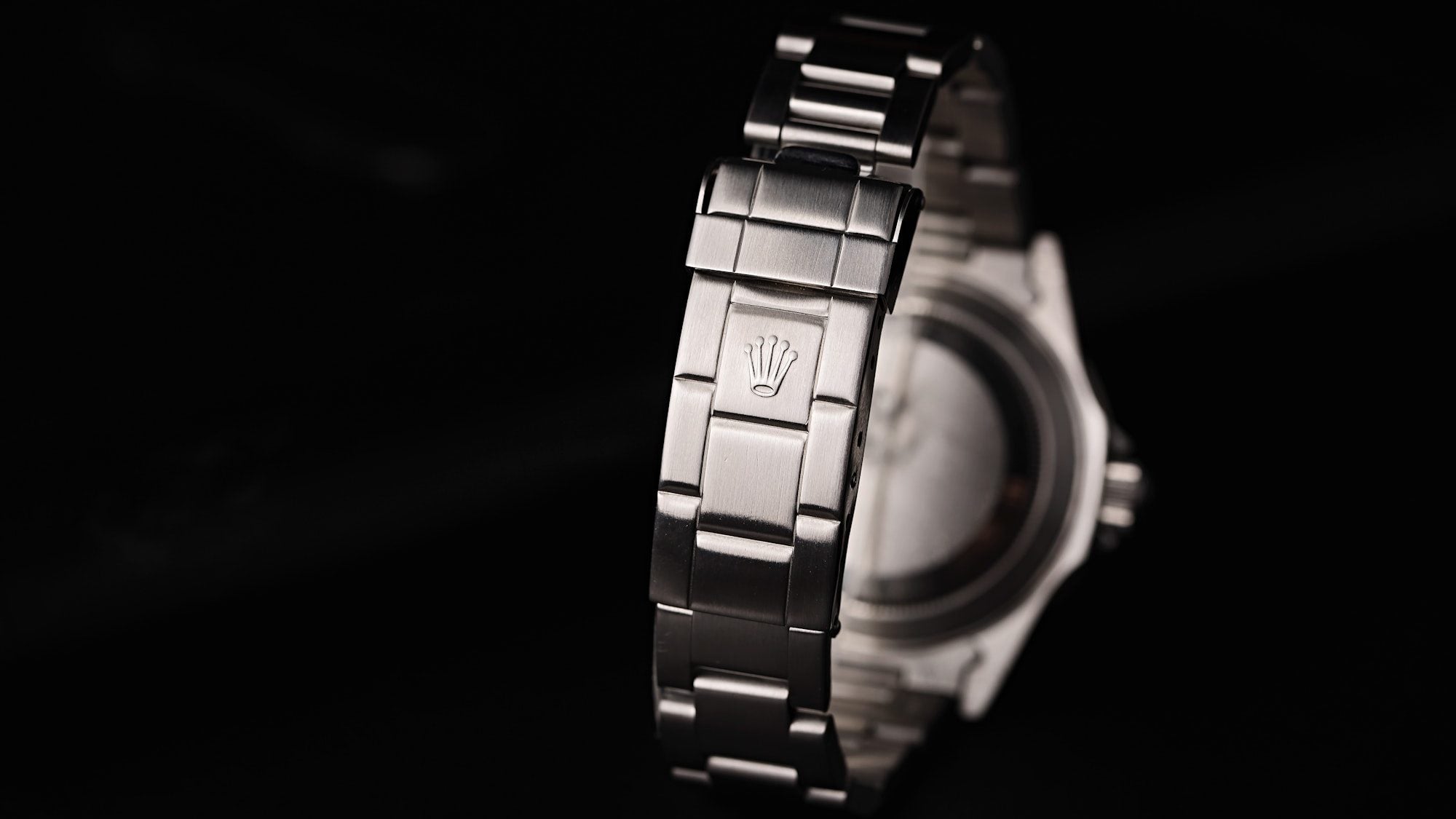
For a dive watch, bracelet adjustability is not just a convenience feature. It is essential. Wet suits expand and contract, and a good clasp system lets you fine-tune the fit without removing the watch. Both Rolex and Tudor have developed proprietary solutions, and this is a category where both brands genuinely excel.
The Rolex Glidelock system has been the gold standard for on-the-fly bracelet adjustment since its introduction. Built into the clasp, it allows the wearer to extend or shorten the bracelet in 2mm increments, across a total range of about 20mm. The mechanism is entirely tool-free and operates with a simple slide. It is precise, robust, and nearly invisible when closed. For many collectors, the Glidelock alone justifies the Submariner’s price premium.
Tudor’s T-Fit clasp is a more recent development and has closed the gap considerably. It offers approximately 8mm of rapid adjustment across five positions, activated by pressing a small button on the side of the clasp. While it does not match the Glidelock’s total range or granularity, the T-Fit is smooth, intuitive, and more than sufficient for daily wear. It has quickly become one of Tudor’s most praised features and is now standard across the updated Black Bay lineup. For most wearers who are not regularly switching between a wet suit and bare wrist, the T-Fit delivers everything they need.
Which Version is Right for You?
The Black Bay lineup spans several sizes and configurations, each of which competes with the Submariner in a slightly different way. Understanding these matchups can help narrow down your decision.
Black Bay 58 vs. Submariner

The Black Bay 58 is the model that first earned Tudor serious respect in the enthusiast community. At 39mm and just 11.9mm thick, it wears like a vintage Submariner from the 1960s, with proportions that suit a wide range of wrist sizes. It is powered by the Caliber MT5402 (or the newer METAS-certified MT5400-U in the latest versions), offering 70 hours of power reserve and COSC certification.
Compared to the 41mm Submariner, the BB58 is a noticeably smaller and lighter watch. It is an excellent choice for buyers who prefer the proportions of classic dive watches but want modern reliability. The trade-off is water resistance (200m vs. 300m) and the aluminum bezel, which lacks the scratch resistance of Rolex’s ceramic. At roughly $3,475 to $4,625 depending on configuration, the BB58 offers a compelling package at less than half the Submariner’s retail price.
Black Bay 54 vs. Submariner

The Black Bay 54 is Tudor’s smallest rotating-bezel diver at 37mm. It draws inspiration from Tudor’s 1954 Oyster Prince Submariner, the brand’s very first purpose-built dive watch. For buyers who find even 39mm too large, or who appreciate the dimensions of mid-century tool watches, the BB54 occupies a niche that Rolex simply does not serve with any current model.
The comparison with the 41mm Submariner is less direct here. These watches target different wearers with different priorities. The BB54 is a small-wristed collector’s dream, and at a retail price around $4,350, it offers serious value. But it is not trying to be a Submariner alternative so much as a tribute to the era that inspired the Submariner in the first place.
Black Bay Monochrome vs. Submariner
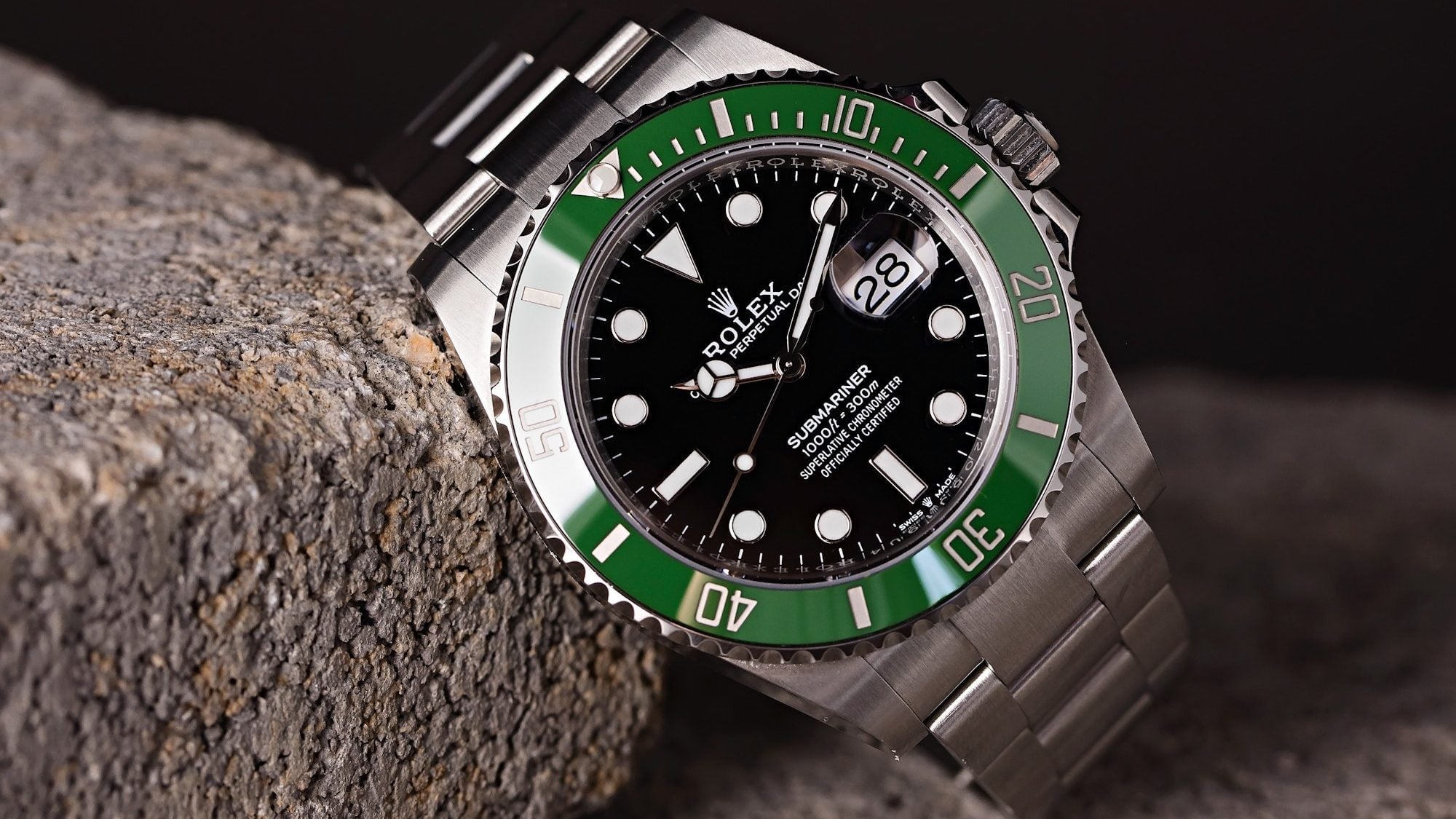
This is the most direct comparison in the current lineup. The Black Bay Monochrome matches the Submariner’s 41mm case size and strips away the vintage gilt details that defined earlier Black Bays. The result is a clean, modern dive watch with a black dial, black aluminum bezel, and rhodium-plated markers. It looks less like a heritage piece and more like a contemporary tool watch.
With its METAS-certified MT5602-U movement, T-Fit clasp, and a price tag under $4,550, the Monochrome offers a remarkable amount of watch for the money. The Submariner still edges it out in finishing, materials, and water resistance, but the gap has never been narrower. For buyers who want the aesthetic of a modern black diver without paying the Rolex premium, the Monochrome is the strongest contender Tudor has ever produced.
Long-Term Value: Is the “Rolex Tax” Worth It?
One of the most common questions buyers ask is whether the Submariner’s higher price translates to better long-term value. Rather than speculate, we looked at our own transaction data at Bob’s Watches, spanning thousands of Submariner and Black Bay sales from 2014 through 2025. The numbers tell a clear and detailed story.
The Widening Price Gap

In 2015, the average pre-owned Submariner sold for $7,929 at Bob’s Watches, while the average Black Bay sold for $3,036. That put the Submariner at roughly 2.6 times the price of a Black Bay. By 2025, the Submariner’s average sale price had climbed to $15,618, while the Black Bay held steady at $3,836. The ratio has expanded to approximately 4.1 to 1.
That widening gap reflects two different market dynamics. The Submariner has benefited from Rolex’s tightly controlled production and enormous global demand, which consistently push pre-owned prices upward. The Black Bay, on the other hand, has remained accessible, with average prices moving within a stable band of roughly $3,000 to $4,300 over the past decade. For a buyer evaluating long-term appreciation, the Submariner has clearly been the stronger performer. For a buyer looking for a stable, low-risk entry into luxury watches, the Black Bay’s consistency is its own kind of strength.
Here is how average pre-owned prices have compared year over year at Bob’s Watches:
| Year | Submariner Avg. Price | Black Bay Avg. Price |
| 2015 | $7,929 | $3,036 |
| 2017 | $8,141 | $3,393 |
| 2019 | $10,652 | $3,361 |
| 2021 | $15,153 | $3,883 |
| 2022 | $16,143 | $4,347 |
| 2023 | $15,023 | $3,602 |
| 2025 | $15,618 | $3,836 |
The Submariner Date Hype Cycle: A Case Study

The Submariner Date (Ref. 116610) provides one of the clearest examples of the Rolex market’s volatility. Based on Bob’s Watches transaction data, the 116610 averaged $7,456 in 2015. Prices climbed steadily through 2019 and 2020 as demand surged during the luxury watch boom. By 2022, the 116610 hit a peak average of $19,346, more than double its price just three years earlier.
Since that peak, prices have corrected. The 116610 averaged $15,710 in 2025, settling into a range that is still more than double its 2015 value but well off the speculative highs of 2022. This pattern is important for buyers to understand. The Submariner can be a strong financial asset, but it is not immune to market cycles. Buyers who purchased near the 2022 peak paid a premium that the market has since corrected.
| Year | 116610 Avg. Price |
| 2015 | $7,456 |
| 2018 | $9,349 |
| 2020 | $13,166 |
| 2022 | $19,346 |
| 2023 | $17,779 |
| 2025 | $15,710 |
Tudor’s Stability: The Safer Entry Point

While the Submariner’s price chart resembles a growth stock with periodic corrections, the Black Bay’s pricing looks more like a savings bond. Average sale prices have hovered between $3,000 and $4,400 for the entire period covered by our data. The Black Bay saw a modest uptick during the 2021 and 2022 watch boom, peaking at an average of $4,347 in 2022, but it quickly returned to its long-term range.
This stability makes the Black Bay a lower-risk purchase. A buyer who paid $3,500 for a Black Bay in 2019 could sell it in 2025 for a similar amount. That is not the case for many watches in this price bracket, where depreciation of 20% to 40% within the first few years is common. For buyers who prioritize wearing and enjoying their watch over tracking its resale value, the Black Bay’s steady pricing removes much of the financial anxiety associated with a luxury purchase.
Market Popularity: The Black Bay’s Rise

The sales volume data tells its own story about where collector interest is heading. Over the past decade, pre-owned Black Bay volume at Bob’s Watches has grown by nearly 50 times, far outpacing the Submariner’s roughly fourfold increase over the same period.
The Black Bay’s volume growth rate far outpaces the Submariner’s, signaling that it has moved from a niche enthusiast choice to a mainstream luxury diver. The “Submariner vs. Black Bay” debate is more relevant today than it has ever been, because more collectors are actively choosing between the two than at any previous point in either watch’s history.
Final Verdict: Rolex Submariner vs. Tudor Black Bay
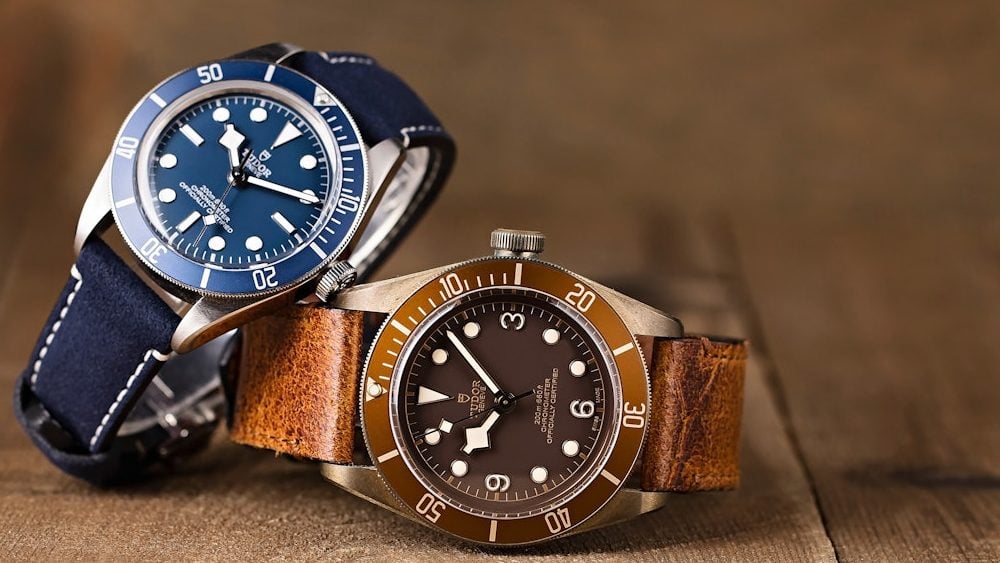
When deciding between these two watches, the choice usually hinges on your relationship with horological history and your budget. The Tudor Black Bay is the more adventurous choice, offering various sizes and a tool-watch feel that connects to the mid-century origins of dive watchmaking. The Rolex Submariner remains the definitive dive watch, offering a level of refinement, brand recognition, and engineering that is difficult to match at any price.
At Bob’s Watches, we see both of these models as essential cornerstones of a modern collection. If you are ready to add the definitive diver to your wrist, explore our current selection of certified pre-owned Rolex watches to find the Submariner that fits your collection. And if the Black Bay’s blend of heritage and value speaks to you, our growing inventory of Tudor timepieces offers plenty to discover. Whichever you choose, you are getting one of the finest dive watches ever made.