Emblematic of racing watches, a tachymeter can be found on many of the world’s most famous luxury timepieces, but what exactly is a tachymeter and most importantly, how do you use one? In the most simple of terms, a tachymeter is a scale found on the dial or bezel of a chronograph watch that allows users to measure average speed based on travel time, or distance based on average speed. However, while speed and distance are the two metrics most frequently associated with tachymeter watches, the core premise of a tachymeter is simply to convert seconds into units per hour, and a tachymeter can therefore be used to calculate the rate of virtually any event that corresponds with the graduation of its scale.
About Tachymeter Watches

The concept of a tachymeter pre-dates the proliferation of the wristwatch itself, but all the way up until 1957, tachymeter scales exclusively appeared on the dials of watches. Early chronograph wristwatches from Longines can be found with tachymeter scales surrounding the outer perimeter of their dials, while Heuer (now known as TAG Heuer) is often credited with popularizing the tachymeter through its high-profile racing chronographs. However, modern tachymeter watches typically tend to feature their tachymeter scales on their bezels, and this shift in placement can trace its origins back to the 1957 launch of the Omega Speedmaster.
The traditional location for a tachymeter is along the outermost perimeter of the dial, but when the Omega Speedmaster debuted in 1957, it relocated its tachymeter to its bezel in order to maximize the legibility of its display. Rather than being printed along the periphery of its dial, the Speedmaster’s tachymeter scale was engraved on its external bezel, and this defining feature was eventually adopted by countless other watch brands. For example, early Rolex chronographs like the “Pre-Daytona” have tachymeter scales on their dials, but when the Rolex Daytona formally launched in 1963, its tachymeter appeared on its bezel, and a tachymeter bezel is now regarded as one of the defining elements of Rolex’s iconic chronograph.
Tachymeter Units & Measurements

The beauty of a tachymeter is that it isn’t tied to a single unit of measurement, and this is precisely why the Rolex Daytona bezel says “Units per Hour” instead of specifying miles or kilometers. Simply put, if it takes one minute to go one unit of measurement, then your average speed is 60 units per hour, regardless of whether you are measuring it in miles, kilometers, or any other unit of distance.
Below is a quick-reference chart that shows the times to complete one unit of distance and the corresponding average speeds for those times.
| Time for One Unit of Distance | Average Speed |
| 60 seconds | 60 units per hour |
| 45 seconds | 80 units per hour |
| 40 seconds | 90 units per hour |
| 30 seconds | 120 units per hour |
| 20 seconds | 180 units per hour |
| 15 seconds | 240 units per hour |
As you can see from the chart above, elapsed time and average speed are inversely related, and halving the time it takes to complete one unit of distance will result in an average speed that is twice the previous value. Logically, this inverted relationship makes perfect sense, and if you double your speed, you will complete a mile (or kilometer) in half the time.
How a Tachymeter Works
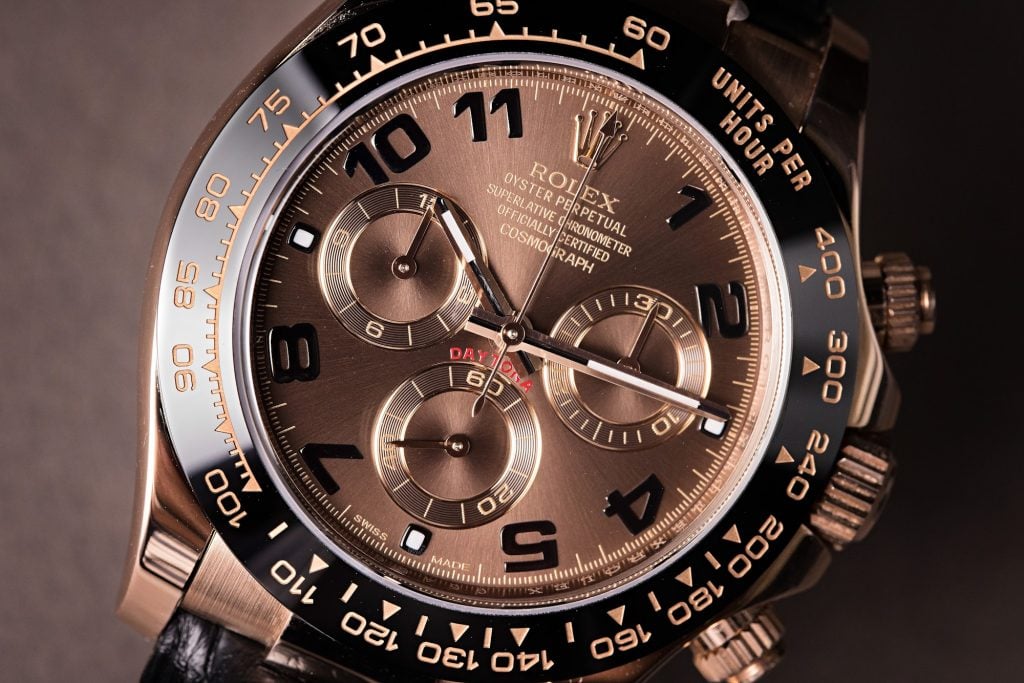
Unlike a diver’s bezel that is specifically designed to rotate, a tachymeter needs to be fixed, and this is exactly why you will see tachymeter scales on both the dials and bezels of watches. A tachymeter works by converting seconds into units per hour, and in addition to requiring the scale be a fixed reference point, a tachymeter also relies on the stopwatch functionality of a chronograph, specifically its ability to start and stop the seconds hand.
Units per hour values are derived from the tachymeter scale itself, but the ability to accurately measure elapsed seconds is a crucial part of a tachymeter’s ability to convert those seconds into their corresponding units per hour values. The mathematical principal that serves as the foundation for all tachymeter watches is that there are 3,600 seconds in one hour, and by measuring how many seconds it takes to perform a task, you can calculate the average rate of any event, regardless of whether it is the speed of a car, the output of a machine, or even how quickly someone consumes hot dogs at the annual Fourth of July eating contest — provided that whatever you are measuring occurs at a constant rate.
Since a tachymeter converts seconds into units per hour by extrapolating the measured value across the 3,600 seconds, it assumes the rate is entirely constant, and it is therefore only able to provide users with an average for whatever rate they are measuring. Unless the event occurs at a constant rate (such as a machine stamping out coins or liquid flowing out of a pipe), the values produced by a tachymeter will simply be reflective of the average; however, this is still sufficient for most day-to-day applications.
How to Measure Speed & Distance with a Tachymeter
Tachymeter scales are most commonly used to calculate average speed, but a tachymeter can also be used to measure distance when you already have a way of tracking your speed.
How to Use a Tachymeter to Measure Average Speed
- Start the chronograph at the beginning of a distance marker.
- Stop the chronograph at the second distance marker, or when you have traveled one unit of the given distance.
- Reference the position of the seconds hand relative to the tachymeter scale.
- The value indicated by the seconds hand will correspond with your average speed (i.e. if it takes 30 seconds to go one mile, then the average speed is 120 miles per hour).
How to Use a Tachymeter to Measure Distance
- Select an average speed that appears as one of the numerals on the tachymeter scale and maintain that constant speed for the entire duration of the measurement.
- Start the chronograph to begin measuring one unit of distance (the unit of measurement will correspond with the units of your speed).
- Stop the chronograph when the seconds hand reaches your designated speed on the tachymeter scale.
- The physical distance traveled during that time will equal with one unit of your distance measurement (i.e. if you are going 120 miles per hour and stop the chronograph when the seconds hand reaches the 120 marking on the tachymeter scale, the distance you will have traveled during that time will be one mile).
Tachymeter vs. Other Watch Bezels
While you can use a tachymeter to measure units of distance, its primary function is for calculating average speed, and tachymeter scales are always fixed on their respective watches, regardless of whether they appear on the dial or bezel. Below are some of the different watch bezels most commonly confused with tachymeter bezels.
Telemeter Bezel

Unlike a tachymeter that is primarily used for measuring average speed, a telemeter bezel measures the distance of an event that is both visible and audible (such as thunder/lightning or artillery fire). Similar to a tachymeter, users start the chronograph when they see the event, and then stop it when they hear the event, with the seconds hand of the chronograph indicating the corresponding distance against the telemeter scale.
Pulsometer Bezel
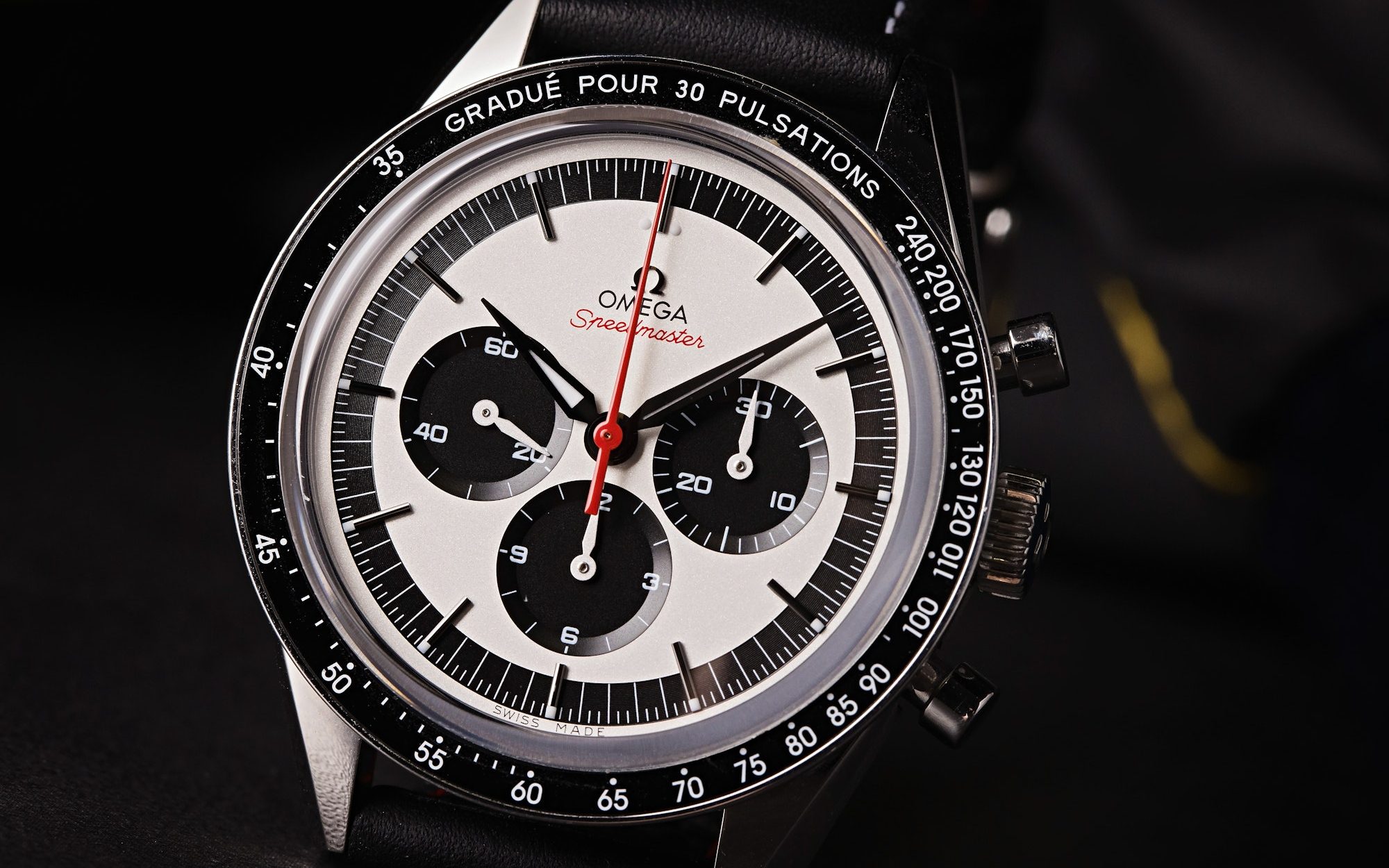
Similar to both a tachymeter and telemeter, a pulsometer is a fixed scale that can either be found on the dial or bezel of a watch. However, rather than being used to calculate speed or distance, pulsometers are specifically designed to help measure a person’s heart rate. Instead of counting heartbeats for an entire minute, users can start the chronograph and the. count the number of beats designated by the scale (typically 15 or 30). The chronograph is stopped after the number of heartbeats has been reached, and the seconds hand will indicate the person’s pulse against the watch’s pulsometer scale.
Slide Rule Bezel

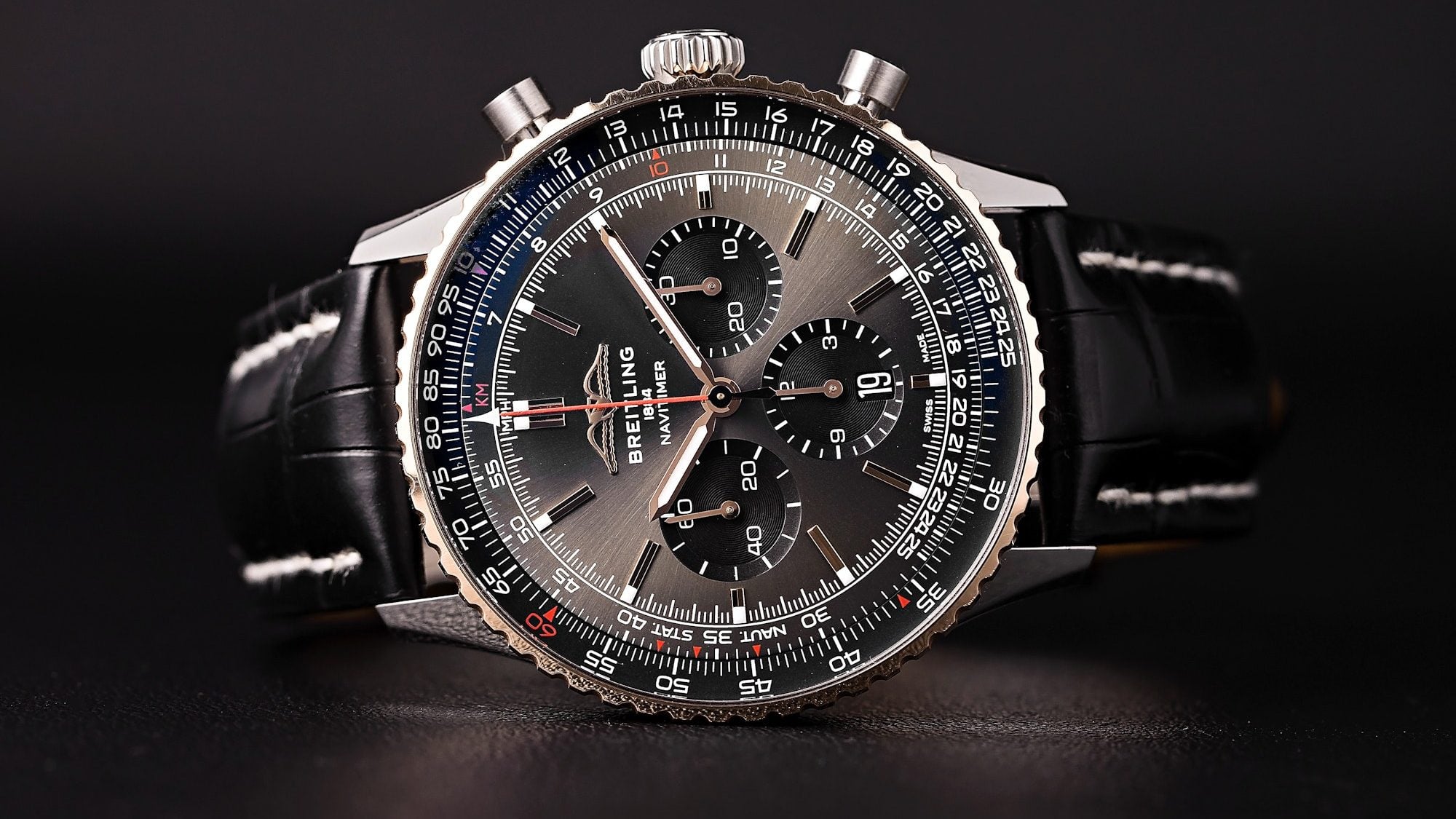
Unlike a tachymeter that will always be fixed on a watch, slide rule bezels are specifically designed to move, and they consist of a rotating outer scale that can be moved to align with a fixed inner track. Popularized by the Breitling Navitimer, slide rule bezels are most frequently found on pilot’s watches, and they essentially function like tiny analog computers that are capable of performing a wide variety of different calculations that range from multiplication and division to currency conversion and fuel consumption.