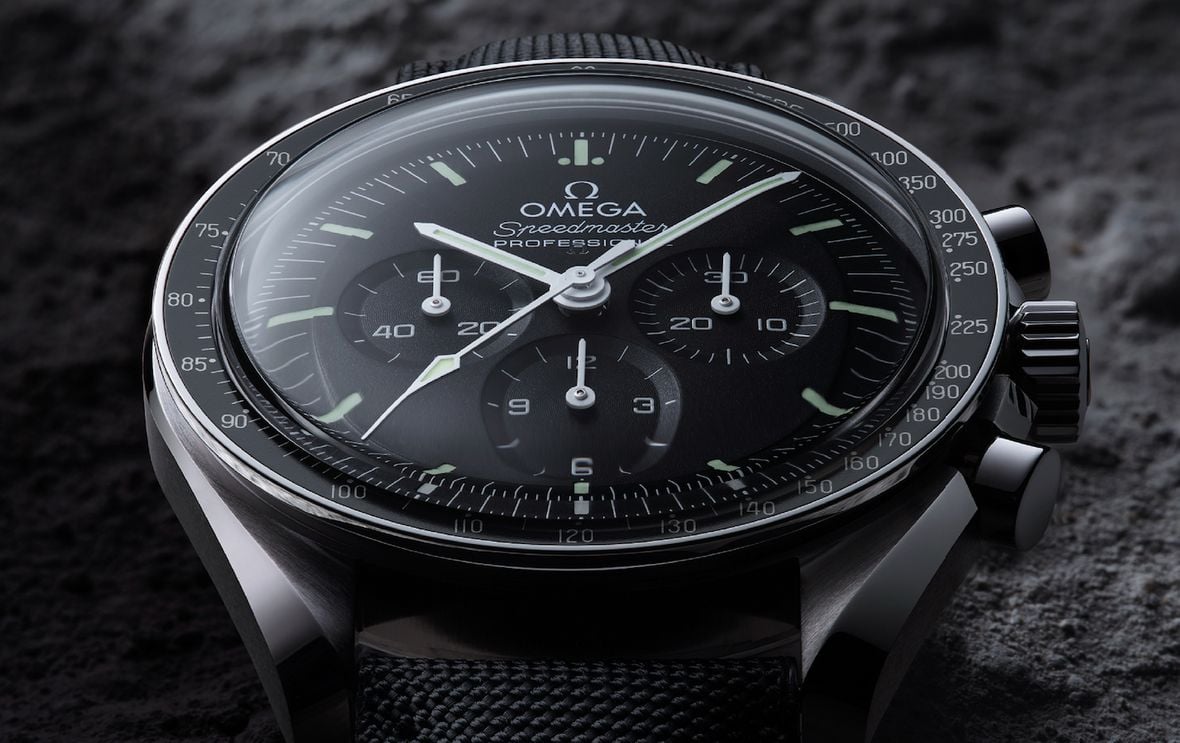
In 2025, OMEGA celebrates ten years since it introduced its METAS Master Chronometer Certification in 2015. This new certification was an interesting evolution for the 177-year-old watch brand, especially for its precision-conscious customers.
The first watch to obtain the METAS certification was the OMEGA Globemaster of 2015, a sporty model featuring vintage-inspired Constellation-style visuals, most notably a pie-pan-style dial. These visuals lie in direct contrast to the watch’s then ultra-modern mechanical movement, the most accurate that OMEGA manufactures. Just as the Constellation ushered in a new era of design in the mid-twentieth century, the Master Chronometer movement has ushered in a new era of technology and precision for OMEGA.
But to understand why this is significant, we first need to understand what chronometer certification is.
C.O.S.C., the most famous chronometer certification
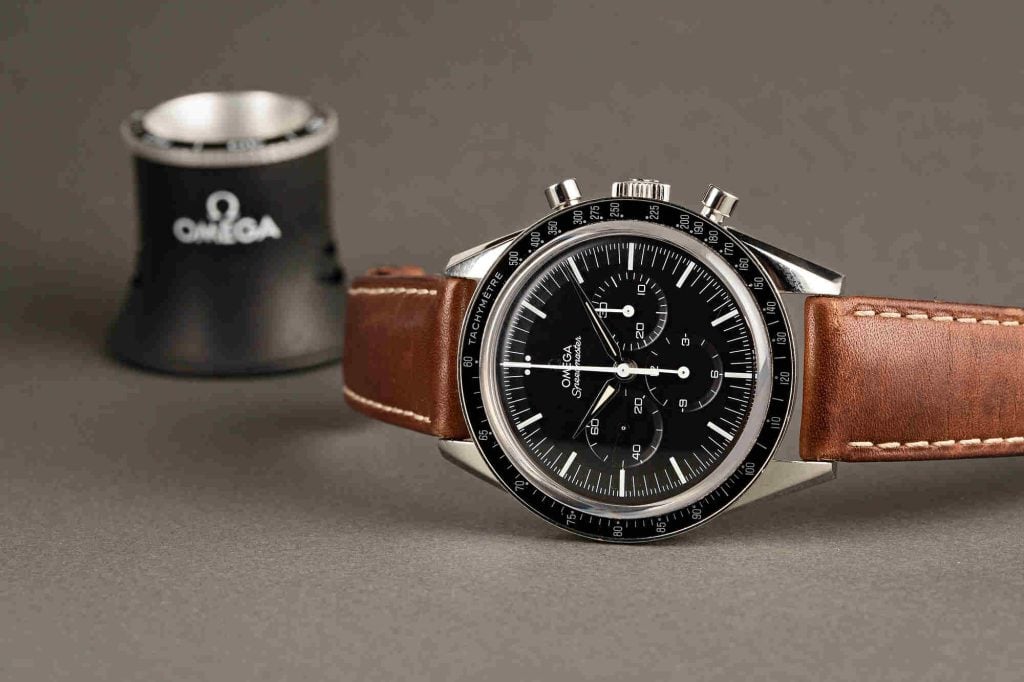
Precision and chronometry have been the holy grails of horology since the beginning, leading watchmakers (and even scientists) on a centuries-long journey to improve the accuracy of mechanical devices. Therefore, starting in the nineteenth century, institutions were established to test and certify the accuracy of a watch.
The most important of these today is the C.O.S.C. (Contrôle Officiel Suisse des Chronomètres), which is located in La Chaux-de-Fonds, Switzerland. Having certified millions – if not billions – of Swiss watch movements since its inception in 1973, the work of this testing facility is based on the ISO 3159 norm, which is an international standard for the definition, testing, and accuracy requirements of a wearable chronometer. In other words, it provides the formal definition of a chronometer – which, according to the C.O.S.C., is a watch whose rate falls into a deviation tolerance of -4 to +6 seconds per day,
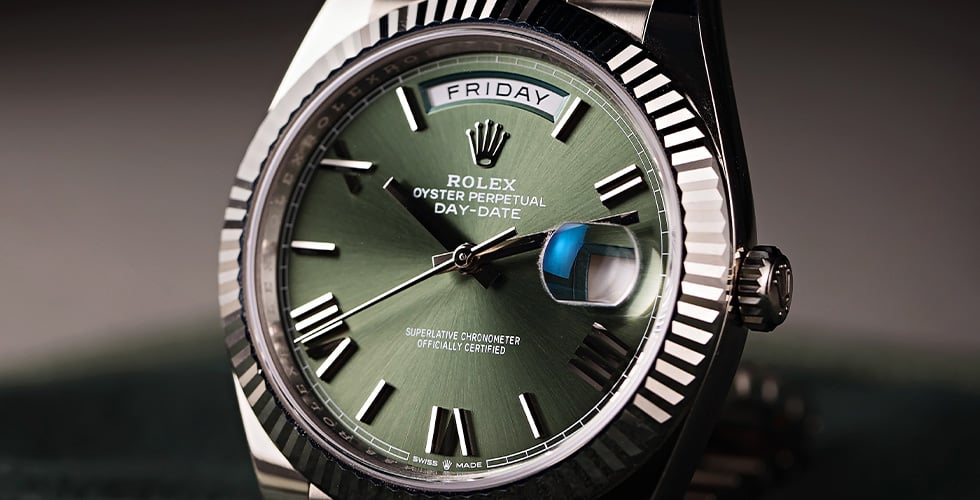
For decades, Rolex has been the C.O.S.C.’s most prolific client, followed by OMEGA and Breitling in second and third places.
Why OMEGA needed new certification?
The C.O.S.C. is not the only body issuing chronometry certificates. With that in mind, one might surmise that there is no need for yet another testing method or hallmark.
And while that might be true, some of today’s most prestigious watch brands still look to highlight the quality of their watches’ mechanical excellence with their own certificates. Patek Philippe’s Patek Philippe Seal, introduced in 2009, is another great example.
Raynald Aeschlimann, president and CEO of OMEGA says, “Master Chronometer is more than a certification for OMEGA. It’s a demonstration of our DNA and our historic quest for excellence that goes beyond the accepted standards. During my time as president, I have proudly overseen the rollout of Master Chronometer across all our collections and witnessed the added value that it has directly brought to our brand.”
OMEGA’s history in precision
OMEGA draws on a long tradition in precision timekeeping, one that is tremendously important to the brand. Even famous for it, OMEGA can look back on success that includes a variety of observatory competition medals for accuracy at the turn of the century.
More recently, technical innovations by OMEGA include several elements designed to improve upon its movements’ accuracy: the brand’s co-axial escapement, originally developed by the ingenious independent watchmaker George Daniels, is one. This escapement style now replaces the standard Swiss lever escapement in OMEGA’s movements throughout the collection. Another is the non-ferrous Si-14 silicon balance spring in these movements, which remains unaffected by contact with magnetic objects.
Silicon in the balance provides another layer of protection against magnetism, important in modern horology since magnetism is all around us in everyday life – from mobile phones to electronics, accessories, and appliances.
Finally, OMEGA developed a new standard in collaboration with Switzerland’s official authority for measurements, the Swiss Federal Institute of Metrology (METAS): the Master Chronometer certificate. This certification includes the extraordinarily high level of magnetic resistance of 15,000 gauss and an accuracy rate of 0/+5 seconds per day. In comparison to the C.O.S.C. as mentioned above, this is obviously another giant step toward absolute accuracy.
The steps to obtaining METAS Master Chronometer certification
For a watch to earn OMEGA’s Master Chronometer certification, it first must acquire a C.O.S.C. certificate. Then it undergoes eight more tests executed over a period of ten days, which are carried out in OMEGA’s factory complex in Biel. These are as follows.
Testing the functionality of the C.O.S.C.-certified movement while exposed to a magnetic field of 15,000 gauss.
Testing the functionality of the watch while exposed to a magnetic field of 15,000 gauss. While this test may seem outwardly very similar to the first one, here the entire watch is subjected to a magnetic field of 15,000 gauss (and not just the movement).
Testing chronometric precision after the watch was exposed to 15,000 gauss. The day after exposure, the watch is demagnetized and the rate calculated after another 24-hour period. The deviation between the two days is recorded.
Average daily chronometric rate of the watch over a period of four days in six positions and two alternating temperatures and once again exposed to a magnetic field of 15,000 gauss.
Checking the power reserve of the watch by proving that it continues to function at the limit of its expected capacity.
Chronometric precision in six positions.
Testing the rate deviation between power reserves of 100 percent and 33 percent full in six different positions.
Water resistance to a maximum of 150 bar.
Double certification
Having “Master Chronometer” on the dial of an OMEGA watch means that it not only has earned two certificates – both METAS and C.O.S.C. – but also guarantees a completely transparent testing process.
Customers can view online the results of the intense tests their watches have completed by entering the certificate number on the red Master Chronometer Certificate card that comes with the watch when purchased.
OMEGA recently announced that in the past ten years, more than 2.5 million of its watches have earned the predicate Master Chronometer through METAS certification. Furthermore, the brand states that this has allowed it to extend the guaranteed warranty on all its watches to five years, up from the previous two, a tangible long-term benefit.
And, finally, in October 2025 OMEGA opened a new laboratory called Laboratoire de Précision, which now performs quality control and chronometer testing, continuing OMEGA’s ever-present drive for more precision.