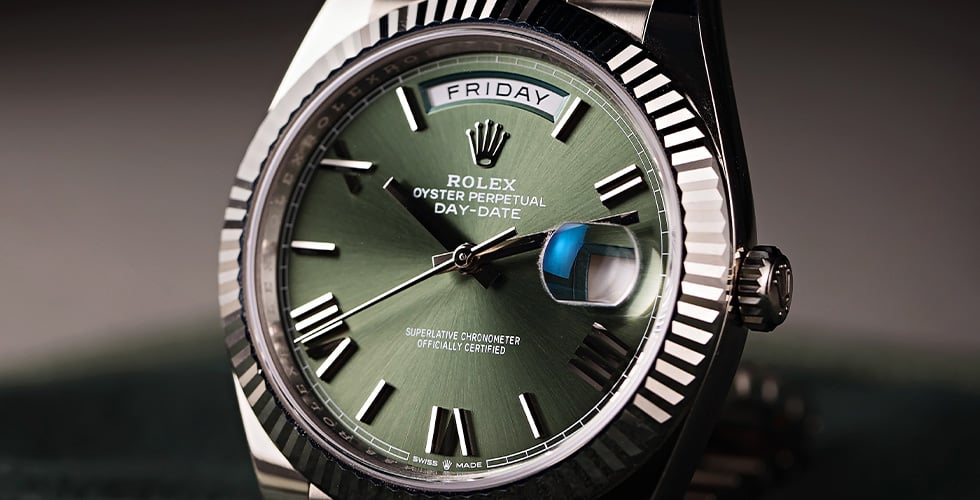
When Rolex introduced the stainless steel Rolex Land-Dweller in 2025, it carried a retail price of $16,450. Within six months, the same reference was trading on the secondary market for more than $42,000. The watch itself had not changed. What moved was demand, and demand is the one variable Rolex stops controlling the moment a watch leaves the boutique.
That gap sits at the center of nearly every Rolex purchase. On one side is MSRP, the Manufacturer’s Suggested Retail Price set by Rolex and honored by its authorized dealers. On the other is true market value, the number a watch actually commands when a willing buyer meets a willing seller. For some references the two figures nearly match. For others they are separated by tens of thousands of dollars.
Buying at retail is the cheaper path on paper, but it comes with a cost that never shows up on the price tag: Time. Securing a popular reference from an authorized dealer often means joining a waitlist that can stretch five years or more, with no promise that the call ever comes. That trade between money and patience is what this guide is built to help you weigh. Below, we break the Rolex market into five clear stages, show where prices sit at each one, and point to the references that still offer real value.
Why Do Some Rolex Models Sell Above Retail On The Grey Market?

Some Rolex models trade above their sticker price because supply and demand never line up at the boutique counter. Rolex sets a fixed retail price and produces a finite number of watches each year, while global demand for the most popular references runs far ahead of that supply. The secondary market is simply where that imbalance gets settled in real time. Three forces drive the premium:
- Fixed production against rising demand. Rolex builds to a standard of quality and finishing rather than to whatever the market wants in a given year. Production cannot scale up quickly without putting that standard at risk, so scarcity is built into the brand by design.
- The authorized dealer rule. Authorized dealers are contractually required to sell at Rolex’s set MSRP. Because they cannot raise prices to match live demand, the resale market becomes the only place where a watch’s real economic value can surface.
- The price of owning it today. For most buyers, a secondary market premium is the fee for skipping the waitlist. It is what you pay to walk out with the watch now instead of waiting years for a phone call that may never arrive.
None of this is accidental. Scarcity protects the brand’s image and keeps demand strong over the long run, which is why the gap between retail and resale has held for decades rather than closing. Recognizing that the premium is a feature of the system, not a glitch in it, is the first step toward buying wisely.
The Rolex Pricing Lifecycle, Broken Into Five Stages
Not every Rolex behaves the same way in the market, and treating the catalog as one block is where most buyers go wrong. A watch’s relationship to its retail price changes as it moves through its life, from launch hype to long discontinuation. The five stages below describe that path. Pinpointing where your target reference sits tells you whether a premium is reasonable Rolex investment, whether retail is realistic, and where the quiet value actually lives.
Stage 1: The Launch Spike
The first stage is defined by intense early hype and almost no supply. When a new reference drops, dealers hand the first units to their best clients, leaving everyone else to the resale market. With so few watches in circulation and a long line of buyers, prices open well above retail.
The Rolex Land-Dweller is a textbook case:
- Retail price: $16,450
- Average secondary market price, first six months: low $40,000s
- Premium over retail: roughly 140%
Buyers at this stage tend to be established collectors, international buyers without a local allocation, and enthusiasts who would rather pay a steep premium than wait years for an allocation that may never come.
Stage 2: The Sustained Premium
Some references never cool off. These are the core, instantly recognizable models where worldwide demand holds year after year, keeping resale prices well above retail long after the launch buzz fades. For these watches, the premium is not a moment, it is a permanent condition.
A few examples show how wide the gap can run. The figures below reflect typical market averages:
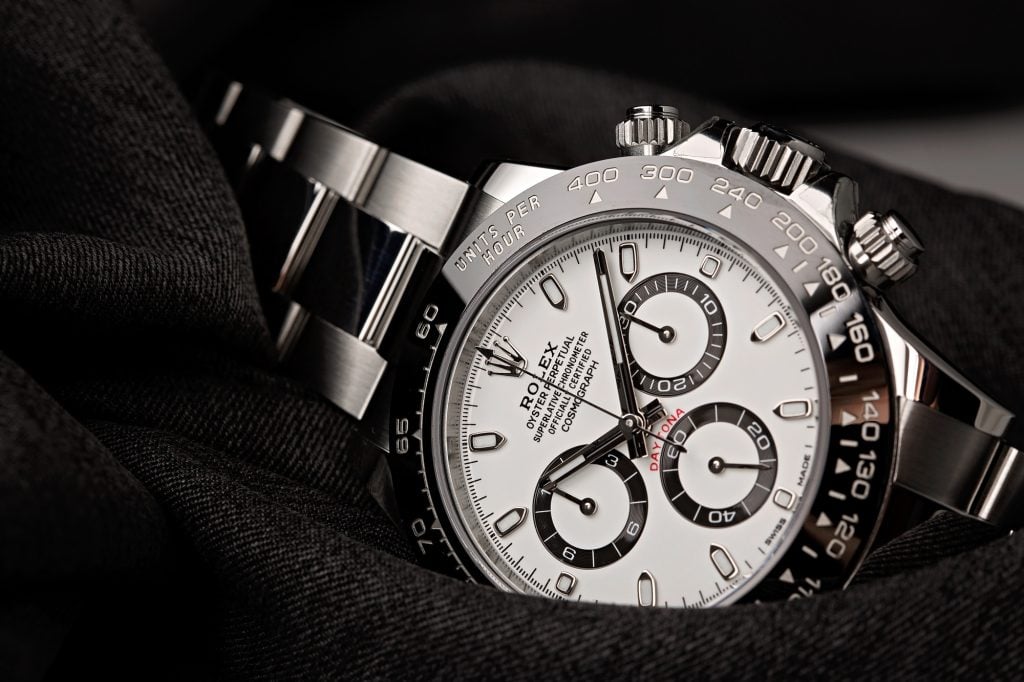
- Stainless steel Daytona (Rolex 126500): retail near $16,900, trading close to double that, around $30,000 and up.
- GMT-Master II: retail for the Rolex GMT-Master II starts around $12,000, with resale premiums that shift depending on the bezel configuration.
- Submariner Date (Rolex 126610): retail near $10,050, with steady market pricing in the low to mid teens.
For models like these, retail is close to a theoretical number, since very few buyers ever access it. The premium is the real price of entry, and it is the cost of buying back the years you would otherwise spend on a waitlist.
Stage 3: The Parity Zone
This is the part of the catalog most buyers overlook. A large share of Rolex references trade close to retail, at retail, or even slightly below it on the pre-owned market. There is no frenzy and no markup, just normal supply meeting normal demand.
The models that tend to live here include:
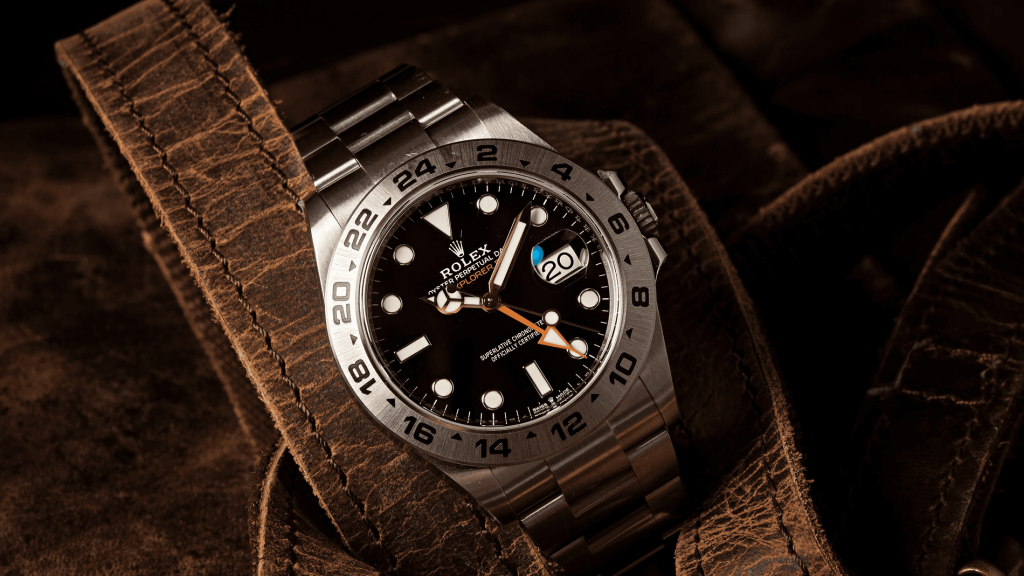
- Rolex Datejust 41 in smooth bezel configurations
- Classic dial Oyster Perpetuals
- The Rolex Explorer
- The Rolex Air-King
Standard steel Datejust 41 and Rolex Oyster Perpetual watches, with retail prices in the $6,000 to $9,000 range, can often be found pre-owned in excellent condition at or below MSRP. For a buyer whose goal is to own and wear a world-class watch rather than chase an asset, this is the sweet spot. You skip both the waitlist and the premium, and you often pay less than you would at the counter once tax is added.
Stage 4: The Discontinuation Pop
When Rolex removes a reference from its catalog, the supply of new examples ends for good. Collector attention shifts immediately, and the fear of missing the final units pushes prices up fast. The clearest recent example is the GMT-Master II “Rolex Pepsi,” Ref. 126710BLRO, which Rolex discontinued at Watches and Wonders in April 2026.
The market reacted within weeks:
- 90 days before discontinuation: the steel Pepsi averaged $18,995.
- After discontinuation, April 2026: the average jumped to $21,352, a rise of 12.4% in a matter of weeks.
- Vintage ripple effect: the vintage Pepsi, Ref. 1675, climbed 39.5% over the same window.
A discontinuation pop is real, but it is also the moment when emotion runs highest. Prices can overshoot before they settle, which makes this a stage to approach with a cool head rather than a fast wallet.
Stage 5: The Legends
The final stage belongs to references that left production long ago and no longer answer to any modern retail price. Their value rests entirely on rarity, condition, and historical importance. A current MSRP tells you nothing here, because the watch has not had one for years or even decades.
A few benchmarks show how far these prices can travel from their original cost:
| Model / Reference | Last Recorded MSRP | Current Secondary Market Range |
| The “Hulk” Submariner (Ref. 116610LV) | ~$9,500 (discontinued 2020) | High teens to mid $20,000s |
| Five Digit Submariner (Ref. 16610) | ~$7,000 (discontinued 2010) | $8,000 to $15,000, higher for the “Kermit” |
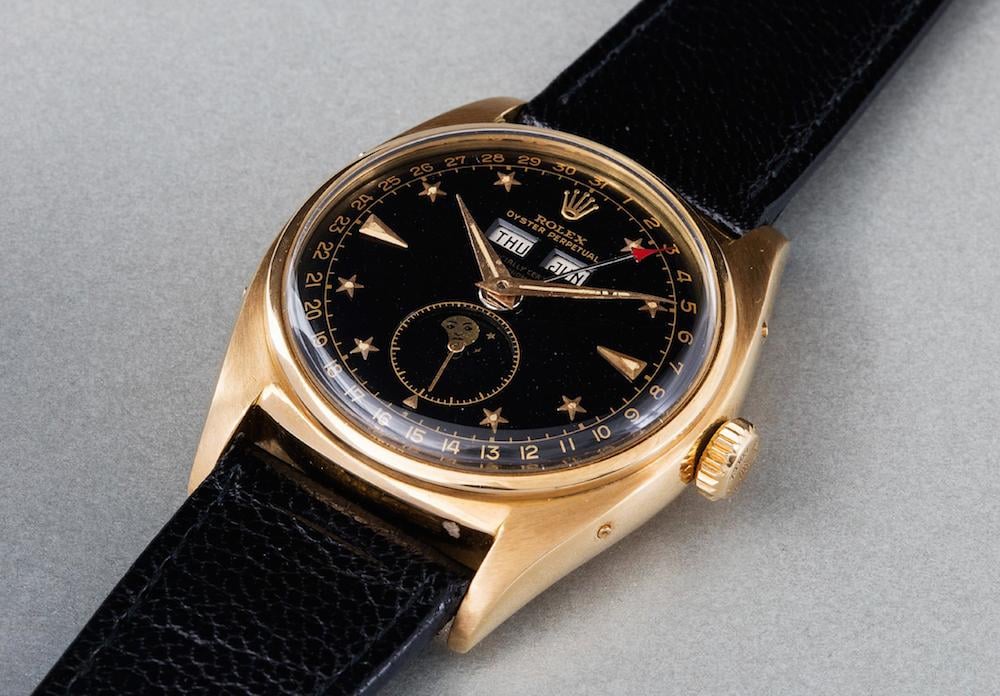
| Zenith Daytona (Ref. 16520) | ~$5,000 (discontinued 2000) | $30,000 to $50,000 and up |
At this level, the watch is a collectible first and a timepiece second. Provenance, original parts, and overall condition drive the number far more than the model name alone, and the right example can be worth several times what a comparable one in lesser shape would bring.
How To Use The Five Stages To Your Advantage

The framework only pays off when you act on it. Before you reach for your wallet, identify which stage your target reference sits in, then match your approach to that stage. The right move for a watch in the launch stage is the wrong move for one in the parity zone, and knowing the difference is what keeps you from overpaying.
Here is how each stage translates into a buying decision:
- Stages 1 and 2: Accept that the premium is the fee for skipping a long wait. Decide honestly whether your capital or your patience is the scarcer resource, then act accordingly.
- Stage 3: Check pre-owned pricing before anything else. You get the watch today without the markup, and often at a small discount to retail once tax is factored in.
- Stages 4 and 5: Do not chase the spike right after an announcement. Put condition, verified provenance, and price history ahead of temporary hype.
The thread running through all five stages is the same: the secondary market is not overcharging you, it is pricing in time, scarcity, and history. Once you can read which of those forces is driving a given reference, you can decide whether the number in front of you is fair for what you actually want from the watch.
The Bottom Line
The distance between a Rolex’s retail price and its market price is neither random nor a trick. It is the visible result of fixed supply, steady demand, and the value collectors place on rarity and time. With the five stages in hand, you can look at any reference and understand why it costs what it costs, and whether that price makes sense for you.