
Trade In Your Rolex: How It Works vs. Selling
Trading in a Rolex lets you apply your watch’s confirmed trade-in value as credit toward another timepiece in a single coordinated transaction. Bob’s Watches accepts trade-ins on every watch we buy, and you can also sell Rolex watches outright for cash. Rolex does not advertise a brand-operated consumer trade-in program, so trades take place through independent dealers, which makes choosing an established specialist the most important decision in the process.
Key Takeaways
- Rolex does not advertise a brand-operated consumer trade-in or buyback program; trade-ins are offered by independent dealers and, in some cases, individual Official Rolex Jewelers under their own policies.
- A trade-in applies your watch’s confirmed trade-in value as credit toward another watch, and you pay or receive the difference.
- Trade-in value is not the same as a retail listing price; it reflects what a dealer can pay after accounting for inspection, servicing, warranty, and resale.
- Trading coordinates the sale and the purchase in one transaction, reducing the steps involved in completing them separately.
- An original box and matching warranty papers can support a stronger valuation, although the effect varies by model, age, and collectibility.
The sections below explain who actually offers Rolex trade-ins, how the process and valuation work, when a trade beats a cash sale, and what a realistic trade looks like with current market numbers.
Does Rolex Have an Official Trade-In Program?

Rolex does not actually have its own second hand buyback program. Customers who want to sell or trade a Rolex do so through independent secondary market dealers or, in some cases now through authorized Rolex dealers (AD's). Rolex’s Certified Pre-Owned program is a separate program for purchasing Rolex-certified pre-owned watches through participating authorized retailers; it is not a trade-in or buyback channel for owners.
For sellers, the practical consequence is simple. The trade-in market for Rolex watches is run by dealers, so the quality of your trade depends on the dealer’s authentication standards, pricing transparency, and inventory.
How a Rolex Trade-In Works

A Rolex trade-in is a single transaction in which a dealer appraises your current watch and applies its confirmed value as credit toward another watch in that dealer’s inventory. The process takes three steps:
- Get a quote. Submit your watch’s model, reference number, condition details, and clear photos to receive a preliminary offer. Noting that you want trade-in credit rather than cash lets the dealer structure the deal from the start.
- Authentication and final offer. Ship the watch with a fully insured, prepaid label or visit the showroom in person. A watchmaker inspection verifies authenticity, movement health, and condition, and the dealer confirms the final trade value.
- Apply the credit. Choose your next watch. The confirmed trade value is deducted from its price, and you pay the difference. If your trade is worth more than the watch you select, the dealer pays you the balance.
The credit works like a down payment that is settled within the same transaction. Trading coordinates the sale and the purchase together, with one authentication, one negotiation, and one set of paperwork instead of two separate deals completed weeks apart.
How Rolex Trade-In Value Is Calculated

Rolex trade-in value is calculated from the same fundamentals that drive the secondary market, adjusted for the costs a dealer takes on when accepting the watch. The main factors are:
- Exact model and reference number, including material and configuration
- Condition, service requirements, and whether the case is unpolished
- Originality of the dial, bezel, bracelet, and other components
- Box, warranty card, and supporting documentation
- Current demand, liquidity, and recent comparable sales for the reference
- The dealer's cost of authentication, servicing, warranty coverage, and resale
A Rolex's trade-in value is not normally the same as its retail listing price or the highest asking price seen online. The dealer assumes the cost and risk of inspecting, servicing, warranting, holding, and reselling the watch, and the trade offer reflects that. Originality and an unpolished case can matter most for certain vintage references, while for modern references overall condition and completeness carry the most weight. A service record can support a valuation, although a history of replacement parts or repeated polishing may raise separate considerations during inspection.
Trade-In vs. Selling for Cash
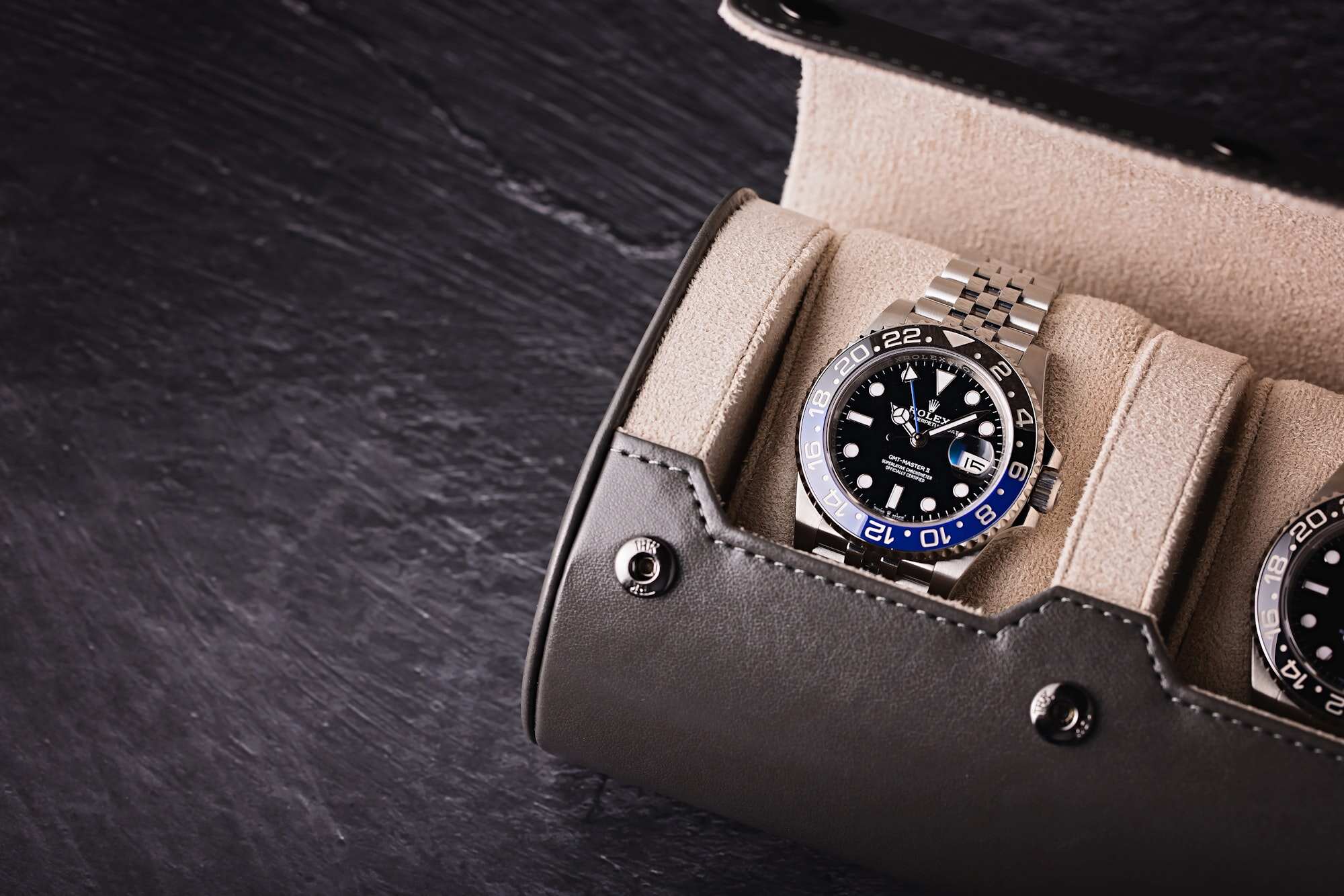
Trading in and selling for cash both start with an appraisal of your watch; the difference is what you walk away with. Neither option is universally better, and the honest answer depends on whether you already know your next watch.
|
Factor |
Trade-In |
Sell for Cash |
|
You receive |
Credit toward another watch, plus cash back if your trade is worth more |
A cash payout by check or wire |
|
Best when |
You already know the next watch you want |
You want liquidity or plan to buy elsewhere later |
|
Process |
One coordinated transaction covering the sale and the purchase |
A sale now, then a separate purchase later |
Selling for cash makes sense when you want flexibility, when you are thinning a collection without a replacement in mind, or when you plan to sit out the market for a while. Trading in makes sense when the goal is the next watch, because it compresses two transactions into one and puts your watch's confirmed value to work immediately.
"Trading in a Rolex isn’t just about selling a watch; it’s about leveraging a highly liquid asset to evolve your collection. To unlock the absolute highest valuation, treat your watch like a fine automobile, preserve the original box, matching warranty papers, and service receipts. In today’s secondary market, collectors value authenticity and complete provenance just as much as the timepiece itself.”
- Paul Altieri, Founder & CEO of Bob's Watches
Trading Example: Exchanging a Datejust Toward a Submariner

The Datejust and the Submariner are the two most frequently traded Rolex families in Bob's Watches transactions over the past twelve months, which keeps both markets liquid and pricing well established. That liquidity is what makes a Datejust a practical stepping stone toward a Submariner.
Bob's Watches sold data shows the general price relationship between the two families. Pre-owned Rolex Datejust 36 models centered on a median sold price of about $7,500, with the middle half of transactions between roughly $6,700 and $10,100. Pre-owned Rolex Submariner models centered on a median of about $14,500, with the middle half between roughly $12,000 and $17,000. These figures span multiple references, materials, and configurations within each family; an individual watch’s value depends on its exact reference and condition.
The example below is illustrative only, and a dealer’s trade-in offer will normally be lower than the eventual retail selling price because it accounts for inspection, servicing, warranty, and resale costs. Suppose your stainless steel Datejust 36 receives a confirmed trade-in offer of $7,000 and the Submariner you want is priced at $14,495. Your trade credit covers nearly half the purchase, and you pay the $7,495 difference to complete the upgrade.
Based on Bob’s Watches sold transactions from July 2025 through July 2026. Prices are rounded.
What You Can Trade Toward
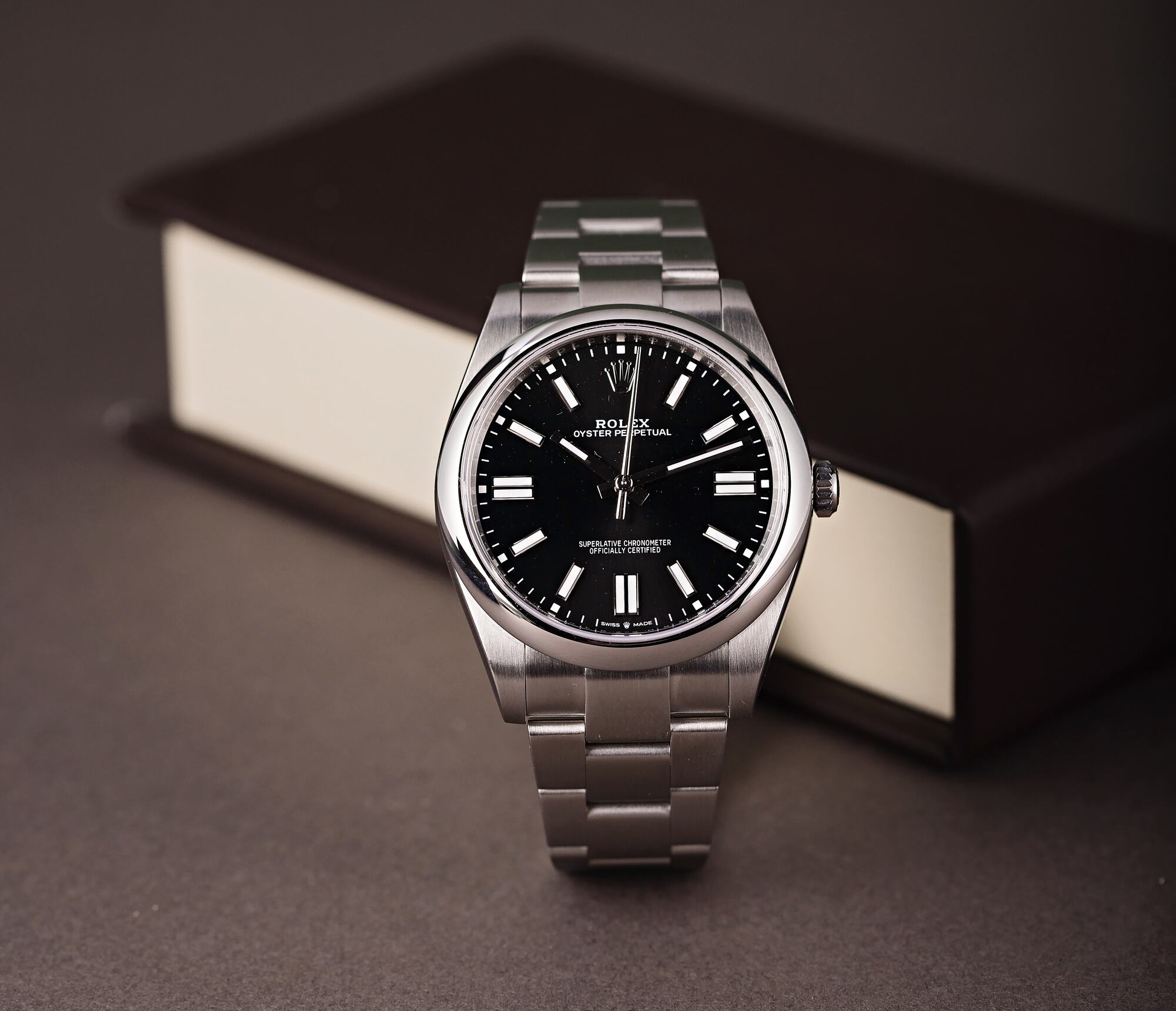
Trade-in credit at Bob's Watches applies to any watch in our inventory, not only another Rolex. Most clients trade toward the professional lines, including the Rolex Submariner, Rolex Daytona, and Rolex GMT-Master, while others move into dress models like the Day-Date and Datejust. Every watch in inventory is authenticated in-house before it is listed, so the piece your credit goes toward has passed the same inspection your trade did.
If you are still deciding between a trade and an outright sale, the our guide to selling a Rolex walks through valuations, documentation, and timing in detail.