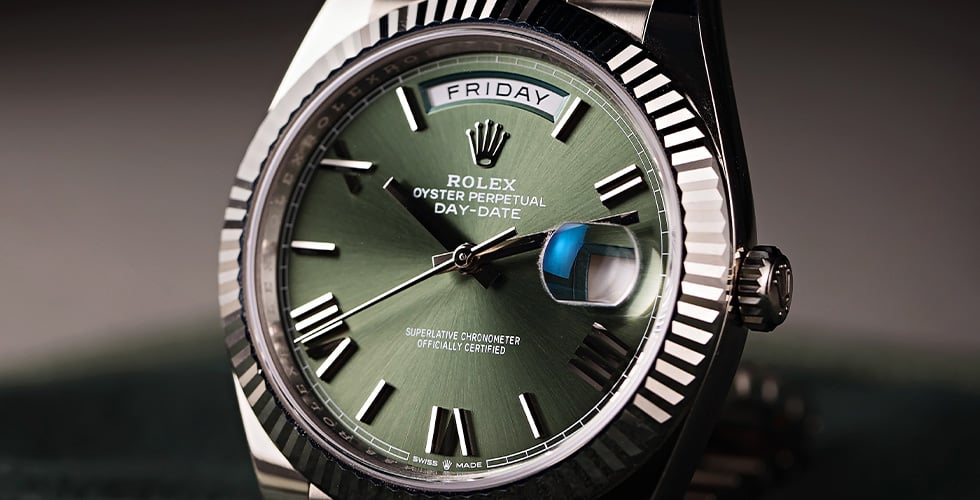
Rolex Roman numerals are fairly common on models like the Datejust and Day-Date. They have a very different aesthetic compared to the standard stick-style or baton hour markers. One detail not everyone knows about, which we will explore in depth here, is the “IIII” at 4 o’clock instead of a proper “IV.” It’s a curious feature that flies under the radar but sparks a lot of questions once people spot it. In this guide, we’ll take a closer look at where that design choice comes from, which Rolex watches use it, and how Roman numeral dials compare to more modern marker layouts.
Key Takeaways:
- Rolex uses “IIII” instead of “IV” for visual balance. It honors centuries of watchmaking tradition.
- Roman numeral dials are most commonly found on the Datejust and Day-Date (President) collections.
- Most Roman numeral markers are made of solid gold and do not feature luminous material. They’re a dressy, low-light tradeoff.
- Iconic dial variations like the “Buckley” and “Wimbledon” are still some of the most talked-about configurations in the Rolex catalog.
- Roman numeral dials usually have a more formal, classic personality compared to the versatile “stick” (baton) marker.
There’s plenty of options out there. You might be a first-time buyer weighing a white Roman dial against a classic stick markers, or a seasoned collector curious about the so-called “IIII misprint”. Either way, this article has all the context you need to appreciate the design choices behind the Rolex Roman numeral dial.
Why Does Rolex Use IIII Instead of IV?

If you’ve ever looked closely at a Rolex dial with Roman numerals, you may have noticed that the four o’clock position reads “IIII” rather than “IV.” This is not a mistake. It is a deliberate choice, and Rolex is far from the only watchmaker to do it. In fact, the practice is so widespread in the industry that it’s earned the nickname “Watchmaker’s Four.”
There’s several theories as to why this convention has lasted for centuries. None of them has been officially confirmed by any single watchmaker, but together they paint a clear picture of why the tradition continues.
- Visual Symmetry: On a round dial, “IIII” (four characters) has a more natural balance with “VIII” (four characters) sitting directly across from it. If the four o’clock position used “IV,” that side of the dial would feel lighter and less balanced.
- The Rule of Four: Using “IIII” divides the twelve hours into three neat visual groups. The first four hours (I, II, III, IIII) use only the character “I.” The next four (V, VI, VII, VIII) all include “V.” The final four (IX, X, XI, XII) all include “X.” This creates a clean, repeating pattern around the dial.
- Historical Tradition: Long before modern math standardized “IV” as the correct way to write four, ancient sundials and early clocks already used “IIII.” The convention predates the luxury watch industry by hundreds of years.
- Religious and Mythological Roots: Some historians have pointed out that in ancient Rome, “IV” was an abbreviation for Jupiter (spelled IVPITER in Latin). Placing the name of a god on a common object may have been considered disrespectful, which could explain why clockmakers chose “IIII” instead.
The bottom line is simple. The “Watchmaker’s Four” is not a flaw or an oversight. It’s a tradition rooted in aesthetics and history, and it remains one of the small details that make Roman numeral dials so unique.
Popular Rolex Models with Roman Numeral Dials

Roman numerals are not available on every Rolex model. They’re more common in the dressier collections. Below is a quick reference of the models most commonly associated with Roman numeral configurations.
| Rolex Model | Typical Case Sizes | Roman Numeral Style |
| Datejust | 31mm, 36mm, 41mm | Applied gold or printed |
| Day-Date (President) | 36mm, 40mm | Deconstructed or faceted |
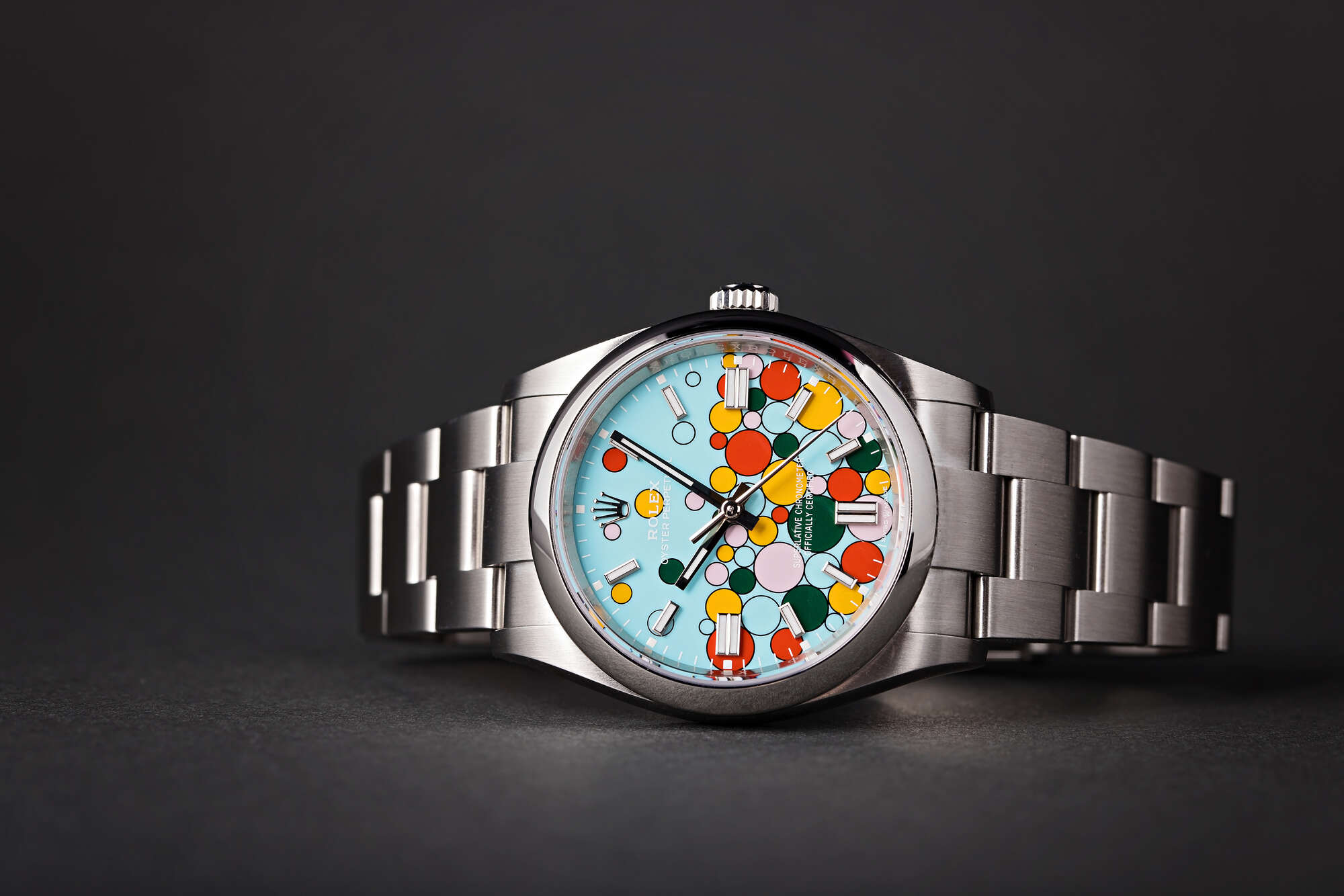
| Oyster Perpetual | Various | Printed or applied |
| Sky-Dweller | 42mm | Applied |
The Datejust is by far the most popular choice for buyers looking for a Roman numeral dial. Its range of sizes (from 31mm to 41mm) and broad selection of dial colors make it one of the most versatile options in the Rolex lineup. The Day-Date, on the other hand, is reserved for precious metal cases only. It’s the more exclusive option. The Sky-Dweller rounds out the list with a larger case and a more complex movement, delivering the Roman numeral look for collectors who want something less traditional in size.
Iconic Rolex Roman Dial Variations
Not all Roman numeral dials are created equal. Over the decades, Rolex has introduced several distinct variations that have developed their own followings in the collector community. Each one brings a different personality to the dial. Some have become more desirable than the standard configurations.
The “Buckley” Dial

This vintage dial style is named after collector John Buckley and features printed Roman numerals rather than applied gold markers. The result is a flatter, more understated look that has a strong retro feel. Buckley dials are most commonly found on older Datejust and Day-Date references, and they have become highly sought after for their “old-world” charm.
Because these dials were produced in earlier decades, finding one in good condition can be a challenge. The printed numerals are thinner and more delicate than applied markers, which gives the dial a lighter, more refined appearance. Based on Bob’s Watches sales data, Buckley dial Datejust models have sold at an average price of around $5,700. They are an accessible entry point into vintage Roman numeral collecting.
The “Wimbledon” Dial

The Wimbledon dial is one of the most unique options out there, thanks partly to its slate grey face with green-outlined Roman numerals. Many believe Rolex developed the dial to celebrate its long-standing partnership with the Wimbledon tennis tournament, hence the nickname. In addition to the green/black numerals, it features a single luminescent baton at 9 o’clock for better at-a-glance legibility.
This hybrid approach gives the Wimbledon dial a sporty yet refined look that bridges the gap between casual and dressy. It is also one of the few Roman numeral configurations that includes luminous material. That combination of readability and style has made the Wimbledon dial one of the more popular options in the modern Datejust lineup, with pre-owned examples averaging around $14,500 on the secondary market based on Bob’s Watches transaction data.
Deconstructed Roman Numerals

Found on the modern Day-Date 40, deconstructed Roman numerals take a completely different approach to the classic design. Instead of flat, single-piece markers, the numerals are broken into multiple faceted pieces of gold that are individually applied to the dial. The effect is three-dimensional and architectural, catching light from every angle. Furthermore, Rolex alternates the Roman numerals with single stick markers. The result is a cleaner, well-balanced dial.
These markers are hand-applied, which adds to the level of craftsmanship involved. The deconstructed style is a bold move by Rolex, turning what is traditionally a conservative design element into something that feels modern and sculptural. This type of dial adds another layer of visual interest, setting it apart from more conventional options.
Rolex Roman Numerals vs. Stick Dials: Which Is More Desirable?
This is one of the most common debates among Rolex buyers, and the answer usually comes down to personal taste and how you plan to wear the watch. Both configurations have loyal fans, and each one has its own advantages depending on the setting.
The Case for Roman Numerals

Roman numeral dials have a more formal, jewelry-like quality to the wrist. The complex shapes of the characters create visual depth and texture across the face, making the dial feel busier and more detailed than a simple set of baton markers. If you’re shopping for a watch to wear to business events, weddings, or dressy occasions, Roman numerals deliver a level of classic refinement that stick markers don’t always match.
There’s a clear heritage angle here. Roman numerals tie back to traditional clockmaking, which is part of the appeal for collectors who care about that history.
The Case for Stick Markers

Stick markers (also called batons) tend to win on practicality. Most Rolex baton markers on modern Rolexes feature Chromalight luminous material, which glows blue in low-light conditions. Roman numeral markers, by contrast, are typically made of solid gold with no lume, meaning they are effectively “blind” in the dark. If you need to read the time quickly in a dimly lit restaurant or during an evening event, stick markers have a clear advantage.
Stick markers also create a cleaner, more open dial. Some collectors feel that Roman numerals, especially on a 36mm case, can make the face look crowded. Batons leave more negative space, which gives the dial a sportier, more modern feel that works well for everyday wear.
Market Perspective
On the secondary market, stick marker dials often generate more “hype” and tend to hold slightly higher demand among younger buyers. However, Roman numeral dials, especially in white or blue, remain consistent performers for buyers looking for a long-term dress watch. Configurations like the white Roman Datejust are also frequently easier to source from an Authorized Dealer, making them a strong entry point for new collectors who want to build a relationship with their local AD.
Looking at Bob’s Watches sales data across thousands of pre-owned Datejust transactions, Roman numeral dials account for roughly 7 to 10 percent of all Datejust sales in any given year. That share has been trending upward, rising from under 4% in 2015 to consistently above 9% in recent years. Dial color also plays a role in pricing: blue Roman Datejust models have averaged around $7,400 on the pre-owned market, compared to approximately $6,400 for white Roman configurations. Both are well below the overall Datejust average (which includes precious metal and diamond configurations), reinforcing their position as one of the more accessible ways to enter the Rolex ecosystem.
Do Rolex Roman Numerals Glow in the Dark?
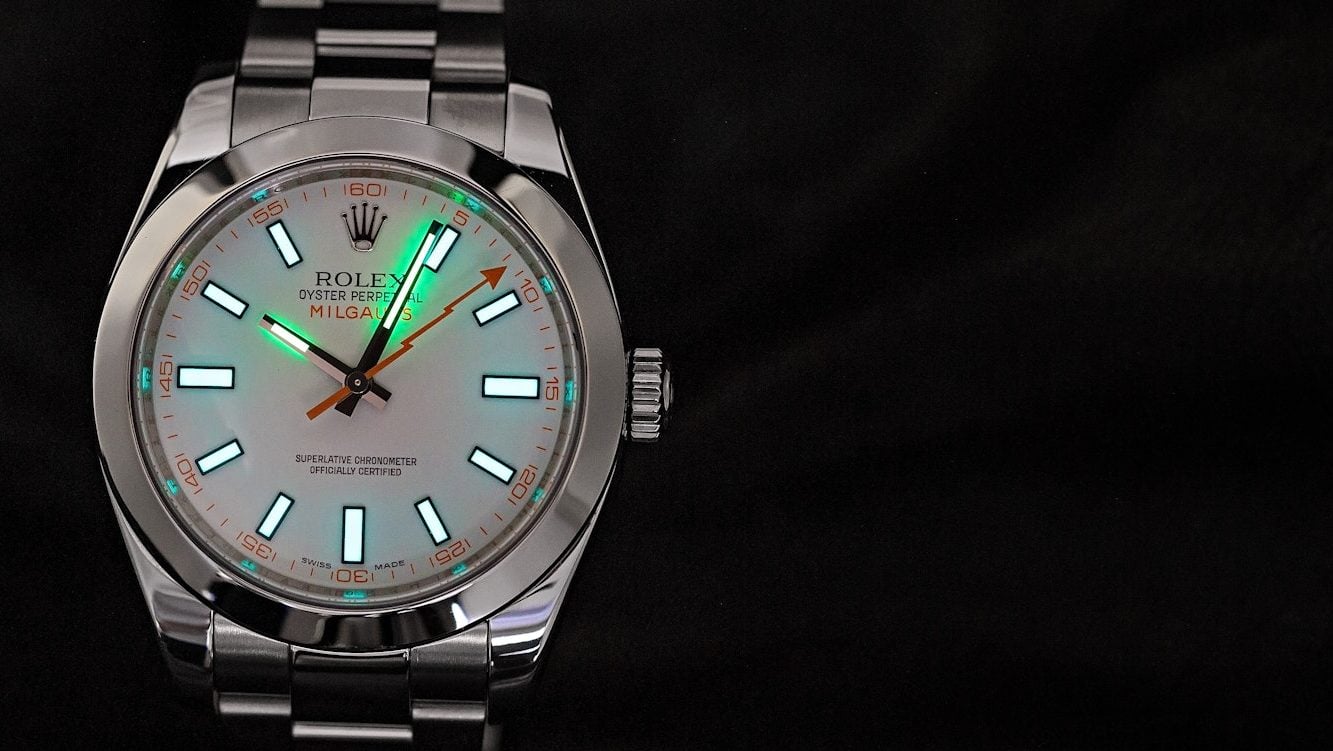
This is a question that comes up often, and the short answer is: generally, no. Most Rolex Roman numeral markers are crafted from 18k gold and do not feature any luminous coating. Rolex’s proprietary Chromalight material, which produces a long-lasting blue glow, is typically reserved for baton (stick) markers and the hands.
The trade-off is intentional. Roman numeral dials prioritize visual elegance over low-light functionality. The solid gold markers catch ambient light beautifully and give the dial a rich, warm appearance, but they will not help you read the time in a dark room. If nighttime legibility is a priority, a stick marker configuration or one of the rare hybrid dials (like the Wimbledon) is a better fit.
Choosing the Right Rolex Roman Numeral Dial

Rolexes with Roman numerals favor tradition and elegance over sporty utility. Still, the range of options is wider than many buyers might realize, from the entry-level charm of an Oyster Perpetual to the hand-finished deconstructed markers on a Day-Date 40.
A few practical questions can help narrow things down:
- How formal is your daily style? Roman numerals pair best with business attire and dressy settings. If you wear a suit most days, they are a natural fit.
- Does nighttime readability matter to you? If you frequently check your watch in dim environments, consider a hybrid dial like the Wimbledon or opt for stick markers instead.
- What size works for your wrist? On smaller cases (31mm or 36mm), Roman numerals fill the dial more aggressively. On a 41mm Datejust or 42mm Sky-Dweller, there is more room for the numerals to breathe.
- Are you buying for the long term? White and blue Roman Datejust dials have proven to be “forever” watches that hold their appeal across decades and style trends.
Some collectors are drawn to the vintage feel of a Buckley dial. Others prefer the sharper, more architectural look of a deconstructed Day-Date. Either way, Roman numeral Rolex dials have a presence that’s hard to replicate. Even small details, like the “Watchmaker’s Four” at 4 o’clock, add to the appeal. It’s the kind of design that doesn’t really go out of style.