For years the Rolex GMT-Master II Ref. 16710 occupied a comfortable middle ground in the secondhand market—respected, but hardly the stuff of auction-house bidding wars. Not any more. As of early 2026, our data places the average transaction price at a record price of roughly $12,400 USD. Compared with a street price of around $3,295 back in 2010, that represents nearly a 300% increase over 15 years. And unlike the speculative frenzy that pumped up modern Rolex references in 2021, this appreciation appears to be driven by something more durable: a genuine reclassification of the 16710 from “used Rolex sports watch” to “last true vintage-feeling daily driver.”
Design and Evolution: The Aluminum Bezel Era
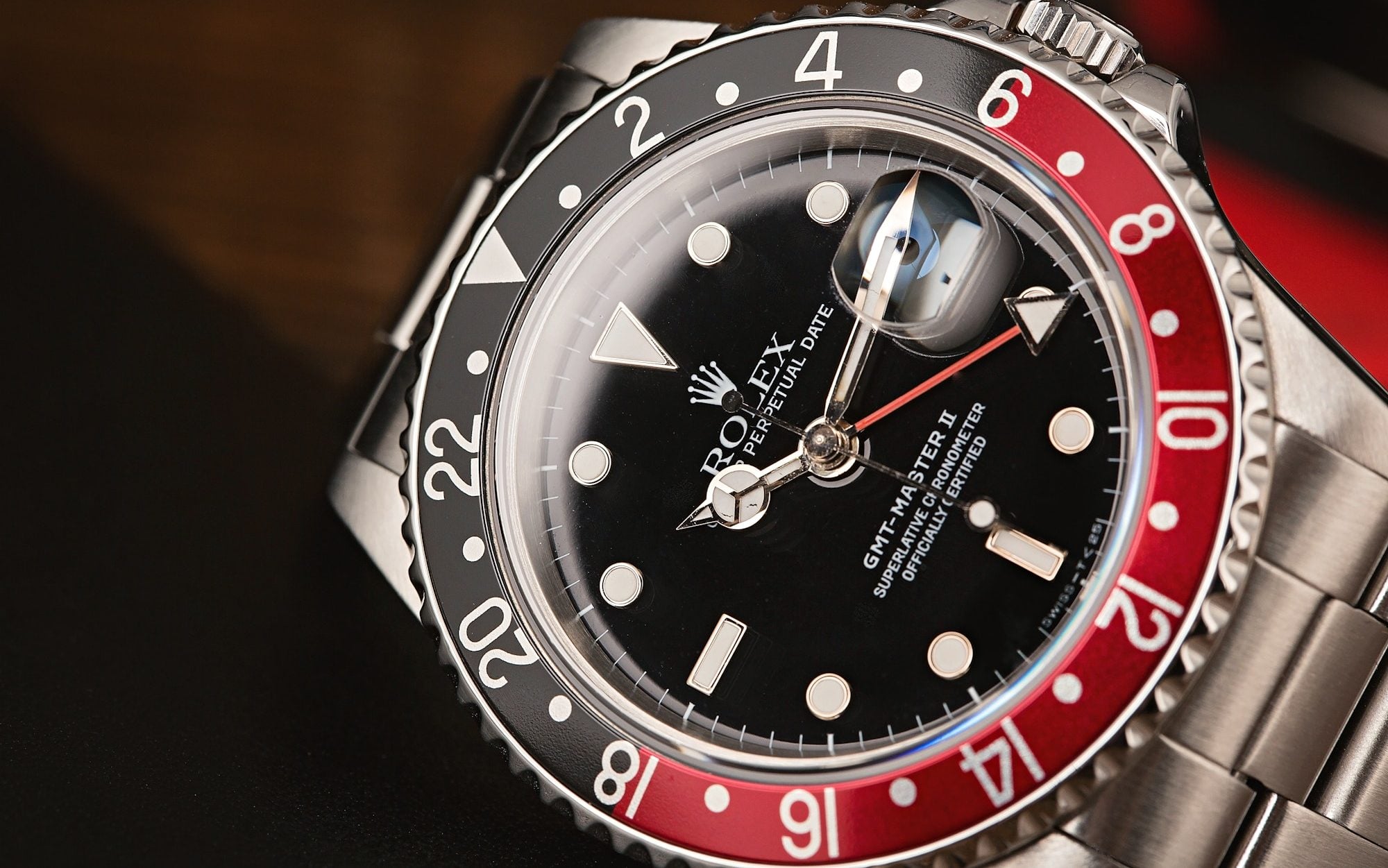
Produced from approximately 1989 to 2007, the 16710 represents a transitional moment in Rolex production. It was the very last GMT-Master II to feature an aluminum bezel insert and slimmer pre-“maxi case” proportions. Everything that followed—ceramic bezels, broader lugs, heavier cases—marked a distinct design departure that purists weren’t all in favor of. As modern references grew larger, more refined, and in many cases, more expensive, “collectors began reassessing the appeal of the earlier, more restrained format,” as Bob’s Watches founder and CEO Paul Altieri puts it. The 16710 was produced in three bezel colorways — the red-and-blue “Pepsi,” the red-and-black “Coke,” and the all-black — each of which has developed its own collector following and pricing hierarchy.
The Value Gap: 16710 vs. Modern Ceramic GMTs
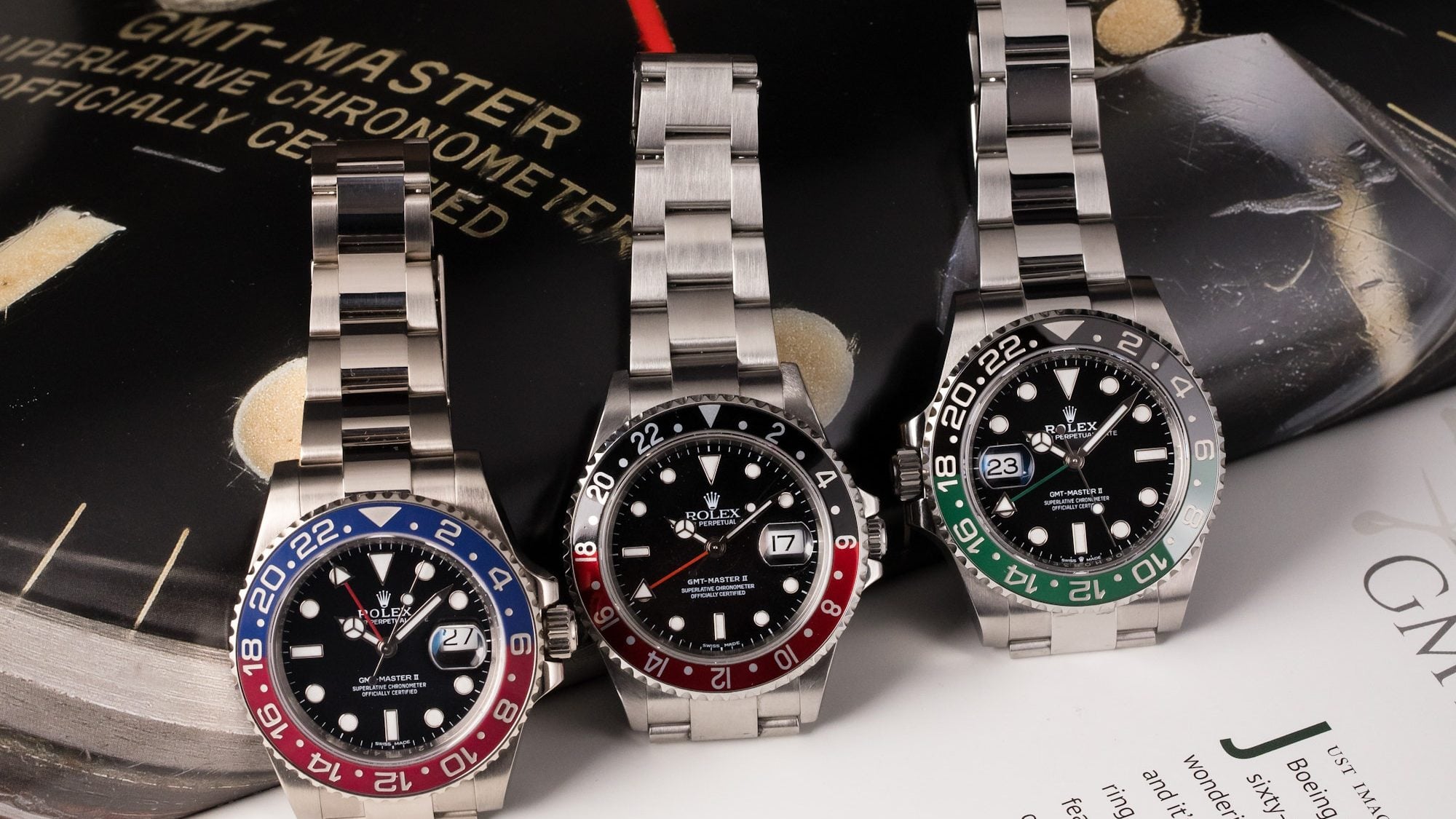
Several forces are now converging to elevate the 16710 to historic highs. The most obvious is relative value. Current-production ceramic GMT-Master IIs trade at $14,000 to $20,000 on the secondary market, which has prompted many collectors to wonder why they should pay a premium for a modern reference when a classic, iconic aluminum-bezel example can be had for less. “That value gap has steadily redirected demand toward the older references,” Altieri notes.
Scarcity and Rare Variants: Caliber 3186 and Tritium Dials
Meanwhile, supply dynamics are reinforcing the trend. 16710 production ended nearly two decades ago, and the pool of available examples, especially in top, original condition, is slowly getting smaller. “Original owners are aging into the stage of collecting where pieces get locked away rather than sold,” Altieri says. “Meanwhile dealers are holding strong examples rather than cycling them quickly.” Early tritium-dial and LumiNova pieces in untouched condition are becoming especially scarce. And late-production pieces fitted with the caliber 3186 movement are valued even higher by some.
A Sustainable Investment in a Modern Classic
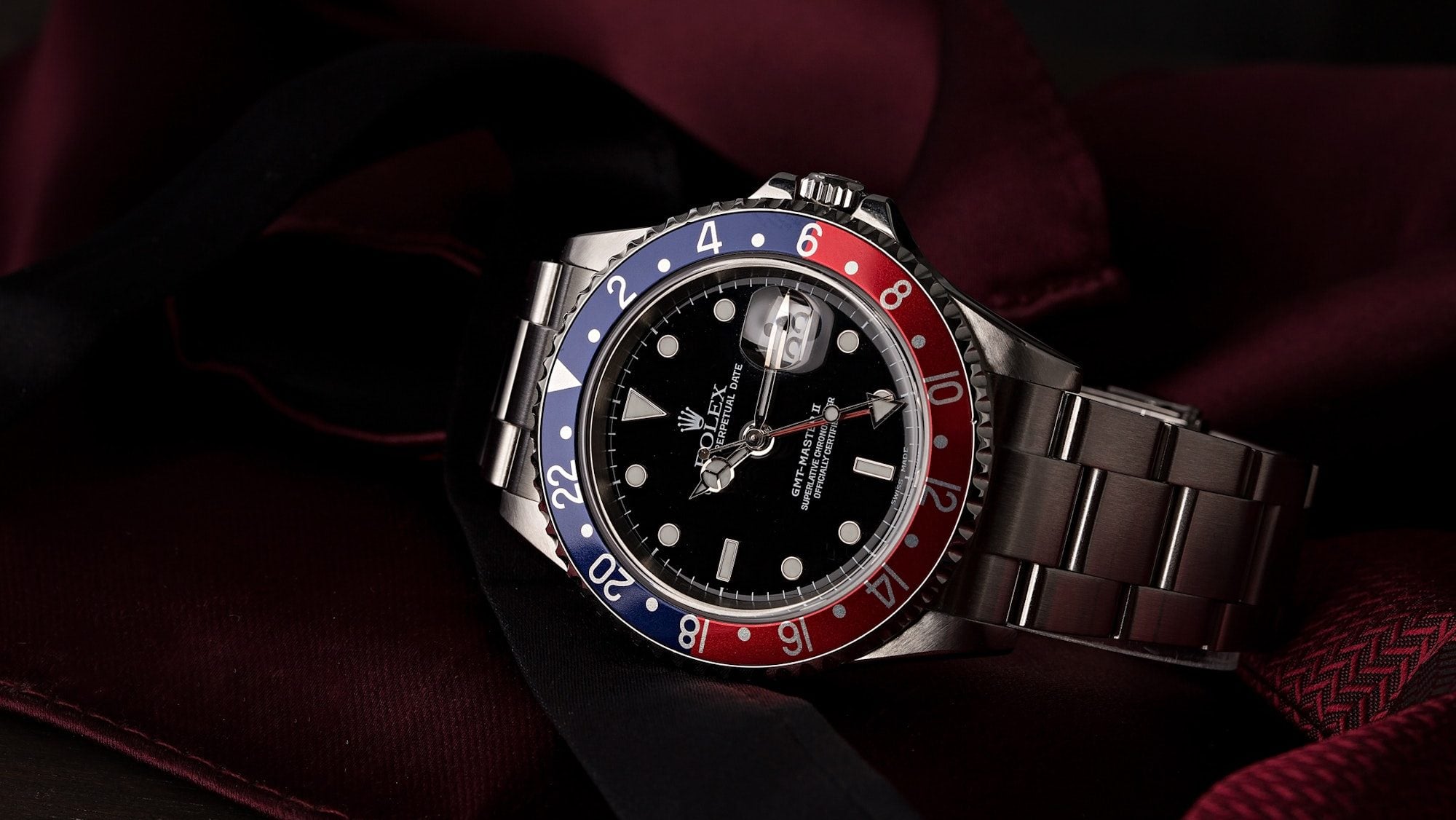
Crucially, today’s price strength differs from the speculative spike of recent years. “There are fewer flippers in the mix and more committed collectors,” Altieri notes. “Prices are climbing steadily rather than exploding, which points to a healthier, more sustainable trajectory.” The pattern looks familiar. The 16710 is behaving much the way the Submariner Ref. 5513 did around 2014 to 2016, when it quietly upgraded from workaday tool watch to modern classic. Once a reference crosses that threshold, dramatic reversals are rare. If you’ve been considering adding a 16710 to your collection, now is the time.