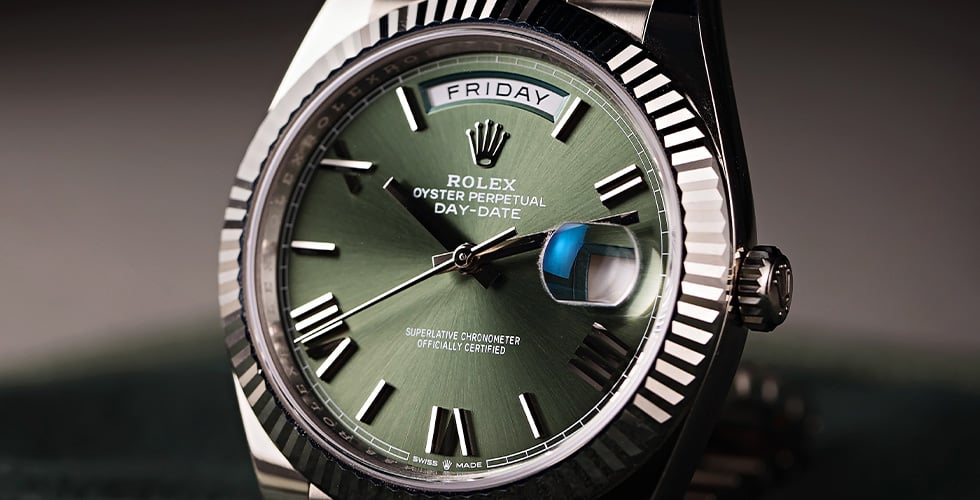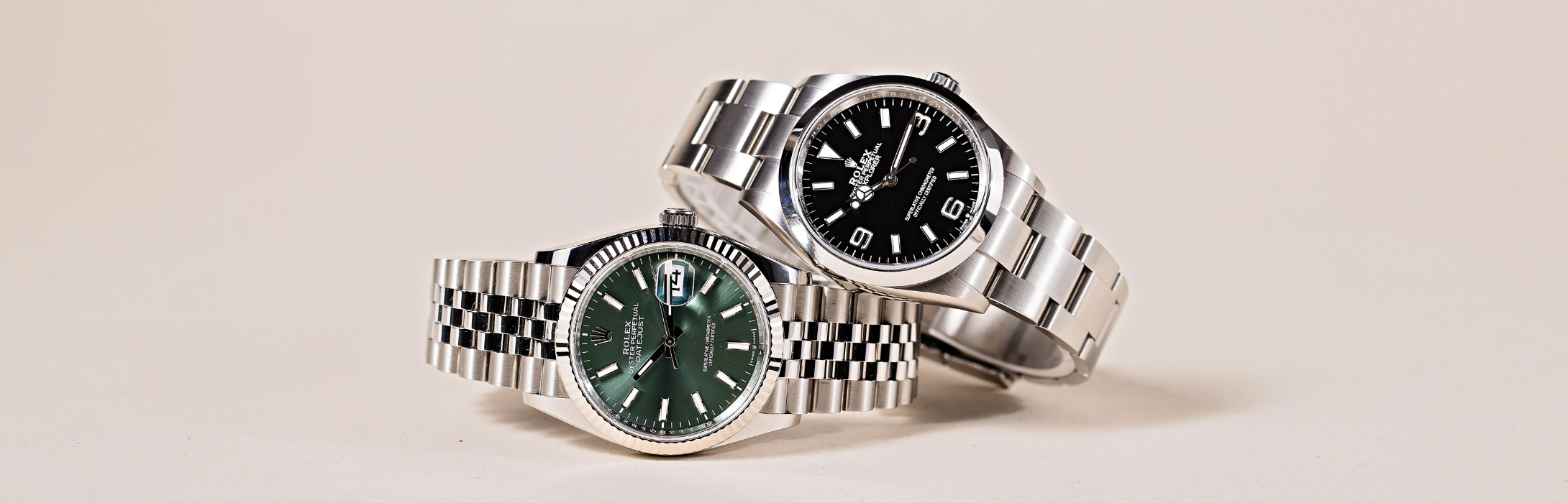

If you want the short answer, here it is. The Rolex Explorer is a rugged, no-frills sports watch built around a smooth fixed bezel and the famous 3, 6, 9 dial layout, while the Rolex Datejust is a versatile dress-casual classic available in thousands of combinations, from fluted bezels and Jubilee bracelets to a wide range of dial colors. Your choice comes down to one question: do you want clean, understated toughness, or a recognizable classic you can personalize, complete with a date window? The Explorer rewards anyone who values quiet minimalism, and the Rolex Datejust rewards anyone who wants expressive styling with a practical date complication.
Key Takeaways at a Glance
- Design philosophy: The Explorer is an understated tool watch with a brushed finish and no date, while the Datejust is a customizable dress-casual classic.
- Dial and layout: The Explorer wears a signature black dial with 3, 6, 9 numerals, while the Datejust comes in dozens of colors with Roman numerals, diamonds, or stick markers.
- Complications: The Explorer shows the time only for clean symmetry, while the Datejust carries the famous date window at 3 o’clock under a Cyclops lens.
- Sizing variety: The Explorer is offered only in 36mm or 40mm, while the Datejust spans 31mm, 36mm, and 41mm, along with smaller ladies’ sizes.
Both Rolex watches share the same mechanical foundation and the same Oyster case architecture, so the engineering pedigree is nearly identical. Their design goals, though, sit at opposite ends of the spectrum. One was created to survive expeditions, and the other was created to define the look of a modern luxury watch. The deep dive below breaks down exactly where they meet and where they part ways.
Design Philosophy and Visual Identity
The fastest way to understand these two models is to look at what each was designed to do. Looking at our Rolex Explorer buying guide you’ll notice that the Explorer was made as a companion for explorers and climbers, so every choice serves legibility and durability. The Datejust was made as a refined everyday watch for the office and beyond, so its design leans toward elegance and personality. That difference in intent shapes everything from the bezel to the bracelet finish, and it shows up the moment each watch lands on the wrist.
The Rolex Explorer: Tool Watch Roots

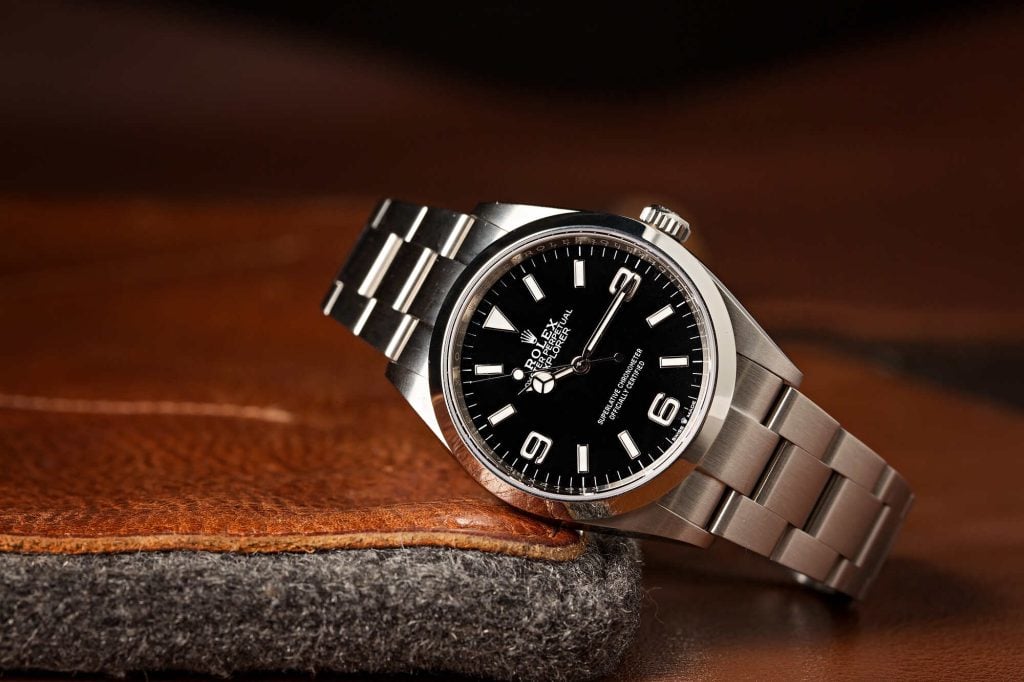
The Explorer traces its identity back to 1953, the year a Rolex accompanied the team that reached the summit of Mount Everest. That heritage still defines the watch. It pairs a satin-brushed Oyster bracelet with a smooth fixed bezel and a high-contrast black dial, and the result is a piece built for clear reading in tough conditions. The 3, 6, 9 numerals, the bold hands, and the large hour markers all exist for one reason, which is to tell the time at a glance.
What makes the Explorer special is how little it asks for attention. There are no polished center links to catch the light and no fluting to sparkle across a room. It is a watch that prefers to stay in the background, which is part of why longtime collectors describe it as the thinking person’s Rolex. For buyers who want serious quality without any flash, the Explorer delivers a focused, purposeful design.
The Rolex Datejust: The Definitive Classic

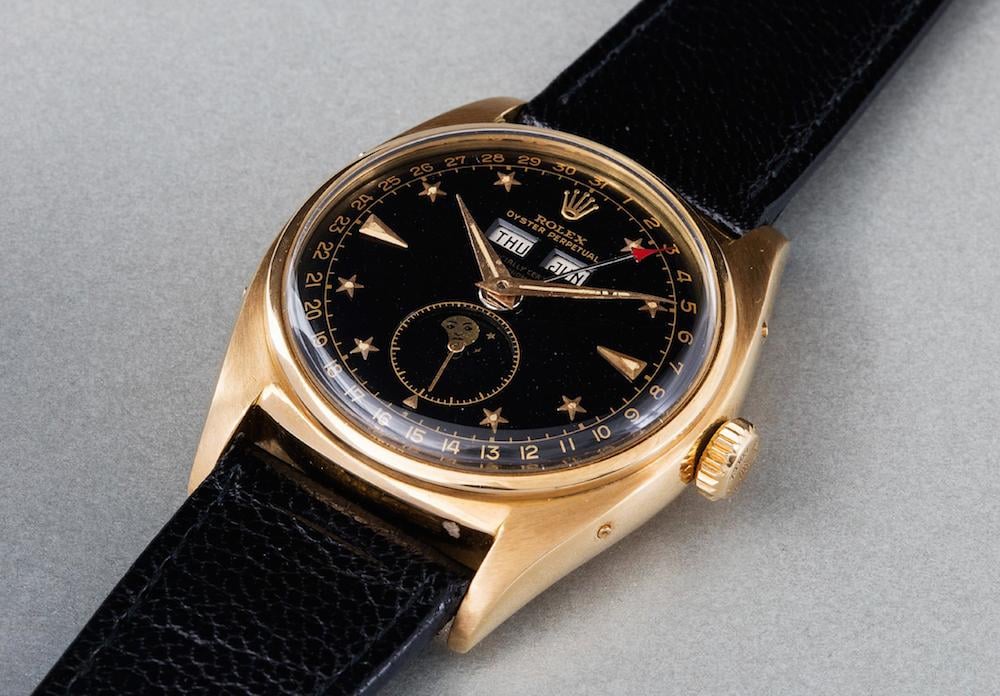
The history of the Rolex Datejust dates back to 1945. The model set the template for what a modern luxury watch should look like. It was the first self-winding chronometer wristwatch to show the date in a window on the dial, and that innovation became an industry standard. Decades later, the Datejust remains the watch most people picture when they imagine a Rolex, thanks to its balanced proportions and timeless silhouette.
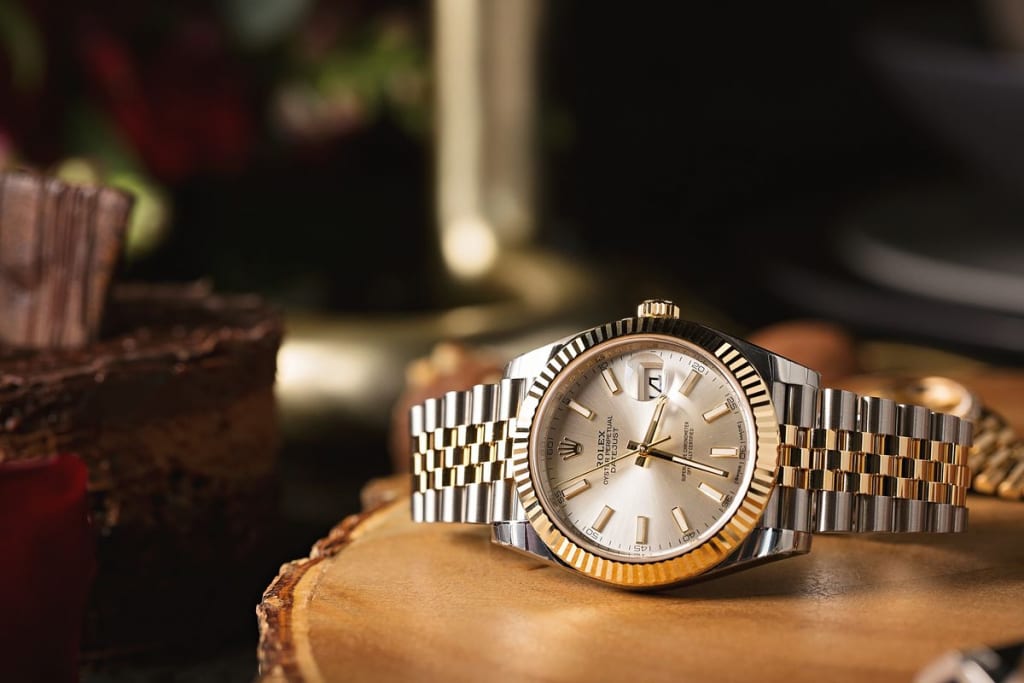
The Datejust leans dressier than the Explorer, with polished case elements and a long list of finishing options. Many versions feature a fluted bezel in 18k white gold that throws light in every direction, paired with a Jubilee bracelet for an unmistakably classic feel. That mix of refinement and customization is why the Datejust works as a milestone watch, a graduation gift, or a daily companion that still looks the part at a formal event.
Side-by-Side Specifications: Head-to-Head Comparison

The table below lays out the core specifications side by side, using current-generation references for each model. The Explorer figures reflect the 36mm Rolex 124270 and the 40mm Ref. 224270, while the Datejust figures reflect the 36mm Rolex 126234 and the 41mm Ref. 126334.
| Feature / Spec | Rolex Explorer (Ref. 124270 / 224270) | Rolex Datejust (Ref. 126234 / 126334) |
| Available sizes | 36mm and 40mm | 31mm, 36mm, and 41mm (plus smaller ladies’ sizes) |
| Bezel options | Smooth, fixed stainless steel | Smooth, fluted (18k gold), or diamond-set |
| Bracelet options | Three-link Oyster (fully brushed) | Three-link Oyster (polished center links) or five-link Jubilee |
| Dial colors | Black only (glossy lacquer) | Wide assortment (blue, green, silver, slate, champagne, and more) |
| Complications | Time only (hours, minutes, seconds) | Date window with 2.5x Cyclops magnification |
| Clasp | Oysterlock safety clasp with 5mm Easylink extension | Oysterclasp with 5mm Easylink comfort extension |
| Water resistance | 100 meters (330 feet) | 100 meters (330 feet) |
| Movement | Rolex Caliber 3230 (no date) | Rolex Caliber 3235 (date mechanism) |
Read the table closely and a pattern appears. The two watches match almost exactly on the technical points that govern reliability, including water resistance and case construction. The real separation happens in the choices Rolex offers the buyer. The Explorer keeps the menu short on purpose, while the Datejust opens it wide.
Case Dimensions, Sizing, and Wrist Presence

Size is where many buyers make their final call, since the way a watch sits on the wrist shapes how often it gets worn. Both lines offer a true everyday range, but they feel different even at matching diameters. The Explorer leans sporty and restrained, while the Datejust can read either classic or bold depending on how it is configured. Below is how the key Rolex sizes compare.
The 36mm classic matchup:
- Both collections offer a 36mm model, a size widely viewed as the ideal proportion for either watch.
- The Explorer 36 wears slightly smaller and more discreet, mostly because the black dial visually tightens the case.
- A Datejust 36 with a fluted bezel and a Jubilee bracelet carries a larger, more reflective footprint, so it draws more notice despite the identical diameter.
The larger alternatives, 40mm vs 41mm:
- The Explorer 40 keeps its clean, sporty character and suits larger wrists without adding visual weight.
- The Datejust 41 uses slimmer lugs to balance its size, yet its polished surfaces and fluted bezel give it strong wrist presence.
- Buyers who want maximum quiet wear gravitate to the Explorer 40, while those who want a statement piece tend to land on the Datejust 41.
The takeaway is straightforward. Diameter alone does not tell you how big a watch will look. Finish, bezel style, and bracelet choice all affect presence, and that is why an Explorer and a Datejust of similar size can feel like two different watches.
Dial Configurations and Customization Versatility
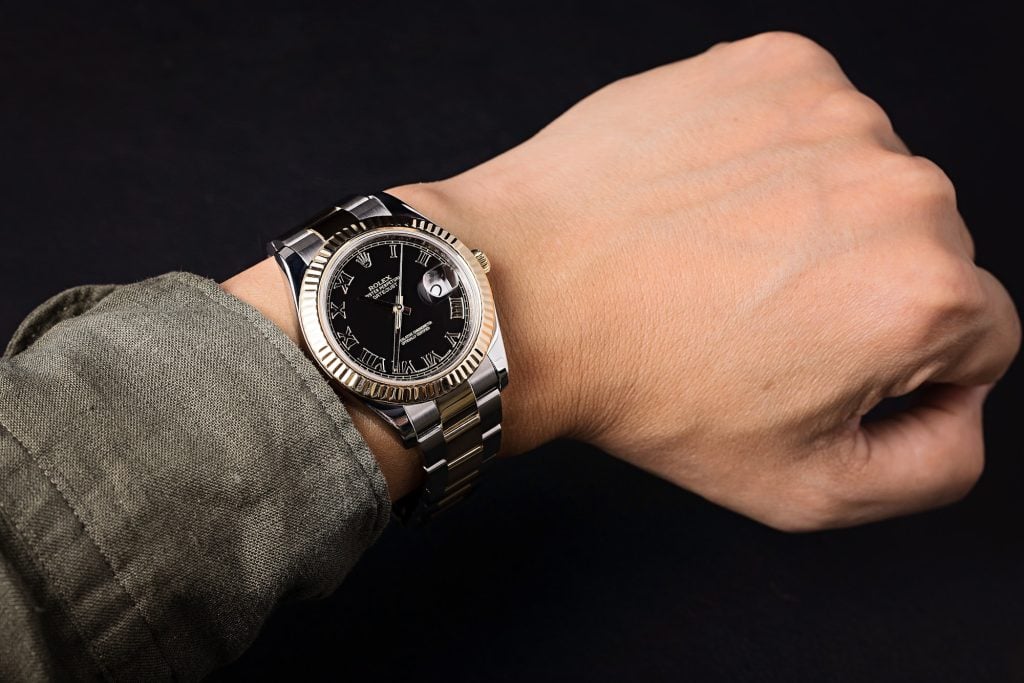
Personalization is one of the clearest dividing lines between these models. The Explorer treats its dial as a finished design that should not change, while the Datejust treats the dial as the starting point for self-expression. Anyone deciding between the two should think about whether they want a single perfected look or a watch they can tailor to their taste.
Explorer, a single focused design:
- The Explorer offers no factory configuration choices.
- You get a black dial, white gold surrounds on the markers, and Chromalight luminescence for low-light reading.
- This is the purist option, made for buyers who want one definitive version and nothing to second-guess.
Datejust, a full configuration menu:
- Bezels: Smooth for a sportier feel, or fluted for traditional luxury.
- Bracelets: Oyster with polished center links for a cleaner look, or Jubilee for an elegant, iconic style that also hides light scratches well.
- Dials: Stick markers, Roman numerals, or diamond indices, paired with sunburst and other finishes across a deep color range.
This contrast is the heart of the Explorer vs Datejust decision. The Explorer says everything you need is already here, while the Datejust invites you to build the exact watch you want. Neither approach is better on paper. It depends on whether you prefer simplicity or variety.
Daily Wearability: The GADA (Go Anywhere, Do Anything) Factor

Watch enthusiasts often talk about a go anywhere do anything watch, meaning one timepiece that can handle nearly any setting. Both the Explorer and the Datejust earn that label, yet they get there from different directions. Insights shared across online communities and by longtime collectors point to two distinct ownership styles, and understanding them helps clarify which watch fits your week.
The Explorer is frequently called the ultimate one-watch collection. Because it skips the high-polish center links and a flashy bezel, it looks at home with a t-shirt and jeans or on a hiking trail, and its slim case still slides easily under a dress shirt cuff. People who value discretion tend to choose it for exactly this reason, since it does serious work without announcing itself. It is the watch you can wear every day for years and rarely think twice about.
The Datejust covers casual wear with ease, though it leans naturally toward office and formal settings. A fluted bezel paired with a Jubilee bracelet reads as a polished, deliberate choice, and it tends to draw a second look in public. A smooth bezel Datejust on an Oyster bracelet moves closer to the Explorer’s sporty side while keeping the practical date window. That flexibility is the Datejust’s quiet strength, since a few configuration choices can shift it from dressy to relaxed.
Movement, Durability, and Maintenance
Under the dial, these two watches are close relatives. The Explorer runs the Rolex Caliber 3230, and the Datejust runs the Caliber 3235, which share the same modern architecture. Both deliver roughly a 70-hour power reserve, a paramagnetic blue Parachrom hairspring, and high-performance Paraflex shock absorbers that protect the movement from knocks. Both are certified Superlative Chronometers, which means Rolex rates their accuracy at minus two to plus two seconds per day after casing.
The single mechanical difference is the date mechanism. The Rolex Caliber 3235 in the Datejust adds the date wheel and the instant changeover at midnight, while the Caliber 3230 in the Explorer leaves it out for a cleaner, time-only display. Maintenance follows the same pattern for both, with Rolex generally recommending a service every several years depending on use. In practical terms, owners can expect comparable reliability and longevity, which makes the durability question close to a tie.
Value Retention, Availability, and Authorized Dealer Dynamics
For buyers thinking about the long term, the secondary market matters as much as the watch itself. Both models have a strong reputation for holding value, but they behave differently once they leave the showroom. The notes below summarize how availability and resale tend to play out for each line.
Quick read on the market: The Explorer behaves like a stable, predictable asset whose value stays consistent over time, while the Datejust can swing more depending on the exact configuration. Standard Datejusts, especially two-tone and smooth bezel versions, are often easier to secure at an Authorized Dealer, whereas in-demand combinations such as a green or blue motif dial on a Jubilee bracelet can carry long waitlists. The Explorer remains a steady, high-demand favorite across the board.
These dynamics reward a little homework before buying. If you want something that should track a clear, reliable resale path, the Explorer’s single design makes it easy to value and easy to sell. If you are drawn to a specific Datejust look, it helps to know that color and dial trends move the needle, so today’s hard-to-find configuration may settle later, and a quieter reference may climb. Both still outperform most of the broader watch market on retention, which is part of why they sit at the top of so many shopping for those searching to buy the best Rolex investment.
Buying Guide: Matching Your Lifestyle to the Perfect Rolex Icon

At its core, the Explorer vs Datejust debate is a choice between industrial minimalism and versatile luxury. If your days call for a rugged, historically meaningful design that avoids any obvious display of wealth, the Explorer is the clear pick. It does everything a daily watch should do, stays comfortable from morning to night, and carries a story tied to one of the great achievements in exploration. For a buyer who wants one watch that simply works and never shouts, it is hard to beat.
If you rely on a date window for daily business, enjoy matching a watch to your wardrobe through dial and bracelet choices, or want a timepiece instantly recognized as a luxury milestone, the Datejust stands alone. It bridges casual and formal better than almost any watch in the lineup, and its range of configurations lets you build something that feels personal. Both represent the best of Rolex engineering, so your decision comes down to a simple idea: the story you want your wrist to tell.