A Rolex GMT-Master II buying guide comes down to four decisions: reference and bezel color, current retail versus the pre-owned market, bracelet, and condition. I wrote this guide with the intention of covering every GMT-Master II reference, real sold-price data from our own transactions, and the checks that protect your purchase of one of the most collected Rolex watches ever made.
Key Takeaways
- The GMT-Master II tracks up to three time zones through its independent local hour hand, its 24-hour hand, and its rotating Cerachrom bezel.
- Rolex discontinued the steel Pepsi (ref. 126710BLRO) in spring 2026, and our sales data shows its average sold price climbing from roughly $22,900 in the six months before the announcement to about $25,900 since.
- Bezel nicknames identify the references: Pepsi (126710BLRO), Batman (126710BLNR), Bruce Wayne (126710GRNR), Sprite (126720VTNR), and Root Beer (126711CHNR).
- The Caliber 3285 powers every current reference with a 70-hour power reserve and Superlative Chronometer accuracy of -2/+2 seconds per day.
- Every major GMT-Master II reference we sold posted a higher average price over the trailing 12 months than the year before, though no reference guarantees a profit.
In the sections below I rank the references by buyer type, break down what each one costs at current retail and on the pre-owned market, explain the movement and bezel technology, and finish with the availability and authentication realities that decide whether your purchase goes smoothly.
Which Rolex GMT-Master II Should You Buy?

The right Rolex GMT-Master II depends on whether you want the definitive colorway, the strongest everyday value, or vintage character. The Rolex GMT-Master II is a dual time zone luxury sports watch, introduced in the early 1980s, that lets the wearer set the local hour hand independently of the 24-hour hand and rotating bezel. Every reference shares that core function, so the decision comes down to bezel color, production status, and price.
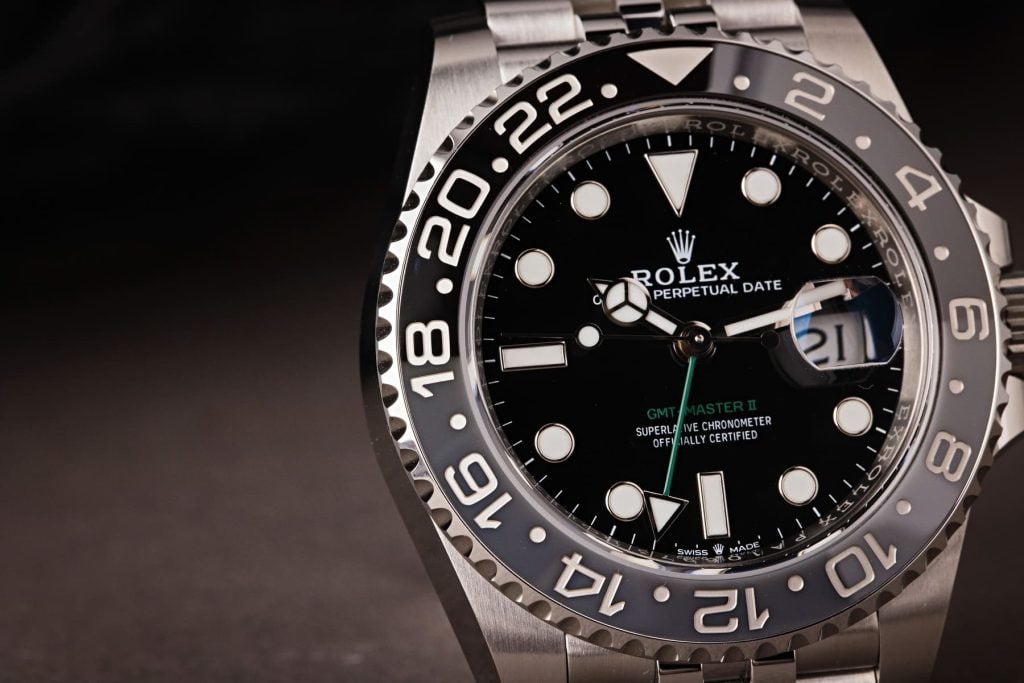
My top picks, based on what I personally see selling at Bob’s: the Pepsi is my collector’s choice now that Rolex has retired it, the Batman offers the most accessible entry into current production steel, and the discontinued 116710LN remains the smartest value in the ceramic lineup. Buyers who want something quietly different should look at the Bruce Wayne, which sells faster through our inventory than almost anything else in the collection.
| Reference and Nickname | Best For | Avg. Pre-Owned Price* |
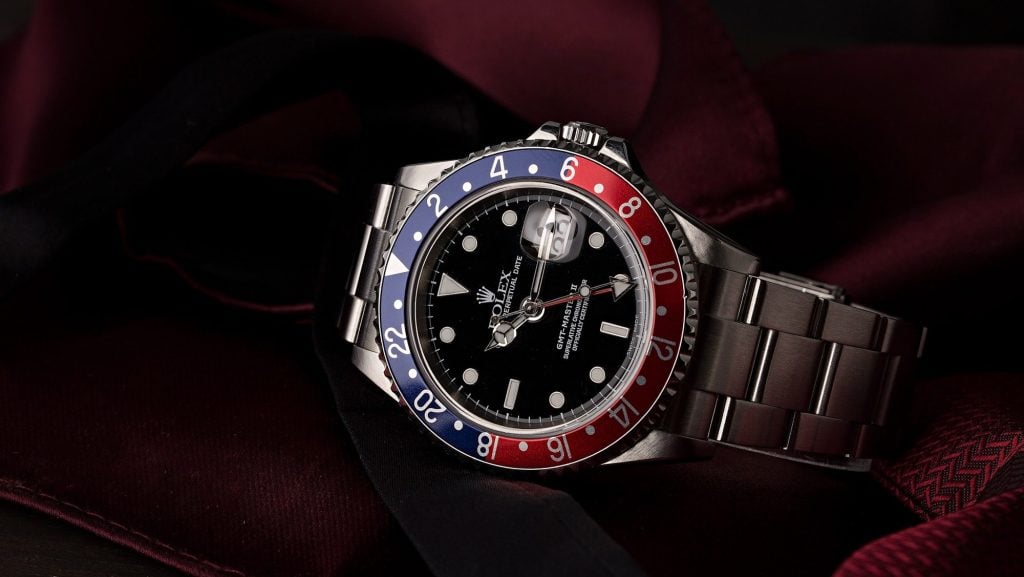
| 126710BLRO Pepsi | The definitive colorway, discontinued in 2026 | $24,100 |
| 126710GRNR Bruce Wayne | Understated current production, high demand | $22,500 |
| 126711CHNR Root Beer | Two-tone Everose warmth | $20,200 |
| 126710BLNR Batman | Most accessible current production steel | $19,700 |
| 126720VTNR Sprite | Left-hand crown configuration | $18,100 |
| 16710 (aluminum) | Vintage proportions and the Coke bezel | $15,200 |
| 116710LN | Lowest-cost path into a ceramic GMT | $13,900 |
*Average sold prices from Bob’s Watches transactions, trailing 12 months through August 2026. Condition, bracelet, and box and papers move individual examples above or below these averages.
Rolex GMT-Master II References and Nicknames by Era
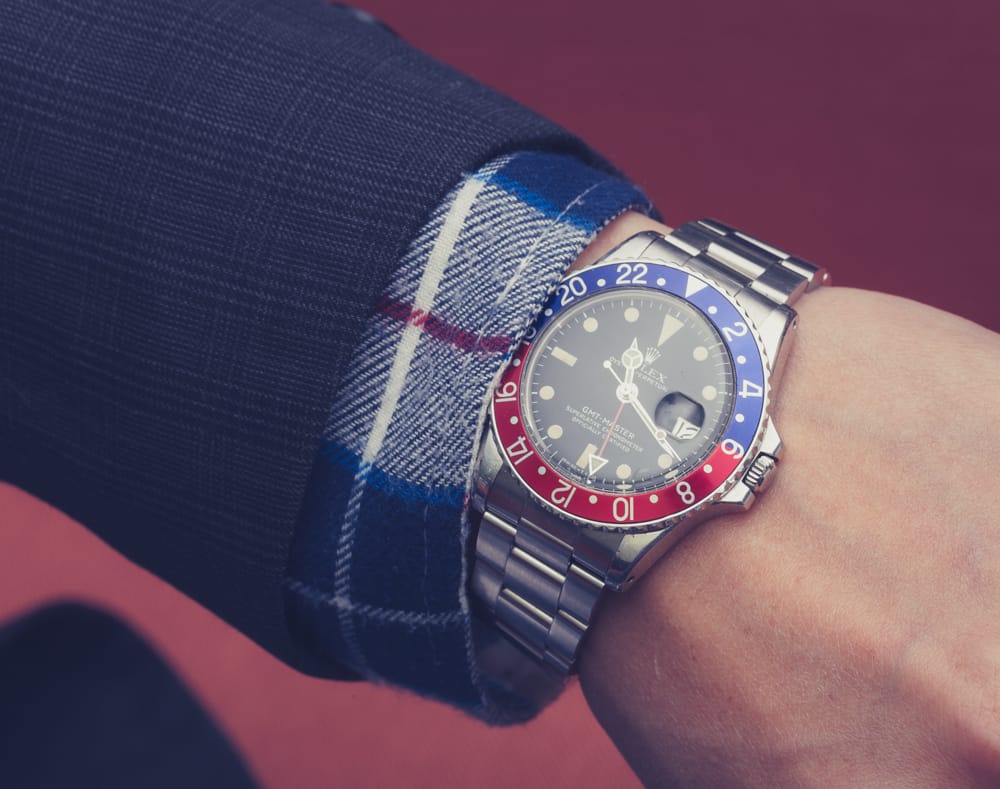
Rolex GMT-Master II references are divided into two eras: aluminum bezel watches produced through 2007 and ceramic Cerachrom references produced since 2005. Collectors identify most of them by bezel nickname rather than reference number, so the tables below pair each code with its colorway and movement. Precious metal versions exist alongside the steel references, including the Everose gold 126715CHNR and the yellow gold 126718GRNR; the white gold Pepsi 126719BLRO, offered with a meteorite dial, left the catalog alongside the steel Pepsi in 2026.
Ceramic era (2005 to present)
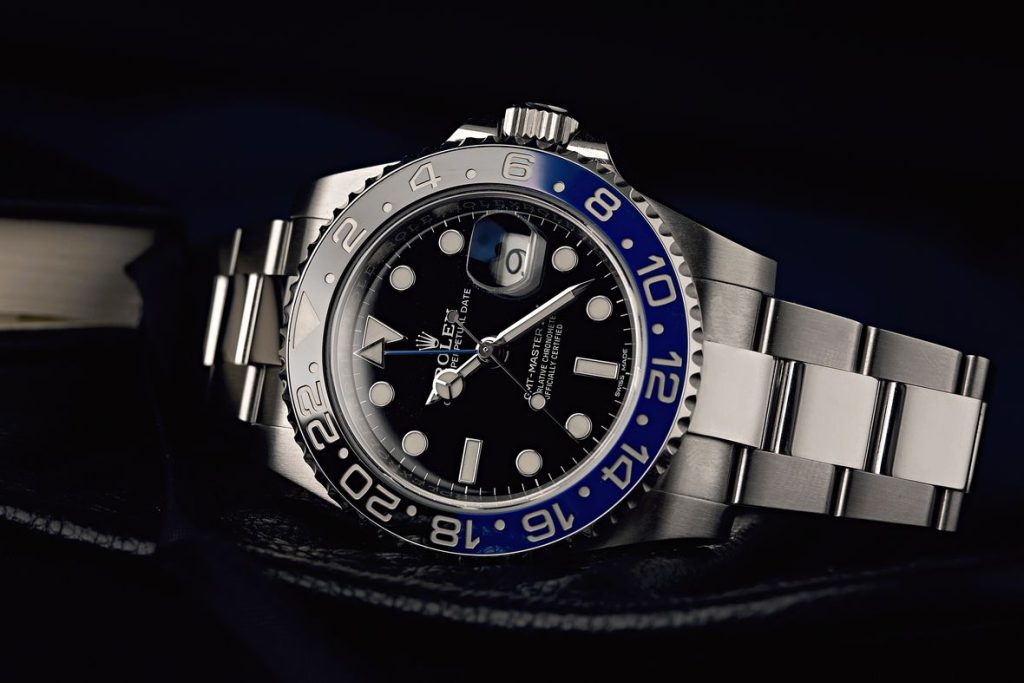
Cerachrom is Rolex’s proprietary ceramic bezel material, introduced to the GMT-Master II collection in 2005, that resists scratching and ultraviolet fading. The ceramic references below span two movement generations, and the movement is the fastest way to date a watch when the seller’s paperwork is incomplete.
| Reference | Years and Bezel | Movement |
| 116710LN | 2007–2019, black | Caliber 3186 |
| 116710BLNR | 2013–2019, blue and black (Batman) | Caliber 3186 |
| 126710BLRO | 2018–2026, red and blue (Pepsi) | Caliber 3285 |
| 126711CHNR | 2018–present, brown and black (Root Beer) | Caliber 3285 |
| 126710BLNR | 2019–present, blue and black (Batman) | Caliber 3285 |
| 126720VTNR | 2022–present, green and black (Sprite), left-hand crown | Caliber 3285 |
| 126713GRNR | 2023–present, grey and black, two-tone yellow Rolesor | Caliber 3285 |
| 126710GRNR | 2024–present, grey and black (Bruce Wayne) | Caliber 3285 |
Aluminum era (1983 to 2007)

Aluminum bezel inserts defined the GMT-Master II’s first two decades, and they fade with sun exposure in ways collectors now prize. The original GMT-Master collection (references 6542, 1675, 16750, and 16700) ran in parallel through 1999, but only the two references below carry the GMT-Master II’s independently adjustable hour hand.
| Reference | Years and Bezel | Movement |
| 16760 (Fat Lady) | 1983–1988, red and black (Coke) | Caliber 3085 |
| 16710 | 1989–2007, Pepsi, Coke, or black | Caliber 3185 / 3186 |
Rolex GMT-Master II Prices: Current Retail vs. Pre-Owned Market
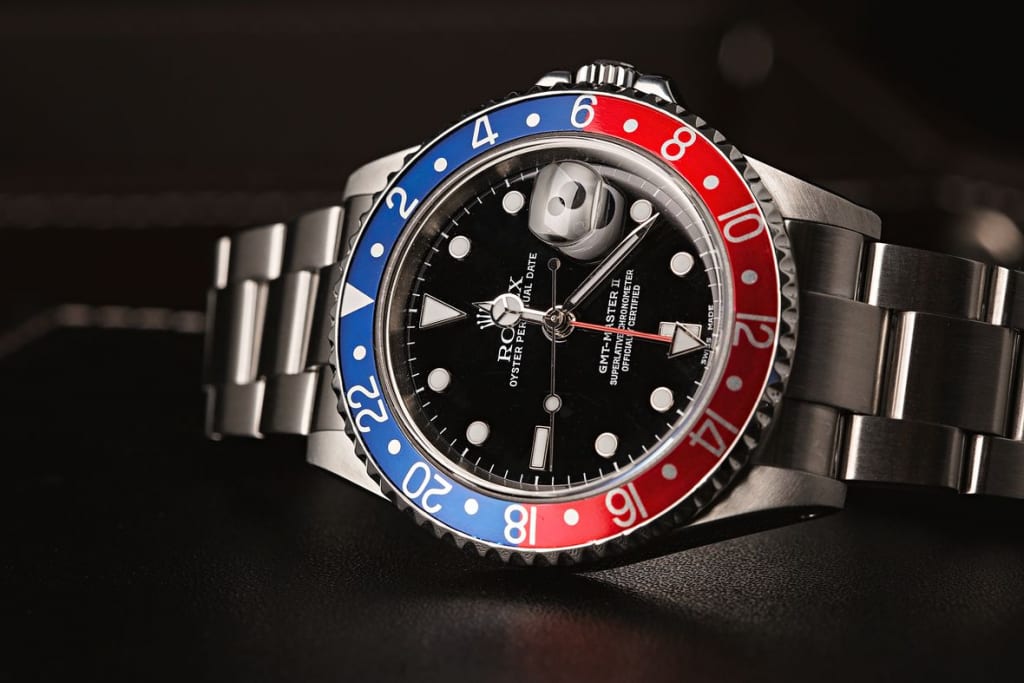
Rolex GMT-Master II prices run on two separate tracks: current retail at authorized dealers and the pre-owned market, where every steel reference trades above its last retail price. Current retail applies only to in-production references such as the Batman, Bruce Wayne, Sprite, and Root Beer. The Rolex Pepsi collection no longer has a retail price at all; Rolex removed the 126710BLRO from the catalog in spring 2026, which makes the pre-owned market the only place to buy one.
The discontinuation reshaped the market immediately. In the transactions I reviewed, the Pepsi averaged roughly $22,900 in the six months before the spring 2026 announcement and about $25,900 in the months since, with most examples now selling between $24,600 and $26,000. Across the trailing 12 months, the Pepsi’s average sold price rose about 17 percent over the prior year, the largest gain in the collection. I included full current figures for every reference in the Rolex buying guide I wrote.I spoke with Carol Altieri, our COO at Bob’s Watches and she mentioned the following:
“The day the Pepsi came out of the catalog, it stopped being a watch you compare to retail and became a watch you compare to other Pepsi watches. We saw buyers who had called decide the same week that pre-owned was the answer.”
Carol Altieri, COO of Bob’s Watches
The rest of the collection seems to have climbed with it. The neo-vintage 16710 posted the second-largest gain in our data, up about 15 percent year over year to a $15,200 average, driven by demand for the Coke bezel that Rolex has never produced in ceramic. The steel Bruce Wayne and the Batman each rose about 9 percent. Speed to sell tells the same story from another angle: the Pepsi and the Bruce Wayne each sold in a median of about five days from listing, the Batman and Sprite in about a week, the 116710LN in about two weeks, and the 16710 in about three weeks. I spoke with Carol Altieri, our COO at Bob’s Watches and she mentioned the following:
Bracelet choice can create it’s own demand for the same or similar watches. In our sales, the Jubilee outsells the Oyster on both the Pepsi and the Batman and carries a premium which can vary depending on the reference. The Rolex Bruce Wayne bucks the trend: the Oyster leads demand on that reference, which fits its more austere character. The value play in the entire lineup remains the discontinued 116710LN. Its all-black ceramic bezel and maxi case deliver most of the modern GMT experience at a $13,900 average, roughly $10,000 less than a Pepsi, with the older Caliber 3186 and its 48-hour reserve as the main trade-off.
Key Features: Caliber 3285, Cerachrom, and the GMT Function

The Rolex GMT-Master II combines a 40mm Oyster case, a bidirectional 24-hour Cerachrom bezel, and the in-house Caliber 3285 movement. Cerachrom is a hardened ceramic that shrugs off scratches and holds its color under ultraviolet exposure, which is why decade-old ceramic bezels still look factory fresh while aluminum inserts from the 1990s fade. The Caliber 3285 is Rolex’s current-generation GMT movement, developed in-house and certified to a stricter standard than the industry norm.
The Caliber 3285, introduced to the GMT-Master II line in 2018, uses Rolex’s Chronergy escapement and delivers a 70-hour power reserve, up from 48 hours in the Caliber 3186 that powers the discontinued 116710LN and 116710BLNR. Every current GMT-Master II reference carries Superlative Chronometer certification of -2/+2 seconds per day.
Core specifications shared across the modern collection:
- Case: 40mm Oyster case, waterproof to 100 meters (330 feet), Triplock crown.
- Materials: Oystersteel, Everose Rolesor, Everose gold, white gold, and yellow gold across the range.
- Bezel: bidirectional rotatable 24-hour graduated Cerachrom insert.
- Bracelet: three-link Oyster or five-link Jubilee, both with the Oysterlock safety clasp and Easylink 5mm extension.
- Movement: Caliber 3285, 70-hour power reserve, paramagnetic blue Parachrom hairspring.
How to use the GMT function

The GMT function separates travelers from tourists, and it takes about a minute to learn. Below I have instructions on how to use the GMT watch. Set it in this order:
- Set the 24-hour hand to your home time (or to Greenwich Mean Time, as pilots originally did) with the bezel’s triangle at 12 o’clock.
- Pull the crown to the first position and jump the local hour hand in one-hour steps to the destination time; the 24-hour hand, minutes, and seconds keep running undisturbed.
- Read home time on the 24-hour hand against the bezel’s engraved scale.
- For a third time zone, rotate the bezel by the offset between home and the third zone and read the 24-hour hand against the repositioned scale.
Rolex GMT-Master II History
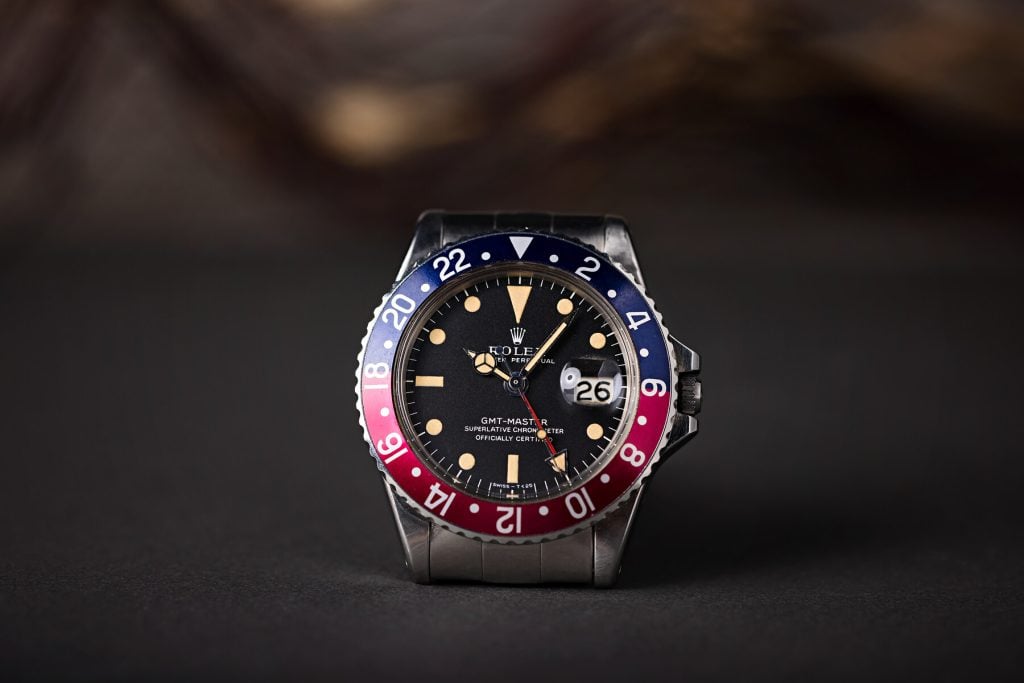
The Rolex GMT-Master II descends from the original GMT-Master, which Rolex developed with Pan American World Airways and released in 1955 so flight crews could track home and destination time on one dial. The history of the original GMT-Master explains that first chapter in full; the short version is that its red and blue bezel earned the Pepsi nickname almost immediately and set the visual template every later reference follows.
Rolex introduced the first GMT-Master II, reference 16760, in 1983, powered by the Caliber 3085. The 3085 decoupled the local hour hand from the 24-hour hand, letting travelers jump the local time in one-hour increments without stopping the movement, the mechanism that still defines the GMT-Master II today.
The modern era arrived in stages. Cerachrom reached the line in 2005 on the model’s 50th anniversary, and the first steel ceramic reference, the all-black 116710LN, followed in 2007. Rolex solved two-color ceramic in 2013 with the blue and black Batman, then cracked red ceramic for the steel Pepsi’s return in 2018, the same year the Caliber 3285 debuted. The left-hand Sprite arrived in 2022, the grey and black Bruce Wayne in 2024, and in spring 2026 Rolex closed the steel Pepsi’s eight-year ceramic run without a replacement, the move that now shapes the entire pre-owned market for this collection.
How to Buy a GMT-Master II: Availability, Waitlists, and Authentication
Buying a Rolex GMT-Master II at retail means joining an authorized dealer’s allocation queue; buying pre-owned means immediate availability at market prices. Rolex publishes no official waitlist, and wait times for steel sport models depend on the individual dealer, the reference, and the buyer’s purchase history, so any specific number you read is an anecdote rather than policy. The Pepsi is no longer available at retail; since spring 2026, the pre-owned market is the only path to that reference.
The pre-owned path trades the waitlist for a different responsibility: verifying what you are buying. The GMT-Master II’s popularity makes it a frequent target for counterfeits and for franken-watches assembled from mixed parts, and the checks below are the ones that catch problems.
Pre-owned authentication and condition checklist
Work through these checks in order, and treat any single failure as a reason to pause the purchase:
- Confirm the serial and reference engravings match the watch’s configuration and, on modern references, the warranty card.
- On aluminum references, verify the bezel insert is original; evenly faded original inserts add value, while service replacements reduce collectibility.
- Watch for franken-watches on high-volume references like the 16710, where mixed-era movements, dials, and cases surface regularly; our guide on how to spot a fake Rolex covers the tells in detail.
- Check bracelet and clasp codes against the watch’s era, and assess stretch on vintage Oyster and Jubilee bracelets.
- Price in the paperwork: complete sets with box and papers command a meaningful premium over watch-only examples, especially on modern references.
- Ask for service history; a documented service from Rolex or a qualified independent watchmaker is worth real money on a neo-vintage reference.
Is the Rolex GMT-Master II a Good Investment?
The Rolex GMT-Master II is generally considered one of the stronger value-holding models in the Rolex catalog, though no reference guarantees a profit. In our sales data, every major reference posted a higher average sold price over the trailing 12 months than in the prior year, led by the Pepsi at about 17 percent and the 16710 at about 15 percent. Those are historical observations from a specific two-year window, not projections, and the same market that rewarded the Pepsi’s discontinuation can cool when supply catches up.
Value retention tracks a few concrete factors: production status (discontinued references like the Pepsi, 116710BLNR, and 116710LN behave differently from current catalog watches), condition, bezel colorway, completeness of box and papers, and provenance. Certain references can hold value or may appreciate; others trade closer to their last retail price for years. Buy the reference you want to wear, treat any gain as a welcome side effect, and keep the paperwork.
Choosing Your Rolex GMT-Master II

If you’re looking at buying a GMT as an investment, I would personally pursue a Pepsi with box and papers, because the discontinued reference now competes only against other pre-owned examples in my opinion. Buyers who want current production should weigh the Batman’s accessibility against the Rolex Bruce Wayne, and left-handed wearers finally have a factory answer in the Sprite. Value hunters should start with the 116710LN, and anyone drawn to patina and thinner cases should handle a 16710 before deciding anything.
Every GMT-Master II sold at Bob’s Watches is inspected and guaranteed authentic, priced against our own transaction data rather than asking prices, and available with free overnight shipping. Whichever reference you land on, insist on the same standard wherever you buy: verified authenticity, transparent pricing, and a watch whose parts all belong together.