The Formula 1 Monaco Grand Prix, taking place June 5–7, is unlike any other race in the world. While every Formula 1 event is a thrilling spectacle, Monaco is truly in a league of its own. The legendarily narrow street circuit, the dramatic backdrop of the Mediterranean, and the armada of luxury yachts in Port Hercule create an atmosphere that extends far beyond the race itself. For many visitors, the weekend is as much about Monaco’s yachting culture as it is about motorsports. Which is exactly why the Rolex Yacht-Master feels so appropriate during Grand Prix weekend.
Why the Yacht-Master Fits Monaco Better Than the Daytona
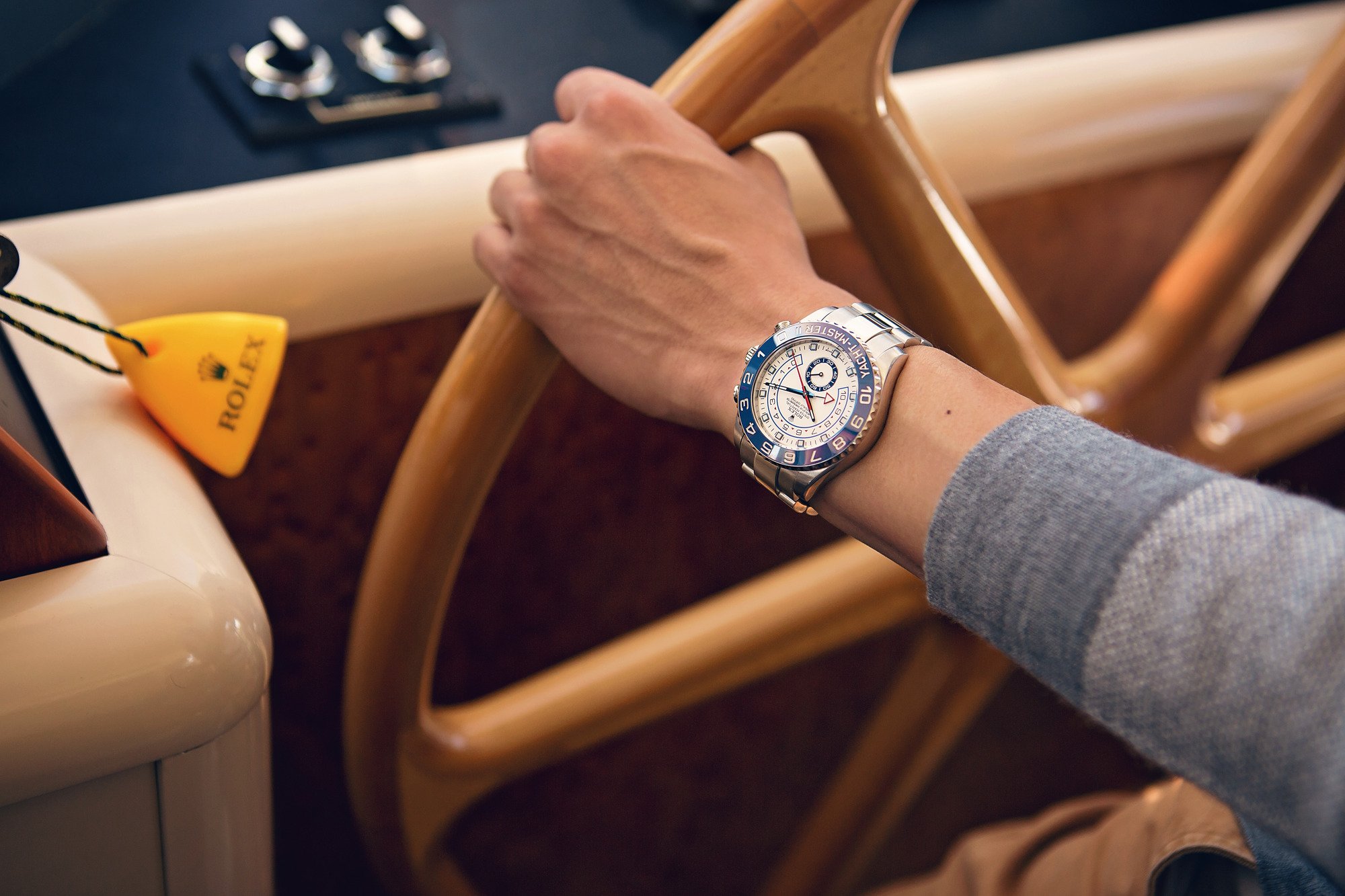
While the Rolex Daytona may be the watch most closely associated with motorsport, the Monaco Grand Prix is as much about the iconic harbor and the Mediterranean lifestyle as it is about racing itself. The Rolex Yacht-Master history dates back to 1992 when the model was introduced for yachtsmen of taste and means. Inspired by sailing, yachting, and life along the water, it was designed to combine sportiness with refinement rather than emphasize the rugged tool-watch character of Rolex’s other sports watches. In any setting shaped by the culture of sailing and yachting, the Yacht-Master feels entirely in its element.
During Grand Prix weekend, Monaco’s posh Port Hercule becomes one of the world’s most intriguing and impressive displays of yachts and superyachts. Some visitors watch practice sessions, qualifying, and the F1 race itself from yachts moored along the harbor, while others move between yacht parties, hospitality decks, and waterfront restaurants throughout the weekend. For a few days each year, the marina becomes the social center of Formula 1.
The Superyachts That Define Monaco’s Grand Prix Image
The harbor itself has become one of the defining images of the Monaco Grand Prix. Over the years, some of the world’s most famous and expensive superyachts have appeared during race weekend, including the 344-foot Lady Moura, the 269-foot Alfa Nero, and the 400-foot Kismet, one of the largest and most technologically advanced private yachts operating today. Hundreds of yachts gather in and around Monaco during Grand Prix week, with additional vessels often anchored offshore when coveted berths in Port Hercule fill up.
The Yacht-Master’s design reinforces that connection. Although it shares some DNA with the Submariner, the Yacht-Master has always occupied a more luxurious position within the luxury sports-watch lineup. One of its defining features is a bidirectional rotating bezel, which can be turned in either direction to measure elapsed time between yachting events, a practical function for sailing and life on the water. The raised, polished numerals are not only visually distinctive but also improve legibility against the matte bezel surface.
Materials That Feel Made for the Mediterranean

The Yacht-Master’s collection’s materials further highlight its appeal in Monaco. Rolesium models combine Oystersteel with platinum, creating a subtle silver-on-silver aesthetic that mirrors the polished metal, white hulls, and bright Mediterranean light found throughout the marina. Everose gold versions offer a warmer interpretation, while references fitted with Rolex’s Oysterflex bracelet combine the appearance and comfort of a rubber strap with the stability of a flexible metal blade hidden inside. In 2023, Rolex further expanded the collection with the black-on-black RLX Titanium Yacht-Master 42, bringing a lightweight, corrosion-resistant material long associated with marine and professional sporting applications to the line. Combined with Rolex’s Chromalight display and self-winding Perpetual movement, the Yacht-Master delivers the performance expected of a modern Rolex sports watch with a distinct maritime flair.
Yacht-Master vs. Yacht-Master II: Lifestyle Watch and Regatta Instrument
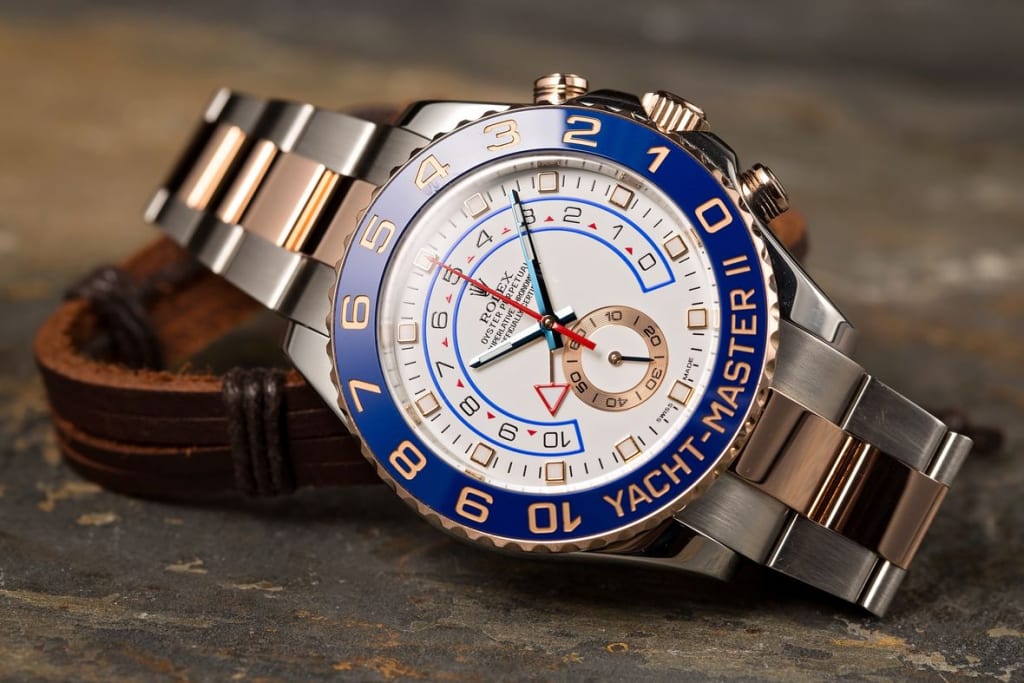
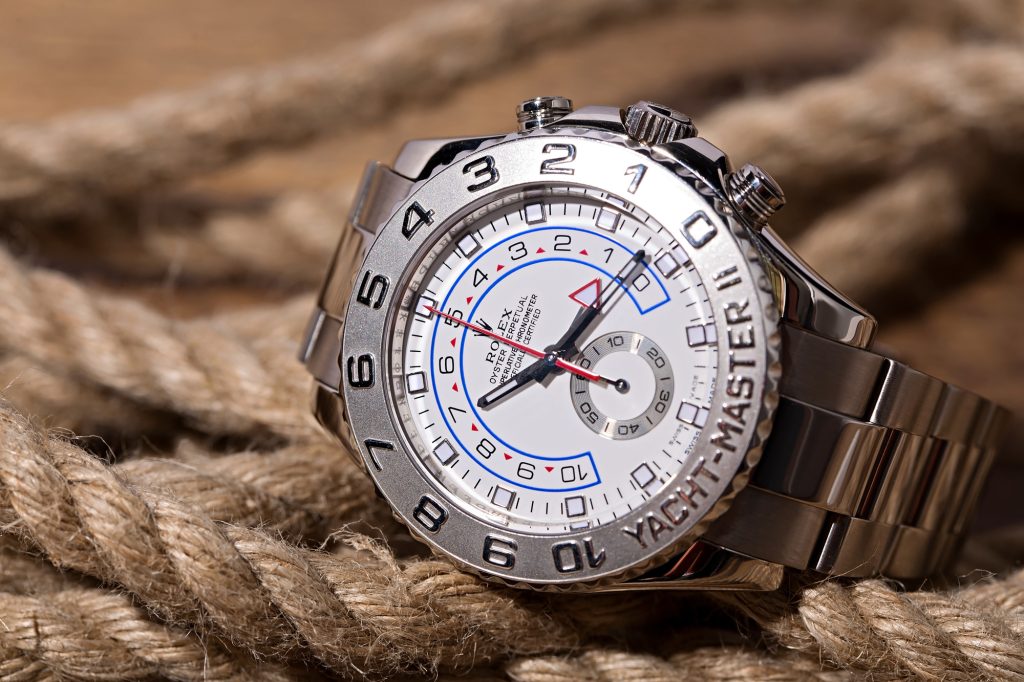
Back in 2007 Rolex first introduced the Rolex Yacht-Master II. Although the two watches share a name, they serve different purposes. The Yacht-Master is a luxury sports watch inspired by the world of marinas, sailing, and coastal living. The Yacht-Master II, by contrast, was developed specifically for competitive yacht racing. Its signature feature is a programmable regatta countdown timer that allows yacht crews to synchronize their starts with official race sequences. The differences extend beyond the movement. While the Yacht-Master has evolved into a diverse collection offered in multiple sizes and materials, the Yacht-Master II remained a more specialized proposition throughout its production run. Produced exclusively in a 44mm case, it appeared in Oystersteel, yellow Rolesor, yellow gold, white gold, and Everose gold configurations, all paired with Oyster bracelets and the collection’s distinctive blue bezel. The Yacht-Master evolved into Rolex’s luxury nautical lifestyle watch, while the Yacht-Master II became a dedicated instrument for the sport of yacht racing.
Together, they represent the two elements that have long defined Monaco itself: luxury and competition. Monaco is home to one of the world’s most prestigious motor races, yet much of its identity is centered around the harbor. It is a place where superyachts, elite hospitality, international travel, and high-level competition exist side by side. The Yacht-Master and Yacht-Master II capture those same themes in watch form.
Why the Yacht-Master Belongs at Monaco
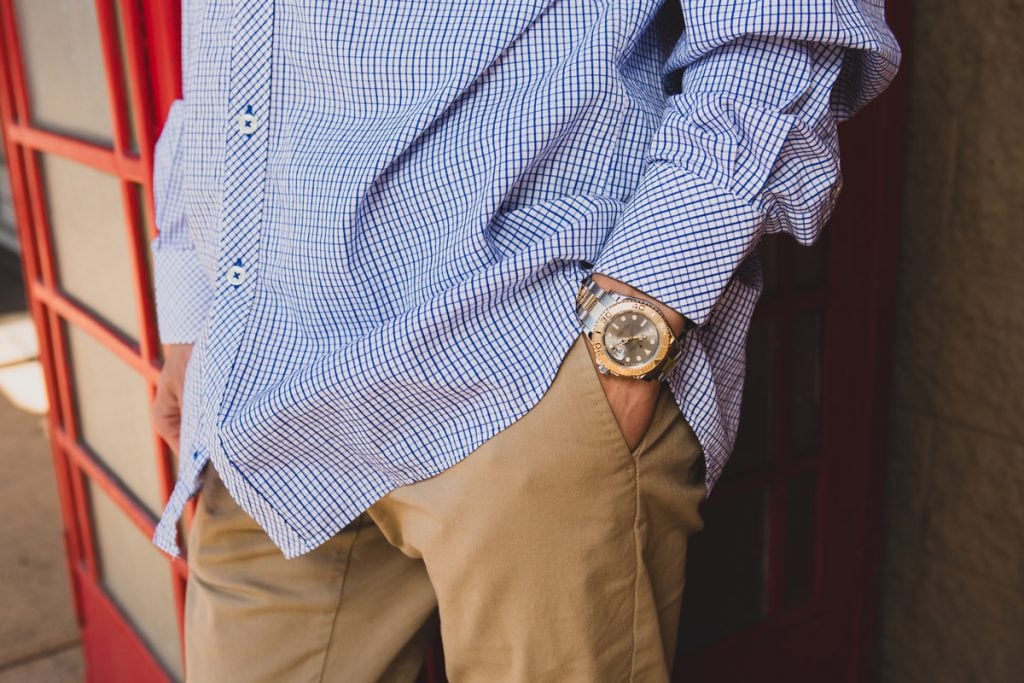
The Rolex Yacht-Master may not be the first watch people think of when they think of Formula 1, but that is exactly what makes it so well suited to Monaco. This is not just a race weekend. It is a meeting point for motorsport, yachting, luxury travel, and Mediterranean style. Against that backdrop, the Yacht-Master feels less like an alternative to the Daytona and more like the watch that best captures Monaco’s full identity. Refined, sporty, nautical, and unmistakably Rolex, it is a natural fit for a Grand Prix defined as much by the harbor as by the circuit.