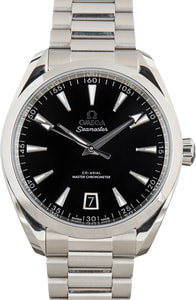
The Wimbledon dial is essentially a Datejust with a slate-grey sunray dial and Roman numerals outlined in green, a look that’s pretty hard to confuse with anything else Rolex makes. The nickname grew organically over time, largely because of Rolex’s long relationship with the Wimbledon tennis tournament and the fact that Roger Federer was so often seen wearing this configuration. Rolex never officially named it the “Rolex Wimbledon,” but the label stuck anyway, to the point that even authorized dealers use it without thinking twice.
Key Takeaways:
- Origins: First introduced in 2009 on the Datejust II
- Defining Features: Slate grey sunray dial, green-bordered Roman numerals and a single luminous baton at 9 o’clock
- Models: Available in Datejust 36mm and 41mm sizes
- Collectability: Popular because it’s sporty and dressy
The Wimbledon dial is a specific Rolex Datejust configuration with a slate-grey sunray dial and Roman numerals outlined in green, a combination that stands out pretty quickly once you’ve seen it in person. The nickname didn’t come from Rolex itself. It grew out of the brand’s long-running Wimbledon sponsorship and the fact that Roger Federer was so often photographed wearing this exact setup. While “Wimbledon” was never an official Rolex name, it’s become common shorthand among collectors and even at authorized dealers.
The Story Behind the Name
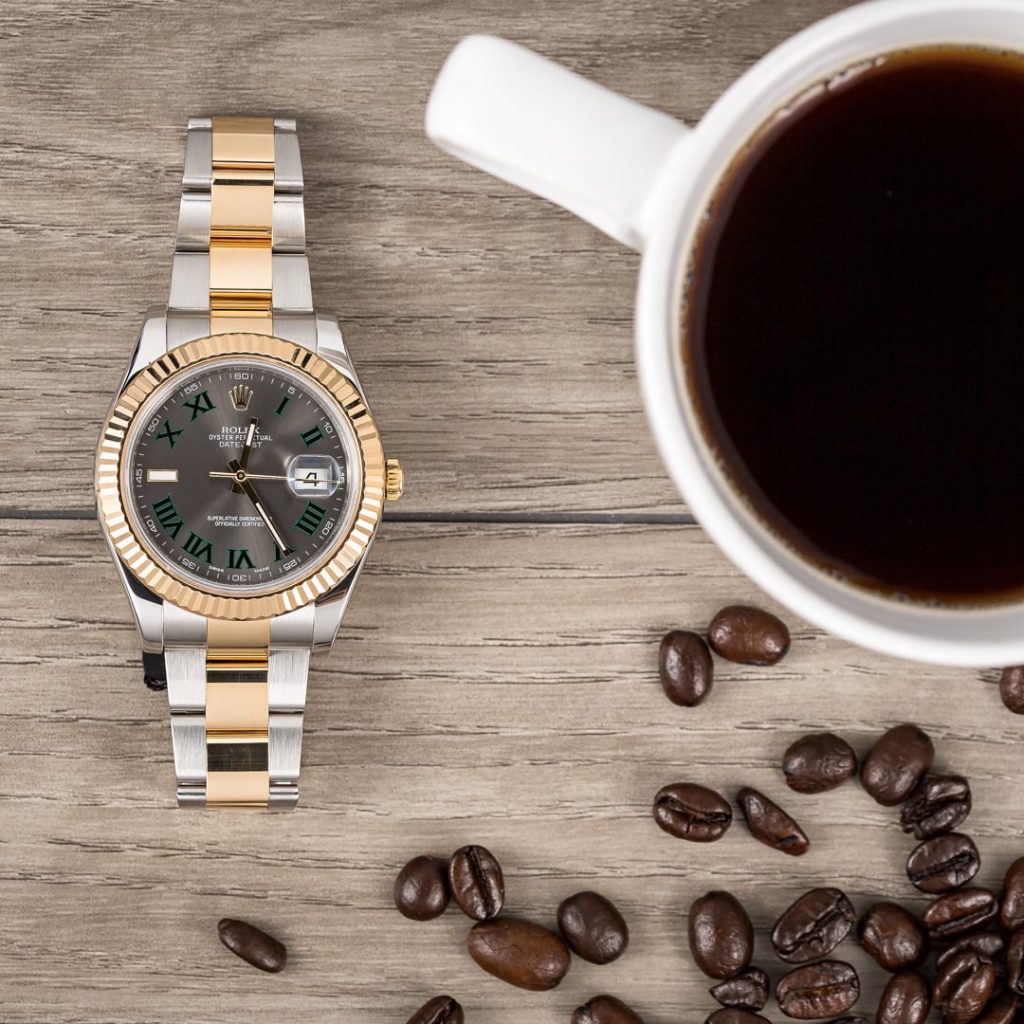
The history of Rolex has a long standing with tennis, but never has sport influenced a dial like Wimbledon. The use of green is a big part of the dial’s moniker. Rolex has been the Official Timekeeper of Wimbledon since the late 1970s and a lot of collectors associate the green sub-dials with Wimbledon’s grass courts.
The Roger Federer Connection
A big part of why this dial took off comes back to Federer. He’s been a Rolex ambassador since the 2000s, and over the years he was regularly photographed wearing a Datejust with the slate dial and green accents, including during some of his Wimbledon wins. Those images did a lot of the work. Seeing Federer lifting trophies with that watch on his wrist is what led fans to start calling it the “Wimbledon” long before the name felt official. At this point, even people who barely follow tennis tend to recognize it as the Federer watch.
Rolex released the Wimbledon dial in 2009, starting with the Rolex 116333. The larger 41mm version of the Datejust. The dial then moved over to the Datejust 41 a few years later when the Datejust II was discontinued. Options then included the Rolex 126333 and Rolex 126334. More recently, the dial was added to the current 36mm lineup, opening up the Wimbledon Rolex to an even broader range of collectors.
Technical Specifications and Aesthetics
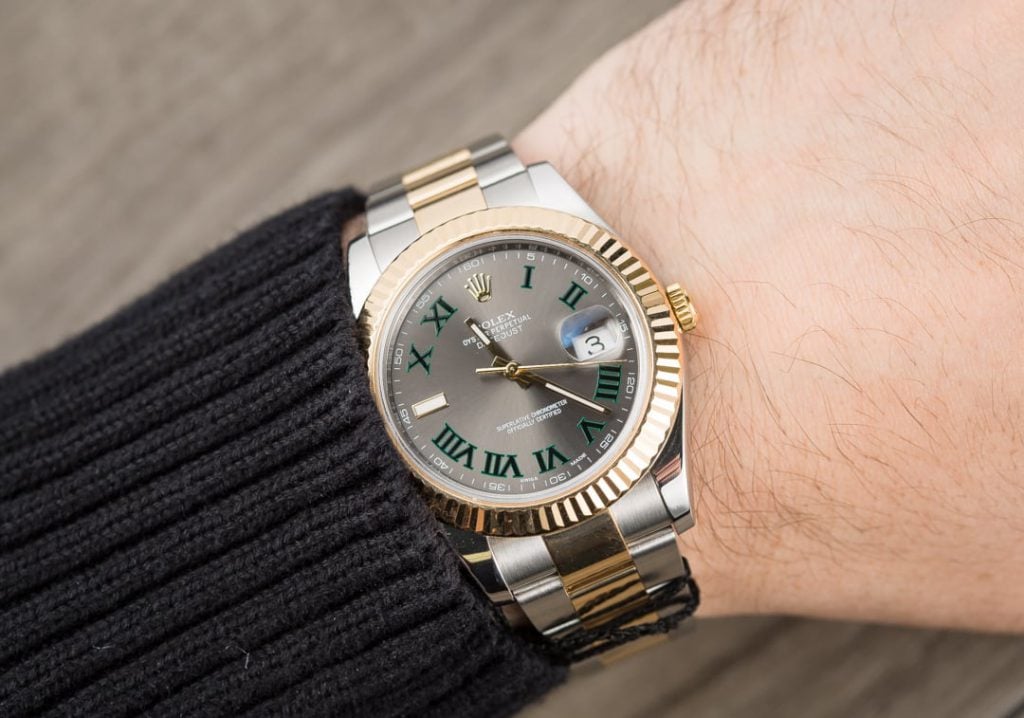
Wimbledon dial starts with a slate grey base color and sunray finish. “Sunray” is a brushed technique with grooves that reflect light as the wrist moves. The dial appears almost metallic and bright in direct sunlight. In darker light it shifts to a deeper charcoal grey.
Dial Component Breakdown:
| Feature | Description | Material/Detail |
| Dial Color | Slate (Dark Grey) | Sunray finish |
| Hour Markers | Roman Numerals | Green-bordered black |
| The “9” Marker | Luminous Baton | Chromalight display |
| Movement | Automatic | Calibre 3235 (70-hour power reserve) |
The dial doesn’t follow traditional design cues but is still legible, nonetheless. Black Roman numerals bordered in green pop against the grey face for high contrast. Additionally, 9 o’clock is marked with a Chromalight baton making it easy to tell the time at-a-glance, day or night. This feature, believe it or not, has sparked debate among some collectors.
Choosing Your Rolex Wimbledon
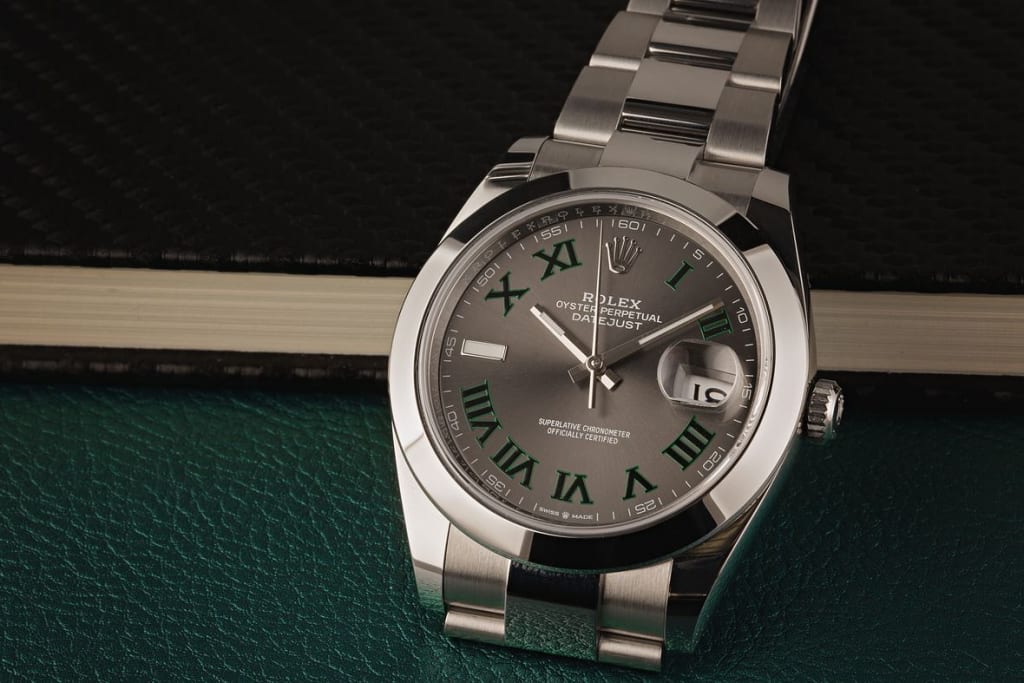
Rolex makes the Wimbledon dial in a few different configurations. There’s a handful of case sizes, metal variations, and bracelet options. Each has its own unique character.
Case Sizes
Starting with the cases. The Wimbledon comes in either 36mm or 41mm. The Datejust 36 is classic and comfortable to wear with anything including under a shirt cuff. The Datejust 41 on the other hand has more wrist presence and works great for anyone with a larger wrist or who wants something a little less traditional. Both are powered by the next-gen caliber 3235 with a 70-hour power reserve and Rolex’s Superlative Chronometer certification.
Metal Options (Rolesor)
Rolex makes the Wimbledon dial in a few metal finishes:
- Oystersteel (Reference 126300): Full stainless steel in 904L grade
- White Rolesor (Reference 126334): Oystersteel case with white gold fluted bezel
- Everose Rolesor (Reference 126331): Oystersteel case with Everose gold fluted bezel
- Yellow Rolesor (Reference 126333): Oystersteel case with yellow gold fluted bezel
Bracelet and Bezel Pairings
Bracelet choice changes the whole feel of the watch, and it’s usually where people spend the most time debating. The Jubilee, with its five-piece links, is dressier and tends to be the traditional match for the Wimbledon dial. The Oyster goes the other direction, three-piece links, a sportier look, and a bit more visual simplicity on the wrist. Bezel choice plays into it too. You can keep things clean with a smooth polished bezel, or go fluted, which is the combination most people picture when they think “Wimbledon,” especially paired with a Jubilee. That’s also the setup Federer was seen wearing most often, which didn’t hurt its reputation.
Why the Wimbledon Dial is Polarizing
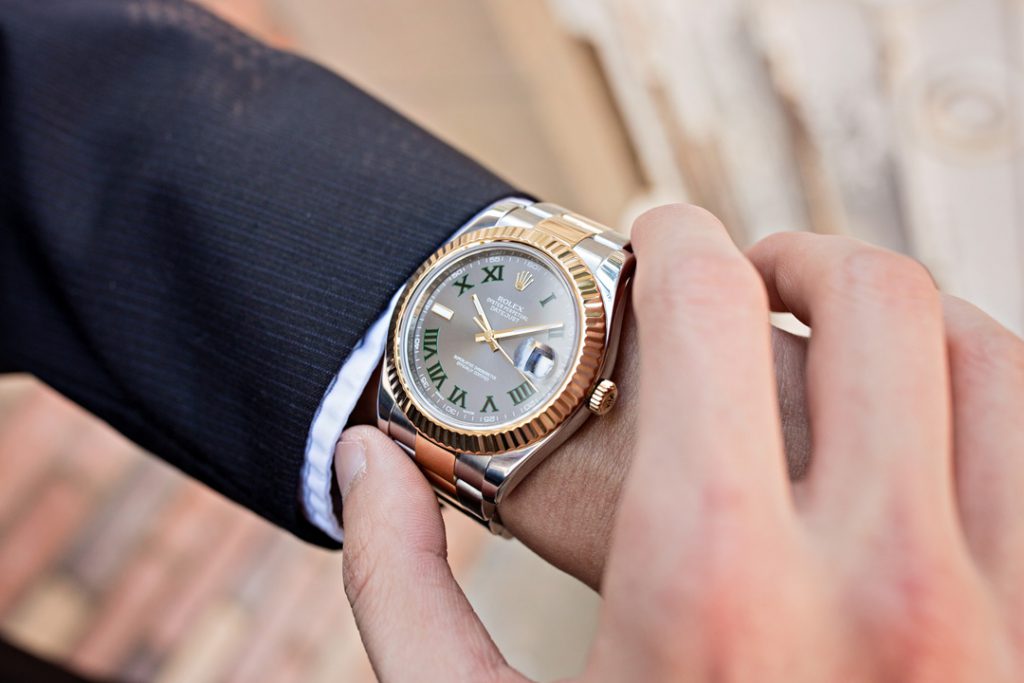
Not every collector loves the Wimbledon dial, and most of the pushback comes down to one small detail: the glowing baton at 9 o’clock. Traditional Rolex enthusiasts tend to care a lot about symmetry, and on this dial you’ve got nine Roman numerals and one lumed marker sitting off to the side. For some people, that imbalance is hard to unsee.
Others see it differently. The lume-filled baton actually serves a practical purpose at night, since Roman numerals themselves don’t glow, and the odd placement gives your eye a reference point in the dark. And then there are collectors who simply like that it feels a bit strange. The offset marker has personality especially compared to safer Datejust layouts. It might be remembered by some as a misstep. To others, a clever design element. However, there’s one thing that’s hard to argue with. The Wimbledon dial always gets people talking.
Is the Rolex Wimbledon a Good Investment?

The Wimbledon dial occupies a bit of a strange middle ground in today’s Rolex lineup. It isn’t a limited edition or something that’s been discontinued. Rolex still produces it as part of the regular Datejust collection. At the same time, it’s not a watch you can just walk into an authorized dealer and buy. Demand has stayed ahead of supply for years, and that gap hasn’t really closed.
Market Considerations:
- Retail Availability: Most ADs have waiting lists for the Wimbledon dial. In particular in White Rolesor with the fluted bezel and Jubilee bracelet
- Secondary Market Pricing: On the pre-owned side, these usually trade above retail, but they don’t reach the stratospheric pricing you see with models like the Submariner or Daytona. There’s still a premium, just not the kind that feels untouchable.
- Long-term Outlook: A lot of the dial’s appeal comes from the Federer connection, and that backstory tends to help when it comes to long-term value.
Retail prices range from approximately $8,150 for the 36mm Oystersteel version to over $17,000 for 41mm Rolesor configurations with fluted bezels. On the secondary market, most examples trade a bit over retail, with the exact number coming down to condition and how hard they are to get at the moment. It’s not a watch people buy hoping for a quick flip. Instead, it’s one that tends to age well value-wise, especially compared to most non-sport Rolex references.
Wimbledon vs. Standard Datejust Dials

What makes the Wimbledon dial special? Let’s compare it to standard Datejusts. On those watches, simple baton-style hour markers or diamonds serve as the hour markers and there’s lume across the dial for extra legibility at night. The Wimbledon dial opts for a different aesthetic, which is where things really start to get interesting.
Comparative Analysis:
| Feature | Wimbledon Dial | Standard Datejust Dials |
| Hour Markers | Green-outlined Roman numerals | Baton markers, diamonds, or plain Roman numerals |
| Lume Application | Single baton at 9 o’clock only | All hour markers (typically) |
| Dial Finish | Slate grey sunray | Multiple colors and finishes available |
| Nickname Recognition | Widely known as “Wimbledon” | Referenced by color or marker style |
The Wimbledon loses a bit of practicality of a regular Datejust with its immediately identifiable character. Yes, you could wear a blue dial with traditional aesthetics, but it doesn’t stand out as boldly, or have the Federer association that so many crave.
Frequently Asked Questions About the Rolex Wimbledon
Conclusion
Rolex managed to blend its rich sports watch history with its legacy of formal dress watches through the Wimbledon dial. A bold decision originally when it debuted in 2009, the slate/GREEN dial pattern has become one of the most popular dial treatments found on today’s Rolex watches. The color combination is interesting enough to not look bland, but still retains the versatility of the Datejust as a daily wearer.
When searching for something authentic to collect, look no further than the Wimbledon. A name like Federer immediately gives this watch cultural significance outside of the watch collecting community. Combine that with the quality and craftsmanship of the Datejust platform, and you have a watch that works just as well as it looks. Love or hate the funky 9 o’clock marker, you can’t deny the classics everywhere else on the dial. The Wimbledon has solidified itself as a modern Rolex legend.