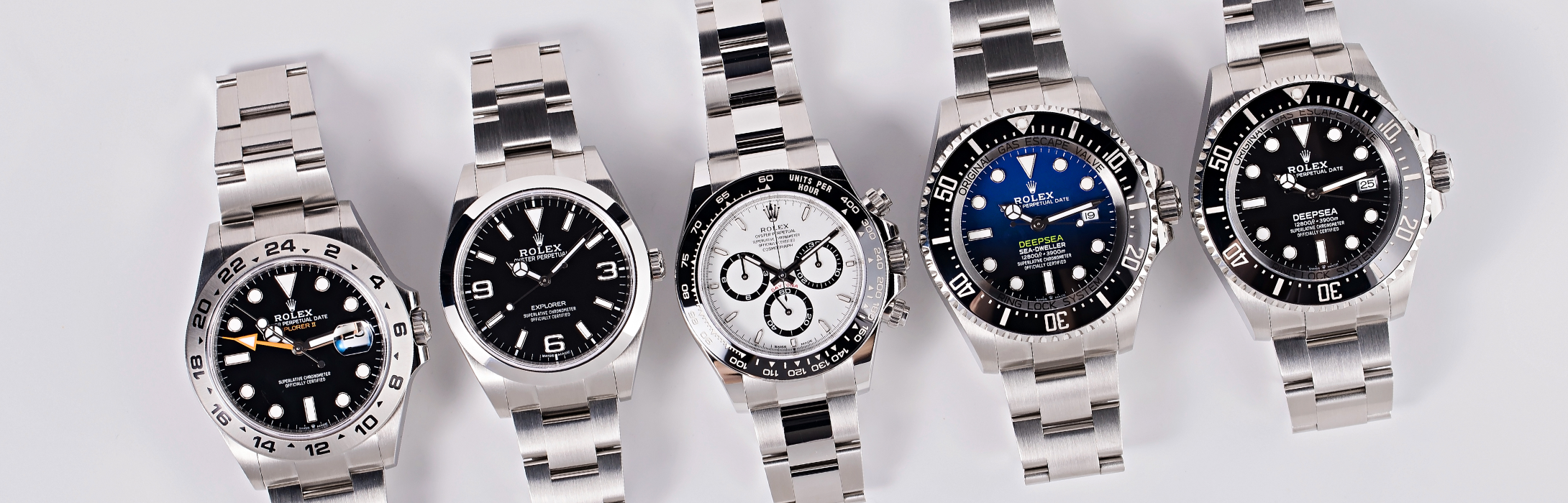
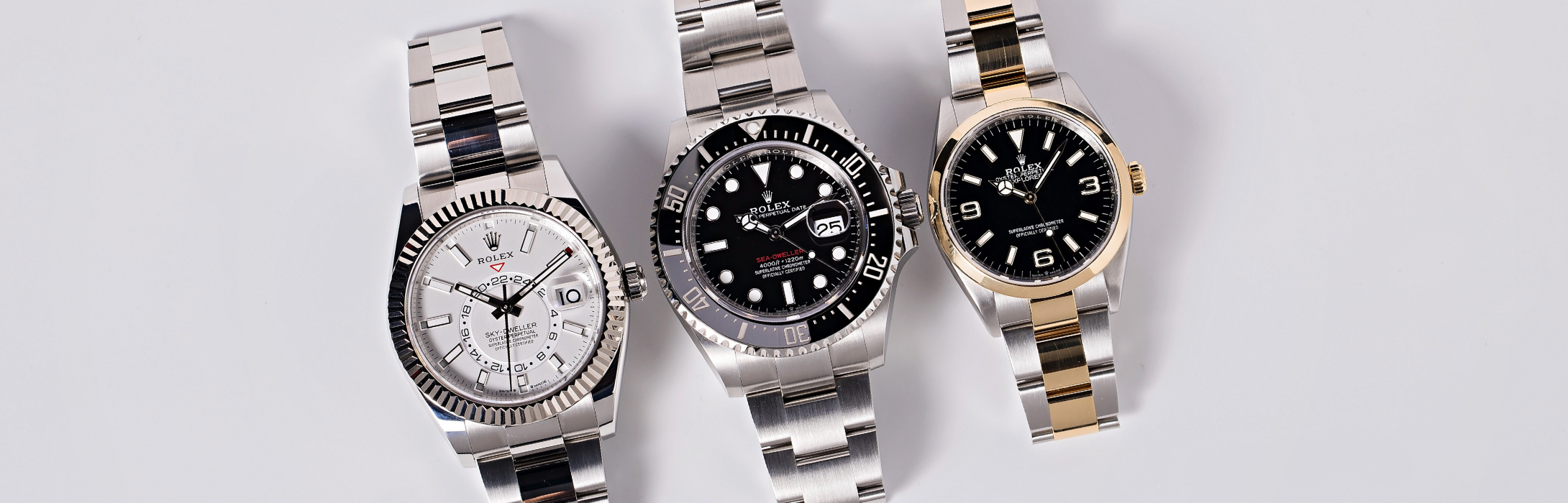
Buying a Rolex Daytona costs between $16,900 and $84,600 at current retail, and between roughly $18,500 and well over $100,000 on the pre-owned market. I have watched hundreds of Rolex Daytonas for sale cross our sales desk over the past twelve months, and the real answer depends on reference, metal, dial, and condition.
Key Takeaways
- The current steel Daytona (ref. 126500LN) retails for $16,900, yet most examples in our sold data brought between $28,000 and the high $50,000s over the past year.
- Two-tone Daytonas are the most accessible entry point, with recent sold prices starting around $18,500.
- White “Panda” dials consistently sold for about $5,000 to $6,500 more than identical black-dial watches in our transactions.
- Precious metal references generally traded between the low $40,000s and $90,000, with rare dial variants exceeding $100,000.
- Vintage four-digit references in our recent sales ranged from $33,000 to $90,000, and exceptional examples at auction can reach seven figures.
Those are the headlines. Below, I break down every price tier with the figures our own transactions produced over the past year, plus my honest opinions on which Daytonas I think are worth the money and which premiums I would personally skip.
How Much Is a Rolex Daytona? My Direct Answer

A Rolex Daytona costs between $16,900 and $84,600 at official retail, depending on the metal, while pre-owned market prices range from roughly $18,500 for two-tone references to well over $100,000 for platinum and rare dial variants. The steel reference 126500 collection carries a $16,900 retail price but trades hands on the secondary market for $28,000 and up because authorized dealer waitlists stretch for years. Most pre-owned Daytonas sell in a band between the mid $20,000s and the mid $40,000s.
That paragraph is the short version, and I stand behind every number in it because the pre-owned figures come from our own completed sales, not from scraping someone else’s listings. Asking prices and sold prices are two different animals, and I have strong feelings about guides that quote the former as if it were the latter.
Rolex Daytona Retail Prices vs. Pre-Owned Prices

Retail and pre-owned are two separate markets. Retail means the MSRP on the official Rolex catalog at an authorized dealer, which almost nobody can walk in and pay for a steel Daytona. Pre-owned means what watches actually sell for on the secondary market today. Here is the current retail picture for the main configurations, as of this writing.
| Reference | Configuration | Current Retail (MSRP) |
| 126500LN | Oystersteel, Cerachrom bezel | $16,900 |
| 126503 | Yellow Rolesor (steel and gold) | $24,550 |
| 126518LN | Yellow gold, Oysterflex bracelet | $42,700 |
| 126505 | Everose rose gold | $59,100 |
| 126506 | Platinum, ice blue dial | $84,600 |
Retail prices change roughly once a year, so verify the current figure on Rolex.com before you anchor a negotiation to it. The pre-owned side is where things get interesting, and it is the market I actually live in.
What Our Sold Data Shows: Twelve Months of Real Daytona Prices

Our completed Daytona sales over the past twelve months ranged from about $18,500 at the low end to over $260,000 at the top, with a median right around $31,000. Half of everything we sold landed between roughly $23,500 and $40,500. The Daytona sits among the five most popular Rolex models in our business, and steel references account for roughly four out of every ten Daytona sales, which tells you exactly where demand concentrates.
| Reference Group | What It Is | Our Sold Range (Past 12 Months) |
| 116520 | Pre-ceramic steel, caliber 4130 | $20,000 – $30,000 |
| 116500LN | Ceramic-bezel steel (2016–2023) | $23,000 – $38,000 typical |
| 126500LN | Current-generation steel | $28,000 – high $50,000s |
| 116503 / 126503 | Two-tone steel and gold | $19,000 – $31,000 |
| 116518 / 126518 | Yellow gold on Oysterflex | $26,000 – $50,000 |
| 116509 / 126519 | White gold | $29,500 – $60,000, rare dials higher |
| 126505 | Everose rose gold | $53,500 – $64,000 |
| Vintage four-digit | 1950s–1970s manual-wind | $33,000 – $90,000+ |
One trend worth flagging: I noticed the median sold prices on the current steel references firmed up through the first half of 2026 compared with late 2025. I would not call it a runaway market, but the softness some commentators predicted has not shown up in our numbers.
The Steel Daytona and the White Dial Premium

The steel Daytona is the reference everyone asks me about first, and the price gap between dial colors surprises almost every first-time buyer. In our sold data, white-dial Rolex Panda examples of the 126500LN brought a median of about $38,200 against roughly $31,700 for the black dial, a premium of $5,000 to $6,500 for what is mechanically the identical watch. The prior-generation 116500LN shows the same split: white dials at a median near $32,000, black dials near $26,600.
Here is my honest take: I think the Panda premium is real and durable, because the white dial with black sub-dials is the configuration that photographs best and echoes the vintage exotic dials collectors chase. But if you buy to wear rather than to post, the black dial is the quiet value play in the steel lineup. Better still, the pre-ceramic 116520 remains the most attainable modern steel Daytona, with most of our sales landing in the low-to-mid $20,000s. I like that watch a lot. It has the same 40mm case architecture and a metal bezel that ages with character.
“The first question I ask every Daytona buyer is whether they are buying to wear or to collect. If you are buying to wear, the black dial steel or a clean two-tone reference gives you the identical experience on the wrist for thousands less, and that is exactly the advice I give my own friends. Pay the Panda premium only if that dial is genuinely the one you want to look at every day.”
Carol Altieri, COO of Bob’s Watches
Two-Tone and Gold Daytonas: Where I Think the Value Is

From what I’ve been seeing, the cheapest way into the model is the buy a two-tone Daytona, and I think they are chronically underrated. References like the 116503 sold with us mostly between $19,000 and $23,000, and the current 126503 between roughly $25,600 and $30,900. That means a two-tone Daytona can cost less on the secondary market than a steel one, which is backwards relative to their retail prices and, in my opinion, one of the few genuine bargains left in the Rolex catalog.
On the precious metal side, you can buy a gold Daytona watch on the Oysterflex bracelet mostly traded between $26,000 and $50,000, white gold examples centered in the mid $40,000s, and Everose models between $53,500 and $64,000. Exotic dials change everything: white gold pieces with rare dials have brought over $100,000 in our sales, and our platinum transactions landed around $90,000. My personal favorite of the group is the white gold on Oysterflex. It has the heft of a precious metal watch without shouting about it.
Vintage Daytonas and the Paul Newman Effect

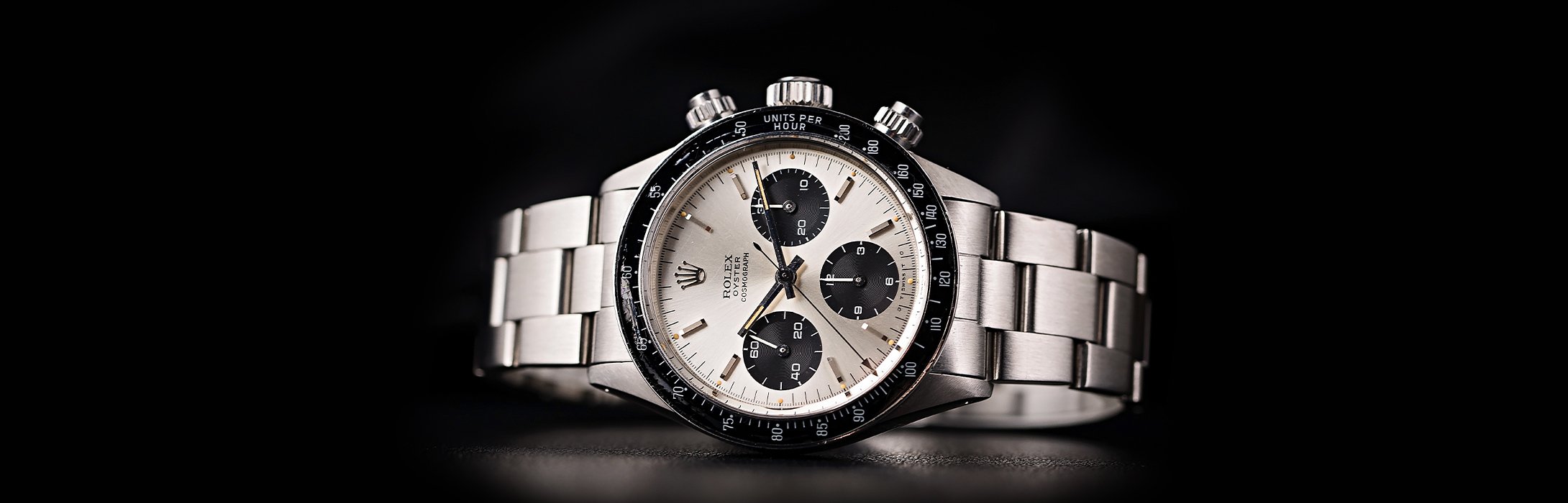
Rolex introduced the Cosmograph Daytona in 1963 with the reference 6239, a manual-wind chronograph built for motorsport timing and named for the Daytona International Speedway in Florida. Those early four-digit references, produced through the late 1980s, are now the blue-chip end of the market. In our recent sales, vintage references such as the 6234, 6239, and 6263 brought between $33,000 and $90,000 depending on condition and originality.
The Paul Newman watches for sale sit in another universe entirely. Paul Newman’s own reference 6239 sold at auction in 2017 for $17.75 million, and clean exotic-dial examples regularly trade in the hundreds of thousands. I will say this plainly: vintage Daytona buying is a specialist’s game where a redialed or swapped part can erase half a watch’s value, so condition assessment matters more here than anywhere else in the Rolex world.
What Actually Drives the Price of a Daytona
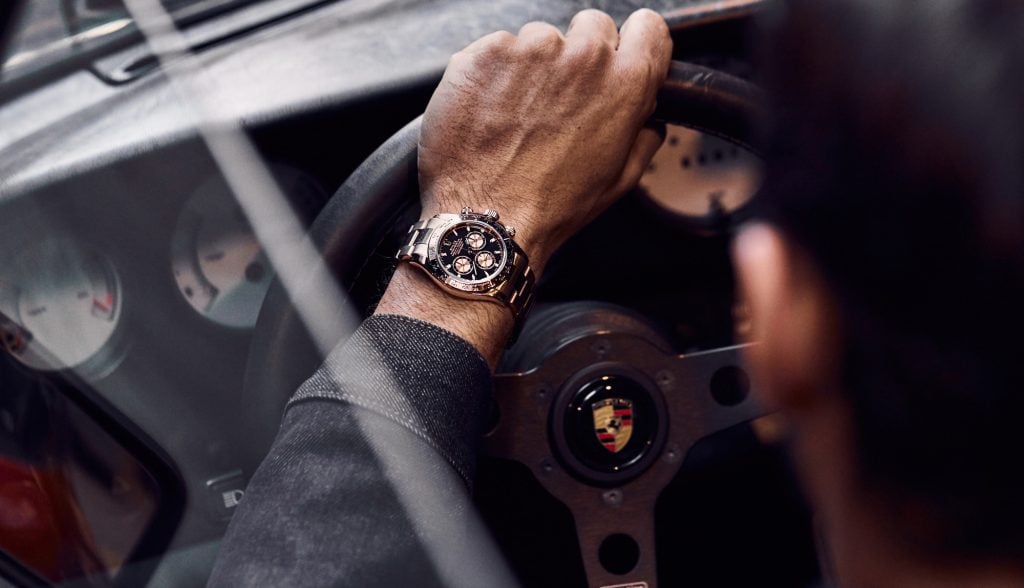
Daytona prices are driven by five factors: reference and metal, dial configuration, condition, completeness of box and papers, and the supply squeeze created by authorized dealer waitlists. The movement matters too. The caliber 4131 inside the current 126500LN uses Rolex’s Chronergy escapement and delivers a 72-hour power reserve, a genuine technical upgrade over the caliber 4130 that powered the Daytona from 2000 to 2023.
Having handled the current watch, I understand the demand on a physical level. What I love most about the Daytona in hand is its balance on the wrist: at 40mm and remarkably thin for a modern automatic chronograph, it wears like a second skin. The mechanical click of the screw-down pushers and the scratch-resistant shine of the Cerachrom ceramic bezel feel intentionally engineered down to the millimeter. In my opinion it is not just a status symbol, it is wearable industrial art, and the market prices it accordingly.
I have to say it, box and papers deserve their own sentence. A full set consistently commands a meaningful premium over a watch-only example, and I always tell sellers to dig through the closet before calling us.
Is a Rolex Daytona Worth the Money Right Now?
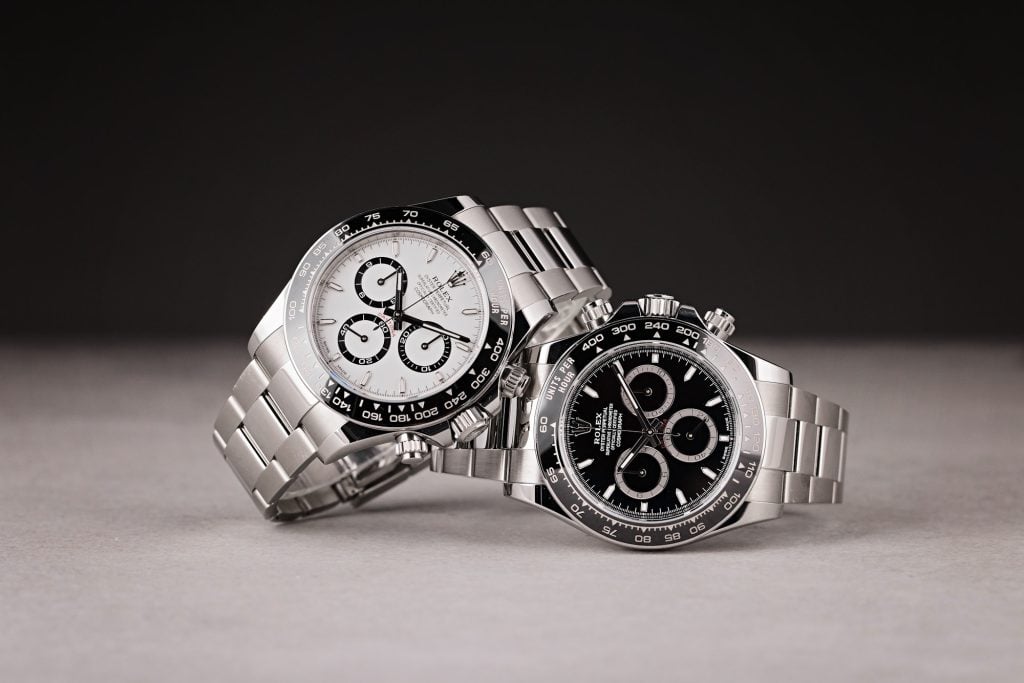
A Rolex Daytona is generally considered one of the strongest value-holding watches in the industry, but I want to be careful with my words here because not every reference guarantees a profit. Steel models purchased at retail have historically carried instant secondary market premiums, and certain references can hold value or may appreciate over time. Performance ties to real factors: scarcity, condition, demand for the specific dial, and the presence of original box and papers.
My opinion, for what it is worth after watching a full year of transactions: buy the Daytona because you want to wear it. If you buy a popular steel or two-tone reference in strong condition at a fair market price, history suggests you are unlikely to get badly hurt. But a watch is not a financial instrument, and anyone who promises you returns on one is selling something other than a watch.
“I review our Daytona transaction data weekly, and what stands out to me is consistency, not spikes. Steel and two-tone references have held their value through many sales cycles I have tracked, but I tell buyers to treat any upside as a bonus, never a plan. Buy the reference you actually want, in the best condition you can afford, at a fair market price, and the numbers tend to take care of themselves.”
Joe Alessindrini, CFO of Bob’s Watches
Finding the Right Rolex Daytona Price for You

The right Daytona price depends on which market you can actually access. If you have an authorized dealer relationship and the patience for a multi-year wait, retail is unbeatable. For everyone else, the pre-owned market is the real market, and the figures in this guide reflect what buyers genuinely paid over the past year rather than optimistic asking prices.
At Bob’s Watches, every Daytona we sell passes through our in-house watchmaker inspection before it is listed, and the sold data behind this article comes from our own completed transactions. If you are ready to compare live inventory against the ranges above, our pre-owned Rolex collection is the place I would start. And if you already own a Daytona and this guide has you curious what it would bring today, our Sell Rolex watches page will get you a real offer grounded in the same sold data you just read.
Frequently Asked Questions
Bob's Watches Blog Updates
Sign up and be the first to read exclusive articles and the latest horological news.