Yes. Watch buyers are going smaller, and we can measure it. At Bob’s Watches, watches 36mm and under increased from June to September 2026. That isn’t a runway story or a social media mood. It’s based on completed sales.
Key Takeaways
- Watches 36mm and under grew about 10% of our sales between June and September 2026.
- The Datejust 36 passed the Submariner to become our best-selling model in September 2026.
- This is a return to how watches were sized for most of the last century, and discontinued references are leading it.
- Going smaller usually means paying less: the median price gap between 36mm-and-under and 40 to 41mm watches is wide.
- Men and women are both shopping across the old size boundaries, in both directions.
The numbers come from our own sales floor, so let’s start there. If you’d rather browse than read, our pre-owned Rolex watches are sorted by exactly these sizes.
What Our Sales Data Shows About the Small Watch Shift

From June to September 2026 the proportion of watches sold at Bob’s Watches which had a case size of 36mm and under rose 10 percent, the average case size we sold decreased, and the Datejust 36 overtakes the Submariner to become our best-selling model. All the figures are based on completed transactions, not on asking prices.
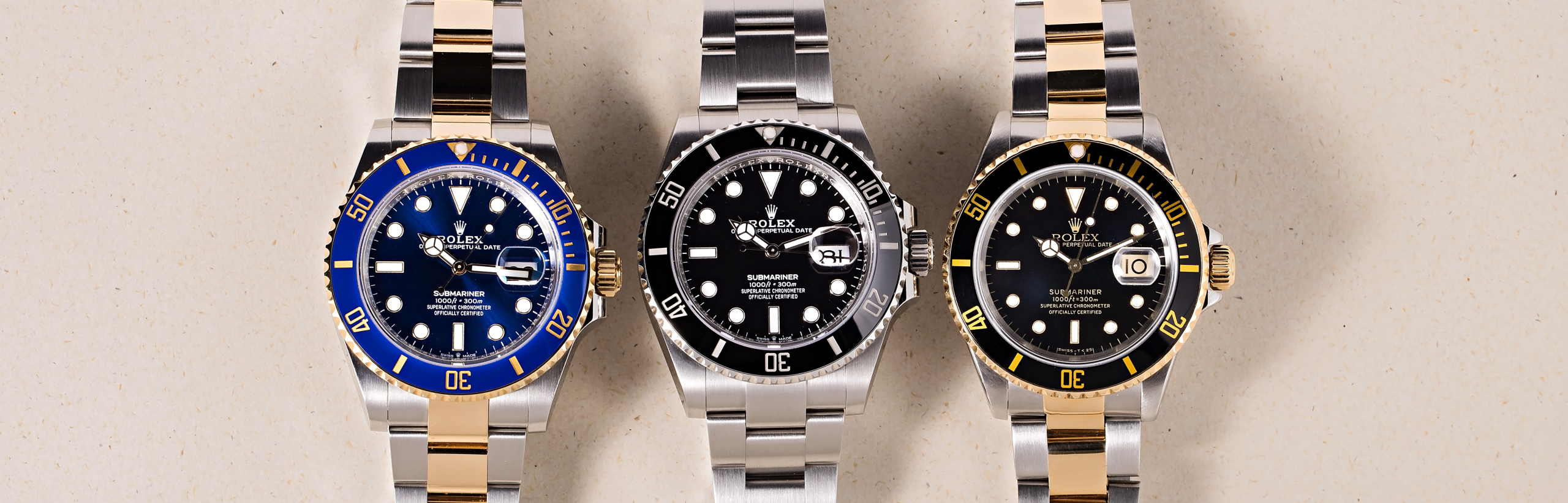
The story at the model level is the one I keep coming back to. The Submariner watch collection has always been the default choice when someone asks me which Rolex to buy. In June, it accounted for about 15% of our sales, with the Datejust 36 coming in a little below that number. By September, they had swapped positions: the Datejust 36 made up more than 15% of our sales, while the Submariner dropped below 15%. It is no minor point that a 36mm watch with a fluted bezel is selling more than the most famous dive watch in the world. The mid-size band tells the same story: the share of our sales from watches between 33mm and 36mm increased about 8% from June to September.
That’s one thing to keep in mind: since we sell pre-owned Rolex watches, the data we provide covers only the deepest and most active part of the second-hand market, not every brand at every price level. Treat it as a high-signal sample rather than a complete survey.
Sales figures are approximate numbers based on completed Bob’s Watches transactions from June through September 2026, not current asking prices. All figures are shares of sales; they describe our pre-owned Rolex sales mix.
Why Watch Buyers Are Going Smaller

No single force explains a ten-point swing in four months, but four of them together do.
- Vintage taste went mainstream. A decade of vintage and neo-vintage collecting trained everyone’s eye. Once you’ve seen enough 1960s references on modern wrists, a 42mm case starts to look like a dinner plate. The look that used to read as “too small” now reads as correct.
- The famous wrists got smaller. High-profile men have been wearing compact dress watches on red carpets and courtsides for a few years now. Bloomberg’s April 2026 report on Gen Z watch buyers describes younger buyers seeking out what that piece memorably calls grandma watches, and watchmakers pivoting to smaller diameters in response.
- Brands resized their lineups. Several major houses have trimmed case sizes across recent releases, pulling models that once shipped at 44mm and up back toward the high 30s and low 40s. As catalogs shrink, the market’s sense of “normal” shrinks with them.
- The gender lines quietly dissolved. Men are buying 34mm and 36mm watches that a dealer would have labeled ladies’ models fifteen years ago, and women are buying 36mm and 40mm sports models. Our own sales mix shows both moves, and nobody involved seems to miss the old labels.
The first and last drivers show up directly in our numbers, which is the next section.
A Smaller Watch Is the Historical Norm, Not a Fad

In the 1950s and 1960s, mainstream men’s watches usually ranged from 33mm to 36mm. The period of oversized watches that ran from the late 1990s through the 2010s was a side trip. The appearance of a new trend is in fact the market finding its way back, once again moving toward the proportions that applied for most of the twentieth century.
According to our sales figures, the resurgence is occurring among older watches rather than new ones. Of the 36mm-and-under watches sold between June and September 2026, just under 85 percent were discontinued models. Buyers are not waiting for the brands to relaunch small watches; instead, they are going straight for the original models: the four-digit Air-Kings watches, the 34mm Dates, the early Datejusts, the models that were simply known as watches long before the term mid-size was ever needed.
“For years, larger sports watches dominated the conversation, but we’re seeing more customers rediscover the appeal of smaller, classic designs. A 34mm or 36mm Rolex offers the same craftsmanship and timeless style, often at a more approachable price. Buyers are becoming less concerned with whether a watch is traditionally considered men’s or women’s and more focused on how it looks and feels on their wrist.”
Carol Altieri, COO of Bob’s Watches
Small Watches for Men: What Buyers Actually Choose

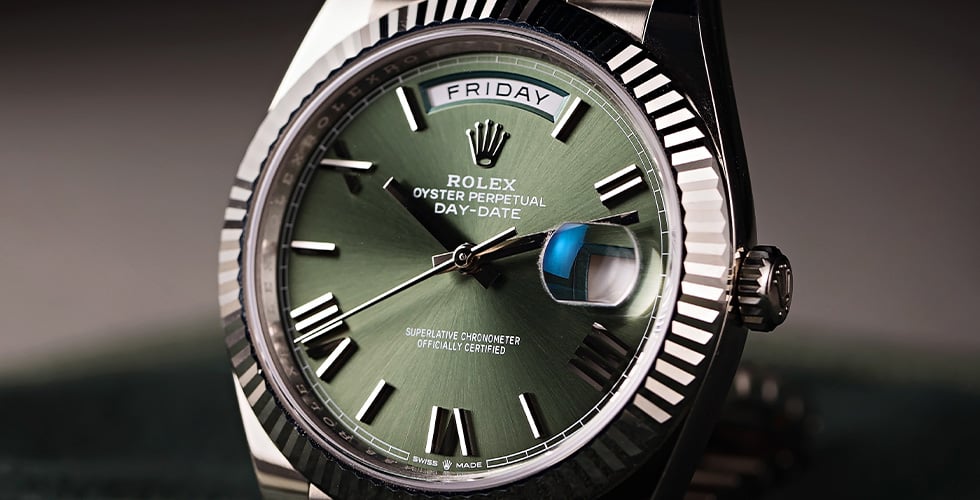
Would 36mm be considered too small for a man? Our customers have answered that question through their purchases. The Datejust with a 36mm case is currently the shop’s best-selling watch, by a wide margin. When worn on the wrist, a 36mm Oyster case appears larger than the figure suggests; the proportions of the bracelet, bezel, and dial were designed as a complete package, a point a spec sheet can’t convey.
What men shopping smaller sizes actually bought from us this summer, with median sold prices from completed transactions, January through September 2026:
| Model | Case size | Average sold price |
| Datejust 36 | 36mm | $9,515 |
| Day-Date 36 | 36mm | $24,820 |
| Explorer 36 | 36mm | $8,530 |
| Oyster Perpetual 36 | 36mm | $10,695 |
| Air-King | 34mm | $5,979 |
| Date | 34mm | $5,880 |
What matters is the range rather than any one figure; the 34mm Date at under $6,000 and the Day-Date 36 at nearly $22,000 are solving at less than $6,000 and the Day-Date 36 collection at almost $22,000 address different issues, yet both have the same appearance when worn and were steadily available from our stock all summer.
Small Watches for Women and Smaller Wrists

The range of small watches available for women extends beyond what most guides acknowledge: at one end are 26mm and 28mm Lady-Datejusts, then the 31mm size in the middle, and many women are now purchasing the same 36mm Datejust offered in the men’s section. This trend is evident in both directions and is reflected in our sales mix. The Lady-Datejust maintained a steady position among the top sellers each month this summer, standing side by side with the sports models.
For anyone shopping for a small wrist, whatever the label on the box once said, the table below shows what sold, with median prices from completed transactions, June through September 2026, as of October 2026:
| Model | Case size | Average sold price |
| Lady-Datejust | 26mm | $9,151 |
| Lady-Datejust | 28mm | $16,771 |
| Datejust 31 | 31mm | $15,676 |
| Oyster Perpetual 26 | 26mm | $8,145 |
| Oyster Perpetual 31 | 31mm | $9,448 |
| Datejust 36 | 36mm | $10,695 |
Regarding the ladder: the 28mm Lady-Datejust median is high because the watches of that size we have sold have tended to be made of precious metals and be newer, while models. By contrast, the 26mm figure includes many steel and two-tone watches dating back many decades. Size and price do not move together; it is the type of metal, the age, and the reference that make the difference.
If your wrist sits under 6 inches, the honest answer is that nearly this whole table will work, and the fit guidance at the end of this article matters more than the diameter alone.
Going Smaller Usually Costs Less

The aspect of this trend that is never mentioned is that, in our sales completed between January and September 2026, the average price of a watch with a diameter of 36mm was around $12,133; for watches measuring 40mm, the average price was $20,855.92; thus, choosing a smaller size can help you save money when purchasing a pre-owned Rolex.
The figures referred to here are second-hand market figures drawn from our own sales data, not current retail prices, and therefore the two cannot be directly compared. However, within the secondary market, the gap is real. It exists mainly because the smaller models in the range had been out of fashion for twenty years. Demand has focused on the 40mm sports models, and this has driven their prices up, while the Datejusts, Dates, and Air-Kings of the world have remained reasonable all over the world.
Whether that gap holds is the interesting question. Smaller references are generally considered well positioned if demand keeps shifting their way, and certain discontinued sizes can hold value on scarcity alone. That said, no watch guarantees a profit, and price performance always comes down to condition, reference, demand, and whether the box and papers survived. Buy the watch because it fits your wrist and your taste; treat anything else as a bonus.
Another practical option is this: if you currently own a clean Rolex that is either 34mm or 36mm and that you stopped wearing many years ago, the time may have come. You can sell your Rolex directly to us to find out how much the market currently values it.
How to Choose the Right Watch Size for Your Wrist

Diameter gets all the attention, but it’s the least useful number on the spec sheet. This is the order we’d work in:
- Measure your wrist – a soft tape just below the wrist bone. Under 6 inches, start your search at 36mm and below; 6 to 7 inches, almost anything from 34mm to 40mm can work; over 7 inches, you still have more small-watch room than you think.
- Check lug-to-lug, not just diameter. The lug-to-lug span is the watch’s true footprint, the distance from the top lug tips to the bottom ones. A watch whose lugs overhang your wrist edges will never look right, whatever its diameter says.
- Factor in thickness. A thinner case wears smaller and slides under a cuff. Many vintage small references are also slim, which is half their charm.
- Look at the bracelet and dial. A Jubilee bracelet and a busy dial make a case wear larger; a plain bezel and stick markers shrink it. This is why a 36mm Datejust and a 36mm Explorer feel like different watches on the same wrist.
- Try the size class on. Numbers get you close; wrists make the final call. Try a 34mm and a 36mm of any model back to back, and the right one is usually obvious within seconds.
Finding the Right Small Watch

The small watch shift is real, measurable, and probably not done. When buyers move ten points toward smaller cases in a single summer, that’s not fashion finding a new toy; it’s the market remembering what watches looked like for most of their history.
Wherever your own wrist lands on that spectrum, the practical move is the same: measure, try the size class on, and buy the proportions rather than the number. At Bob’s Watches, we photograph every watch we sell on a wrist for exactly this reason, and if you end up with a 36mm Datejust, you’ll be in fast-growing company.