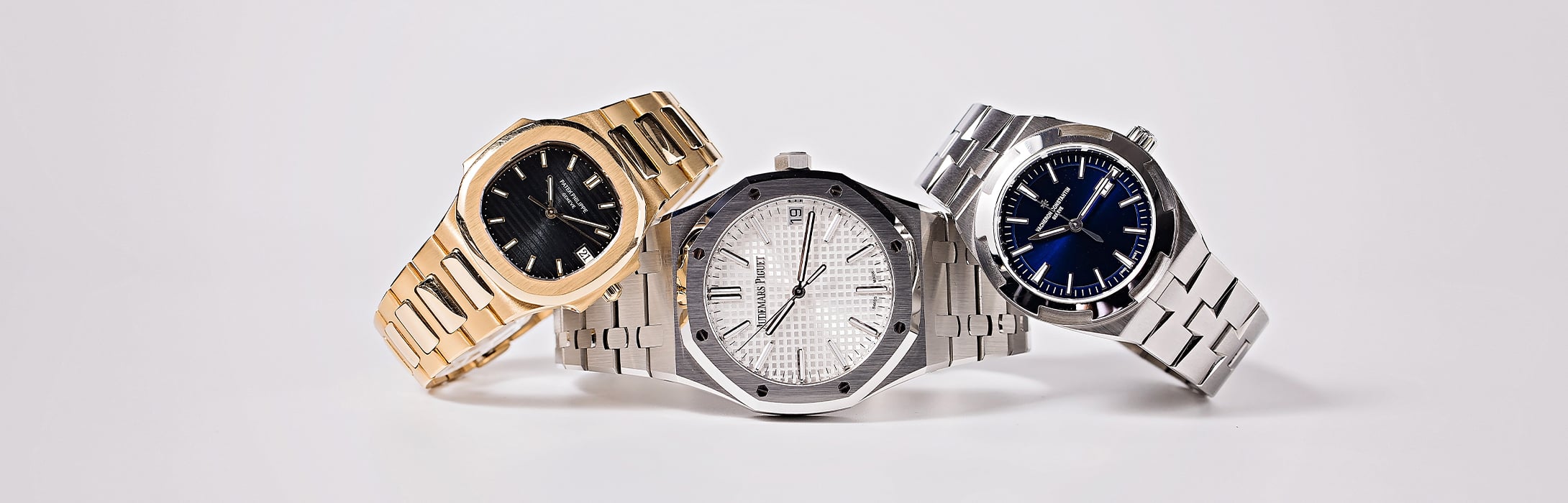

The “Holy Trinity of Watches” refers to the three most prestigious Swiss watchmaking houses: Patek Philippe, Vacheron Constantin, and Audemars Piguet. Collectors and industry insiders widely recognize these luxury watch brands as the pinnacle of fine watchmaking, combining centuries of uninterrupted history, in-house movement production, and hand-finished craftsmanship at a level few others can match.
Here is what you need to know going into this guide:
- The Brands: Patek Philippe (The King), Vacheron Constantin (The Heritage), Audemars Piguet (The Iconoclast)
- The Criteria: A place in the Trinity requires an unbroken operating history, full in-house movement manufacturing, and master-level finishing
- The Modern Context: Brands like Rolex and Cartier are essential to the collector conversation today, even if they sit outside the traditional Trinity
While the Big Three define the top of the watchmaking world, the collector landscape has changed. Rolex commands waiting lists. Cartier has carved out a design legacy all its own. This guide covers the history and significance of the Holy Trinity, and looks at how modern giants fit into the picture.
The Origin: Why Only These Three?

The title “Holy Trinity” did not come from a marketing campaign. It emerged organically among collectors and watch journalists over decades of debate about which brands truly sat at the top. Three names kept rising to the surface, and for good reason. Each one met a set of criteria that almost no other brand in the world could match.
To understand why Patek Philippe, Vacheron Constantin, and Audemars Piguet hold this status, it helps to understand what separates a truly elite manufacture from a prestigious one.
The Unbroken History Rule
One of the key requirements for Trinity status is continuous operation. Many luxury brands paused or restructured during the Quartz Crisis of the 1970s, when battery-powered watches flooded the market and nearly collapsed the Swiss mechanical watch industry. The Big Three did not stop. They pushed through, maintained their workshops, and kept producing mechanical movements when it was far from profitable to do so. That commitment to craft during the industry’s hardest period is part of what sets them apart.
The Trinity at a Glance
| Brand | Founded | Known For | Iconic Models |
| Patek Philippe | 1839 | Complexity and resale value | Nautilus, Calatrava |
| Vacheron Constantin | 1755 | Oldest uninterrupted history | Overseas, Patrimony |
| Audemars Piguet | 1875 | Avant-garde design | Royal Oak |
Patek Philippe: The Sovereign of the Trinity

Patek Philippe is widely considered the most prestigious name in watchmaking. Founded in Geneva in 1839, the brand has spent nearly two centuries building a reputation for technical mastery and long-term value. Its marketing leans into legacy, with campaigns built around the idea that you never truly own a Patek Philippe. You look after it for the next generation. That message resonates with collectors who view these watches as heirlooms rather than accessories.
At the top of the Patek lineup sits the Grandmaster Chime, one of the most complicated wristwatches ever produced. But the brand’s appeal is not limited to its most complex pieces. Some of its most beloved references are understated and elegant.
Key Patek Philippe collections include:
- Nautilus: The sport-luxury icon, designed by Gerald Genta in 1976, recognizable by its porthole-shaped case and integrated bracelet
- Aquanaut: A more contemporary take on the sport watch, with a rounded octagonal case and rubber strap
- Calatrava: The classic dress watch, simple and refined, built around the cross-shaped Calatrava emblem
- Complications: A broad range of watches featuring advanced functions like perpetual calendars, minute repeaters, and split-seconds chronographs
Vacheron Constantin: The Master of Tradition

Vacheron Constantin holds a record that no other watchmaker can claim: it has been in continuous operation since 1755, making it the oldest watch manufacturer in the world without interruption. That history spans the French Revolution, two World Wars, and the Quartz Crisis. The brand has never stopped making watches, and that consistency is central to its identity.
Where Patek leans into family legacy and AP leans into design boldness, Vacheron leans into craft and heritage. The brand’s “Les Cabinotiers” department takes that philosophy to its furthest point, creating fully bespoke timepieces for individual clients. These are one-of-a-kind watches built to a single person’s specifications, requiring years of work from some of the most skilled artisans in the industry.
Popular Vacheron Constantin collections include:
- Overseas: A versatile sport watch that competes directly with the Nautilus and Royal Oak, featuring an elegant integrated bracelet and a clean, refined case
- Patrimony: A dress watch that strips everything back to pure form, with a slim profile and minimal dial detail
Audemars Piguet: The Disruptor

Audemars Piguet was founded in 1875 in Le Brassus, a small village in the Swiss Jura Valley. For nearly a century, the brand was known as a respected but relatively traditional manufacture. That changed in 1972, when designer Gerald Genta delivered a sketch for a bold new watch on a paper napkin. The result was the Royal Oak, a steel sports watch priced higher than most gold watches of the time.
The Audemars Piguet Royal Oak was a commercial risk and a design statement. Its octagonal bezel with exposed screws, integrated bracelet, and “tapisserie” dial pattern had no precedent in luxury watchmaking. The watch did not immediately succeed, but over time it became one of the most referenced designs in the industry and is largely credited with creating the luxury steel sports watch category that Rolex’s Daytona, Patek’s Nautilus, and others would later occupy. AP continues to push boundaries today, with skeletonized movements, new materials, and bold case shapes that keep the brand at the edge of what high watchmaking looks like.
The Modern Contenders: Cartier and Rolex
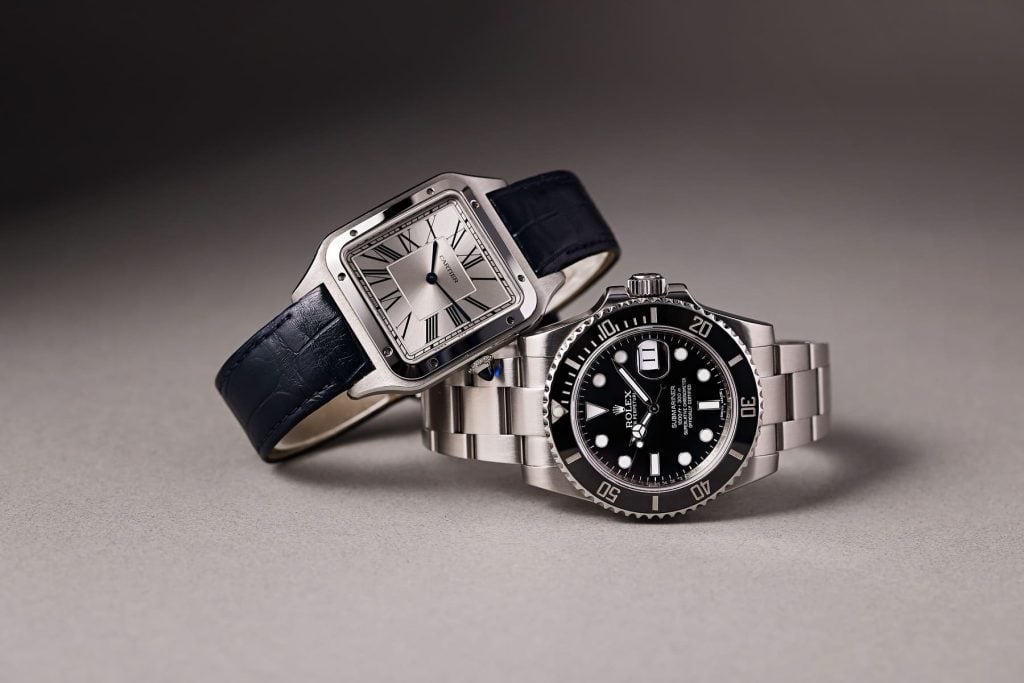
The Big Three hold the top of the horological hierarchy, but the collector conversation does not stop there. Two brands in particular come up constantly when enthusiasts and new buyers talk about prestige, value, and investment: Cartier and Rolex. Neither sits inside the Holy Trinity, but both have built legacies powerful enough to make the traditional ranking feel incomplete without them.
Cartier: The King of Shapes and Sizes

Cartier watches is often called the “Jeweler of Kings,” a phrase rooted in its long history of creating pieces for European royalty and global heads of state. The brand’s watchmaking identity is built around design rather than movement complexity. Cartier cases are sculptural. The Tank, the Santos, the Ballon Bleu, and the Panthère all have shapes that are immediately recognizable, even to people who know nothing about watches.
The Cartier Tank is one of the most enduring watch designs in history, introduced in 1917 and still in production today. It comes in several sizes, which matter because Cartier’s proportions are a big part of the buying decision:
- Tank Mini: 16.5mm x 24mm. The smallest option, more of a jewelry piece than a daily wear watch
- Tank Small: 22mm x 29.5mm. The classic proportions that most people associate with the Tank
- Tank Large/Medium: 25.5mm x 33.7mm. A versatile size that works well on a wide range of wrists
- Tank XL: 31mm x 41mm. A bold, contemporary option with a strong presence on the wrist
Princess Diana was famously photographed wearing a Cartier Tank Louis and a Cartier Tank Française throughout her life, which cemented the Tank’s cultural status beyond the watch community.
Rolex: The Fourth Pillar?

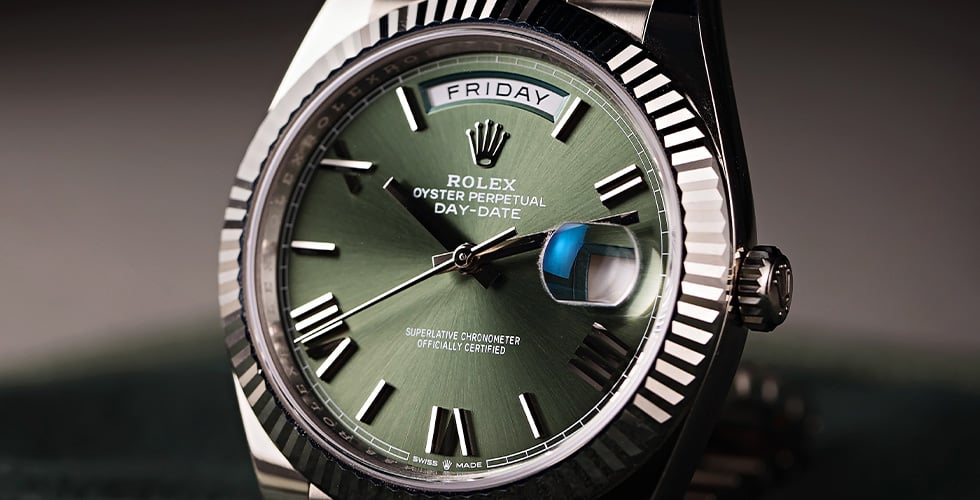
Rolex is the most recognized watch brand in the world. Its name appears in pop culture, financial media, and everyday conversation in a way that no other watchmaker can match, including the Big Three. Technically, Rolex does not meet the full criteria for Holy Trinity status. The brand built its name on tool watches and reliability rather than grand complications, and its movement finishing, while excellent, is not in the same category as a Patek or Vacheron.
But Rolex watches has redefined what prestige looks like in the modern market. Models like the Submariner, Daytona, and GMT-Master II hold or increase their value over time. Waitlists at authorized dealers can stretch for years. Rolex CEO Jean-Frédéric Dufour has spoken openly about the brand’s focus on consistency and long-term demand management, which has kept supply tight and desirability high. For a new buyer asking which watch holds its value best, the honest answer often points to Rolex before it points to any member of the Big Three.
How to Choose Your “Grail” Watch

Choosing a grail watch is a personal decision, but a few practical factors can help narrow things down. Investment value is one of the first things to think about. Patek Philippe, particularly the Nautilus and Aquanaut references, has shown some of the strongest resale performance in the secondary market. Rolex holds value across a wide range of references and is far easier to liquidate quickly. Vacheron and AP tend to appeal more to collectors who prioritize the art of watchmaking over short-term return.
Wrist size matters more than most buyers expect. A watch that looks great in a display case can feel oversized or lost on a particular wrist. The Cartier sizing system is a useful reference point here: small cases in the 29mm to 34mm range suit slimmer wrists, while watches in the 38mm to 42mm range work better for larger builds. Movement type is the other major consideration. Mechanical watches require more maintenance but offer a connection to craft that quartz movements cannot replicate. For a first luxury purchase, a mechanical watch from any of the brands discussed here will provide a better long-term experience than a quartz equivalent from the same house.
The Future of the Watchmaking Hierarchy

The Holy Trinity is not going away. Patek Philippe, Vacheron Constantin, and Audemars Piguet will continue to represent the highest level of Swiss mechanical watchmaking for the foreseeable future. Their combination of history, technical depth, and finishing standards is genuinely difficult to replicate. However, the collector community has shifted. Younger buyers are entering the market through Rolex before ever considering a Big Three piece. Cartier has seen a significant increase in demand driven partly by its fashion and cultural presence. Both of these timepieces might be considered among the best luxury watch brands. The hierarchy still exists, but it is no longer the only lens buyers use.
At Bob’s Watches, we see this shift in real time through the watches that move through our platform. Pre-owned demand for Rolex remains the strongest across all price points. Patek and AP attract a specific type of buyer who has done serious research and knows exactly what they want. Vacheron tends to attract the purist who values craft above recognition. The right watch depends entirely on where you are in your collecting journey and what the watch needs to do for you, whether that is financial, personal, or both.