
A Tudor watch costs between $2,500 and $6,000 for standard steel models at retail, with titanium and solid gold pieces climbing past $17,000. Tudor watches sits in the entry-to-mid luxury tier, offering Swiss in-house movements and Rolex-backed engineering at a fraction of Rolex pricing.
Key Takeaways
- Standard steel Tudor models retail between $2,500 and $6,000, while titanium and solid gold versions reach beyond $17,000.
- The Black Bay and Pelagos collections, the brand’s core, average roughly $4,500 at retail.
- The Tudor 1926 line is the most affordable entry point, starting near $2,575.
- Pre-owned Tudor watches average approximately $4,175, frequently delivering better value than buying new.
- Tudor and Rolex share ownership under the Hans Wilsdorf Foundation but operate as separate manufacturers.
Pricing across the Tudor catalog comes down to three factors: case material, movement complexity, and collection positioning. The sections below break down each collection by retail tier, then examine how those same references perform on the pre-owned market.
Tudor Watch Baseline Pricing

A Tudor watch typically requires an investment of $2,500 to $6,000 for standard steel models, while specialized titanium or solid gold iterations range from $6,000 to over $17,000. The core pillars of the brand’s catalog, including the popular Black Bay and Pelagos lines, average approximately $4,500 at retail. Sourcing these timepieces from the secondary market lowers the entry point, where pre-owned averages sit near $4,175.
Three variables set the price of any given reference: the case material, the movement inside it, and the collection’s place in the lineup. Steel dress watches occupy the floor, in-house dive and GMT models hold the center, and titanium or precious-metal pieces define the ceiling. The table below maps both the 2026 retail landscape and current pre-owned averages across the brand’s primary collections.
| Model Collection | Retail Pricing | Pre-owned Pricing |
| Tudor 1926 | $2,575 to $3,500 | $1,899 (avg) |
| Tudor Royal | $2,650 to $4,500 | $2,615 (avg) |
| Black Bay 54 / 58 | $4,475 to $5,350 | $3,900 (avg) |
| Black Bay GMT | $5,275 to $5,650 | $3,800 (avg) |
| Black Bay Chrono | $6,875 to $7,000 | $4,500 to $5,300 (avg) |
| Pelagos 39 / 42 | $5,625 to $6,025 | $4,058 (avg) |
| Gold / Special Editions | $6,000 to $17,000+ | Limited recent data |
Tudor Black Bay Collection Pricing Breakdown
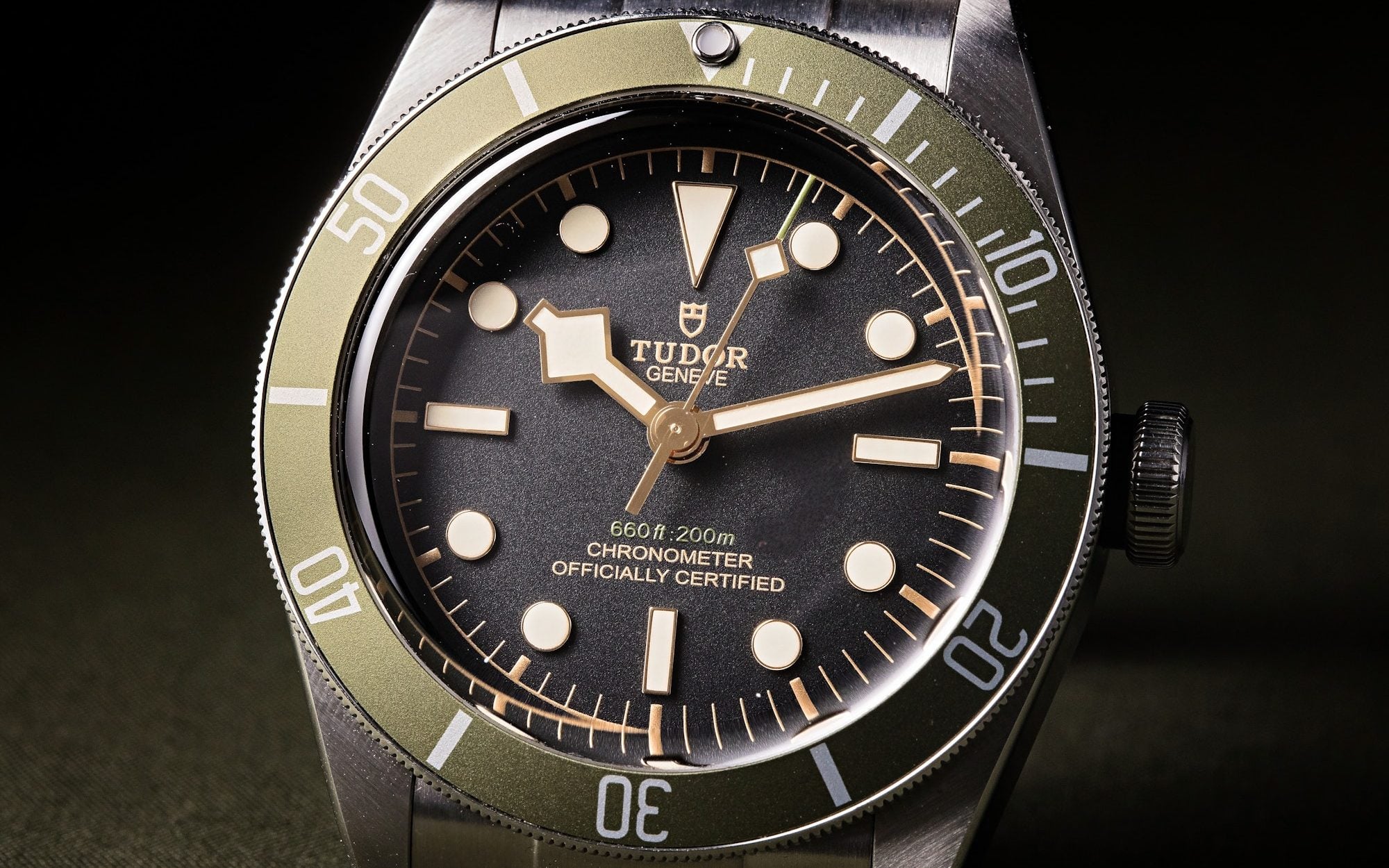
The Tudor Black Bay is a vintage-inspired collection of divers and sport watches introduced in 2012 that serves as the brand’s design anchor. The line draws on Tudor’s 1950s and 1960s dive heritage, pairing domed crystals, snowflake hands, and rivet-style bracelets with modern in-house movements. Black Bay pricing forms the heart of the catalog, with most steel references landing between $4,000 and $5,650 depending on size and complication.
Retail pricing on the Black Bay shifted upward recently, with online horology communities noting a roughly $200 overnight increase across core steel references. These incremental hikes reflect Tudor’s broader strategy of moving its flagship line steadily upmarket. Buyers tracking a specific Black Bay should confirm the current figure with an authorized dealer, since the brand now adjusts retail pricing more frequently than it once did.
Tudor Black Bay 54 and Black Bay 58 Prices

The Black Bay 54 and Black Bay 58 are the compact core of the collection, built around 37mm and 39mm cases respectively. The Black Bay 54 is a 37mm diver that references Tudor’s first dive watch from 1954, while the Black Bay 58 is a 39mm model named for the 1958 introduction of Tudor’s 200-meter reference. Both deliver in-house, COSC-certified automatic movements in proportions that suit a wide range of wrist sizes.
These two references represent the mid-tier baseline of the brand. Current 2026 retail pricing sits firmly between $4,475 and $5,350, with the exact figure set by bracelet choice, dial configuration, and any sterling silver or two-tone variation. The 58 commands a slight premium over the 54 in most configurations, reflecting its larger case and broader strap options.
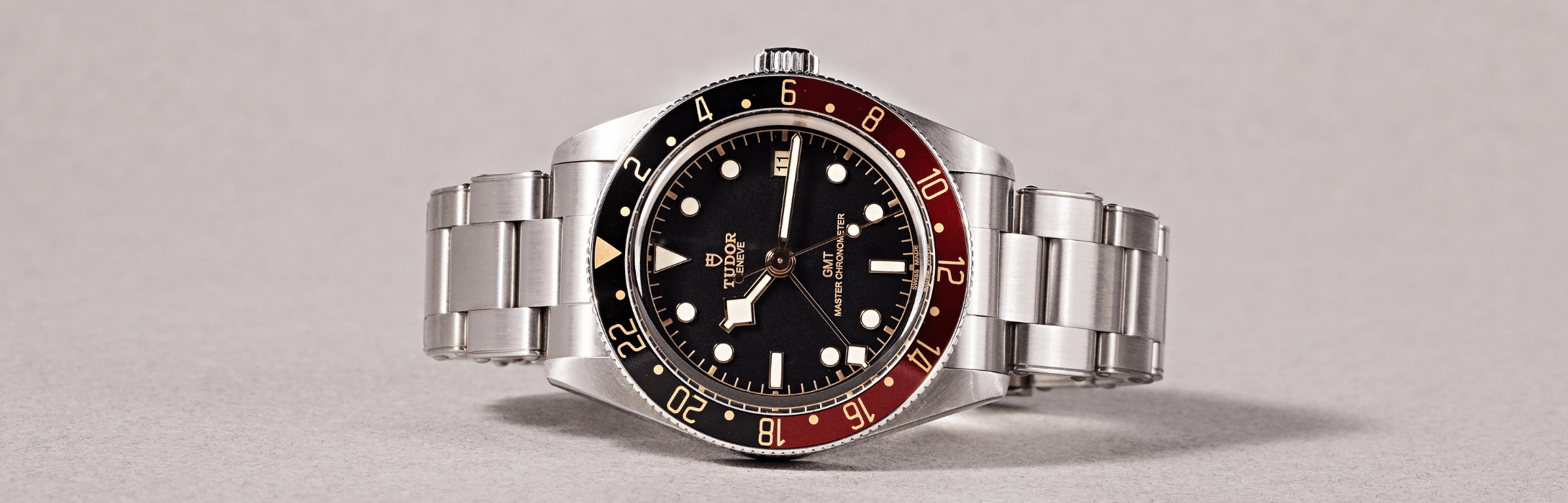
Tudor Black Bay GMT and Chronograph Complications

The Black Bay GMT and Black Bay Chrono add mechanical complications that raise both function and price. A GMT complication tracks a second time zone through an independent hour hand and a 24-hour bezel, while a chronograph integrates a stopwatch operated by pushers on the case side. Each complication adds engineering complexity, parts count, and assembly time, which the retail price reflects.
The GMT appeals to travelers who need a second time zone at a glance, and the Chrono targets buyers who want column-wheel stopwatch precision in a sport case. Pricing for these two references breaks down as follows:
- Black Bay GMT: $5,275 to $5,650, depending on bracelet and dial configuration.
- Black Bay Chrono: $6,875 to $7,000, reflecting its column-wheel chronograph movement.
Tudor Pelagos Collection Costs and Technical Specifications

The Tudor Pelagos is a titanium professional dive watch rated to extreme depths and engineered for technical diving applications. The collection sits above the Black Bay in both capability and price, trading vintage styling for a tool-watch focus on lightness, legibility, and water resistance. Pelagos pricing reflects its titanium construction and specialized movement architecture.
The manufacturing value of the Tudor Pelagos is rooted in its use of the Kenissi-manufactured MT5612 caliber, which features a non-magnetic silicon hairspring and a variable inertia balance. This specialized movement architecture ensures COSC-certified chronometer precision under extreme thermal and mechanical shock conditions.
The collection splits into two principal sizes, each built for a different diver:
- Pelagos 39: A minimalist 39mm titanium diver with a cleaner dial and a 200-meter depth rating, priced at $5,625 MSRP.
- Pelagos 42: The extreme-depth standard at 42mm, engineered for technical diving, priced at $6,025 MSRP.
Entry-Level Accessibility: Tudor 1926 and Tudor Royal Pricing

The Tudor 1926 and Tudor Royal are the most accessible entry points into the brand, occupying the floor of the retail catalog. The Tudor 1926 is a classic dress watch line named for the brand’s founding year, built around polished and brushed steel cases with domed dials. The Tudor Royal is an integrated-bracelet sport-dress line that combines a fluted bezel and date function in a single cohesive design.
Both lines control retail pricing by blending classic steel cases with outsourced or modified standard calibers rather than the complex manufacture movements found in the sports collections. This approach keeps the entry price low while preserving Swiss automatic mechanics and Tudor’s finishing standards. The table below outlines where each line begins.
| Reference Family | Distinguishing Features | 2026 MSRP Tier (USD) |
| Tudor 1926 | Classic dress case, domed dial, steel | From $2,575 |
| Tudor Royal | Integrated bracelet, fluted bezel, date | From $2,650 |
The Historical Connection to Rolex and Its Pricing Impact

The connection between Tudor and Rolex is the single biggest factor shaping how buyers perceive Tudor’s value. Tudor and Rolex are sister brands united under the same ownership, which is why Tudor watches carry Rolex-level build standards at lower prices. This relationship answers the two questions buyers ask most often: whether Tudor is made by Rolex, and why Tudor costs less.
Hans Wilsdorf founded the Tudor watch brand in 1926 to offer timepieces that maintained the technical dependability of Rolex but at a more accessible consumer price point. This historical foundation allowed early Tudor references to utilize Rolex-signed cases and crowns while deploying third-party outsourced movements to control overhead costs.
Modern Tudor no longer shares components with Rolex the way it once did, but the two brands remain linked through the Hans Wilsdorf Foundation and through shared movement manufacturing at Kenissi. That structural relationship lets Tudor price below Rolex while still delivering chronometer-certified mechanics, which is the core of its value proposition.
Pre-Owned Market Trends: Do Tudor Watches Hold Value?
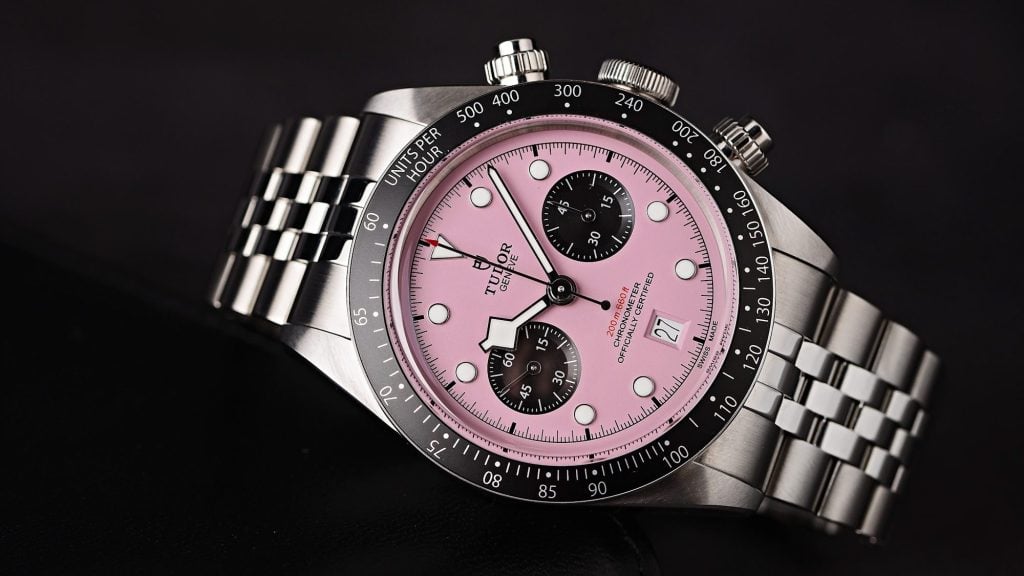
Tudor watches hold their value well compared with the broader luxury watch market, though the experience differs sharply depending on whether a buyer purchases new or pre-owned. A watch bought new at an authorized dealer typically absorbs an immediate depreciation hit the moment it leaves the counter, much like a new car. A watch bought clean on the secondary market sidesteps that initial drop and tends to hold its price more steadily over time.
This split is central to how value-focused collectors approach the brand. Standard catalog references, produced in steady supply, rarely command above-retail premiums, which means the secondary market sets a more honest price than the boutique. The section below explains why many enthusiasts treat pre-owned as the smarter entry.
Retail Depreciation vs. Secondary Market Sourcing
Retail depreciation is the natural adjustment a standard Tudor makes toward its established market value shortly after a full-price purchase from an authorized dealer. Acquiring a well-kept pre-owned model bypasses the initial valuation hit entirely. A buyer who sources a gently used Tudor Ranger or Black Bay with box and papers typically pays meaningfully less than retail while receiving a watch that is mechanically identical to a new one. For collectors focused on value rather than the unboxing experience, secondary sourcing is the more efficient path.
Pre-Owned Market Analysis: Tudor Pricing Movements
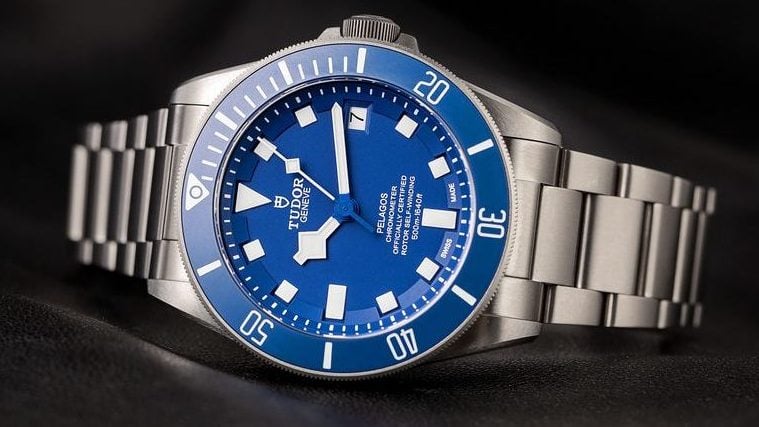
Tudor pricing on the secondary market has proven resilient over the long term, with values trending upward across most core references. Our own sales data indicates that Tudor pre-owned values have shown extreme resilience over time, with a steady appreciation that peaked significantly in 2022. A brief, short-term softening followed through 2023 and 2024, in line with the wider luxury watch market’s correction during that period.
Secondary market prices have since rebounded strongly, pushing the overall pre-owned average to $4,175. The figures below, drawn from our own sales records, show how individual collections perform on the resale market:
- Tudor Submariner (Vintage): Commands a massive collector premium, averaging $7,358 due to historical rarity.
- Tudor Pelagos: Demonstrates outstanding value retention, averaging $4,058 on the secondary market.
- Tudor Black Bay: Acts as a stable value anchor for the brand, establishing a firm average secondary trading price of $3,703.
- Tudor Royal: Offers an accessible modern entry point, averaging $2,615 pre-owned.
- Tudor 1926: Represents the ultimate secondary market value proposition, averaging $1,899.
Navigating the Luxury Watch Market Value Shift

The luxury watch market has shifted in a way that directly affects where Tudor sits, and the brand’s pricing strategy is the clearest signal. Tudor’s consistent annual price increases are intentionally moving the brand upstream, into the market tier once occupied almost exclusively by OMEGA. A steel Black Bay or Pelagos now competes head-to-head on price with mid-range OMEGA Seamaster references rather than undercutting them.
This upward move has opened space beneath Tudor that other brands are stepping in to fill. Longines, through its Spirit and HydroConquest lines, and Oris, with its in-house dive and field watches, are increasingly capturing the value-king title that Tudor itself held a decade ago. Market trends suggest buyers seeking the lowest entry into Swiss mechanical watchmaking now look one tier below where Tudor used to sit. For Tudor, the trade-off is a stronger brand image at the cost of its former reputation as the undisputed value champion.
Sourcing Lasting Value in a Modern Precision Timepiece

Tudor secures its position as a top-tier horological investment despite continuous retail price adjustments. The brand’s integration of high-grade materials, METAS and COSC certifications, and Rolex-backed build quality gives each watch a foundation that holds up across decades of ownership. A Tudor purchase buys genuine Swiss manufacture mechanics, rigorous chronometer testing, and a service network tied to one of the most respected names in watchmaking, which is why the brand’s core references retain their value so reliably.
Working with a transparent, trusted secondary market leader like Bob’s Watches allows buyers to move through these pricing structures with confidence. A certified pre-owned purchase confirms authenticity, sidesteps the depreciation that comes with buying new, and ensures buyers acquire the maximum amount of watch for their capital. For anyone weighing how much a Tudor watch should cost, the secondary market remains the most efficient route to lasting value.