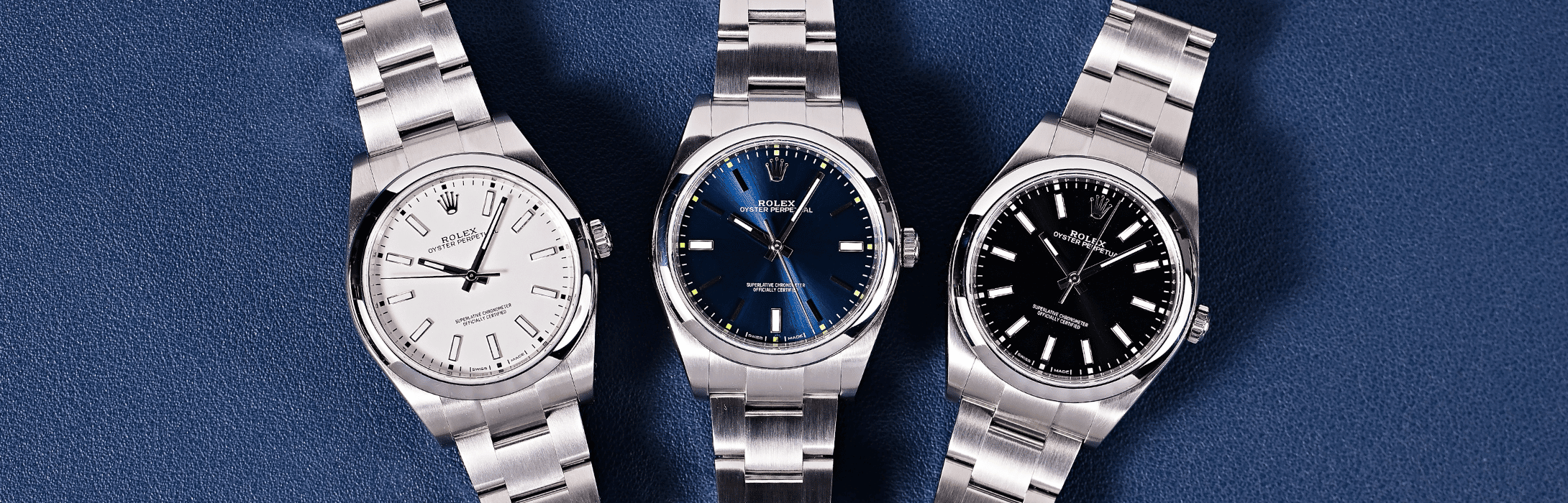

The Rolex Oyster Perpetual retail prices range from $6,200 to $7,050+, determined primarily by case size and metal type. Pre-owned prices sit from about $4,800 to $12,000, with that spread driven mostly by dial color, case size, and condition. This guide covers what you can expect to pay at retail and on the secondary market, along with the factors that move the final number.
Key takeaways
- Retail floor: standard Oystersteel models start around $6,200 (28mm) at authorized dealers.
- Secondary market ceiling: prices start around $4,800 with rare and discontinued dials, such as turquoise and yellow, climbing past $19,000 pre-owned.
- Biggest premium driver: dial color moves price more than any other single factor, often more than case size itself.
Closing the gap between the retail sticker and the real price you pay comes down to three things: the case size, the dial variant, and how the open market prices a watch you can buy today. The sections below walk through each, starting with how Rolex structures its retail prices across the five sizes.
Rolex Oyster Perpetual Retail Prices by Case Size

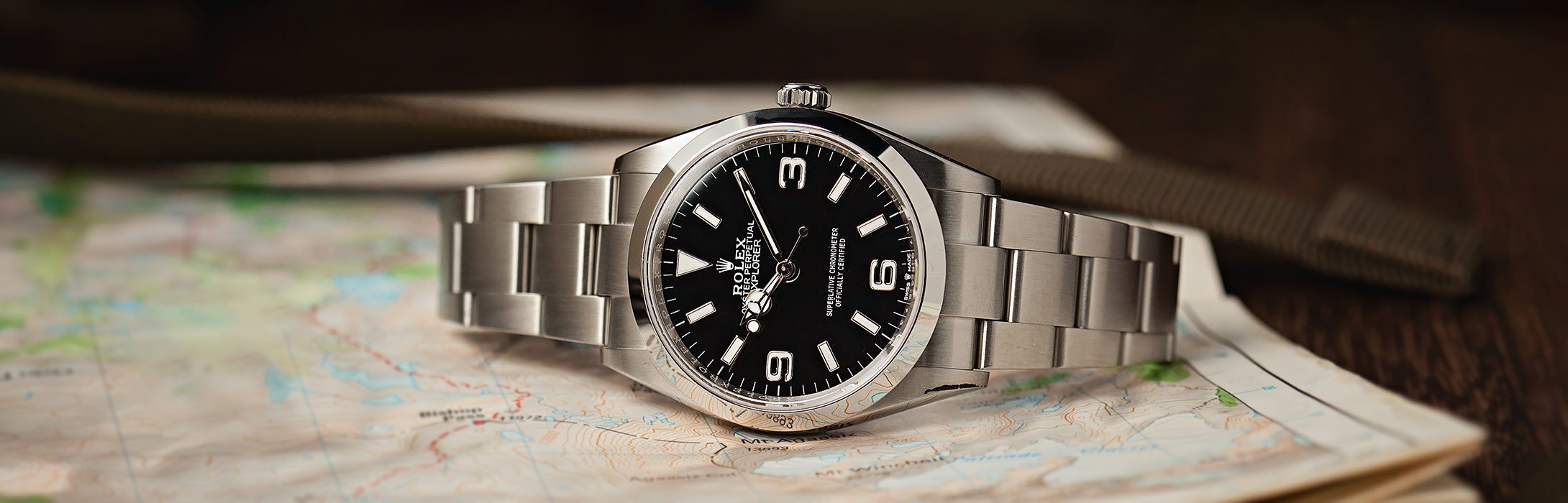
Rolex sets Oyster Perpetual retail prices mainly around case size, since a larger case uses more Oystersteel and calls for slightly different engineering. Every model in the line shares the same core build: a waterproof Oyster case, a smooth bezel, a three-link Oyster bracelet, and a Superlative Chronometer certified movement rated to within -2/+2 seconds per day. The 36mm and 41mm models run the Caliber 3230, while the smaller sizes use Rolex’s other in-house automatic calibres.
Two recent changes affect what you see at the counter. Rolex raised retail prices across the catalog on January 1, 2026, and the Oyster Perpetual took a modest increase. The 41mm was also updated in 2025, when Rolex 134300 replaced the long-running 124300 reference with slimmer lugs, a thinner bezel, and a larger Twinlock crown. The table below shows current US retail figures next to typical secondary market values for standard dial colors.
| Case Size (mm) | Model Reference Number | Official Rolex Retail Price (MSRP) | Secondary Market Value |
| 28mm | Ref. 76080 | Discontinued | ~4,800 |
| 28mm | Ref. 276200 | ~$6,200 | ~$9,800 |
| 31mm | Ref. 277200 | ~$6,300 | ~$10,000 |
| 34mm | Ref. 124200 | ~$6,400 | ~$8,000 |
| 36mm | Ref. 126000 | ~$6,750 | ~$9,000 |
| 41mm | Ref. 134300 | ~$7,050 | ~$10,000 |
Reference numbers are worth knowing, because they tie directly to value. The discontinued Rolex 124300, for example, still trades actively on the secondary market and carries the sought-after turquoise “Tiffany” dial that pushes prices well beyond the figures above.
Factors That Determine the Cost of an Oyster Perpetual
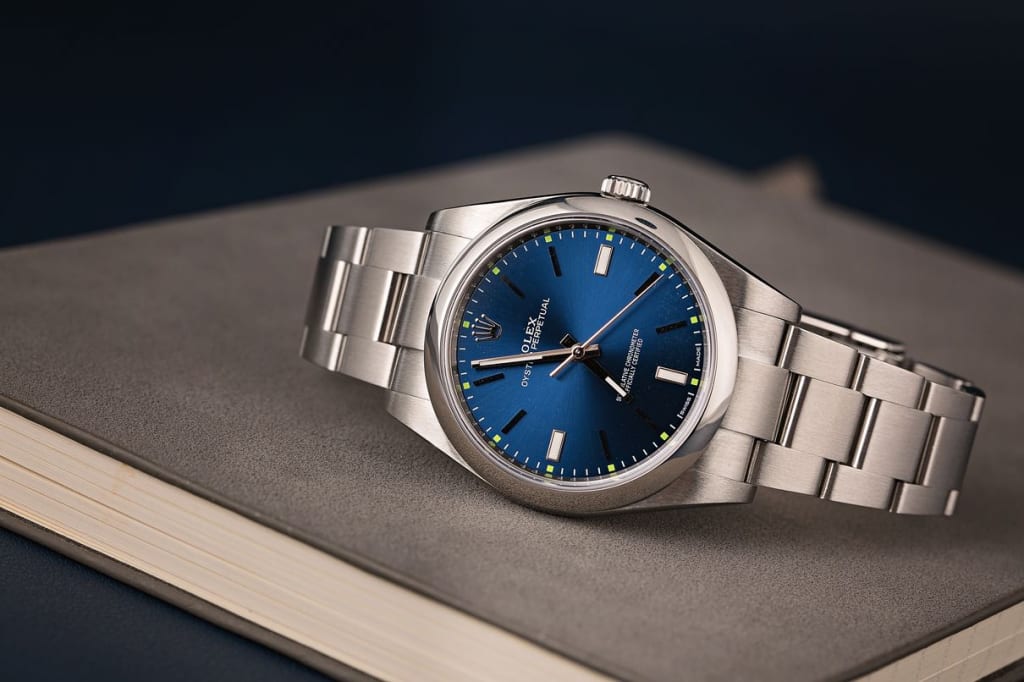
A time-only stainless steel Rolex Oyster Perpetual watch might sound like it should carry one fixed price, yet final costs swing widely from one Oyster Perpetual to the next. Three variables explain most of that range: the case size you choose, the dial in front of you, and how complete and clean the watch is. Each one pulls value in a different direction, and together they decide whether you pay close to retail or several thousand dollars above it.
Case Dimensions and Proportions
The 36mm and 41mm models command the strongest demand and the highest secondary values. Both wear well across a wide range of wrist sizes, which broadens the pool of buyers and keeps prices firm. The 36mm is the classic Rolex proportion and slips easily under a cuff, while the 41mm offers more presence and legibility. The 28mm and 31mm are typically chosen for smaller wrists, and they sit at the lower end of both retail and resale pricing.
The “Dial Color” Premium
Dial color is the single biggest lever on the price of an Oyster Perpetual. Standard black, silver, and the Rolex Oyster Perpetual blue dial trade near retail, since supply is steady and they appeal to a broad audience. Bold lacquer dials behave differently. The “Celebration” motif (introduced in 2023 and discontinued in 2025), the turquoise “Tiffany” dial, and the vivid yellow dial detach almost entirely from retail. According to experts who track the market, turquoise examples routinely change hands at two to four times their original sticker, and other discontinued colors regularly clear $15,000.
Condition and Documentation
A complete watch is worth meaningfully more than a bare one. A “full set” includes the original inner and outer boxes, the green chronometer tag, and the stamped warranty card showing the purchase date. Compared with a “naked” watch that arrives with no accessories, a full set typically adds several hundred to more than a thousand dollars in value, since documentation supports authentication and resale. Physical condition matters in the same way, with unworn or lightly worn pieces pulling a clear premium over examples that show wear on the case and bracelet.
Retail vs. Secondary Market: Understanding the Price Gap
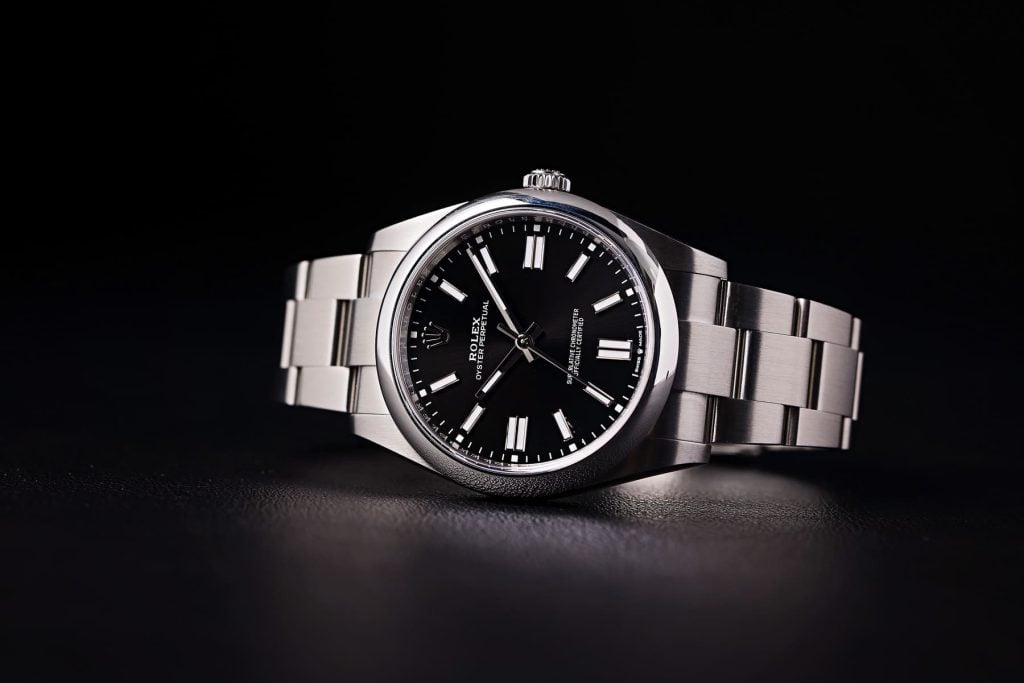
At an authorized dealer, the Oyster Perpetual is priced at MSRP, but getting one at that price is the hard part. As mentioned in our Rolex Oyster Perpetual buying guide, Rolex controls production tightly, and even its entry-level line carries waitlists at most boutiques. Popular dials can take months, and allocation often depends on your purchase history with the dealer. The result is a steady stream of buyers who want a watch now rather than later.
That demand flows straight to the secondary market, where specialist dealers and online communities price watches you can buy and wear today. The premium for that immediate access is real and measurable. Our own internal sales data shows the average Oyster Perpetual sold for $9,804.07 so far in 2026, up slightly from $9,629.88 in 2025, which reflects how steady this collection has been even as the broader market has cooled in places.
Buying a Pre-Owned Oyster Perpetual: Retail vs. Independent Dealers

Once you decide to buy on the secondary market, you have two main channels. Get on a long waitlist to buy one at retail, or browse pre-owned Rolex watches to purchase one immediately. Both routes deliver an authentic watch, but they serve different priorities, and the price difference between them can be significant. On the pre-owned side, you also have two channels to weigh.
- Retail: Sold through official Authorized Dealers, also referred to as an AD. An AD usually has very limited supply and long waitlists that can take many years to aquire a watch (if ever).
- Independent specialist dealers: Established secondary dealers offer sharper pricing and a wider selection, including discontinued references and dial colors that retailers can no longer supply. Authentication quality depends on the dealer’s reputation, so buying from a trusted specialist with strong reviews and clear return policies matters.
Smart Strategies: Is a Rolex Oyster Perpetual a Good Investment?
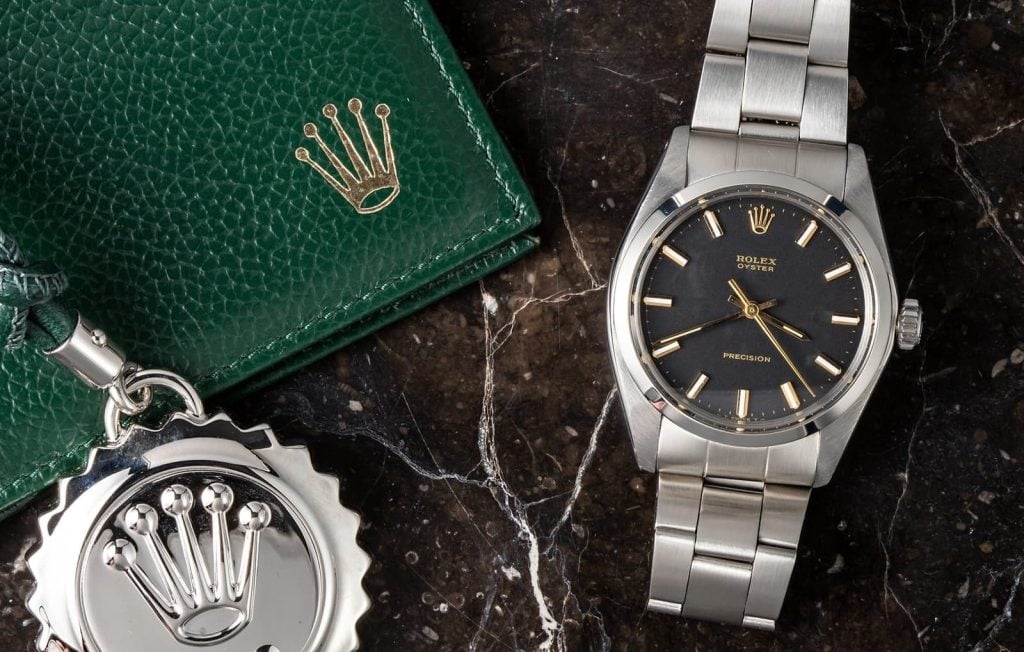
It helps to separate value retention from speculation. The Oyster Perpetual is rarely the watch that doubles overnight, and chasing a rare dial purely for profit carries real risk if the trend cools. What the line does reliably is protect capital. Decade over decade, it has held a predictable floor that few consumer luxury goods can match, which makes it less of a gamble and more of a stable place to park money you also get to enjoy on the wrist.
That stability is the practical case for buying one. A standard dial bought near retail tends to hold most of its value, and a discontinued or rare dial bought at the right price can appreciate over time. Treat the watch as a durable asset first and any upside as a bonus. The Rolex Oyster Perpetual for sale makes sense as both a first Rolex and a long-term hold.