What are the most iconic Rolex watches? The answer to that question is usually the Submariner, Daytona, Datejust, and GMT-Master. These watches are frequently regarded as the archetypes of luxury watches. Rolex’s prestige as the premier watchmaker is derived from the each watch’s past, such as the success in timekeeping at the 1953 British Everest Expedition and a subsequent dive to the bottom of the Mariana Trench by Jacques Piccard, precision engineering and manufacturing, and the exclusivity and universality of the brand beyond watchmaking. Their watches are associated with human endeavour and success, as demonstrated by various world leaders, sports champions and even A-list movie stars.
Key Takeaways
- The Submariner remains the world’s most recognized diving watch
- The Daytona is the pinnacle of chronograph desirability and resale value
- The Day-Date (President) is the ultimate symbol of status and leadership
- Historical significance (Rolex Explorer) and technical innovation (Milgauss) are as vital as aesthetics
Rolex has created countless watch references during its 100+ year history, but the 10 watches listed below are the most influential. They are strong in design, innovation, and demand and continue to influence the industry today.
At a Glance: The 10 Most Iconic Rolex Watches
| Model Name | Year Released | Primary Purpose |
| Submariner | 1953 | Professional diving |
| Cosmograph Daytona | 1963 | Motorsport timing |
| GMT-Master / GMT-Master II | 1955 | Dual time zone tracking |
| Datejust | 1945 | Everyday elegance |
| Day-Date | 1956 | Executive prestige |
| Explorer | 1953 | Mountain climbing |
| Oyster Perpetual | 1931 | Essential timekeeping |
| Milgauss | 1956 | Scientific environments |
| Sea-Dweller | 1967 | Deep-sea saturation diving |
| Air-King | 1945 | Aviation tribute |
The Deep Dive: 10 Most Iconic Rolex Models
Rolex has defined luxury watchmaking for over a century, creating timepieces that transcend mere function to become cultural icons worn by explorers, presidents, athletes, and celebrities. From the depths of the ocean to the summit of Everest, these ten Rolex models span across the history of Rolex watches, highlighting some of the top collections.
#1. Rolex Submariner (The Quintessential Diver)
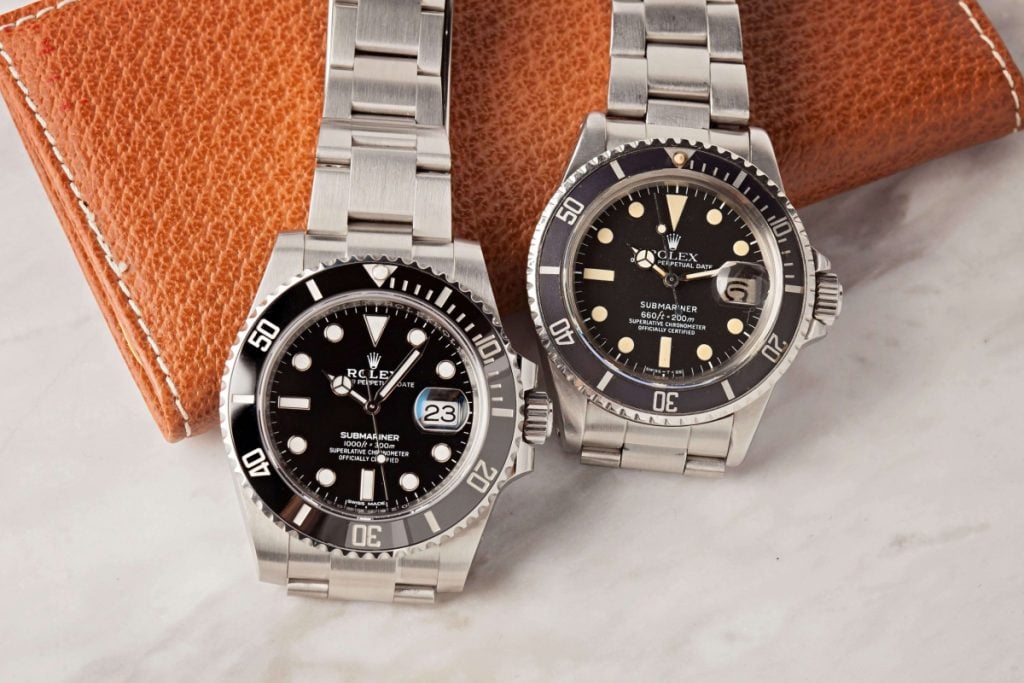
Rolex released the Submariner in 1953. It is a professional diving watch and the model from which all dive watches since have taken their cue. But when Sean Connery wore a Rolex Submariner as James Bond in “Dr. No” in 1962, the watch went from being a niche tool watch to becoming an archetype and cultural icon that redefined what a luxury sports watch could be. The Submariner silhouette is today the most imitated watch in the world, and is featured at every price point by innumerable watch brands.
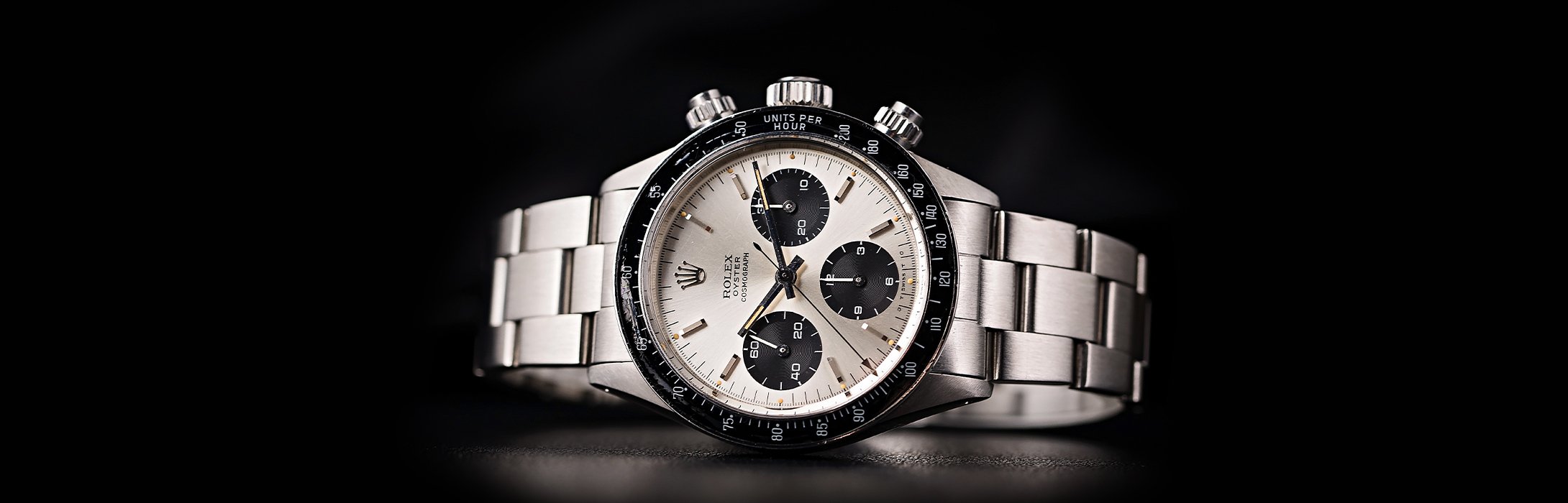
#2. Rolex Cosmograph Daytona (The Racing Legend)

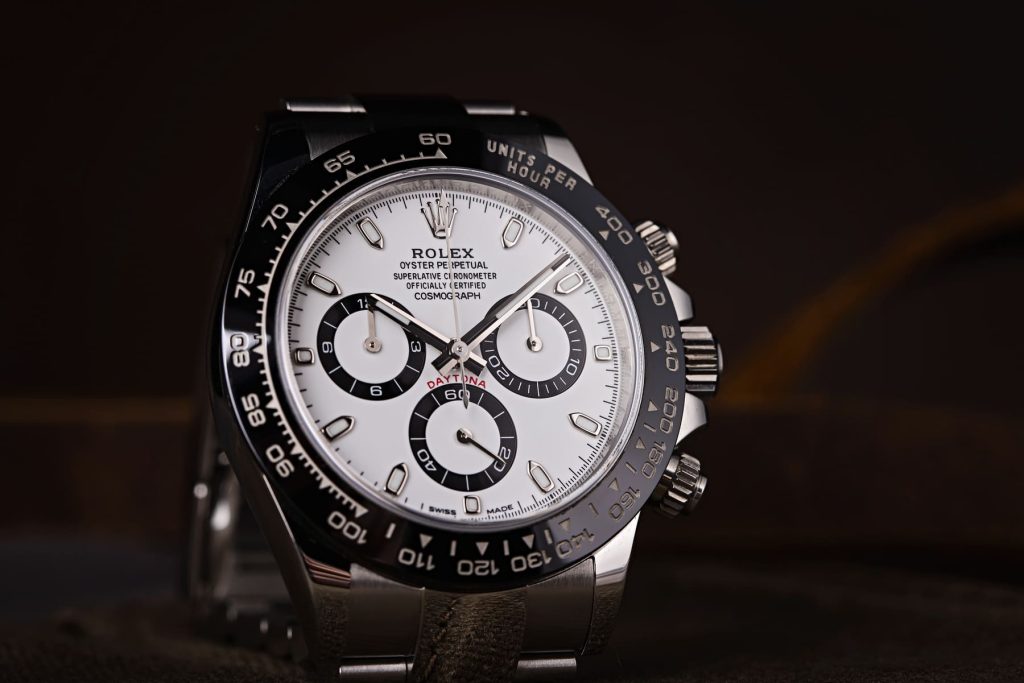
You might be surprised to hear that the Rolex Daytona had a hard time selling when it was introduced in 1963. Jewelers would offer free Daytonas as incentives to people buying other Rolex watches. The tide shifted when Hollywood star Paul Newman wore his exotic dial version. It was sold for a record $17.8 million in an auction in 2017 to become the most expensive wristwatch ever sold at the time. The stainless steel Daytona with a ceramic bezel has years-long waiting lists at authorized dealers. On the grey market, it regularly sells for double its retail price.
The chronograph function and tachymeter scale on the bezel allow drivers to measure average speeds up to 400 kilometers or miles per hour. Modern Daytonas feature the in-house Caliber 4131 movement, which Rolex developed specifically for this model to improve reliability and reduce thickness.
#3. Rolex GMT-Master / GMT-Master II (The Pilot’s Choice)
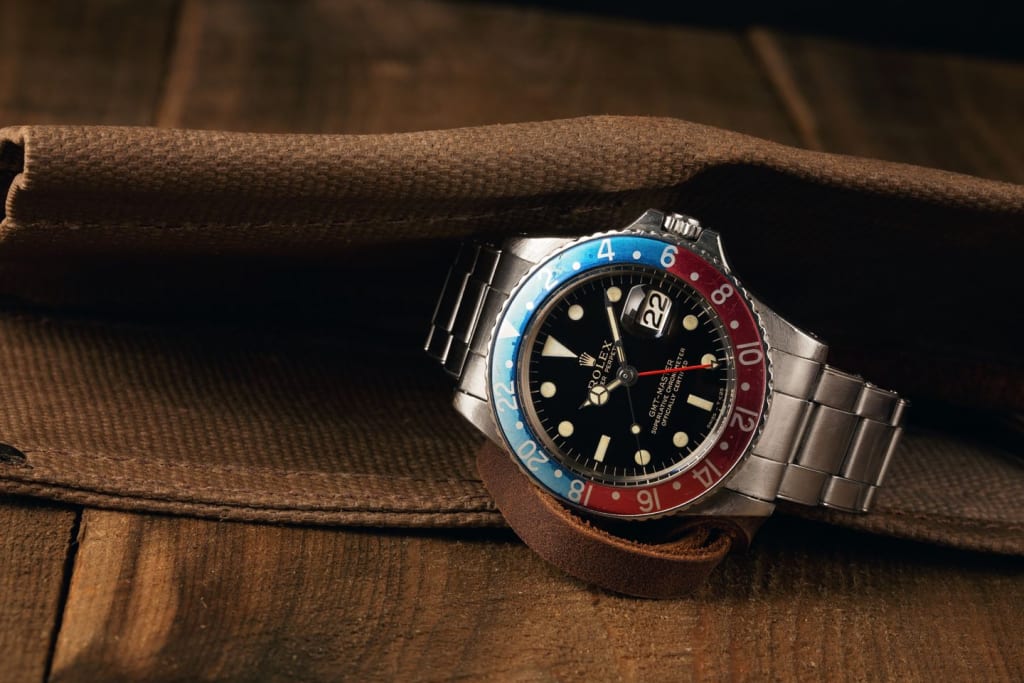
Pan Am Airways approached Rolex in the 1950s to design and supply a watch with two time zones that could be read at a glance for pilots flying the new transatlantic routes. The answer was a fourth hand completing one rotation every 24 hours, and a bi-color rotating bezel, the development of which became a defining feature of the watch. The red and blue “Rolex Pepsi” bezel has by far become the most popular and sought-after colorway, but the blue and black “Rolex Batman” colorway has also gained cult status since its 2013 introduction.
The GMT-Master II, which is the second generation Rolex GMT-Master, was released in 1982. The hour hand could be adjusted independently, which was more practical for frequent travellers who needed to reset the time zone when crossing time zones without stopping the watch and affecting the accuracy of the second time zone.
#4. Rolex Datejust (The Daily Classic)
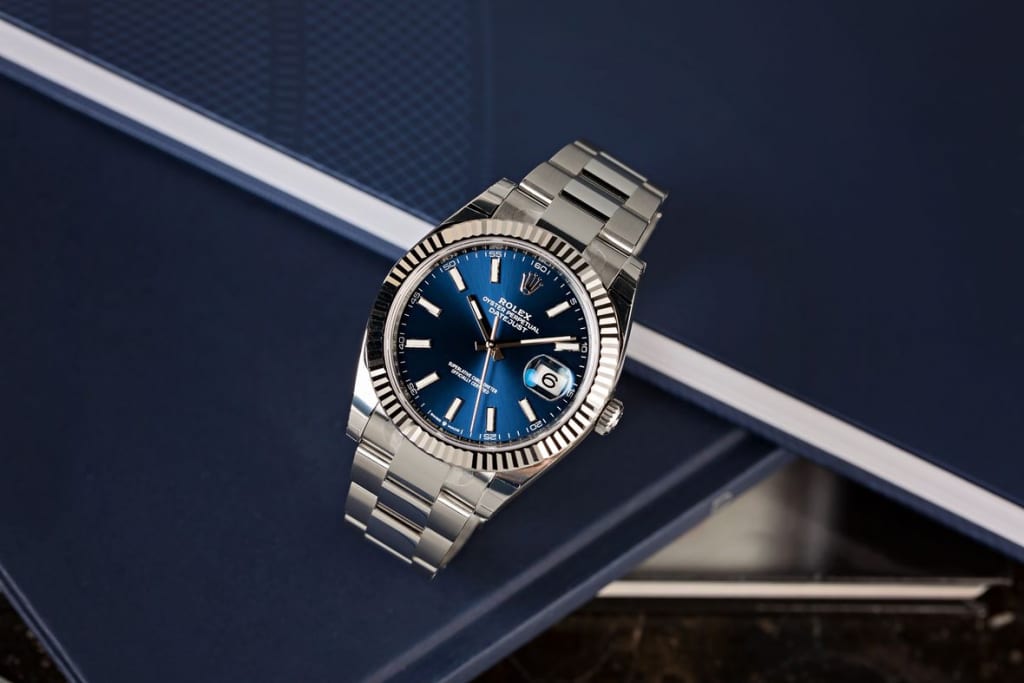
Rolex created the Rolex Datejust in 1945 to celebrate the brand’s 40th anniversary. It was the first self-winding chronometer wristwatch to feature the date in a window on the dial. In the 1950s, Rolex added the Cyclops lens which magnifies the date 2.5 times; this has become one of the most-recognized features in watch design. Available with cases from 28mm to 41mm and in steel, gold, two-tone Rolesor and dozens of dial variations, there are more different Datejust models than any other Rolex watch.
When reviewing the Rolex Datejust, the models popularity might be due to the versatility associated with this timepiece. This versatility is why the Datejust has been in continuous production for 80 years. From boardroom to beach, the watch moves seamlessly and is a favorite of those who prefer one quality watch to suit all occasions.
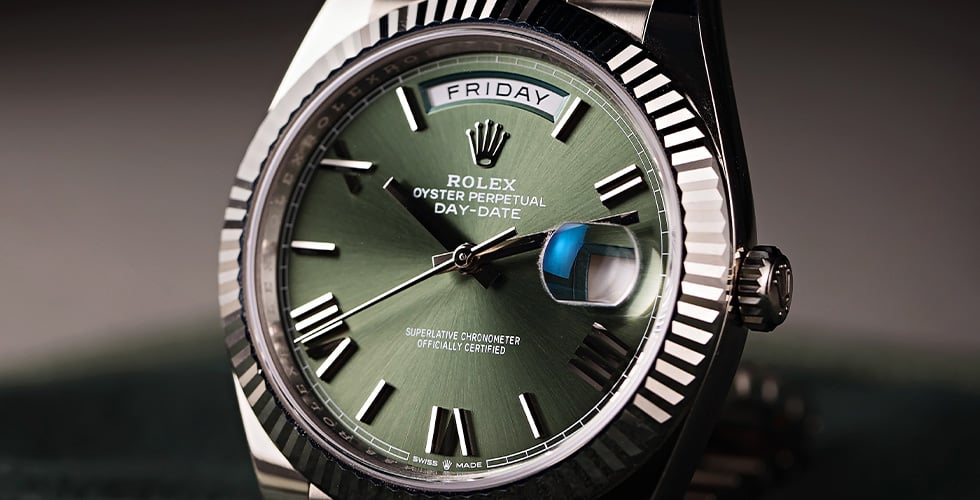
#5. Rolex Day-Date (The President)
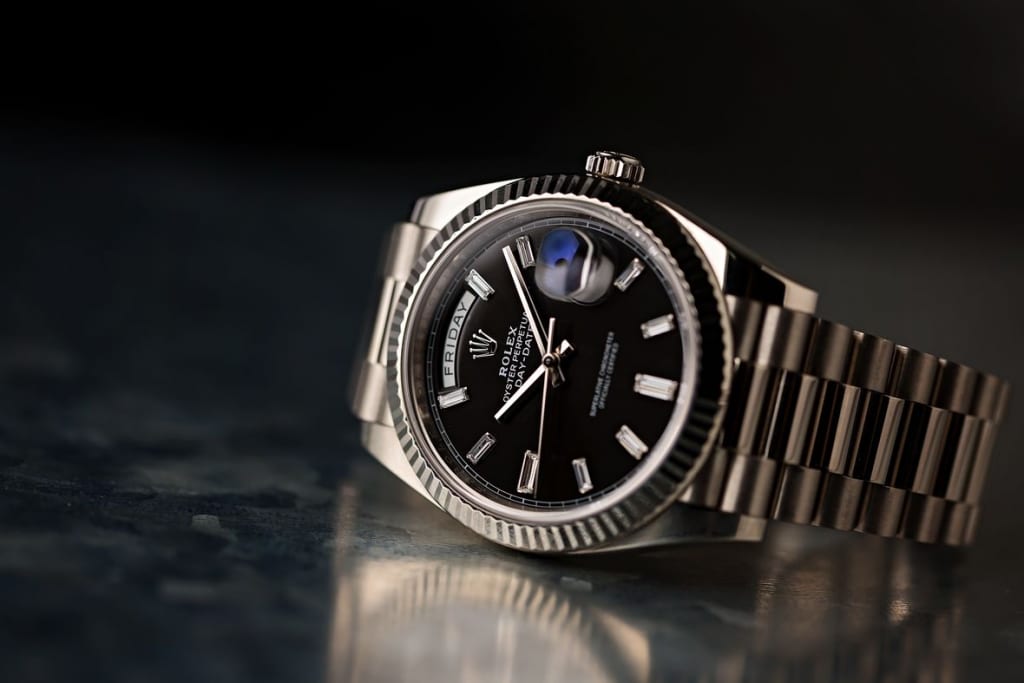
The Rolex Day-Date is made exclusively in precious metal (18k gold or 950 platinum), making it one of the most expensive collections in the brand’s portfolio. Most recognize it from the unique three-link President bracelet initially developed for the collection and named after its impressive roster of past U.S. Presidents who have worn it, from Lyndon B. Johnson to Ronald Reagan and Donald Trump.
The Day-Date, also referred to as the Rolex Presidential, was the first watch to spell out the day of the week in full at 12 o’clock in 26 languages. This complication, along with the date display at 3 o’clock and requirement for prestigious metals, sets the Day-Date as Rolex’s ultimate status symbol.
#6. Rolex Explorer (The Mountaineer’s Watch)
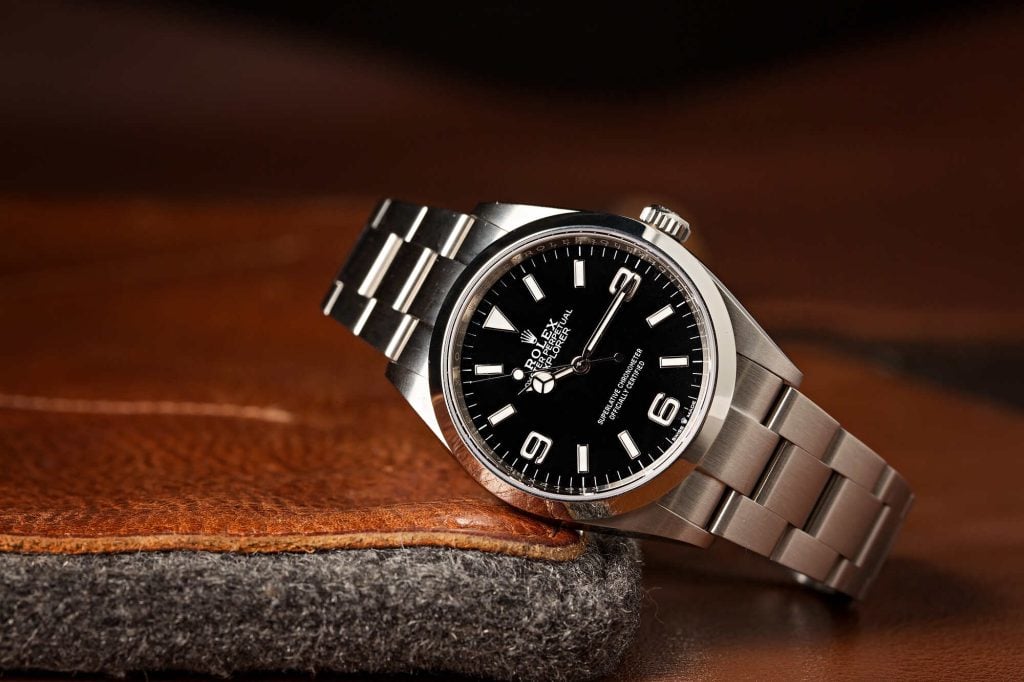
Rolex equipped the 1953 British expedition that first summited Mount Everest with watches. Sir Edmund Hillary and Tenzing Norgay reached the summit on May 29. There is some question as to which Rolex model actually reached the summit first, but later that year the Rolex Explorer was launched as a tribute to the climb. It features large Arabic numerals at 3, 6 and 9 o’clock for legibility under all conditions, a feature that has seen little change in 70 years.
Explorer is built on a reputation of rugged simplicity and reliability rather than complexity or gold. The Rolex 124270, the current 36mm model is one of the most useable sizes Rolex makes.
#7. Rolex Oyster Perpetual (The Purest Form)
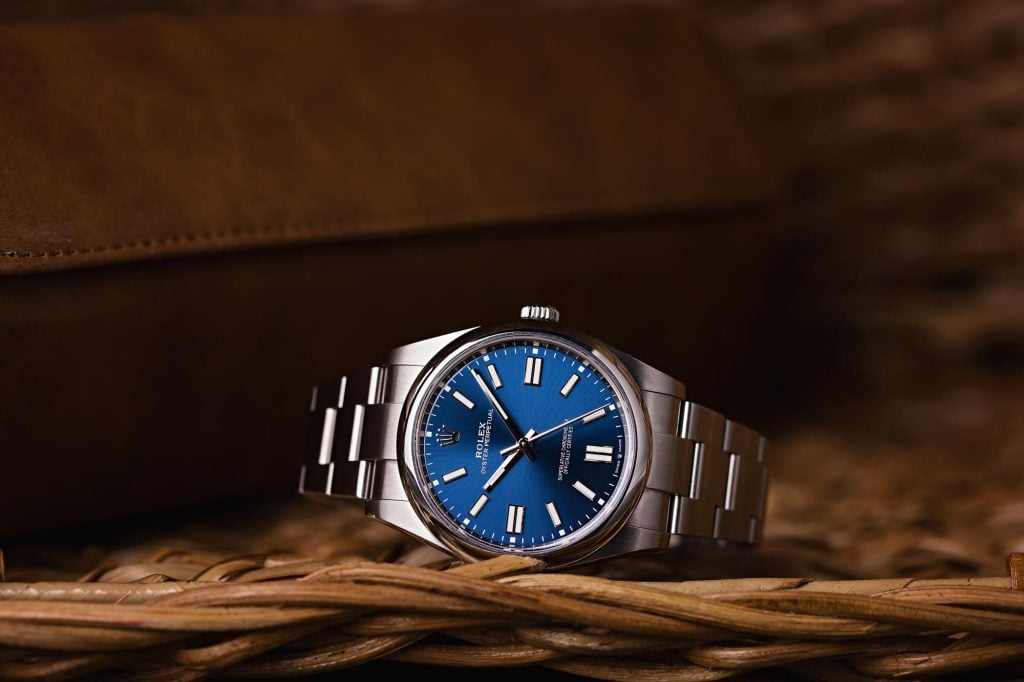
The Oyster case was patented in 1926 and was the first waterproof wristwatch case in the world. It forms the basis of every Rolex you see today. The self-winding Perpetual movement followed not long after in 1931. The Oyster Perpetual removes all complications leaving only hours, minutes and seconds on the dial, in its simplest form, representing what made Rolex so ground-breaking. The collection was relaunched in 2020 with a new, playful range of stella-inspired dial colors. The Coral Red, Turquoise Blue and Yellow colorways from the Rolex Oyster Perpetual collection, which is still Rolex’s entry-level collection, have created an unprecedented level of demand and waitlists for the brand’s easiest to buy Rolex.
“Stella” dials are named after the highly collectible lacquered “Stella” dials Rolex made for Day-Date watches in the 1970s. This new Oyster Perpetual, with its Rolex ownership experience (COSC-certified accuracy, Rolex’s five-year warranty), is available at a more affordable price point than the sport models.
#8. Rolex Milgauss (The Scientist’s Watch)

CERN scientists approached Rolex to provide a watch that could tolerate the magnetic fields inside their research facilities. Rolex first developed the Rolex Milgauss in 1956 with resistance to 1,000 gauss of magnetic interference. Since most mechanical watches will function abnormally at magnetic fields of as little as 60 gauss, the Milgauss movement is shielded by a soft iron inner case. The bolt seconds hand and the green-tinted sapphire crystal (officially “Glace Verte”) on some references make the Milgauss instantly identifiable.
The Milgauss has always been a limited appeal model, with lower production runs than either the Submariner or Datejust. This relative scarcity, and its unique look and scientific heritage, has created a small but solid group of collectors for what is arguably Rolex’s most unusual design.
#9. Rolex Sea-Dweller (The Deep-Sea Professional)
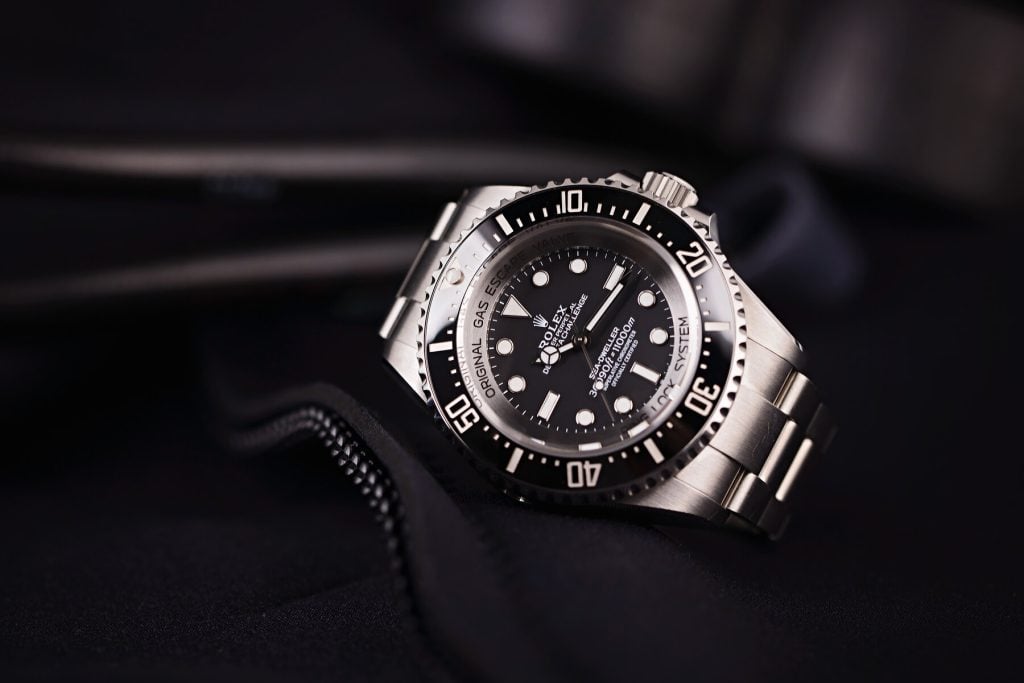
When commercial divers started using helium-saturated breathing gas for deep saturation dives in the 1960s, it was found that helium molecules under compression can seep through the watch case, leading to crystal explosion during decompression. Rolex’s solution to the problem was the helium escape valve, a one-way valve which releases the helium during decompression but maintains the watch’s waterproof properties. The Rolex Sea-Dweller was launched in 1967, purpose-built for professional use with an original depth rating of 610 meters.
The current Rolex Sea-Dweller is water-rated to 1,220 metres. There is also a Deepsea version, water-rated to 3,900 metres. In 2012, film director James Cameron dove the experimental Deepsea Challenge model to the bottom of the ocean at 10,908 metres, where it continued to operate.
#10. Rolex Air-King (The Aviation Tribute)

The Rolex Air-King name first appeared in 1945. The current Air-King, launched in a new design in 2016, departs from prior Rolex products in a number of stylistic choices including the use of a dashboard-inspired dial design with the minute scale positioned large and centrally, with a mixture of Arabic numerals breaking with prior Rolex designs. The dashboard aesthetic is a reference to the Bloodhound SSC land speed record vehicle, which Rolex supported.
At 40mm, with a smooth bezel and Oystersteel case, the Air-King has professional watch dimensions at a lower price point than other sport models. The unique dial design appeals to buyers looking for something outside the traditional Rolex style.
What Makes a Rolex “Iconic”?
- Exceptional Resale Value: Rolex watches hold 60–85% of their original retail value, with some models such as the Daytona and GMT-Master II “Pepsi” commanding over-retail prices on the secondary market. Reasons for this include their controlled supply, constant demand and the quality of the watches themselves, which is such that many Rolex watches continue to operate correctly for multiple generations.
- Full In-House Manufacturing: Rolex makes all the components in its watches, including the Oystersteel alloy and the gold for cases, the synthetic sapphire crystals and the Chromalight luminous material. Having all four manufacturing facilities in Switzerland allows Rolex full control of quality and enables innovations such as Cerachrom bezels and Paraflex shock absorbers, which are not available to other brands.
- Moment of Truths: Rolex watches have been present at the most significant moments in the history of mankind and in nature; on the top of Everest and on the bottom of the ocean, on the wrists of presidents and in Hollywood movie screens. Those associations are not just a marketing strategy: they are genuine watches that proved themselves in extreme conditions and extreme settings, long before becoming icons of luxury. Rolex’s association with organizations such as the National Geographic Society, and Rolex’s support of explorers are a direct continuation of this legacy.
Frequently Asked Questions
Final Thoughts

The Rolex that is the best for one person may not be for another, and “best” is always a very subjective term. The best Rolex watches of all time, however, became considered as such not only because they were first of their kind, but because they changed the course of watchmaking, and because they catapulted far beyond their original purpose as tool watches into the stratosphere. The 10 Rolex models in this guide are more than timekeeping instruments. They are the timepieces that best represent excellence in watchmaking, and that best celebrate human achievement, technical prowess and iconic designs that have stood the test of time and remained fashionable across several generations.