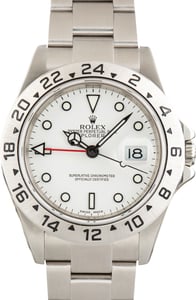
Finding the right watch size starts with a tape measure, not a size chart. Measure your wrist just below the wrist bone (where the watch will sit). Most wrists between 6.5 and 7.5 inches will look perfect in a 36 to 42mm case. In 2026, the 40mm and 41mm sizes combined accounted for 43% of the pre-owned luxury watches we sold. The chart below will get you close; your wrist and a few minutes with the watch on will get you the rest.
Key takeaways
- Measure your wrist below the wrist bone, snug but not tight, and write the number down in both inches and centimeters.
- The wrist-to-case chart is a starting point, not a verdict; wrist shape and the watch’s proportions matter as much as the inch number.
- In my experience, lug-to-lug tells you more about how a watch will fit than case diameter does.
- Across every brand we sell, 40mm and 41mm cases were our most popular sizes in 2026, and smaller cases are gaining share in our sales.
- A bracelet sized correctly is half of what makes a watch size look right, and it is the half most people skip.
I have been fitting watches to wrists for a long time. The pattern is always the same. People are always concerned about the millimeter number and ignore everything else that determines whether the watch actually looks like it belongs on them. So, let’s start where the fit begins.
How To Measure Your Wrist for a Watch

Measure where the watch will sit (just below the bump of the wrist bone on the side of your hand, not over it). Keep the tape snug against the skin; don’t pull it tight. You’re measuring the circumference of your wrist as it is, not when you squeeze it. Write down the result in inches and centimeters, since the watch specs are in millimeters and most size charts are in inches, so you’ll be converting back and forth anyway.
With a tape measure
- Wrap a soft sewing tape around your wrist just below the wrist bone.
- Let it sit flush all the way around, snug but not compressing the skin.
- Read the number where the tape meets its zero end. That is your wrist size.
Without a tape measure
- Cut a strip of paper about half an inch wide, or use a piece of string.
- Wrap it around your wrist in the same spot, below the wrist bone, and mark where the end overlaps.
- Lay the strip flat against a ruler and measure from the starting edge to your mark.
- If you plan to wear a metal bracelet, remember that the bracelet gets sized to a comfortable fit, not exactly to this measurement. A bracelet that fits exactly to the skin will feel tight by the afternoon.
One more thing: wrist size can vary throughout the day, especially in warm weather. If possible, check your measurement later in the day as well. A watch sized to a morning wrist may feel tighter by dinner.
If you plan to wear a metal bracelet, remember that the bracelet gets sized for comfort, not to match your wrist measurement exactly. A bracelet that fits tightly against the skin will become uncomfortable as your wrist changes throughout the day.
Watch Size to Wrist Size Chart

This chart is our experience in a nutshell, presented as ranges. It’s not a standard, and there is no such thing as a standard. It’s the band of case diameters that usually look proportional on each wrist size, with a note on what tends to go wrong outside that band. One thing the chart cannot tell you: vintage and dress watches were often intentionally designed to be smaller. A 34mm vintage piece on a larger wrist is a style choice with a long history, not a fit mistake.
| Wrist size | Case diameter that usually works | Why |
| Under 6 in (under 15 cm) | 28 to 34mm | Above this, the lugs start to reach past the flat of the wrist |
| 6 to 6.5 in (15 to 16.5 cm) | 34 to 38mm | The classic 36mm sits in the middle of this band for a reason |
| 6.5 to 7 in (16.5 to 18 cm) | 36 to 40mm | Both a 36mm dress watch and a 40mm sports watch look at home here |
| 7 to 7.5 in (18 to 19 cm) | 36 to 42mm | The widest band; this is where taste, not fit, decides |
| 7.5 to 8 in (19 to 20.5 cm) | 40 to 44mm | Below 40mm, dials can start to look small; a 36mm still works as a deliberate choice. |
| Over 8 in (over 20.5 cm) | 40mm and larger, by preference | Lug-to-lug matters more than diameter here; a long case fills the wrist without needing a wide one. |
These ranges apply regardless of whether you’re shopping for a men’s or women’s watch. Case sizes are not inherently gendered, and the old habit of steering women toward a 28mm or 31mm case by default is outdated advice.
A 36mm watch is one of the most common sizes we sell. It sits beautifully on a 6-inch wrist, and plenty of people buying one simply want a dial they can read and a watch with classic proportions. Buy the size that looks right on your wrist, not the one a catalog category assigned to you.
If you’re between two sizes, our advice is to try both when possible. If both fit comfortably, I often lean toward the smaller case. It tends to offer more classic proportions and can be more comfortable for everyday wear. But the right choice ultimately depends on the watch and the person wearing it.
Why Two Watches With the Same Case Size Wear Differently
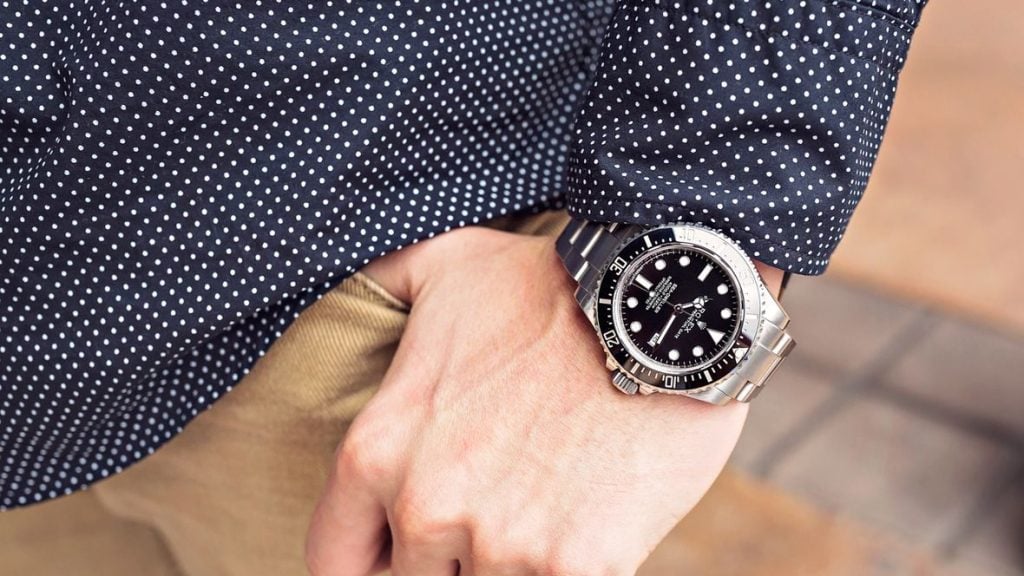
Case diameter is measured across the case from 9 o’clock to 3 o’clock (excluding the crown). We use digital calipers because a ruler only gets you within a millimeter, and that’s exactly the difference people will argue about. Diameter is just one number, though, and it doesn’t necessarily determine fit. A couple of other things matter more.
Lug-to-lug matters more than diameter. Lug-to-lug matters more than diameter.
Lug-to-lug is the distance from the tip of the top lugs to the tip of the bottom lugs, measured straight down the case. Lug width is the width of the lugs where the bracelet attaches. They’re different measurements, and people get them mixed up all the time.
Lug-to-lug determines whether a watch will fit, and my rule is that the lugs should sit within the flat of your wrist. If they don’t, it will rock, the bracelet will sit at an angle, and no amount of love for the dial will change that.
For example, modern Datejust 36 vs. Datejust 41 references are often measured at approximately 43 – 44mm and 47 – 48mm lug-to-lug, respectively. Measurements can vary by reference and measuring method. That difference of several millimeters is why the 41 feels like a different watch on a 6.5-inch wrist, not a slightly bigger one. If you want the lug to lug for each Rolex size, the full list is there.
Thickness and the shirt cuff
Thickness is measured from the caseback to the very top of the crystal. The general rule of thumb you’ll see all over the place is that a case over 12mm starts to fight a shirt cuff, and that’s what we hear from our customers who are wearing a suit. A very thin 36mm will disappear under a cuff. A Deepsea watch at approximately 17.7mm (depending on the reference) will not, and it’s not meant to. Work out where you’ll wear the watch before you decide how thick it can be.
Bezel, dial, and wrist shape
A 40mm dive watch with a wide rotating bezel will, in fact, wear smaller than a 40mm dress watch with a thin bezel and a wide, open dial, because your eye is drawn to the dial rather than the case. On the wrist, it can go the other way, too, with the thickness and weight of a dive watch making it seem larger than its dial would suggest. A dark dial will appear smaller than a white one. A flat wrist will carry the width better than a round one, so two people with the same 7-inch measurement can be completely at odds about the same watch. My view is that if you take away one thing from this section, it should be the lugs. Everything else is just a matter of preference. Overhanging lugs are a matter of fit.
How a Bracelet Should Fit

The case gets all the attention, and then the watch arrives. The bracelet is two links too long and just slides around, making it look completely oversized. The bracelet is half the fit, and getting it right makes a bigger difference than most people realize.
A bracelet should sit just below the wrist bone with enough room to slide a finger underneath, and no more. Depending on the bracelet, a watchmaker will adjust the fit by removing links, using a half link where the design includes one, or moving the clasp’s micro-adjustment. Clasp systems differ by manufacturer, and not every bracelet has a half link. Modern sliding clasp extensions let you add a few millimeters on a hot day without a tool. I consider them one of the most underrated features on a sports watch.
My own opinion: a bracelet that fits is half of what makes a watch size look right, and in my experience a loose bracelet is often the real reason a watch feels too big.
The Watch Sizes People Actually Buy

Size charts tell you what should work. Our sales show which case sizes customers purchased, offering a useful complement to general fitting recommendations.
Across every brand we sell, 40mm and 41mm cases combined accounted for 39% of the watches sold through Bob’s Watches between January and mid-October 2026. Those were our two most popular case sizes by a long way, and that’s exactly what you’d expect from the middle of the chart.
The 36mm case held its own, making up 14% of the watches we sold, matching the 41mm in units. In an industry that spent the 2000s and 2010s sizing up year after year, that kind of showing from a smaller case is worth noting. It tells me that there is still plenty of demand for watches with more traditional proportions. One caveat: our sales mix also reflects what comes through our doors in a given quarter, so treat it as a signal, not a verdict.
Shopping Rolex specifically? Every current case size, including lug-to-lug and thickness for each model, is in our Rolex sizes guide, so I won’t repeat that chart here. The takeaway from this one is simpler: 40mm and 41mm lead in both units and dollars, but 36mm is holding real ground.
Based on watches sold through Bob’s Watches between January and mid-October 2026; shares are of watches sold, not of inventory.
How To Tell If a Watch Fits Properly
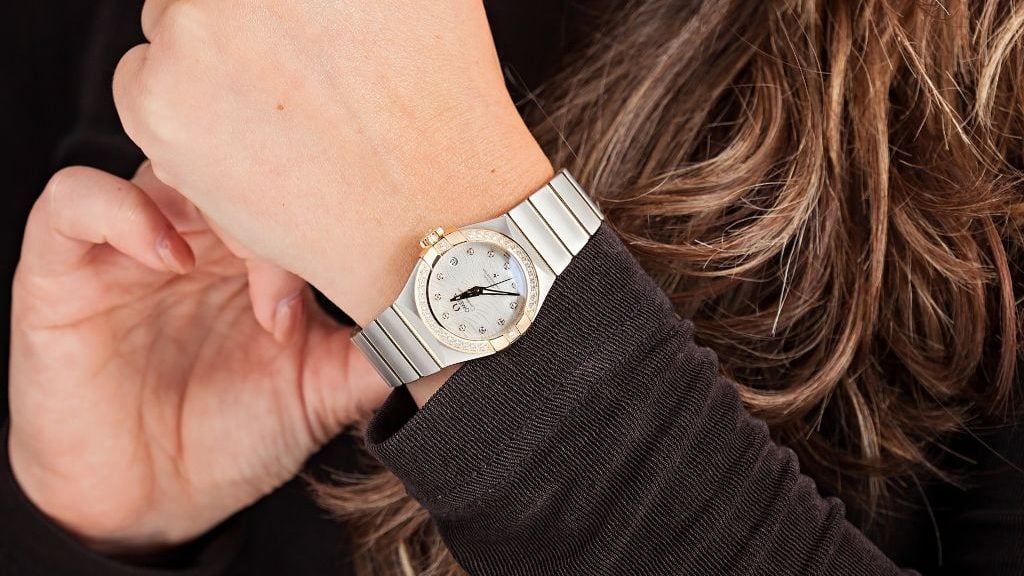
No chart replaces the watch on your wrist. Carol Altieri, our COO, has a clear view of where first-time buyers go wrong with size.
“The mistake I see most often is buying the size you think you should want instead of the size that fits. Someone measures a 6.75-inch wrist, reads that 40mm is the popular size, and orders a 42mm because bigger felt like more watch for the money. My advice is the same every time: measure first, look at where the lugs land, and if you are torn between two sizes, choose the one you will reach for on a Tuesday, not the one that impresses you on a Saturday.”
Carol Altieri, COO, Bob’s Watches
If you’re deciding between two sizes, try them side by side. Pay attention to where the lugs land, how the case sits on your wrist, and whether the bracelet feels comfortable. A watch should feel secure without being tight, and it should sit naturally rather than slide around.
If you’re buying online, photograph a watch you already own on your wrist in daylight. It can help you study how the case and lugs sit relative to your wrist and give you a useful point of comparison when considering another size.
Wrist Size for Watches: The Short Version

Measure below the wrist bone, find your row on the chart, and then let the lugs and the bracelet make the final call. If you are between two sizes, I often lean smaller. Our 2026 sales mix also shows a higher share of watches measuring 36mm or less than earlier in the year.
If you are shopping a specific brand, check the lug-to-lug before the diameter.
At Bob’s Watches, we size and fit watches every day, and the Rolex sizes guide carries the measured numbers for every current model if you want to go deeper than this one. Everything here applies just as well to an OMEGA, a Tudor, a Cartier, or a Breitling. Wrists do not care about the logo.