Two-tone watches are back, and I have the receipts. Demand for two-tone in our completed sales rose 28% year over year as of October 2026, with buyers paying a median of $9,995. But the comeback doesn’t align with what the fashion press describes. It’s driven by discontinued two-tone watches, not the current catalog.
Key Takeaways
- Two-tone demand in our completed sales grew 28% year over year as of October 2026, a step ahead of all-steel at 23%.
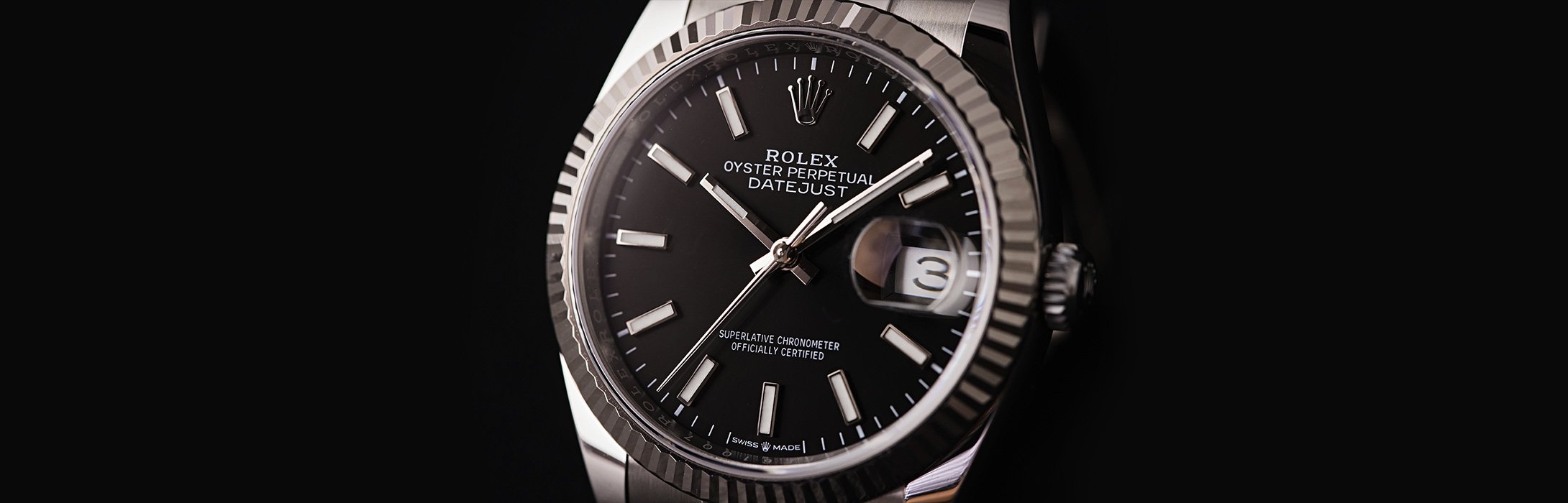
- The Datejust 36 carries the comeback: about 23% of two-tone demand at a $7,506 median sold price.
- 71% of the two-tone watches we sold are discontinued references. This is a neo-vintage story.
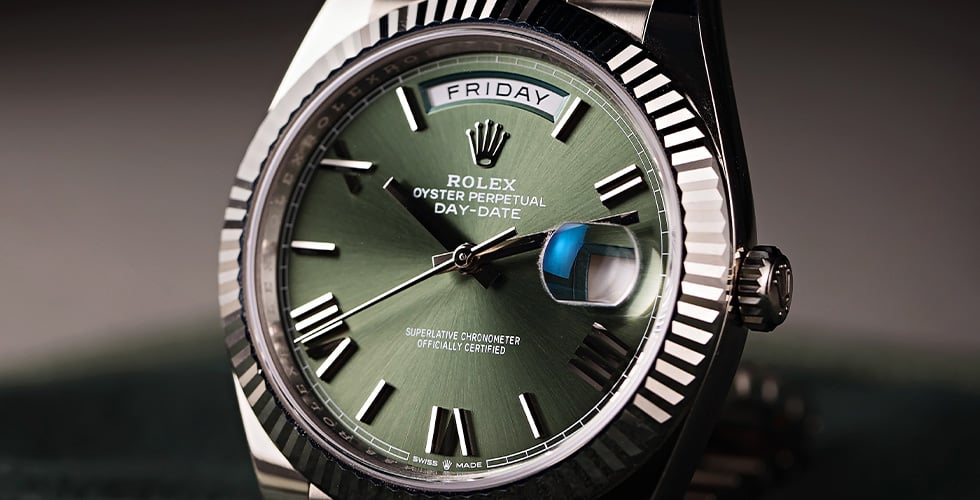
- Yellow gold holds roughly 85% of two-tone demand and hasn’t given up a point in eight quarters, whatever you’ve read about rose gold.
- Half of all two-tone pieces sold under $10,000, which makes mixed metal the most accessible door into a gold-touched Rolex.
For twenty years, people have called the two-tone watch a dad’s watch, the kind of metal mix your uncle wore with a polo shirt in 1987. Buyers disagree, and as we look at pre-owned two-tone watches every day, I think it’s better to show you what they actually choose rather than debate matters of taste. Let’s begin with the figures.
What Our Sales Data Shows About Two-Tone Demand

Two-tone demand at Bob’s Watches rose 28% year on year by October 2026, based on completed transactions from January 2025 to October 2026. For perspective, our total sales rose 27% over the same period, and all-steel sales rose 23%. Moreover, the two-tone range has maintained a steady proportion of all our sales, staying within two points for eight consecutive quarters.
Taken together, the fair assessment is that two-tone isn’t just surviving on steel’s lunch; it’s enjoying a robust market and is moving a little faster than the market itself, after years when the category was ignored. That counts as a reversal in my eyes, though not the kind that leads to a mania.
The median price of the two-tone watches was $9,995 and half of all the two-tone watches we sold closed at under $10,000. Here’s who’s doing the selling:
| Model | Share of two-tone demand | Median sold price |
| Rolex Datejust 36 | 23% | $7,506 |
| Rolex Submariner | 15% | $15,495 |
| Rolex Lady Datejust | 15% | $6,995 |
| Rolex GMT-Master II | 5% | $19,695 |
| Rolex Datejust 41 | 5% | $15,995 |
I would have thought the sport models would be at the top of the list, but they aren’t. The Datejust 36 collection, one your accountant would recognize, is the engine behind the entire comeback, and that fact strikes me as significant. Hype-driven trends start with the noisiest watches. This one started with the quietest.
Regarding the figures: all numbers in this article are based on completed Bob’s Watches transactions from January 2025 through October 2026, not on current asking prices. The shares refer to two-tone sales, and the year-over-year comparisons cover January through September of each year.
Why Two-Tone Watches Are Back in Style
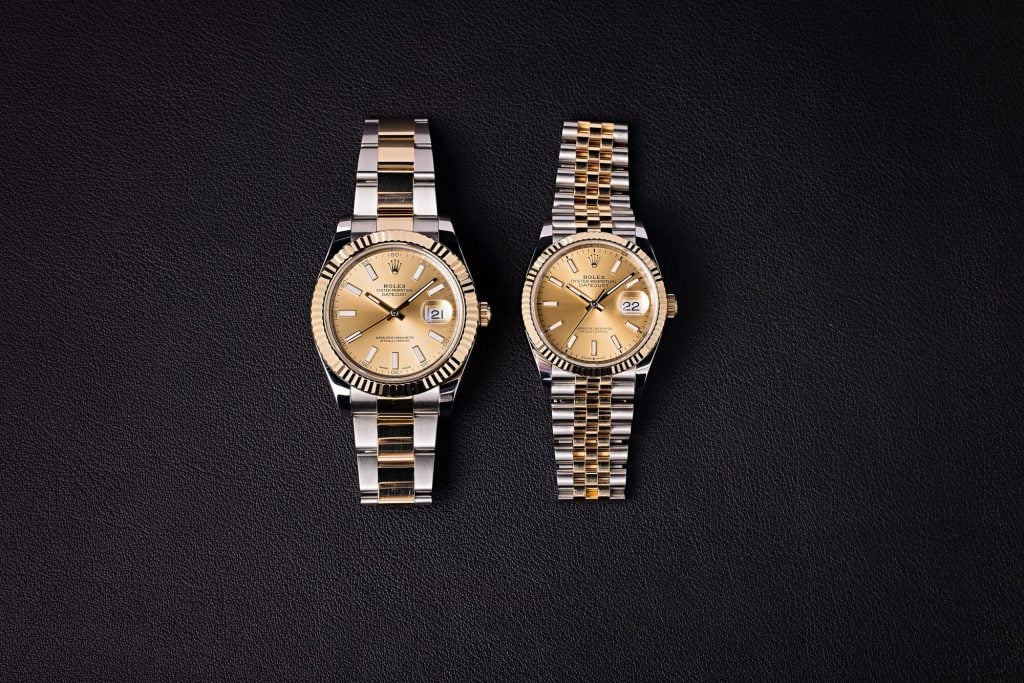
Two-tone watches have made a comeback, though only two of the factors are driven by style. The first is the taste cycle. Watches from the 1980s and 1990s are no longer seen as out of date; instead, they’re regarded as having character, much like a used Mercedes, which has moved from an ordinary car to a collectible. The second factor is the growing preference for quieter luxury; a steel-and-gold Datejust signals that you own a good watch without having to announce the brand to everyone in the room. For nearly a century, there have been Rolex watches for sale offered with this combination under the name Rolesor: a steel case and bracelet with gold on the bezel, crown, and central link.
The third factor is the one the style press is missing, and it’s the one I’d bet on: price. By October 2026, half of the two-tone models we sold were priced under $10,000, while the all-steel sport models, which are so popular, still sold for well above what most first-time buyers are willing to spend. In my view, the usual backward explanation is wrong; fashion didn’t cause people to rediscover the two-tone style. Instead, when they entered the used car market, they saw how much less the mixed-metal versions cost than the steel ones and decided they looked pretty good for the price. The design rationale came afterward.
The Two-Tone Rolex Watch Models Buyers Want Most
We’ve already published a ranked guide to the best luxury two-tone watches if you want opinions on what deserves your money. What follows is different. This is what buyers actually bought, in order of demand.
Two-Tone Datejust: Still the One to Beat

The two-tone Datejust 36 is about 23% of our two-tone demand, the single biggest slice, at a median sold price of $7,506 as of October 2026. And buyers are remarkably consistent about the recipe: 78% of the Datejust 36 pieces we sold wear a Jubilee bracelet, and champagne is the top dial at 38%: fluted bezel, Jubilee, champagne. The uniform works, and nobody’s fighting it.
Two-Tone Submariner: The Bluesy Effect

The two-tone Submariner accounts for about 15% of two-tone demand, with a $15,495 median, and it’s really one watch wearing a few reference numbers: 62% of the two-tone Submariners we sold have a blue dial. Collectors call the blue-on-blue steel-and-gold Sub the two-tone Rolex Bluesy, and the nickname has stuck. The detail I love is which Bluesy wins. The five-digit 16613, discontinued for over a decade, outsells the current generation in our data, at a $12,995 median.
GMT-Master II: The Fastest Riser
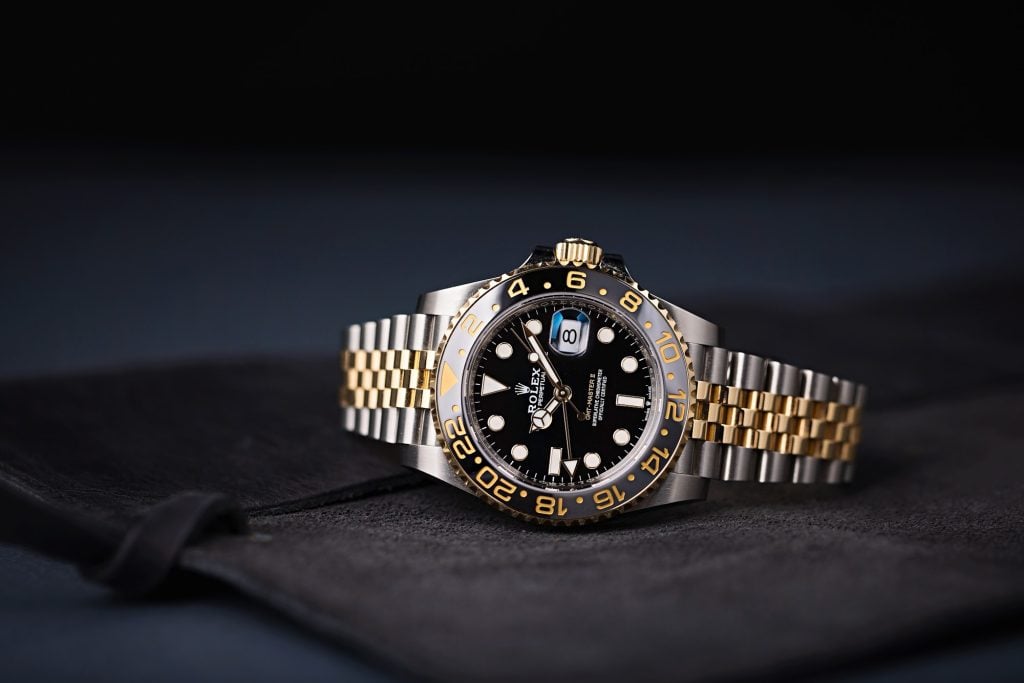
The two-tone GMT-Master II is the most popular Rolex sport model in our two-tone sales, with year-over-year sales up 38% and a median selling price of $19,695 by October 2026. Root Beer versions, which have the brown-and-gold appearance, make up about 40% of that demand, with a median price of $19,895. The Datejust 41 comes next with a median price of $15,995, followed by the two-tone Daytona and Yacht-Master, all of which are seeing growth, though none come close to the volume share of the Datejust 36.
The Real Story: Discontinued References Lead the Comeback

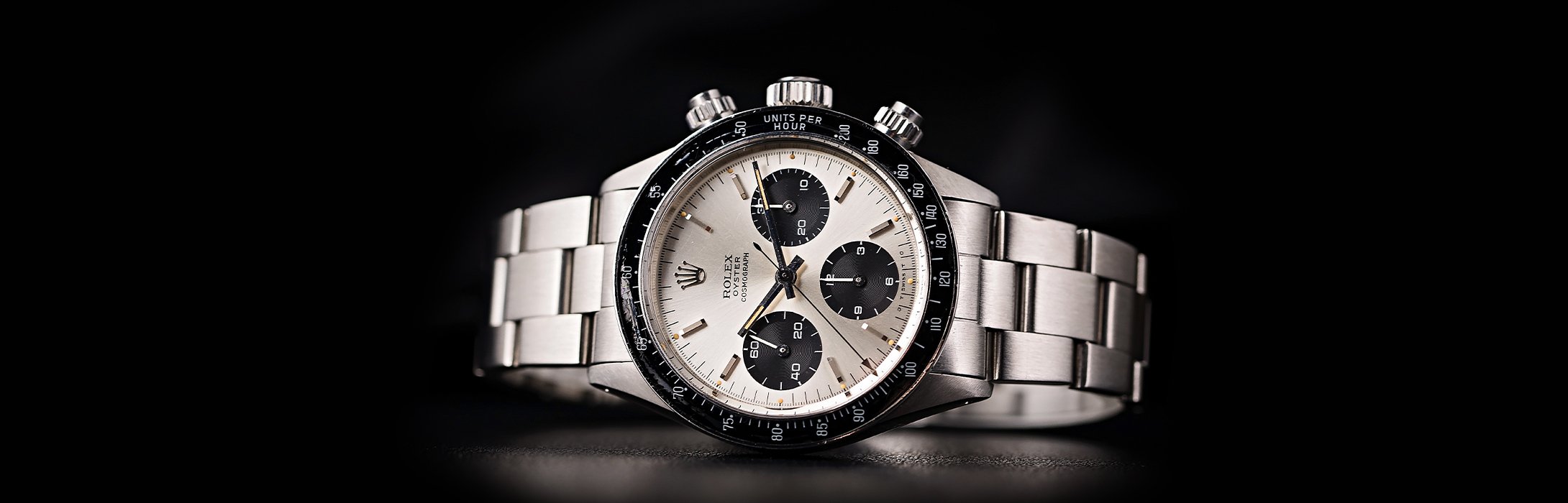
Here’s the number that reframes everything: 71% of the two-tone watches sold at Bob’s Watches are discontinued references, based on completed transactions from January 2025 through October 2026. The two-tone comeback is not a current-catalog phenomenon. It’s a neo-vintage one.
The Datejust 36 makes this clear: five-digit references such as the 16233 and 16013, from the 1980s and 1990s, account for about 65% of the demand for the Datejust 36, with a median price of $7,195, compared with $11,995 for their six-digit counterparts, same design language, same wrist presence, a difference of nearly five thousand dollars. The 16613 Submariner is similarly situated when compared with the current generation. Consumers have done that calculation, and I believe they are correct to do so. In my view, the value in the pre-owned Rolex market at the moment is here, with the usual reservation that value is a matter of price, not a guarantee regarding the future.
“We’re seeing customers gravitate toward discontinued references that offer the classic steel-and-gold look at a more accessible price. These watches have always had an audience, but buyers are recognizing their appeal again, particularly in the pre-owned market.”
Paul Altieri, Founder & CEO of Bob’s Watches
Yellow Gold vs Rose Gold: What the Data Says

Yellow gold dominates the two-tone market. In our two-tone sales, steel and yellow gold make up 85.6%, while Everose accounts for 14.4%. This proportion has remained almost unchanged for eight consecutive quarters up to October 2026. While demand for Everose has increased by 33% year on year, compared with 28% for yellow gold, the rose side is therefore in good shape. It is merely growing from a small base and is not gaining any market share.
You’ll read that rose gold is conquering a younger generation. I don’t feel that our checkout data shows that. My take: yellow gold paired with steel is the two-tone look, the one your eye recognizes from thirty feet, and Everose is a lovely niche rather than a changing of the guard. Buy Everose because you love the warm look, not because you’ve been told it’s the future.
Two-Tone Watches for Women: The Quiet Driver

The Rolex Lady Datejust makes up around 15% of our two-tone demand on its own, an increase of 33% compared to the previous year, and had a median selling price of $6,995 by October 2026. When you broaden the scope, cases measuring 31mm and under account for about 27% of all the two-tone watches we sell, with most of those closing within the range of $5,400 to $9,000. Women’s demand isn’t a minor part of this recovery; it represents one quarter of it.
That aligns with what the jewelry industry already knows, namely that jewelry takes priority over the instrument when it comes to mixed metals, a fact that matches the way many women purchase watches; the two-tone Cartier Panthère, apart from Rolex, is the watch we see used for the same purpose, a bracelet that also tells the time.
Beyond Rolex: Cartier, OMEGA, and Tudor Two-Tone

Rolex is leading the way in two-tone sales, but the segment under $6,000 is active and belongs to everyone else, and it’s lively and shared among all the other brands. As of October 2026, the median price of the two-tone Cartier Santos was $5,145, and Cartier usually offers the best design value per dollar when it comes to mixed metals. Tudor has a median of $3,938, representing the most affordable option for a two-tone watch designed to meet modern sports-watch standards. OMEGA was our fastest-growing brand, since two-tone demand had more than doubled from the previous year, although it started from a small base, so keep the confetti.
| Brand or model | Median sold price | Why buyers pick it |
| Cartier Santos | $5,145 | The shaped-case icon; jewelry and watch at once |
| Omega two-tone | $6,245 | Seamaster and Constellation heritage at half a Rolex |
| Tudor two-tone | $3,938 | Modern build quality at the category’s entry price |
Do Two-Tone Watches Hold Their Value?

Let me address the reputation question, since I’ve heard that two-tone watches were said to lose all their value. That idea circulated in the 2010s, when steel sports watches were booming while others stayed flat. Here’s what our current sales data indicates. The median price buyers paid for two-tone watches increased by about 10% year over year as of October 2026, the same pace as steel. And among the various model lines, the two-tone versions of the Datejust 36, Submariner, GMT-Master II, and Datejust 41 all reached higher medians than their steel equivalents in our data. Now, be careful about that second point: since the mix of references varies between the groups, it tells us what buyers paid, not a like-for-like premium and not evidence of appreciation.
This is the cautious viewpoint: some two-tone watches, especially those with a clean five-digit design and box and papers, can retain value, with the ones that do so determined by their scarcity, condition, and demand. No watch can guarantee a profit, and anyone who says that is, in fact, selling something other than watches.
One practical note while we’re on value: if a two-tone Rolex has been sitting in your drawer since the last time the category was cool, this is the best market it has seen in years. You can sell a Rolex watch to us directly and find out what it’s actually trading for.
Frequently Asked Questions
Where the Two-Tone Watch Market Goes Next
My prediction, worth exactly what predictions are worth: the neo-vintage end tightens. Five-digit Datejust prices in our data already rose 14% year over year, the Lady Datejust 16%, and clean examples with papers get harder to source every month. The gap between five-digit and six-digit pricing is the kind of gap markets eventually notice.
We’ll keep publishing what our sales actually show, because this category has carried other people’s narratives for forty years and deserves its own data. If this piece put a specific reference in your head, the two-tone collection at Bob’s Watches is where I’d start looking.