METAS-certified watches have passed the Master Chronometer testing program run by METAS, the Swiss Federal Institute of Metrology. The entire watch, including the movement, is tested over ten days and subjected to a ten-day test during which its accuracy, resistance to magnetic fields of 15,000 gauss, water resistance, and power reserve are evaluated.
That’s the textbook answer. Here’s the dealer’s answer: METAS is one of the rare instances in this hobby where a marketing claim has to be put before an external referee. We deal with OMEGA and Tudor every week at Bob’s, and that little red certification card changes how buyers talk about a watch. The question of whether it should affect the price is another matter, and I’ll come to that.
Key Takeaways
- METAS is an independent Swiss government institute, not a watch brand or an industry group.
- A Master Chronometer must already contain a COSC-certified movement before it’s tested again as a complete watch.
- The tolerance for accuracy is between 0 and +5 seconds each day, and a Master Chronometer must not run slow.
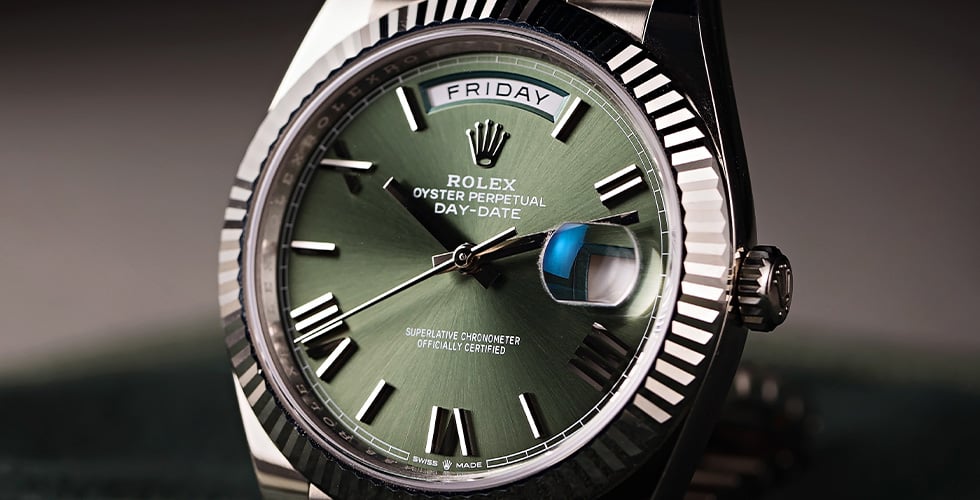
- Rolex is not certified by METAS; it instead subjects its watches to its own in-house Superlative Chronometer standard.
- OMEGA and Tudor are the two brands using METAS certification at scale.
- On the pre-owned market, the certification travels with the watch, and pricing follows the usual factors: desirability, rarity, and condition.
If you’ve browsed pre-owned OMEGA watches lately, you’ve seen the words Master Chronometer upon half the dials. Here’s what sits behind them.
What Does METAS Certification Actually Test?

The testing works in two tiers. Before a watch ever reaches METAS, its movement must earn chronometer status from COSC, the Swiss testing body that has graded movements for decades. Only then is the movement cased up, with its crown, crystal, hands, and gaskets, and submitted to the official METAS certification program for eight additional tests over ten days. Every Master Chronometer is therefore certified twice: once as a bare movement, once as the finished watch on your wrist.
That second stage is what matters. A movement that performs well on a laboratory bench may behave differently once put into a watch and worn, and conventional tests were not designed to catch this kind of behavior.
| Test | What It Checks | Standard |
| Daily accuracy, fully cased | Rate across positions and temperatures | 0 to +5 seconds per day |
| Magnetic resistance | Function and performance during exposure | 15,000 gauss |
| Accuracy across power levels | Rate when fully and partially wound | 0 to +5 seconds per day |
| Water resistance | Complete watch under pressure | Manufacturer’s rated depth |
| Power reserve | Runtime against the advertised figure | As stated by the brand |
The tests are carried out in special certified rooms with the proceedings continuously monitored by officers from the institute itself. Although OMEGA can say its watch is accurate, METAS requires the company to prove it through a documented procedure directed to a government body with no interest in the outcome.
How METAS Compares to COSC
COSC certification answers a narrower question. A brand sends the bare movement, before casing, to an independent lab, where it runs for 15 days across five positions and three temperatures. To pass, a standard men’s mechanical movement must hold an average daily rate of -4 to +6 seconds per day. That earns the word chronometer upon the dial, and it’s a real accomplishment, not a rubber stamp.
The Master Chronometer standard is separated from it by two things.
| Criterion | COSC | METAS |
| What gets tested | Bare movement only | The complete, cased watch |
| Accuracy tolerance | -4 to +6 sec/day | 0 to +5 sec/day |
| Magnetic resistance | Not tested | 15,000 gauss |
| Test duration | 15 days | 10 days, after COSC |
| Run by | Independent Swiss lab | Swiss federal government institute |
At the lower end of those tolerance ranges, a COSC chronometer may lose as much as four seconds a day and still be considered acceptable, while a Master Chronometer is not allowed to run slow at all and may be up to five seconds fast.
The greater practical difference lies in the magnetism test. Everyday items such as your phone, your laptop, your tablet’s magnetic case, and the clasp on a handbag all produce magnetic fields that can magnetize a conventional hairspring and, as a result, either make a watch run fast or stop it completely. Since COSC was never intended to measure any of this, neither standard is misleading you; they address different issues.
Is Rolex METAS Certified?

No, Rolex is not METAS certified. Since 2015, Rolex has tested every watch in-house to its own Superlative Chronometer standard, which guarantees -2 to +2 seconds per day on the fully cased watch, a tighter tolerance than the Master Chronometer’s 0 to +5.
When customers ask me which standard is better, I tell them they’re comparing philosophies, not grades. Rolex runs extremely tight testing behind its own doors. METAS pairs rigorous testing with independent government verification, so an outside agency vouches for the result. One gives you a tighter number. The other gives you a third-party referee. Neither approach is a shortcut, and I’ve never seen a modern Rolex or a Master Chronometer that couldn’t back up its paperwork.
It should be stated clearly that Rolex movements do, in fact, pass the COSC standard before the company’s in-house testing starts, which means that a Superlative Chronometer is also a COSC chronometer. Rolex has decided to carry out the second stage of testing in-house rather than hire an outside organization to conduct the audit. If you want the full details, I have compared the two standards item by item in our guide to Master Chronometer versus Superlative Chronometer.
Which Brands Make METAS Certified Watches?

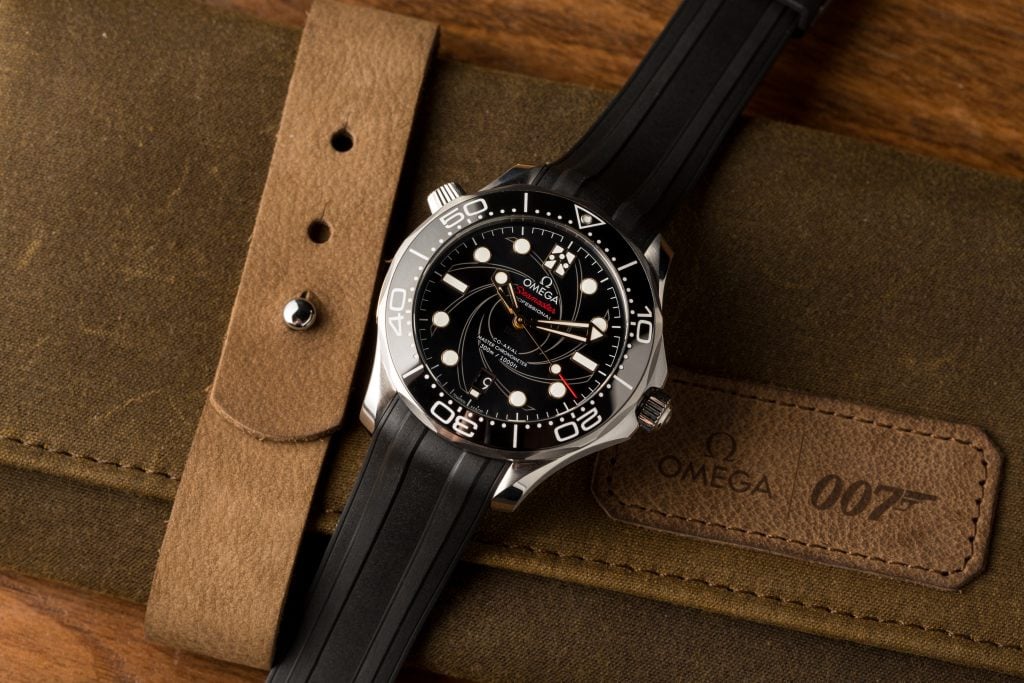
OMEGA and Tudor are the two brands certifying watches through METAS at any meaningful scale. OMEGA got there first: the certification grew out of its partnership with the institute, and the OMEGA Globemaster became the world’s first Master Chronometer when it debuted in 2015. Today nearly all of OMEGA’s current mechanical catalog carries the certification. Tudor followed in 2021 with the Black Bay Ceramic, its first METAS-certified model, and has since moved more of its lineup toward the standard.
A lot of people still assume METAS is an OMEGA-exclusive club. It isn’t. The standard is open to any Swiss brand willing to submit, which raises the obvious question of why so few do. Two honest reasons. First, passing the 15,000 gauss test demands specialized manufacturing, silicon balance springs, and anti-magnetic escapement components that not every brand can produce at volume. Second, some brands prefer their own internal standards, Rolex being the clearest example. There’s also a Swiss-made requirement, so a brand like Grand Seiko wouldn’t be eligible regardless of how well its watches perform.
For buyers, Tudor is the entry point to a METAS-certified watch, and the secondary market value is real: you can browse pre-owned Tudor watches and land a Master Chronometer for less than half the retail cost of most OMEGA equivalents.
What METAS Certification Means on the Pre-Owned Market
This is the part of the story nobody else tells you, because you need transaction data to tell it.
Begin with the paperwork. A Master Chronometer certification doesn’t expire or become invalid just because the watch has changed hands. Buyers do notice this.
As Ripley Sellers, our Contributing Editor at Bob’s Watches, puts it:
“On the pre-owned market, however, any example of a METAS-certified watch will be accompanied by that certification, so the price between that model and similar ones will be dependent on the normal factors, such as desirability, rarity, and condition.”
Our sales figures support this. The following shows what certified model families of METAS have actually sold this year. The pricing observations are based on completed transactions for Bob’s Watches from January through late September 2026, not current asking prices.
| Model family | Median sold price | Sold range |
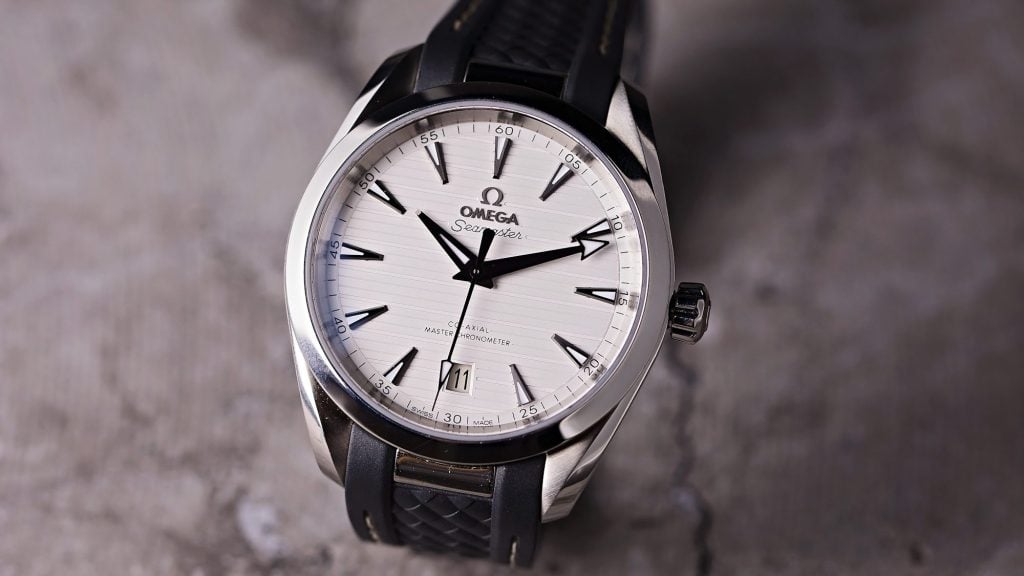
| OMEGA Seamaster Diver 300M Master Chronometer (210 series) | $5,595 | $4,395 to $10,795 |
| OMEGA Aqua Terra 150M Master Chronometer (220 series) | $5,845 | $2,795 to $27,995 |
| OMEGA Speedmaster Moonwatch Master Chronometer (310 series) | $7,595 | $5,595 to $34,995 |
| Tudor Black Bay 41 Master Chronometer | $4,495 | $3,795 to $4,995 |
The higher end of those ranges reflects precious metals, which is exactly what Ripley is getting at: metal, rarity, and condition have a much greater effect on price than the certification line on the card.
The generational comparison is where it gets interesting. The earlier generation of the Seamaster Diver 300M (the 212 series) was sold at a median price of $3,995 during that period, and pre-METAS models of the Black Bay (79230 series) had a median price of $3,595. Although more recent certified generations fetch higher prices, I wouldn’t say the testing program is responsible for the difference. A new watch with a new movement that meets greater current demand will always sell for more; certification follows this trend rather than causing it.
On the secondary market, certification reduces arguments. A government institute verified the watch’s performance claims and documented them against its serial number, so a buyer isn’t just trusting the seller’s word about accuracy or magnetic resistance. Documentation that can hold value, not a lever that creates it. And if you own a Master Chronometer you’re thinking of moving, that documentation is exactly what you want in the box when you sell your watch.
Does METAS Certification Matter When Buying a Watch?

It is important, but perhaps not exactly as the specification sheet indicates.
Accuracy should be the top priority; the difference between a watch that gains two seconds a day and one that gains five is not noticeable in everyday use. You’ll adjust your watch when you change time zones or during daylight saving time, long before the drift becomes a problem. I wouldn’t pay extra for that tolerance, even though I sell these watches.
Magnetic resistance is the better solution. Today’s world contains all sorts of magnets your grandfather’s watch would never have met, such as phone cases, laptop lids, tablet covers, and speaker grilles. A normal movement that picks up a charge begins to run extremely fast without any obvious damage, which confuses the owners and leads to an increase in service bills. A watch rated to 15,000 gauss has thus effectively avoided the entire issue.
Ripley’s view, and I agree, is that certification has no effect on the nature of the watch. A METAS-certified watch functions no differently for having been tested; what the certification adds is a guarantee that the performance you were promised, the timekeeping and the magnetic resistance, watch that has been certified by METAS does not function any differently as a result of the testing; the certification merely means that the performance you were promised, accurate timekeeping and resistance to magnetic fields, has been was actually verified rather than just asserted.
The point at which I draw a line is with investment pitches. You shouldn’t buy a Master Chronometer based on the certificate because it will make the watch increase in value. No watch can guarantee a profit, and many vintage watches with no modern certification at all are worth many times the price of a current Master Chronometer. You should buy it because you want a watch that has been thoroughly tested, and its value should then follow from its condition, rarity, and demand, as it always has. If you’d like to hear the full argument, the hero video at the top sets out the point in detail.
Frequently Asked Questions
If that watch turns out to be a Master Chronometer, you’ll find pre-owned OMEGA, Tudor, and Rolex at Bob’s Watches, with documentation we’ve verified ourselves, including certification cards when they come with the watch. The test results are the brand’s promise. The paperwork in the box is ours.