The Turn-O-Graph came to market in 1953, and at first glance it doesn’t seem revolutionary. It’s a 36mm Rolex with a clean dial and a rotating 60-minute bezel. But that bezel was the point. At the time, Rolex hadn’t put a watch with a rotating bezel into regular production yet, the Submariner would follow later that same year, which makes the Turn-O-Graph the one that quietly did it first. Early versions were simple, time-only watches meant to measure elapsed minutes without much fuss. Over time, the model evolved. It picked up a date window and took on the Datejust-adjacent aesthetic more collectors are familiar with. Eventually, it was adopted by the U.S. Air Force Thunderbirds, and the nickname, “Rolex Thunderbird,” was born.
Key Takeaways
- Debut Year: 1953, predating both the Submariner and the GMT-Master.
- Defining Feature: A bidirectional rotating timing bezel designed to measure elapsed time up to 60 minutes.
- Nickname: Commonly called the Rolex “Thunderbird” due to its connection with the USAF aerobatic team.
- Status: Discontinued in 2011, making pre-owned and vintage examples highly collectible.
The Turn-O-Graph never reached the celebrity tier of the Daytona or Submariner. But it occupies a niche those watches don’t: it combines timing utility with Datejust refinement in a single watch. Let’s go through its history, key references, how the bezel works and what the market is doing today.
The History of the Rolex Turn-O-Graph
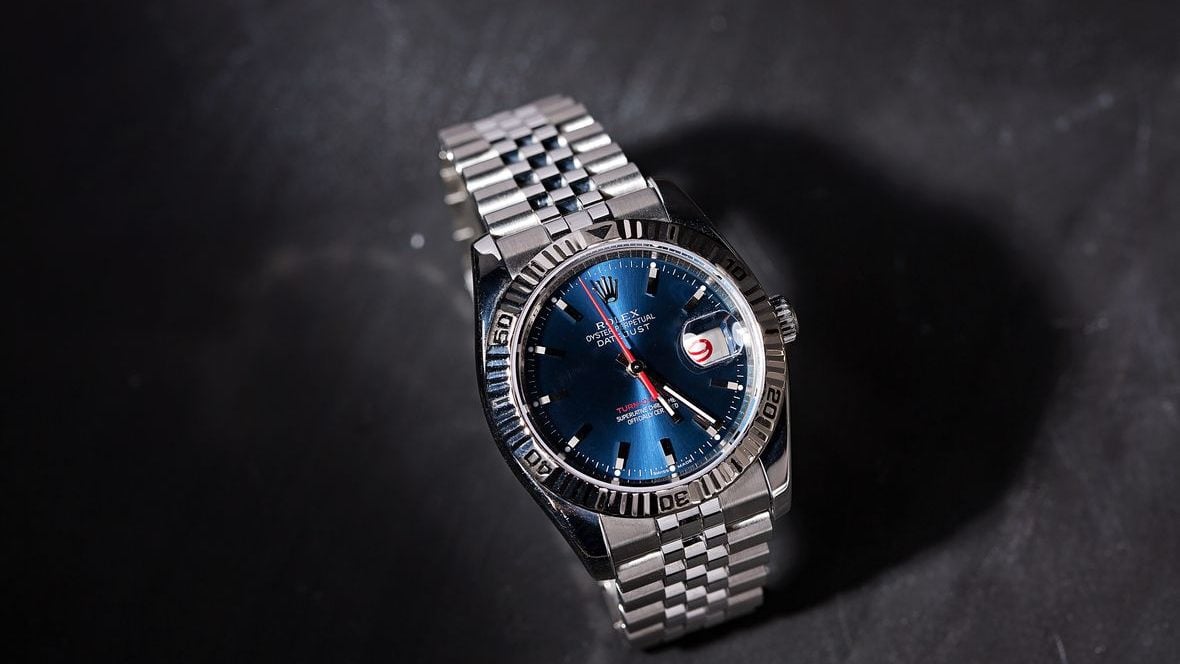
The Turn-O-Graph story really starts in 1953 with reference 6202, a straightforward time-only watch that happened to carry something entirely new for Rolex: a rotating bezel marked in 60-minute increments. The Submariner (Ref. 6204) wouldn’t make its debut until later that same year, which quietly positions the Turn-O-Graph as the first Rolex to put a rotating bezel into regular production. The Ref. 6202 even shared the same stripped-down aesthetic as those early Submariners, with a clean dial, no date window, and bold luminous hour markers. It wasn’t trying to be luxurious or flashy. This was a practical instrument, meant to let pilots and other professionals track elapsed time, long before rotating bezels became a defining feature of Rolex’s sport watch identity.
As the 1950s transitioned into the 1960s, Rolex added a date complication and gradually folded the model into the Datejust collection. That shift changed the watch’s identity. It became less purely utilitarian and more versatile, still equipped with a timing bezel, but now suitable for daily wear. The Cyclops lens over the date completed that transformation.
There had been several variations of the watch by the time Rolex discontinued the Turn-O-Graph in 2011. It never dominated headlines, but collectors who understand Rolex history recognize its importance.
The “Thunderbird” Connection

The Turn-O-Graph earned its famous nickname in the late 1950s when it caught the attention of the United States Air Force Thunderbirds, the military’s elite aerobatic demonstration squadron. The bi-directional rotating bezel was helpful for pilots because it allowed them to quickly mark a starting point and measure elapsed time during flight maneuvers and navigational calculations. The watch became part of the squadron’s unofficial kit. And the association stuck.
Rolex really embraced that connection. In North America, the company began marketing certain Datejust Turn-O-Graphs under the “Thunderbird” name, and some models even featured the squadron’s emblem on the caseback. It is worth noting, however, that while every Thunderbird is a Turn-O-Graph, the reverse is not always true. The Thunderbird label specifically applies to the Datejust versions with a date window, not to the original time-only Ref. 6202 that started it all.
Key Rolex Turn-O-Graph Reference Numbers
Rolex made the Turn-O-Graph for nearly six decades, from 1953 to 2011. A wide range of references came to market during that time across different materials and specifications. Below is a breakdown of the most notable models by era.
The Pioneer (1953)
This is the original watch. Time-only, no Cyclops, no date. Its resemblance to early Submariners adds to its appeal today. It’s also the rarest Turn-O-Graph reference and commands a premium, particularly with original dial components intact.
The Vintage Classics (1960s to 1970s)
The Ref. 1625 is the golden age of the Thunderbird. This is the reference most collectors picture when they hear the name, featuring a fluted gold or white gold bezel on a 36mm Oyster case with an acrylic crystal and a date window at 3 o’clock. Rolex made this watch for a while, and it came in steel, two-tone steel and gold, and full-gold configurations. It is the quintessential vintage Thunderbird, and as market data shows, its values have been climbing steadily as collectors rediscover this era.
The 5-Digit Era (1980s to 1990s)
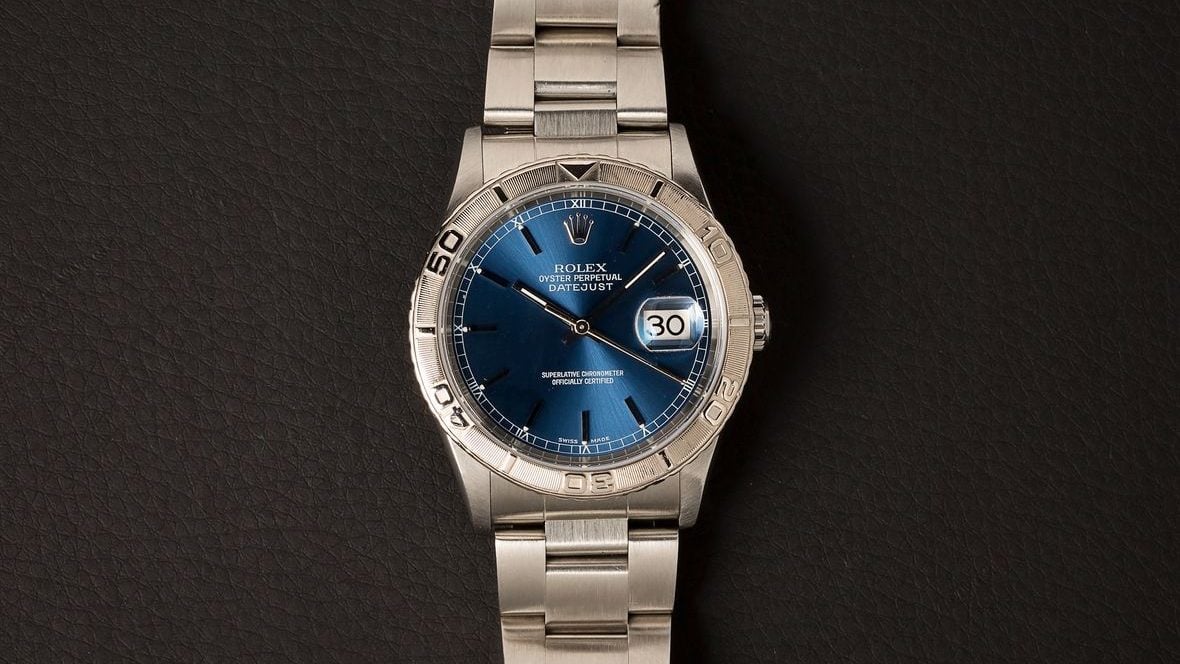
When Rolex moved into five-digit references, the Turn-O-Graph quietly modernized. The Ref. 16264 introduced the Quickset date and sapphire crystal, making daily adjustments far more convenient. Two-tone options like the Ref. 16253 added warmth and a slightly dressier aesthetic. These references sit comfortably between old-school character and modern practicality, and they’re still some of the more approachable entry points into the Turn-O-Graph family.
The Modern 6-Digit Era (2000 to 2011)
The final generation has its own personality. References like the 116264 in steel with a white gold bezel and the two-tone 116263 are instantly recognizable thanks to small but deliberate details: a red seconds hand, red “TURN-O-GRAPH” text, and a roulette date wheel alternating between red and black numerals. Fitted with the Jubilee bracelet and hidden Crown clasp, they wear a bit more refined than earlier versions. This was Rolex’s most complete vision of the Turn-O-Graph, and today these references are typically the easiest to track down on the pre-owned market.
Reference Comparison Table
| Generation/Era | Key Reference Numbers | Notable Features |
| Pioneer (1953) | 6202 | Time-only, no date, first rotating bezel |
| Vintage Classics (1960s-1970s) | 1625 | Fluted gold bezel, date with Cyclops, Thunderbird era |
| 5-Digit Era (1980s-1990s) | 16250, 16253, 16264 | Sapphire crystal on some models, quickset date, two-tone options |
| Modern 6-Digit Era (2000-2011) | 116264, 116263 | Red accents, roulette date, Super Jubilee bracelet, Crown clasp |
How Does the Rolex Turn-O-Graph Work?
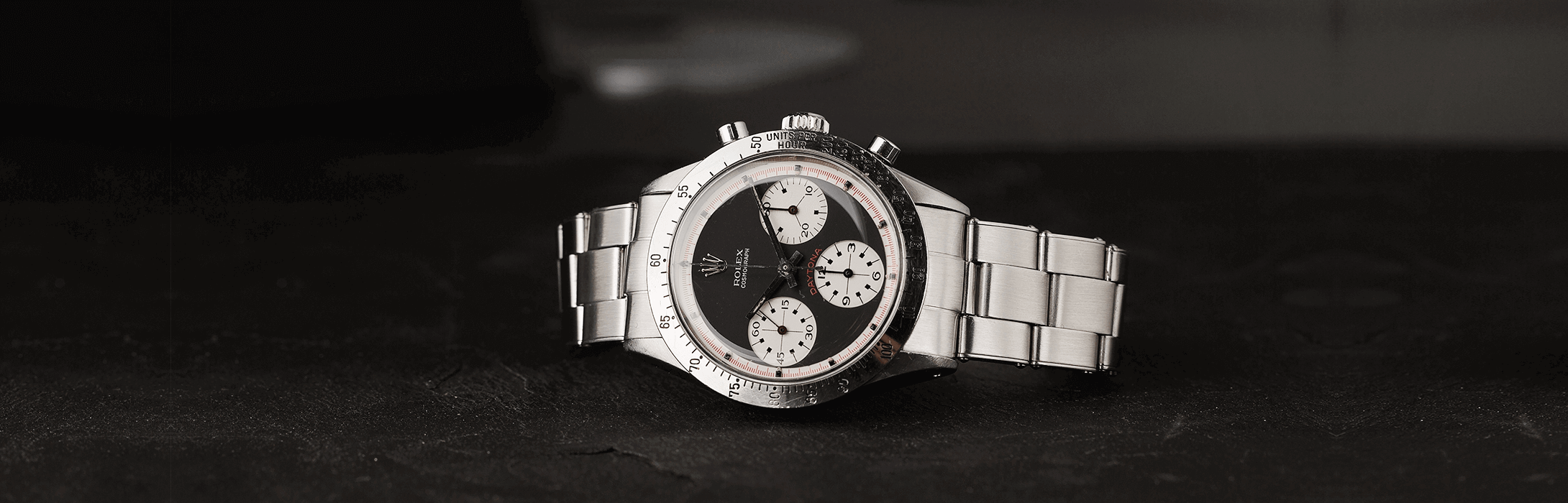
While most modern Rolex rotating bezels are unidirectional (meaning they only turn in one direction as a safety feature for divers), the Turn-O-Graph’s bezel is bidirectional. It rotates freely in both directions to measure any event up to 60 minutes in length. The Turn-O-Graph is not a chronograph. Unlike the Daytona, which uses pushers and subdials to time events, the Turn-O-Graph relies on a simple friction bezel paired with a standard three-hand movement. There are no pushers, no subdials, and no complications beyond the date.
Watch our complete video on the history of the Turn-O-Graph, including a visual demonstration of how to use the rotating bezel:
Here is how to use it:
- Note the minute hand. Identify the starting point of the event you want to time by checking the current position of the minute hand on the dial.
- Rotate the bezel. Turn the bidirectional bezel in either direction until the zero marker (the inverted triangle at 12 o’clock) lines up exactly with the minute hand’s current position.
- Read the elapsed time. As time passes, glance at where the minute hand now points along the 60-minute bezel scale. The number it indicates is the number of minutes that have passed since you started.
- Add hours if necessary. The bezel scale only covers 60 minutes. If your event runs longer than an hour, you will need to keep a mental count of the additional hours as the minute hand passes the zero marker again.
Is the Turn-O-Graph a Sports Watch or a Dress Watch?

This question comes up all the time with the Turn-O-Graph: is it a dress watch or a sports watch? The most honest answer is that it sits comfortably in both worlds. As part of the Datejust family, it carries all the familiar cues of a classic Rolex you’d wear with a suit, a polished 36mm Oyster case, a fluted bezel in precious metal, and often a dressier Jubilee bracelet. On paper, it’s refined and traditional.
At the same time, the rotating bezel tells a different story. Add in the red accents found on later references and the model’s early life as a pilot’s timing tool, and it starts to feel far more utilitarian. That balance is the real appeal. The Turn-O-Graph works just as easily with a blazer during the week as it does with something more relaxed on the weekend. If you’re looking for one everyday watch that can cover both roles without feeling like a compromise, this is one of the few that genuinely can.
Buying Guide: Turn-O-Graph Price and Value
Market Position
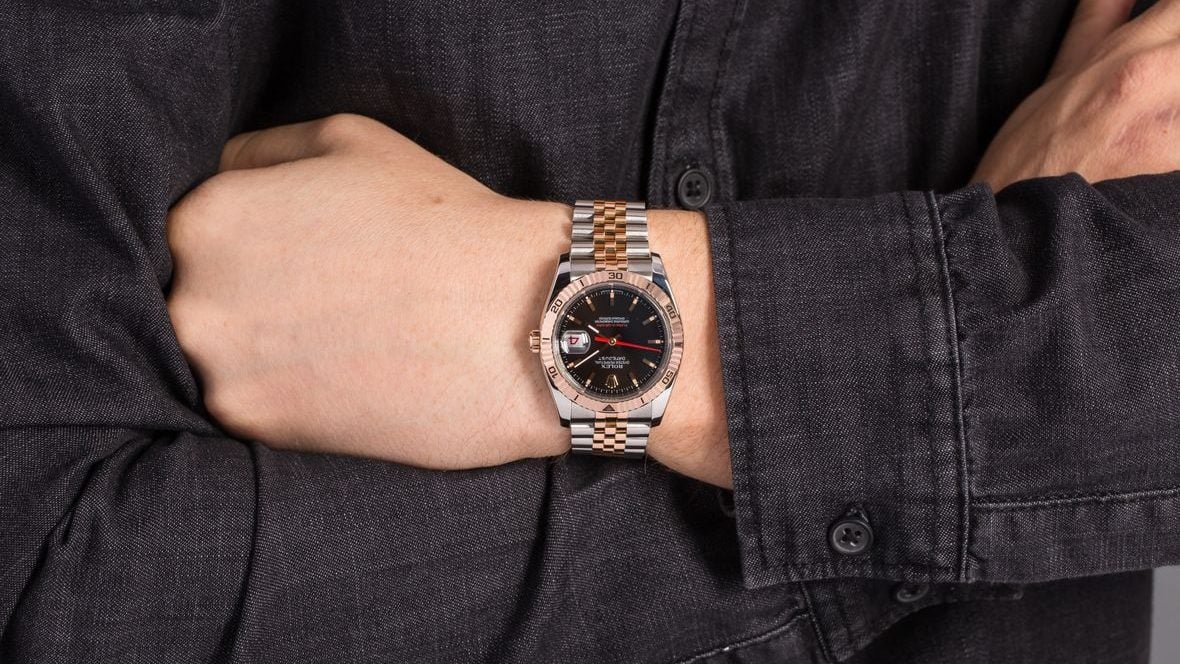
The Turn-O-Graph has always lived in a quieter part of the Rolex conversation. Overshadowed by models like the Submariner, Daytona, and GMT-Master. For collectors paying attention, that’s never been a bad thing. Since Rolex discontinued the model in 2011, supply has been fixed, and that kind of built-in scarcity tends to matter over time. Prices have reflected that reality, moving gradually but consistently higher.
Looking at completed sales between 2015 and 2025, the pattern is clear. The average sale price sat around $5,113 in 2015. By 2025, it had climbed to roughly $8,094. What stands out isn’t just the growth, but the steadiness. Even during the 2021–2022 surge and the corrections that followed, Turn-O-Graph values remained relatively stable when viewed reference by reference. In a market known for sharp swings, this model has behaved with surprising consistency.
Sales volume tells a similar story. Sales activity grew a lot during the 2021 watch boom and has remained healthy ever since, with steady demand year over year. Constant interest, even after the broader market cooled, signals that the Turn-O-Graph is earning long-term collector loyalty rather than riding short-term hype.
Price Performance by Reference

Not every Turn-O-Graph has moved at the same pace. When you break it down by reference and look at the past decade, some clear leaders emerge.
The vintage Ref. 1625 has been the strongest performer. In 2015 the average price of $3,800 rose to$8,328 by 2025, a CAGR of about 8.2%. That translates to prices more than doubling over a decade, driven by growing collector interest in original four-digit Thunderbird era watches. A solid gold Ref. 1625 Thunderbird sold for $16,495 in late 2025. That, of course, set a new high-water mark for the reference and shows that exceptional examples in precious metals can reach well into five-figure territory.
The modern steel and white gold Ref. 116264, the most frequently traded model by volume, grew from an average of about $5,199 in 2015 to around $8,615 in 2025, a CAGR of approximately 5.2%. Its average price in 2022 was $8,373, and by 2024 it had actually ticked up to $8,820, effectively ignoring the broader market downturn.
The two-tone Ref. 16263 from the five-digit era has ridden the wave of renewed interest in 1980s and 1990s gold and steel watches, climbing from roughly $4,374 in 2016 to about $7,595 in 2025 for a CAGR of approximately 6.3%.
The five-digit steel Ref. 16264 followed a similar path, moving from around $4,195 to roughly $8,000 over the same period, a CAGR of about 7.45%.
And the modern two-tone Ref. 116263, which carries a higher starting price due to its gold content, grew from approximately $6,466 to about $9,635, representing a CAGR of around 4.1%. Across the modern generation, the two-tone Ref. 116263 carries a premium of roughly $1,900 over the steel and white gold Ref. 116264, which is worth keeping in mind when comparing listings.
Current Market Estimates
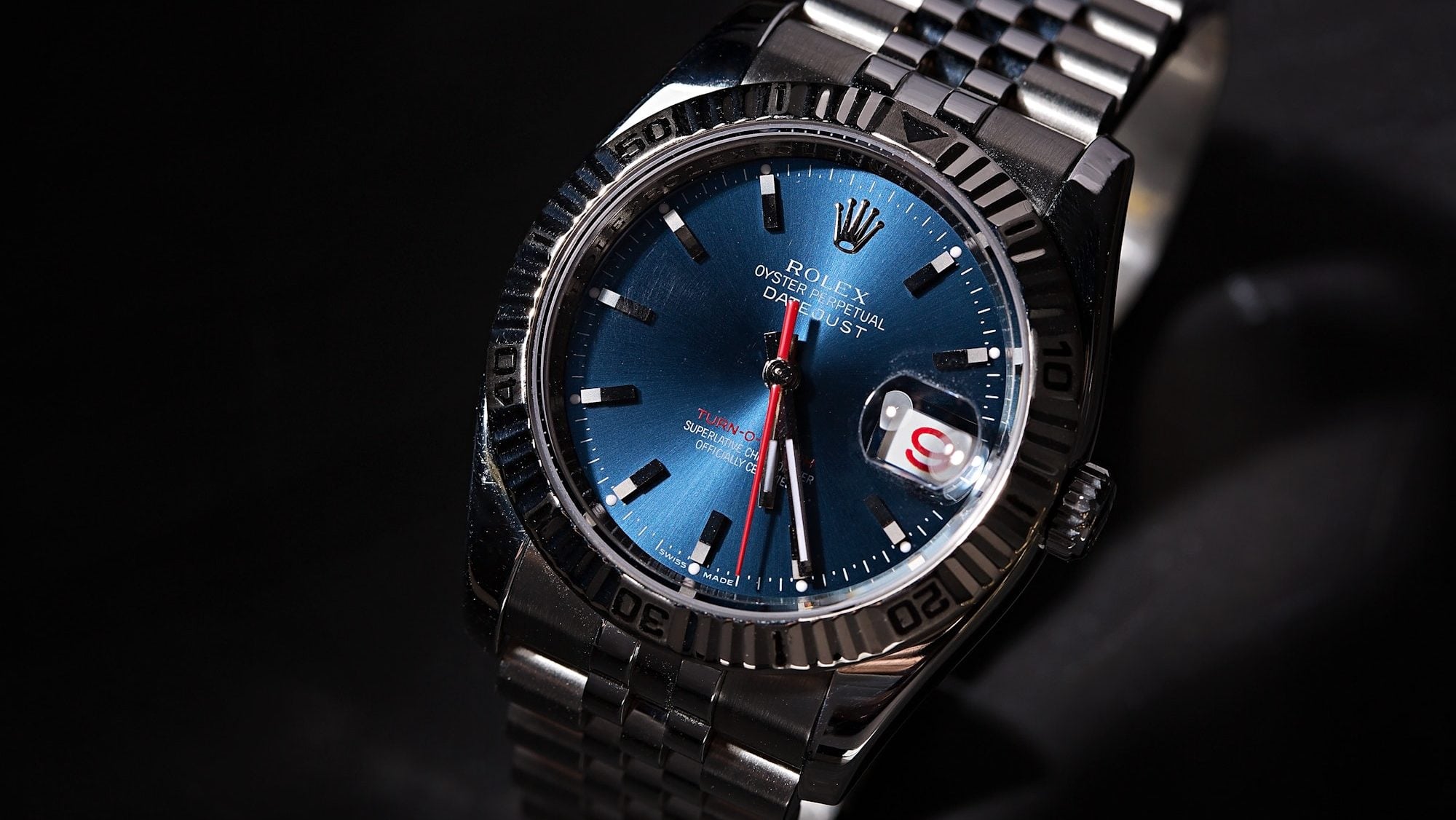
As a general pricing guide based on recent sales data:
- Vintage four-digit references (such as the Ref. 1625): Typically range from $6,000 to $10,000 depending on condition, dial variant, and whether original box and papers are included. The earliest Ref. 6202 commands significantly more.
- Five-digit references (such as the Ref. 16264 and 16253): Generally fall between $5,500 and $8,000, with two-tone models at the higher end of that range.
- Modern six-digit references (such as the Ref. 116264 and 116263): Range from approximately $7,500 to $10,000 or more, with stainless steel models at the lower end and two-tone versions pushing higher.
Across the board, the Turn-O-Graph is an entry point into Rolex collecting that’s tough to beat. Its average annual appreciation of roughly 5% to 6% has been steady and supported by long-term sales data. Just as important, it hasn’t followed the sharp spikes and pullbacks that affected more heavily hyped models in recent years.
The Lasting Legacy of the Datejust Turn-O-Graph
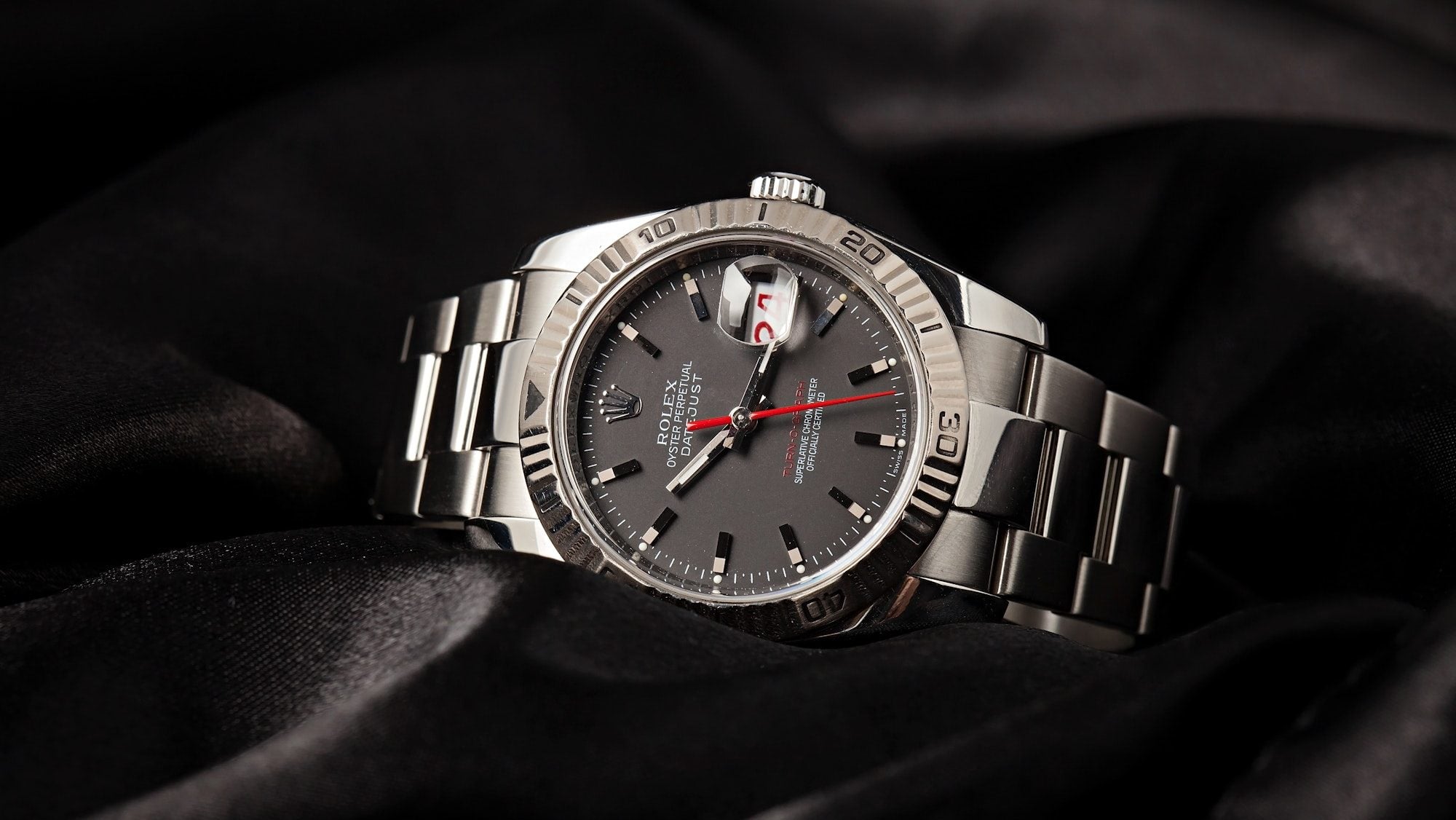
Rolex may have discontinued the Turn-O-Graph in 2011, but its role in Rolex history is hard to overlook. It was the first Rolex to feature a rotating bezel, laying the groundwork before the Submariner, GMT-Master, and the rest of the sport lineup turned that idea into an icon. In many ways, today’s divers and pilot watches trace part of their DNA back to this model. By pairing practical timing functionality with the familiar refinement of the Datejust, the Turn-O-Graph created a formula that still makes sense, even if it’s no longer in production.
Finding a high-quality pre-owned Turn-O-Graph means sourcing from a dealer you can trust. It might be a vintage Thunderbird or something from our wider collection of pre-owned Rolex timepieces. Either way, Bob’s Watches guarantees authenticity and exceptional quality on every watch we sell. With supply permanently fixed and collector awareness growing, the Turn-O-Graph is one of those rare watches that rewards both wearing and owning.