How Can I Tell If an OMEGA Watch is Real?
Verifying OMEGA watches comes down to checking a handful of physical markers against the correct paperwork. Look closely at the serial number, the logo and dial printing, the movement, and the overall weight, then confirm each detail against the original documentation. The only method that gives you complete certainty is verification by an OMEGA boutique or a certified watchmaker.
Key Takeaways
- Mismatched serial numbers: The number on the lug should match the movement and the warranty card. Generic or unmatched numbers are an immediate warning sign.
- Weak luminescence: Genuine lume charges quickly and glows brightly. Dim, patchy, or bleeding lume points to a fake.
- A ticking seconds hand: Most modern OMEGAs sweep smoothly. A hand that jumps once per second usually signals a cheap quartz movement hidden inside.
- Sloppy engraving and printing: Shallow serial etching and blurry dial text are common on counterfeits.
- A watch that feels too light: Authentic OMEGAs use premium metals and feel substantial on the wrist. Hollow links and a light case suggest cheaper materials.
Counterfeit OMEGA watches have come a long way. The best "super clones" can pass a quick glance, which is why a careful inspection matters more than ever. The sections below walk you through the obvious tells and the small details that forgers tend to miss, so you can complete a full check with confidence.
The Golden Rule of OMEGA Authentication: The Serial Number
Every OMEGA carries a OMEGA serial number, and it is the first thing worth examining when you question a watch. The number ties the case, the movement, and the paperwork together, and a genuine piece will show the same figures across all three. Counterfeiters can copy a number onto a case, but they rarely make every layer agree, which is why this single detail catches so many fakes.
Where to Find the Serial Number
Modern OMEGA watches carry a seven or eight digit serial number on the exterior of the case. On most current models it is laser engraved on the back of one of the lugs, commonly the lug near the 7 o'clock position, while some pieces place it on the outside of the case back. On vintage models the number sits inside the case back or on a bridge of the movement, which means the watch has to be opened to read it. Whatever the era, the serial number should match the figure on the OMEGA movement and the number printed on the warranty documents.
Do Fake OMEGAs Have Serial Numbers?
Yes, and this catches a lot of buyers off guard. High end counterfeits often include a serial number to look the part. The problem is how the number is applied and whether it holds up to scrutiny. Forgers tend to reuse a single valid number across thousands of fakes, or they etch it shallowly with an uneven, generic font. A real OMEGA serial number is crisp and uniform, with clean depth and consistent spacing. If the figure looks rough under a loupe, or it fails to match the movement and the cards, treat the watch as suspect.
Why There's No Free Online Lookup
OMEGA does not offer a free, instant serial number lookup tool to the public, and that is by design. An open database would let counterfeiters mine valid numbers and clone them at scale. Instead, owners have two official routes. For watches older than a few years, OMEGA's Extract from the Archives service confirms a watch's production details directly from the brand's records. For modern Master Chronometer models, the My OMEGA portal lets owners view the certification data tied to their specific watch using the information on the warranty card.
|
Feature |
Genuine OMEGA Serial Number |
Counterfeit Serial Number |
|
Placement and quality |
Crisp, aligned laser etching, usually on the lug near the 7 o'clock position |
Shallow, uneven etching, or missing entirely |
|
Font and typography |
Uniform thickness with clean, consistent depth |
Generic font with thick or thin lines and inconsistent depth |
|
Cross referencing |
Matches the movement and the warranty card exactly |
Often a generic number that does not match the model or movement |
Physical Red Flags: What to Look For on the Dial and Case
The dial and case hold some of the clearest evidence of a watch's origin. OMEGA holds tight tolerances on printing, finishing, and component placement, and these are the areas where shortcuts show. A jeweler's loupe is your best friend here, since the giveaways are usually small and easy to miss with the naked eye. The points below cover the details worth studying before you trust a watch.
The OMEGA Logo and Typography
The Greek OMEGA symbol is one of the easiest places to spot a problem. On a genuine watch the symbol is balanced and clean, with even spacing between the logo and the brand name. Pay attention to the following:
- The feet of the symbol should be evenly shaped and should not curve up so far that they touch the lettering.
- The logo should be applied cleanly, with no smudging, uneven paint, or fuzzy edges.
- Check the spelling and font of model names such as Speedmaster and Seamaster. Counterfeits sometimes use the wrong typeface or include subtle misspellings.
Luminescence (Lume) Quality
If you have ever studied the evolution of lume in watches, you likely know that the OMEGA brand uses a high grade lume on their watches. Authentic modern OMEGA watches use high grade Super-LumiNova, applied neatly within each marker and hand. The lume charges fast under light, glows strongly, and sits flush inside the boundaries of each marker. Fakes struggle to match this.
- Genuine lume glows brightly and holds the charge for a reasonable stretch of time.
- Counterfeit lume often looks dim, patchy, or fades quickly after charging.
- Watch for lume that bleeds over the edges of the markers, which signals careless application.
The Dial Text and Printing
OMEGA prints its dials with precision pad printing, which produces sharp text that looks crisp and slightly raised under magnification. Counterfeit dials rarely reach this standard. Under a loupe you may see blurry edges, smudged characters, or lines that bleed into one another. Hold the dial at an angle in good light and study the smallest text on the watch, since that is where the difference between genuine and fake is most visible.
The Helium Escape Valve on Seamaster Models
The helium escape valve is a strong tell on Seamaster models, because it is difficult and costly to reproduce correctly. On a genuine Seamaster Diver 300M the valve sits on the left side of the case, and its lower edge lines up with the 10 o'clock marker. Many fakes that bother to include a valve center it directly on the 10 o'clock position or place it lower, which is a clear sign something is off. The valve on a real watch is also fully functional and screws down smoothly, while counterfeits often fit a valve that is purely decorative.
Internal Mechanics: The Movement and Weight
What sits inside the case tells you more than almost anything on the outside. OMEGA builds its movements to a high standard and finishes them with care, and that quality is hard to fake on a budget. Weight and materials follow the same logic, since genuine metals and solid construction give the watch a heft that cheap copies cannot match. The points below cover what to check, and a few require a watchmaker to open the case.
The Co-Axial Movement and Its Smooth Sweep
Most modern OMEGAs run on the brand's Co-Axial mechanical movement. The seconds hand should glide in a smooth, sweeping motion, since these calibers vibrate at a high rate, commonly 25,200 beats per hour on the in house families and 28,800 on some others. If the seconds hand jumps in a single, distinct tick once per second, you are almost certainly looking at a cheap quartz movement dressed up as a mechanical OMEGA.
For those who might be asking, does OMEGA produce quartz watches, and woldn't those be an exception, your right. The exception is a small group of genuine vintage OMEGA quartz models from the 1970s and 1980s, which were designed to tick.
What an Exhibition Case Back Reveals
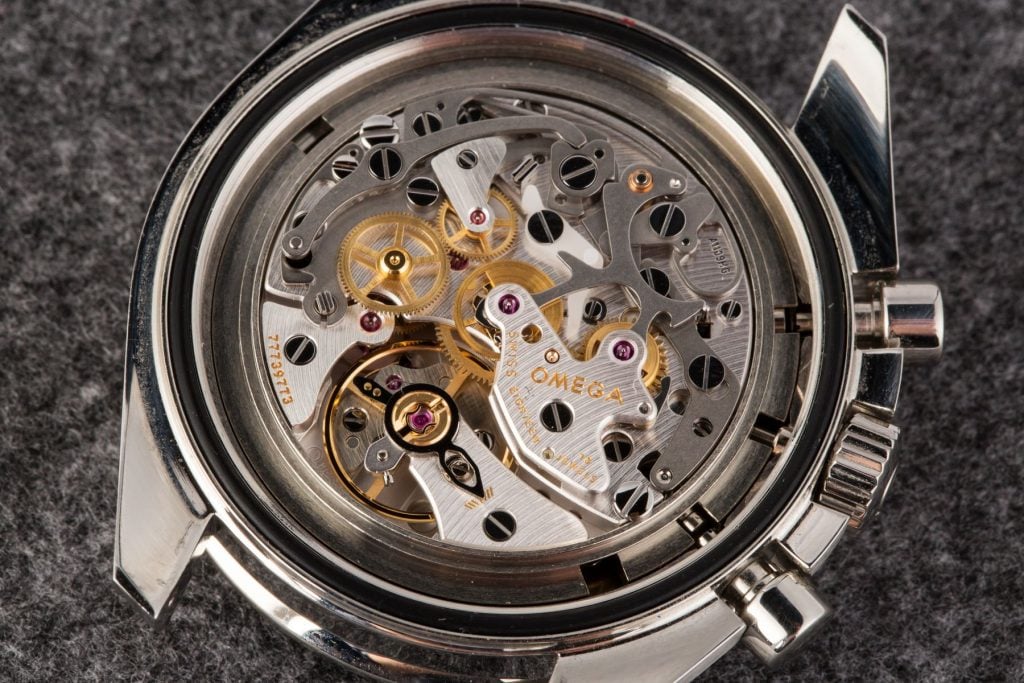
Many modern OMEGAs feature a clear sapphire case back, and so do many fakes that show off a clone movement. Knowing what a real movement looks like is what protects you here. Under a loupe a genuine OMEGA movement shows:
- Clean, even Côtes de Genève finishing, often described as Geneva waves.
- Precise rhodium plated surfaces and well machined components.
- A serial number etched neatly into the movement itself.
Counterfeit movements give themselves away with unpolished gears, plastic parts, and lettering that looks roughly stamped rather than cleanly applied.
Weight and Materials
Real model watches from the brand are built from premium OMEGA materials such as 316L stainless steel, titanium, 18k gold, and ceramic, and they feel solid in the hand. A counterfeit often uses cheaper base metals and hollow bracelet links, which makes it feel noticeably lighter than the genuine article. Weight alone will not confirm a watch, but a piece that feels flimsy or unbalanced is worth a much closer look.
Modern vs. Vintage OMEGA Authentication
Authenticating an OMEGA depends partly on when it was made, because the brand has changed how it marks and certifies its watches over the years. A check that works perfectly on a current Seamaster may not apply to a watch from the 1960s, and the reverse is true as well. Understanding which era you are dealing with helps you focus on the right evidence.
Modern OMEGA: The Master Chronometer Era
Current OMEGA watches carry Master Chronometer certification, tested and approved by METAS. Each certified watch comes with a card that lets the owner view that specific watch's test results through OMEGA's online portal. This digital link between the physical watch and the brand's records is something counterfeiters cannot replicate. If a seller claims a watch is a recent Master Chronometer model but the certification data does not check out online, that mismatch tells you what you need to know.
Vintage OMEGA: The Pre Lug Serial Era
Vintage OMEGA watches, generally those made before the 1990s, do not carry a serial number on the outside of the lugs. Instead, the serial number and the case reference number are found inside the case back or on the movement. Identifying one of these watches usually means having a professional safely open the case to read the caliber number and the case reference. Experts and longtime collectors in online communities point out that vintage authentication leans heavily on the movement, so the case should only ever be opened by a qualified watchmaker.
Documentation, Packaging, and Accessories
The box and paperwork are not proof of authenticity on their own, since both can be faked or swapped. Still, genuine OMEGA packaging is a high quality product in its own right, and the cards carry details that should align perfectly with the watch. Looking at these items closely adds another layer of confidence to your check.
The Box and Presentation
A genuine OMEGA box, whether a modern wooden case or an older leatherette version, is a well made luxury item. Fakes tend to cut corners here. Watch for low quality faux leather that flakes or peels, uneven interior stitching, and a logo that is embossed off center or printed unevenly. A box that feels cheap is a reason to slow down and inspect everything else carefully.
The Cards and Certificates
Modern OMEGAs usually ship with two or three plastic, credit card sized certificates, including the warranty card and, for current models, the Master Chronometer card. On a genuine set the text is sharp and aligned, the dealer information is present and correct, and the serial number matches the watch. Use this checklist when reviewing the paperwork:
- The serial number on the cards matches the watch and the movement.
- The text is cleanly printed with no typos or crooked alignment.
- A dealer stamp or authorized seller details are present where expected.
- For modern models, the Master Chronometer data checks out through OMEGA's portal.
How to Check OMEGA Watch Authenticity By Model
Recognizing a genuine OMEGA watch requires a discerning eye and an appreciation for the brand’s meticulous craftsmanship. In the upcoming sections, we'll delve even deeper into each aspect, equipping you with the knowledge you need to confidently authenticate an OMEGA watch. Understanding these critical elements of an OMEGA timepiece is not only a testament to the brand's commitment to excellence but also a safeguard against counterfeit watches that attempt to imitate the legendary craftsmanship of OMEGA.
OMEGA Constellation
Look out for these red flags: When assessing whether an OMEGA Constellation watch is genuine, several details are crucial to examine. Firstly, the dial should be flawless, with sharp and even printing of the logo and indices; any inconsistency or misalignment could indicate a fake. Incorrect or misaligned star and constellation pattern on the dial. Poor quality or inconsistent finishing on the case and bracelet. Inaccurate or missing engravings on the case back. Subpar movement performance or non-OMEGA caliber.
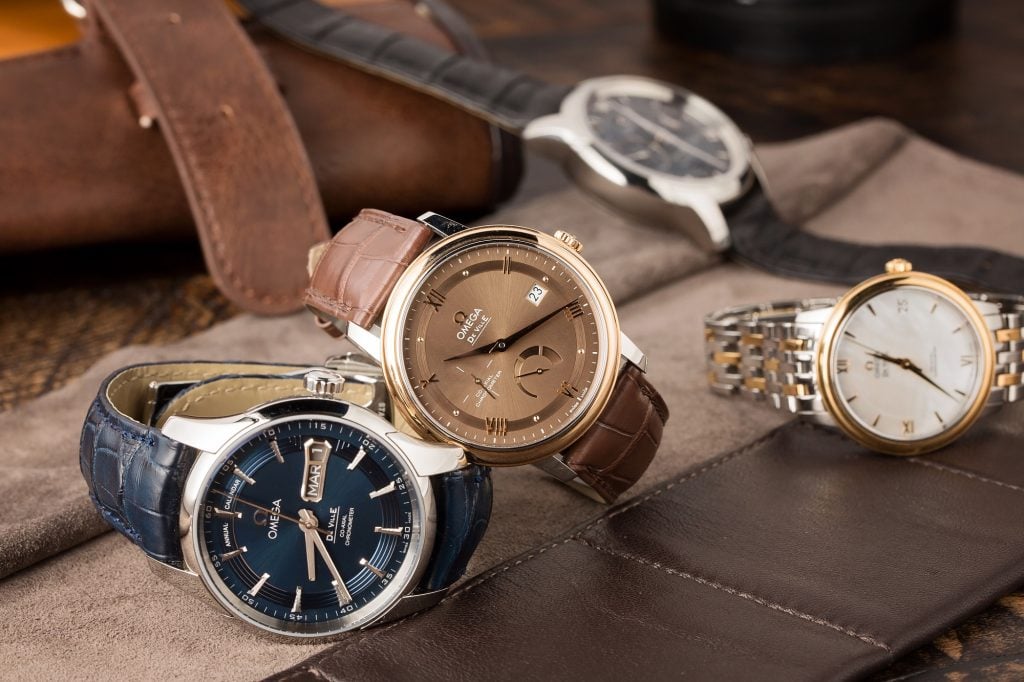
OMEGA DeVille
Be wary of these signs: Inauthentic or low-quality materials used in the case and bracelet. Inconsistencies in the dial layout or printing compared to genuine models. Incorrect or missing hallmarks and serial numbers. Rough or uneven finishing on the case and movement. The overall craftsmanship should be impeccable; genuine OMEGA DeVille watches are known for their precise detailing and superior finish. Look at the dial carefully; the text, including the OMEGA logo, should be crisp and perfectly aligned, without any signs of poor printing or spacing errors.
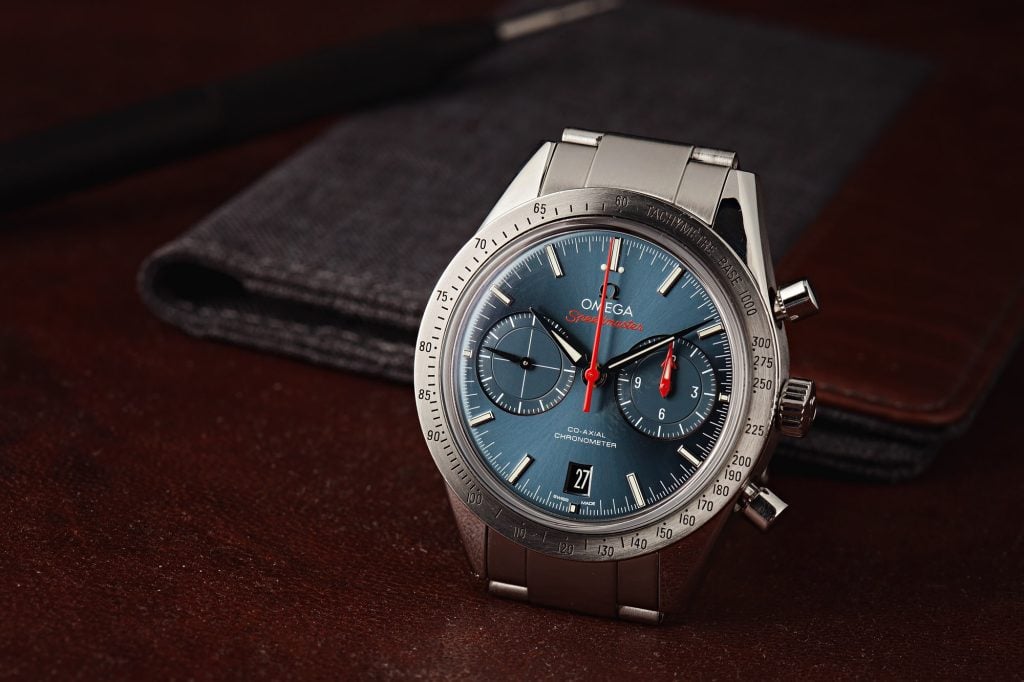
OMEGA Speedmaster
Common indicators of a counterfeit Speedmaster include: Incorrect subdial spacing or placement. Inauthentic tachymeter scale or bezel markings. The tachymeter scale on the bezel should be sharp and perfectly aligned with the dial markings. Subpar quality or finishing on the case and bracelet. Non-OMEGA or low-grade movement. Lastly, the feel of the pushers and crown should be solid and function smoothly, providing a tactile confirmation of quality materials and construction like what you would find on a real OMEGA Speedmaster watch.
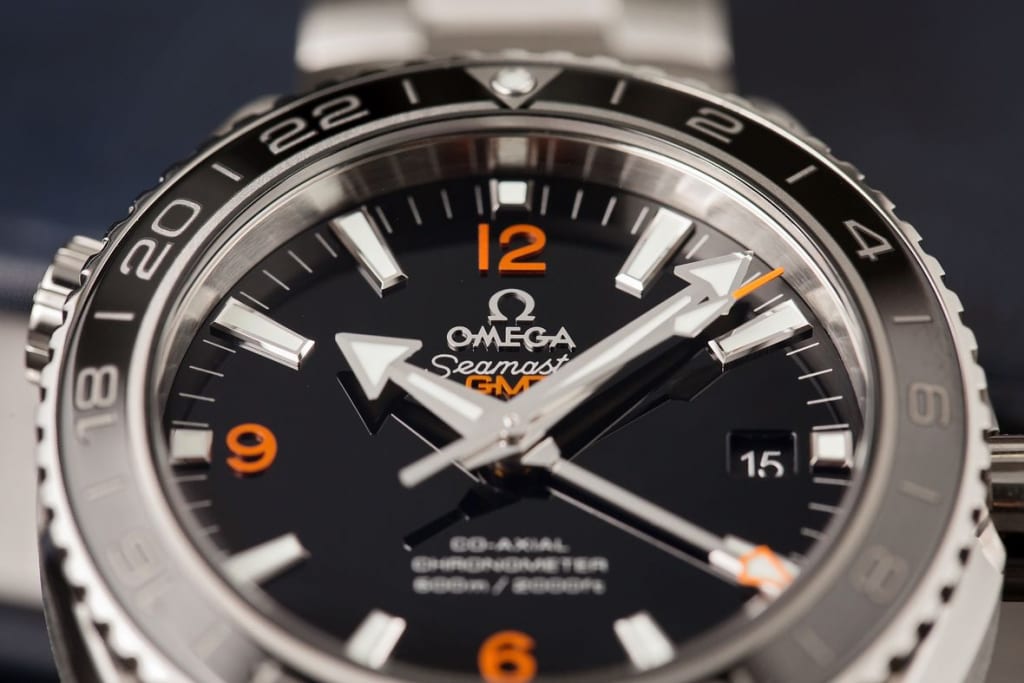
OMEGA Seamaster
When differentiating between a fake and real OMEGA Seamaster, compare the dial, bezel, and hands to genuine OMEGA specifications. Inspect the quality and finishing of the case and bracelet. Verify the movement's authenticity and performance. Check for correct engravings and serial numbers.
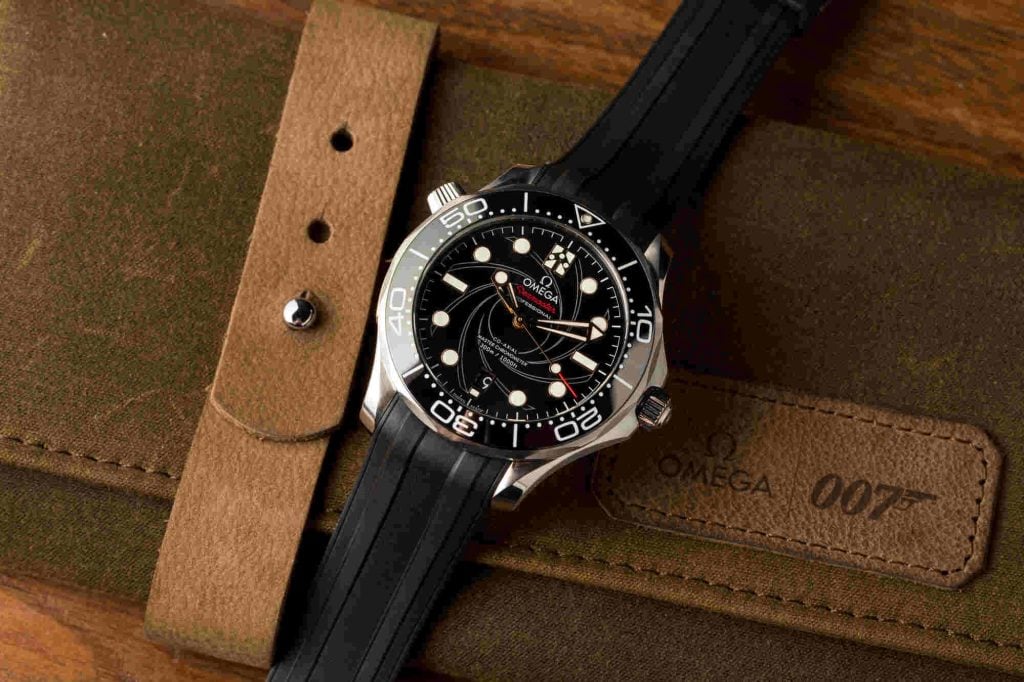
OMEGA 007
To spot a fake OMEGA 007 edition, scrutinize the dial for any inconsistencies or inaccuracies in the 007 branding. Verify the quality and authenticity of the materials used. Check for correct serial numbers and engravings specific to the 007 edition. Confirm the movement is a genuine OMEGA caliber.
Protecting Your Investment: Where to Verify Safely
Even a careful personal inspection has limits, especially against a high grade clone. The smart move is to combine your own checks with professional verification before money changes hands. Knowing who to trust, and who to be cautious about, can save you from an expensive mistake.
Can a Jeweler Check My OMEGA Serial Number?
A skilled watchmaker or a high end jeweler can read the serial number, open the case, and confirm that the movement matches the case. That said, expertise varies widely. A general mall jeweler may not have the experience to catch a convincing super clone, so the answer depends entirely on who is doing the checking. Keep these points in mind:
- Do seek out a watchmaker or jeweler with specific OMEGA experience.
- Do ask whether they will open the case to verify the movement.
- Don't rely on a quick visual glance from someone unfamiliar with the brand.
The Most Reliable Verification Method
For complete certainty, take or send the watch to an official OMEGA boutique or an Authorized Dealer. OMEGA can route the watch to an official service center, which can issue a Certificate of Authenticity. That certificate is the strongest proof available that a watch is a genuine OMEGA, and it is worth the time for any significant purchase.
Final Verdict on OMEGA Authenticity
Checking the serial number, studying the dial printing, and watching the seconds hand sweep are excellent first filters, and they will catch most fakes on their own. Still, the counterfeit market keeps improving, and the best clones are built to survive a casual inspection. Treat your own checks as the start of the process rather than the final word.
There is an old piece of advice in the watch world that holds up well here: buy the seller, not just the watch. Do your homework on the vendor, cross reference the documentation through OMEGA's official portals, and lean on third party escrow or professional authentication when buying pre-owned. A genuine OMEGA is a watch worth owning for a lifetime, and a little patience up front is the surest way to know you are getting the real thing.
Frequently Asked Questions
About Paul Altieri
