A Rolex spider dial is a vintage dial whose glossy lacquer finish has cracked into a fine, web-like pattern across its surface. The flaw traces to Rolex’s switch from matte to gloss dials in the 1980s, and what left the factory as a defect has turned into one of the stranger things collectors now hunt.
Key Takeaways
- The cracking lives in the lacquer topcoat, not the dial plate, so the printing and markers underneath usually survive intact.
- Affected watches are transitional 1980s references, including the Submariner 5513, GMT-Master 16750, Day-Date 18038, and Explorer II 16550.
- Value rides on the pattern: fine, even webbing on an otherwise original dial can command a premium, while heavy or uneven cracking often trades like damage.
- Rolex routinely swapped cracked dials during service, which is why untouched survivors get scarcer every year.
- Genuine lacquer crazing looks nothing like moisture damage or a refinished dial under magnification, and the difference is worth checking before you buy.
I’ve handled a lot of strange corners of the vintage Rolex market, and this one earns its nickname on sight. Here’s what’s actually going on with these dials, and why a crack can be worth money.
What Is a Spider Dial?

The Rolex nickname is literal. Hold one of these watches under direct light and you’ll see a network of hairline fissures spreading across the dial, meeting and branching like a web spun corner to corner. Watchmakers call this kind of surface cracking crazing, and on these dials it sits entirely in the clear gloss topcoat. The paint, the printing, and the applied markers underneath are usually untouched.
That distinction matters more than it sounds. A spider dial isn’t a dial that’s falling apart. It’s a dial whose finish aged in a way nobody at Rolex intended, which is a different thing from damage, and the market has slowly come around to treating it that way.
One more thing worth knowing before we go further: the term isn’t exclusive to Rolex. Dial finishing problems of this era touched other brands too, since watch companies often shared dial suppliers. Rolex just happens to be where the collecting energy concentrated, the way it usually does.
What Caused the Cracking?
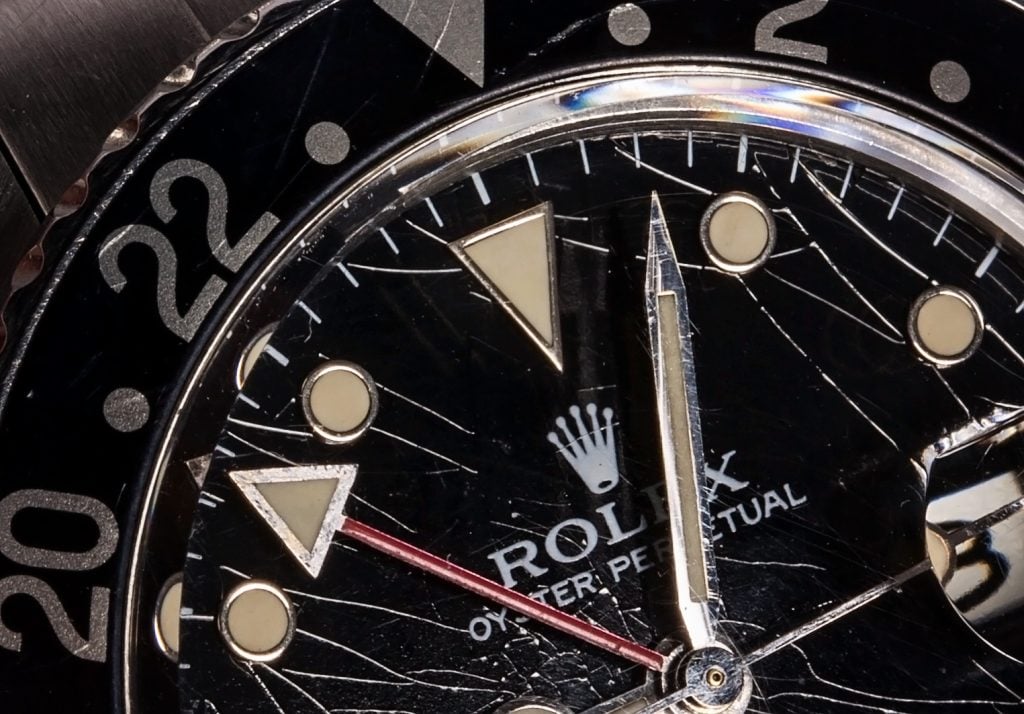
Blame the gloss. During the early-to-mid 1980s, Rolex moved its dials from matte finishes to glossy lacquer, and the earliest gloss formula aged badly: exposed to UV light, humidity, and temperature swings, the topcoat expanded and contracted unevenly until it fractured into the web-like cracking collectors now call a spider dial.
The triggers were ordinary life:
- Sunlight, which worked on the lacquer every day the watch was worn
- Humidity cycling, from weather, showers, and the occasional swim
- Heat and cold, expanding and contracting the finish at a different rate than the brass plate beneath it
None of this was abuse. These watches cracked while being used exactly as intended, which is part of why the webbing turned up on so many honest, well-worn examples rather than on safe-queen pieces.
Rolex never acknowledged the problem publicly, and it didn’t have to: the finish was corrected, later gloss dials don’t develop the webbing, and the service department quietly swapped cracked dials whenever the watches came in. That last habit matters a great deal to collectors, and we’ll come back to it.
Rolex References Known for Spider Dials

Spider dials turn up on the transitional references, the watches built while Rolex was switching finishes. If a model wore an early glossy lacquer dial in the 1980s, it’s a candidate.
| Model | Reference | Era of affected dials |
| Submariner | 5513 | Glossy examples, circa mid-to-late 1980s |
| Submariner | 16800, 168000 | Transitional gloss dials, 1980s |
| GMT-Master | 16750 | Later gloss-dial examples; the reference ran from 1979 |
| Explorer II | 16550 | Mid-1980s production |
| Day-Date | 18038 | Gloss-era examples; the reference launched in 1977 |
| Datejust | 16013, 16030 | 1970s to 1980s |
The GMT-Master 16750 is probably the poster child. Rolex built it for roughly eight years starting in 1979, beginning with matte dials and finishing with gloss, so the late examples sat squarely in the bad-lacquer window. A 16750 with fine, evenly spaced webbing under a faded Rolex Pepsi bezel is about as charismatic as vintage sports Rolex gets.
The Submariner 5513 tells the same story from the dive-watch side. It stayed in production long enough to catch the gloss transition at the very end of its run, and the late spider examples make an odd, appealing contrast with the crisp matte dials the reference is famous for.
On the Explorer side, the one to know is the Explorer II 16550, whose dials from this era are already famous for aging strangely; the webbing is one more way they did.
“At one point in time, a cracked dial was a reason to walk away. Now it’s the first thing a serious vintage buyer asks about. What they want is fine, even webbing on a dial nobody has touched, and when one comes in with the original hands and lume still with it, it rarely makes it to the website.”
Carol Altieri, COO at Bob’s Watches
Do Spider Dials Add or Lose Value?
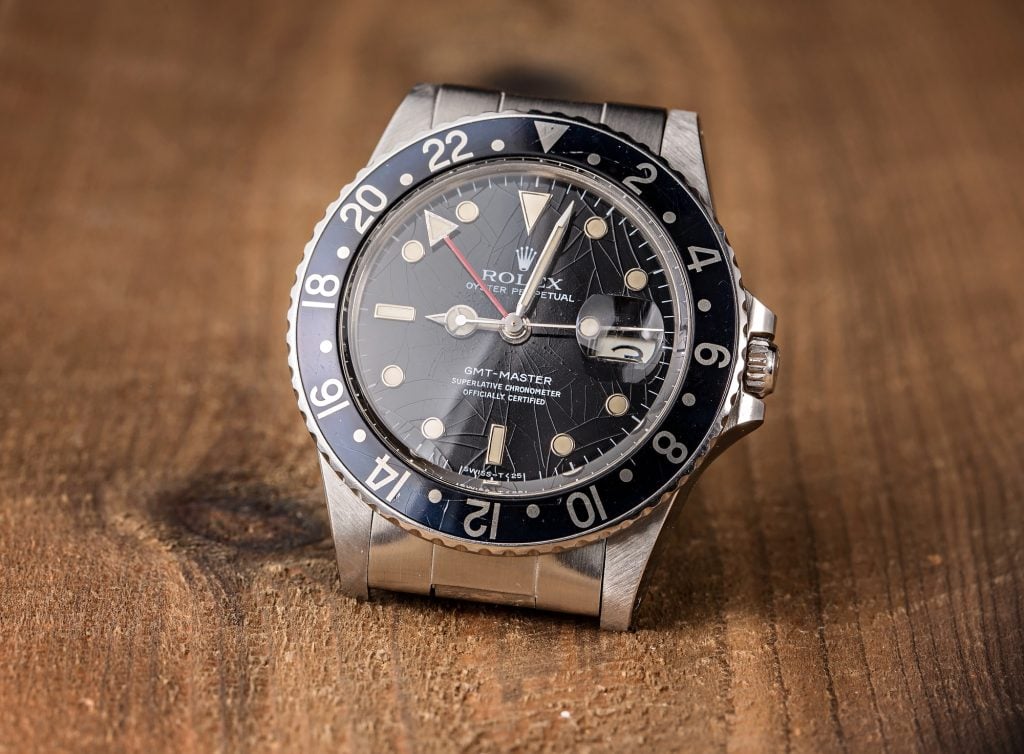
Both, and the dial itself decides which. A spider dial with fine, even webbing spread across an otherwise original face can command a premium over a clean example of the same reference, while heavy, patchy, or asymmetric cracking tends to trade the way damage trades. Collectors read the web the way they read any patina: evenness first, then what surrounds it.
The surroundings carry real weight. Matching tritium lume that’s aged with the dial, an untouched handset, and original box and papers all push an example toward the premium end. A spectacular web on a dial with a replaced handset or mismatched lume is a harder sell, because the story stops holding together. And the usual caveat applies with full force here: certain references may appreciate, but no vintage dial guarantees a profit, spider or otherwise.
The auction world has made its position fairly plain by putting the nickname on the catalog page. Christie’s offered a circa 1987 Submariner ref. 5513 cataloged under the name spider dial in its online watch sale, title and all. When a defect starts headlining lots, it has stopped being just a defect.
If you own one of these and the cracking has you wondering what it means for your watch, that’s exactly the kind of question worth settling before you decide anything; it’s also the conversation we have had with people when they are selling a Rolex to Bob’s.
How to Tell a Genuine Spider Dial

Here’s the uncomfortable part: a dial that looks spidered can be something worse, and the difference decides whether you’re buying a collectible or a problem. Three impostors show up most often.
- Moisture damage. Water gets under the finish and leaves spotting, blistering, or corrosion that usually creeps in from the edges and the date window, rather than webbing evenly across the surface.
- A refinished dial. A redial erases the problem and the originality with it. Printing quality and font shapes give most refinished dials away, but the good ones take a trained eye.
- A relumed dial. Fresh lume on an old cracked dial breaks the story the watch is telling; the plots and the web should have aged together.
Genuine crazing has a signature: the cracks sit in the clear topcoat, the web spreads across the whole dial rather than radiating from one wound, and the printing underneath reads cleanly through it.
Then there’s the service problem, which is really a survival problem. For decades, sending one of these watches to Rolex for routine service meant the cracked dial was a candidate for replacement with a fresh service dial, no questions asked. That’s a big part of why original spider dials keep getting scarcer. If you own one and you’re servicing the watch, say explicitly, in writing, that the dial is to stay in the watch and come back with it.
Spider Dial vs. Tropical Dial and Other Patina
Vintage Rolex collecting runs on aging effects, and it helps to keep them straight, because the market treats each one differently.
| Patina type | What you see | What causes it |
| Spider dial | A web of fine cracks in the gloss lacquer | Unstable 1980s lacquer reacting to UV, humidity, and heat |
| Tropical dial | A black dial faded toward brown | Pigment breaking down under long UV exposure |
| Lume patina | Markers aged to cream or pumpkin tones | Tritium compounds aging over decades |
Tropical dials are the establishment favorite, warm and uniform and easy to love. Lume patina is nearly universal on honest vintage watches and mostly a question of evenness. The spider is the polarizing one: some collectors see the best kind of character, others see a cracked dial, and both camps are describing the same watch. Faded ghost bezels belong to the same family of happy accidents, though that’s a bezel story rather than a dial one.
Frequently Asked Questions
Finding a Rolex Spider Dial for Sale
Spider dials don’t sit in a catalog waiting to be ordered. They surface one at a time, on transitional references that happened to keep their original dials through four decades of service intervals, which makes finding a good one a patience game. When one does appear, the questions that matter are the ones this article walks through: is the crazing genuine, is the rest of the dial original, and does the web have the kind of evenness collectors pay for.
At Bob’s Watches, vintage references from this era pass through our Newport Beach team regularly, and every watch we list is authenticated before it goes anywhere near a product page. If a spider dial is on your hunt list, browsing our used Rolex watches is a reasonable place to start, and worth checking back on, because the good ones never stay long.
Bob's Watches Blog Updates
Sign up and be the first to read exclusive articles and the latest horological news.