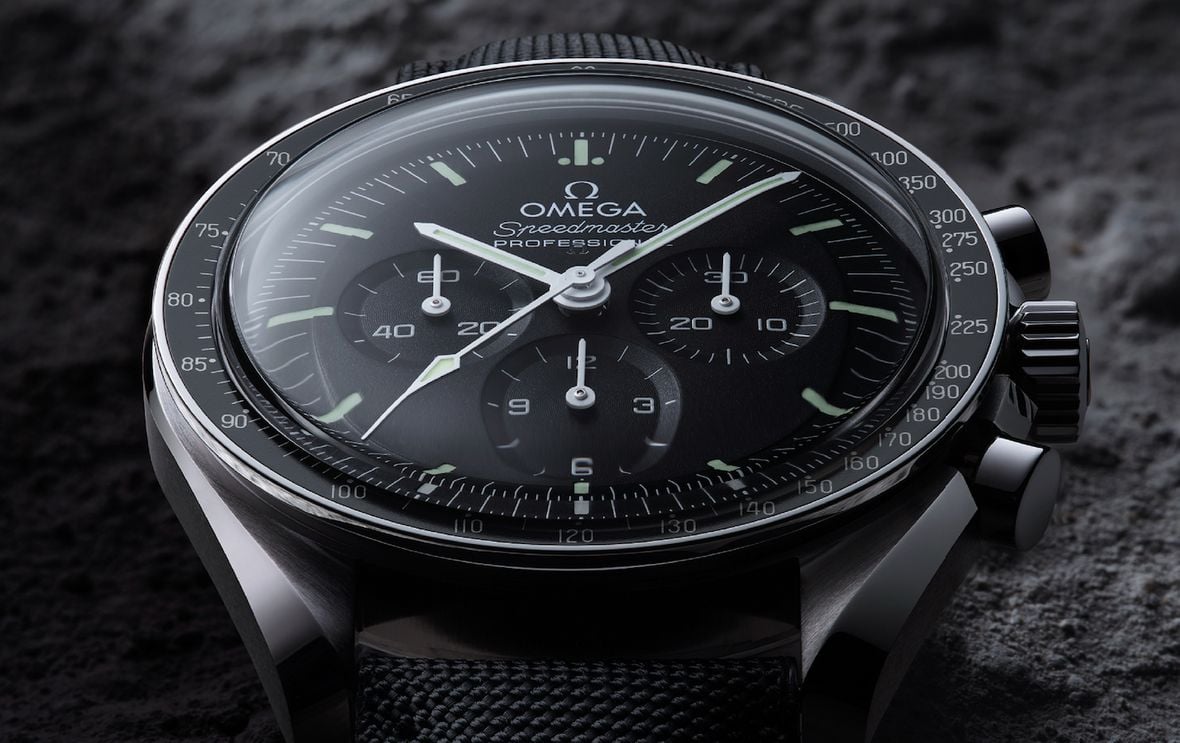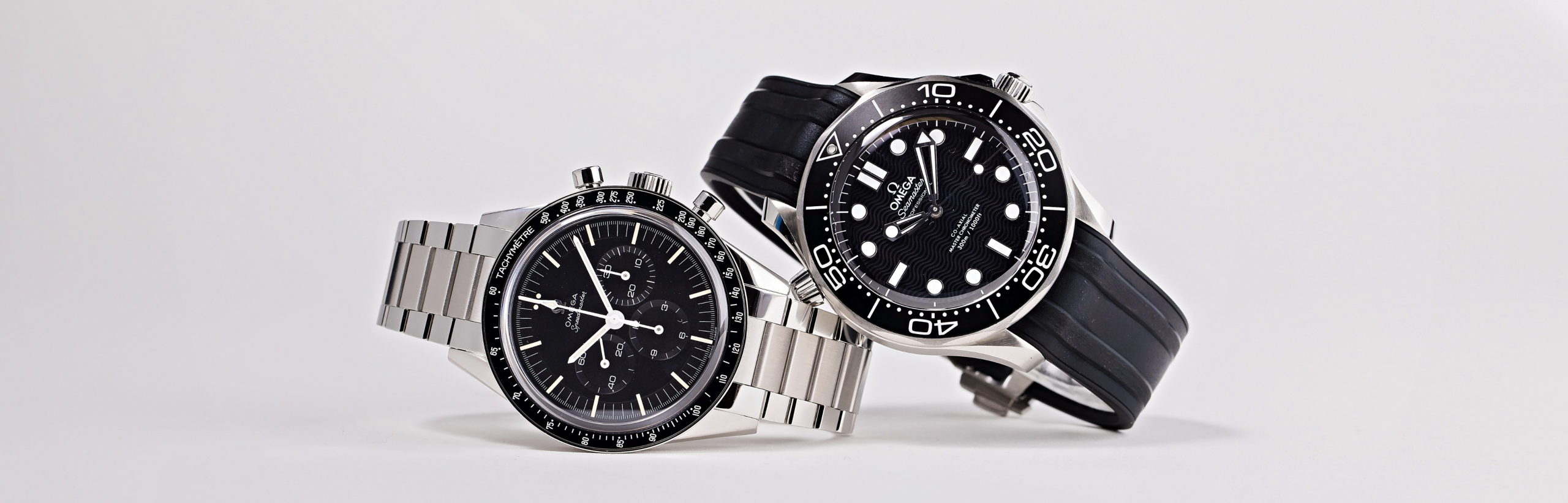

The OMEGA Seamaster is an automatic dive watch designed for underwater use and convenient to wear every day. The OMEGA Speedmaster is the manual-wind chronograph that went to the Moon. In our completed sales, pre-owned Seamasters have a median selling price of $4,995 and Speedmasters $6,245 as of October 2026.
Key Takeaways
- The Seamaster is OMEGA’s do-everything sports watch; the Speedmaster is a manually wound chronograph you wind because you want to.
- Based on completed Bob’s Watches transactions through October 2026, the median pre-owned Seamaster sells for $4,995 and the median Speedmaster for $6,245.
- Seamasters account for about 57% of the OMEGA watches we sell, nearly twice the Speedmaster’s share, so the market has already voted on the everyday pick.
- Speedmaster sold prices in our data have climbed since early 2025, while Seamaster prices have stayed close to $5,000.
- First OMEGA? Buy the Seamaster. Already own a dive watch, or want the history on your wrist? That’s the Speedmaster’s territory.
I’ve sold thousands of examples of both over the years, and the two watches almost never compete on specifications. They compete on what a watch should do for you. The specifications, the actual transaction prices, and the truthful response to ‘which one came first’ are all given below. If you prefer to browse as you read, our pre-owned OMEGA watches are just a click away.
Seamaster vs. Speedmaster at a Glance
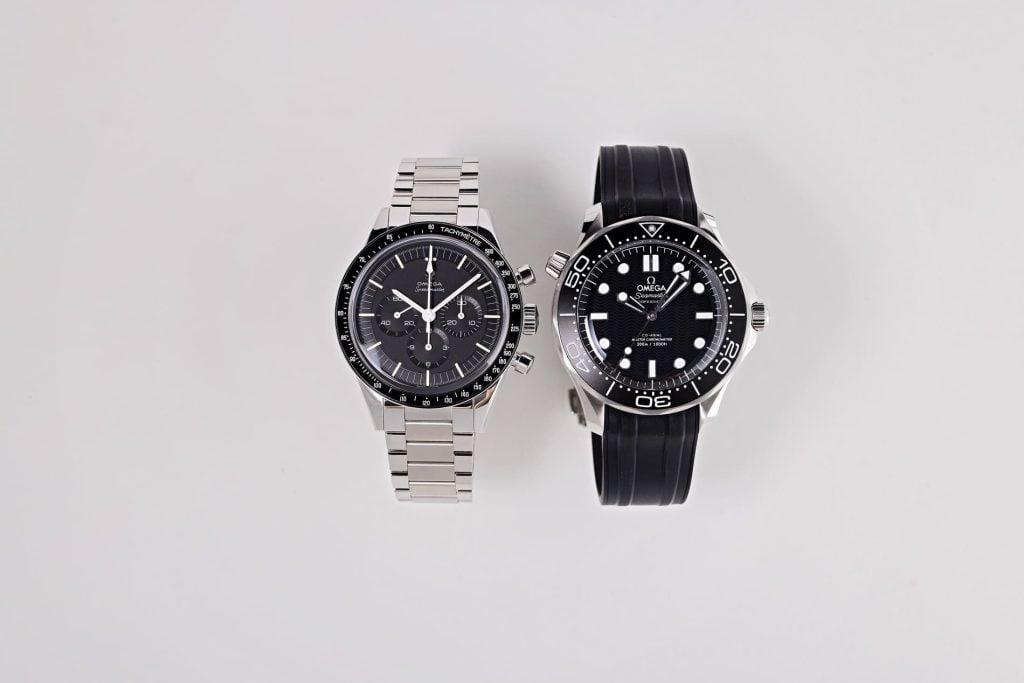
The full comparison is presented in a single table; the explanations that follow it provide the reasons.
| Feature | Seamaster | Speedmaster |
| Watch type | Dive and sports watch | Manually wound chronograph |
| Signature movement | Automatic Co-Axial Master Chronometer | Hand-wound Caliber 3861 (Moonwatch) |
| Winding | Winds itself on the wrist | You wind it most mornings |
| Water resistance | 300m on the Diver 300M | 50m on the Moonwatch |
| Crystal | Sapphire | Hesalite or sapphire, your pick |
| Heritage | Omega’s dive line since 1948, Bond’s watch since 1995 | Worn on the Moon in 1969 |
| Median pre-owned price | $4,995 | $6,245 |
OMEGA Seamaster vs. Speedmaster Price: Pre-Owned vs. Retail
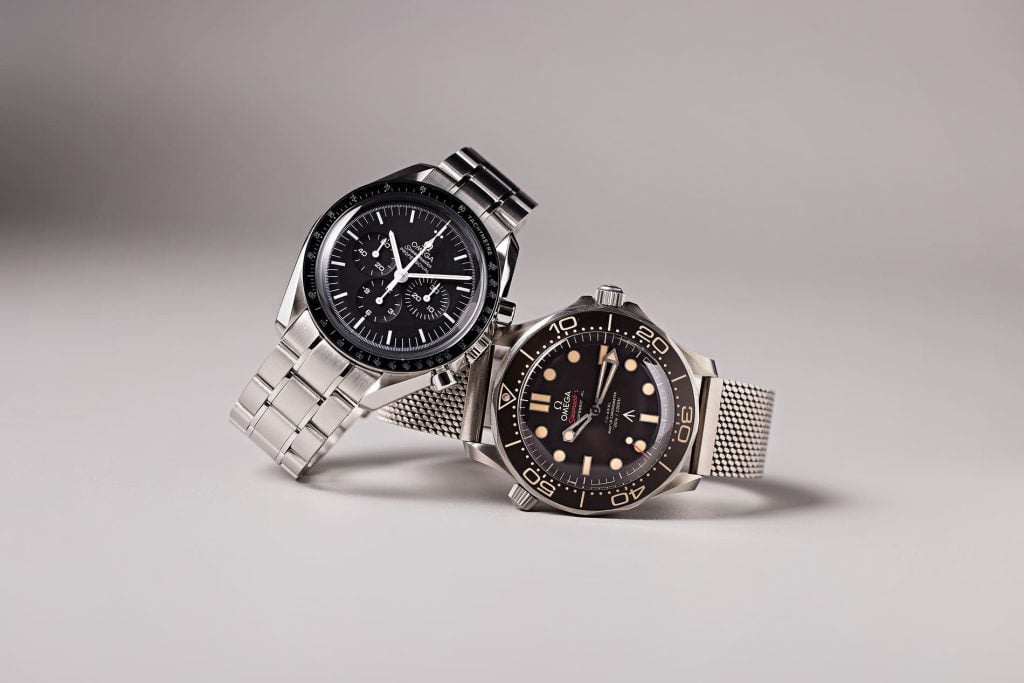
What makes this comparison interesting is the question of price, because the sticker price and the actual price tell different stories.
On the secondary market, the difference between the two watches is approximately $1,250 at the median. Based on completed Bob’s Watches transactions up to October 2026, pre-owned Seamasters sell at a median price of $4,995, with half of sales falling between $3,995 and $5,995. Used Speedmasters have a median selling price of $6,245, with the middle half of sales ranging from $4,495 to $7,995. This greater range for Speedmasters is due to the collector’s market: special editions and older references drive the higher end of the price range.
Here’s how the major sub-models break out:
| Model | Median sold price | Typical range |
| Seamaster Diver 300M | $4,995 | $4,295 to $5,995 |
| Seamaster Aqua Terra | $4,995 | $4,195 to $5,995 |
| Seamaster Planet Ocean | $5,445 | $4,320 to $6,995 |
| Speedmaster Moonwatch/Professional | $6,695 | $5,595 to $7,870 |
| Speedmaster Reduced | $3,295 | $3,195 to $3,995 |
Pricing analysis is based on completed Bob’s Watches transactions from January 2025 through October 2026, not current asking prices.
At a glance, two points stand out. The first is that the Diver 300M and the Aqua Terra share the same median price, so the decision between them comes down entirely to personal lifestyle preferences. The second is that the Speedmaster Reduced, priced at $3,295, is by a large margin the most economical way to get the Speedmaster look, a route most buyers are unaware of. The current state of the market can be seen any week on our pre-owned OMEGA Seamaster page and in the existing Speedmaster listings.
Current retail is a separate conversation. At an authorized dealer, OMEGA’s current retail pricing puts a new Moonwatch well above what clean pre-owned examples trade for in our data. Keep the two frameworks separate when you shop: retail is the catalog, and pre-owned is the market.
Seamaster 300M vs. Speedmaster Professional

The two that most people are actually interested in when they ask this question are the Diver 300M, which you’ve seen on Bond’s wrist, and the Moonwatch. So let’s compare the head-to-head top models directly.
Let me start by pointing out a common mistake. The Seamaster 300 and the Seamaster Diver 300M are different watches. The 300M is the current generation of dive watch, featuring the wave dial and a helium escape valve; the Seamaster 300 is a separate range that brings back the 1957 design associated with skin diving. When you’re comparing a watch to a Speedmaster, you most likely mean the 300M, and the figures listed below refer to that model.
Specs head-to-head
| Spec | Diver 300M | Speedmaster Professional |
| Movement | Automatic Co-Axial Master Chronometer | Hand-wound Caliber 3861 |
| Water resistance | 300m | 50m |
| Complication | Date, dive bezel | Chronograph, tachymeter bezel |
| Median pre-owned price | $4,995 | $6,695 |
Price, demand, and what we see on the floor
Looking at the median of our completed sales, the Moonwatch has a premium of $1,700 over the OMEGA Diver 300M, with the figure at $6,695 as compared to $4,995 as of October 2026. In terms of demand, however, Seamasters account for about 57% of the OMEGA watches we sell, and Speedmasters make up about 30%. Consumers prefer the dive watch by a ratio of nearly two to one and end up paying the extra amount if they choose the chronograph.
Two Histories: the Dive Watch and the Moonwatch
Each of the two watches developed its story without the need for a marketing department; one obtained it underwater while the other did so in space.
Seamaster: OMEGA’s dive line since 1948

OMEGA launched the Seamaster in 1948 as the brand’s definitive ‘one watch for everything,’ aligning with its vision for a single, versatile timepiece. Over the decades, the collection has encompassed everything from refined dress pieces to professional dive tools, culminating in the iconic wave-dial Diver 300M introduced in the 1990s. In 1995, Pierce Brosnan wore a blue Seamaster in GoldenEye, and the watch has remained Bond’s ever since, regardless of which actor has taken on the role or which reboot has come along. As mentioned in my OMEGA James Bond watch review, this connection still has an impact on sales, with people often walking in and asking specifically for ‘the Bond Seamaster’.
Speedmaster: flight-qualified since the 1960s

The Speedmaster was originally launched in 1957 as a racing chronograph with a tachymeter on the bezel and was designed for timing laps, not dives. NASA qualified the Speedmaster for manned spaceflight in the 1960s after testing it against competing chronographs, and the watch was worn by astronauts on the Moon during the Apollo 11 mission in 1969. This is why it is known as the Moonwatch and why OMEGA has kept the hand-wound version essentially unchanged for many decades. If you buy one, you’re getting a design that has hardly needed to change.
Movements and Daily Wear
The movement difference isn’t a footnote in this comparison. It’s the comparison.

Modern Seamasters are fitted with automatic Co-Axial Master Chronometer movements: they are anti-magnetic, chronometer-certified, and self-winding from the movement of your wrist. You put the watch on and then don’t have to think about it anymore. That is the entire idea, and it’s precisely what a first watch should do.
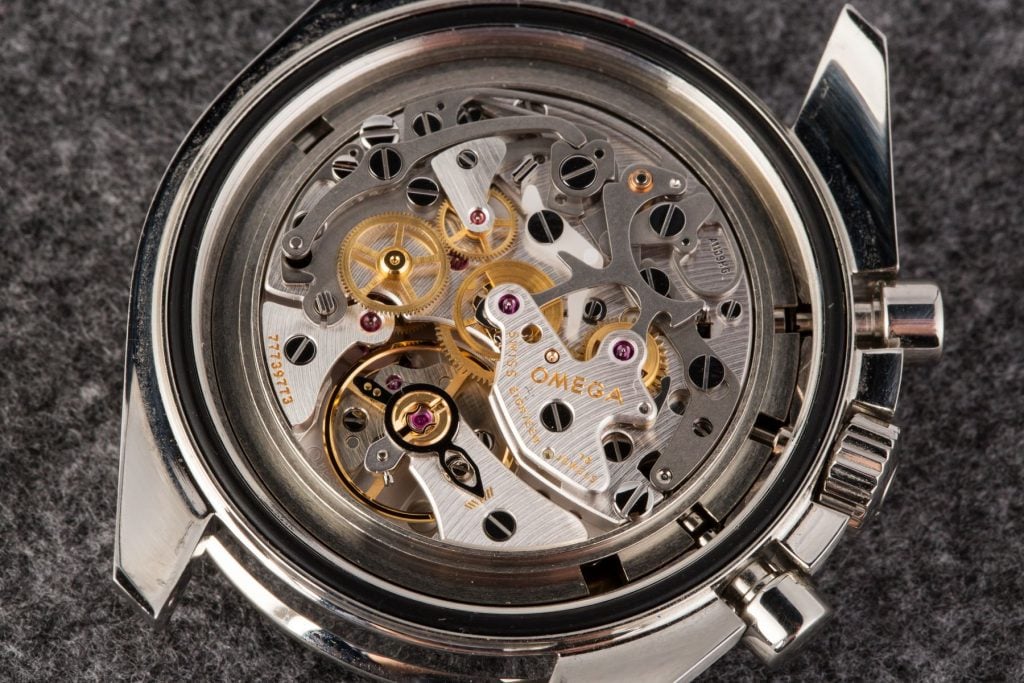
The Moonwatch is fitted with the hand-wound Caliber 3861, which has no rotor and no self-winding feature. It takes about twenty turns of the crown, roughly the time it takes to drink your coffee, to fully wind it, and once fully wound, it will keep running for approximately two days. Some customers hear this and immediately opt for the self-winding Seamaster, while others cherish the daily tactile ritual of manual winding. There’s no right or wrong choice, but knowing your preference before spending $6,000 is key.
Three practical differences decide most daily-wear questions:
- Water: the Diver 300M shrugs off everything short of saturation diving; the Moonwatch’s 50m rating means it’s fine in the rain and wrong for the pool.
- Attention: the Seamaster asks for none; the Speedmaster asks for a wind and a bit of care.
- Crystal: Moonwatch buyers choose between warm, scratchable Hesalite and modern sapphire; every current Seamaster is sapphire.
So, can you wear a Speedmaster daily? Yes, and plenty of our customers do. You live around water instead of through it.
Which One Should You Buy?
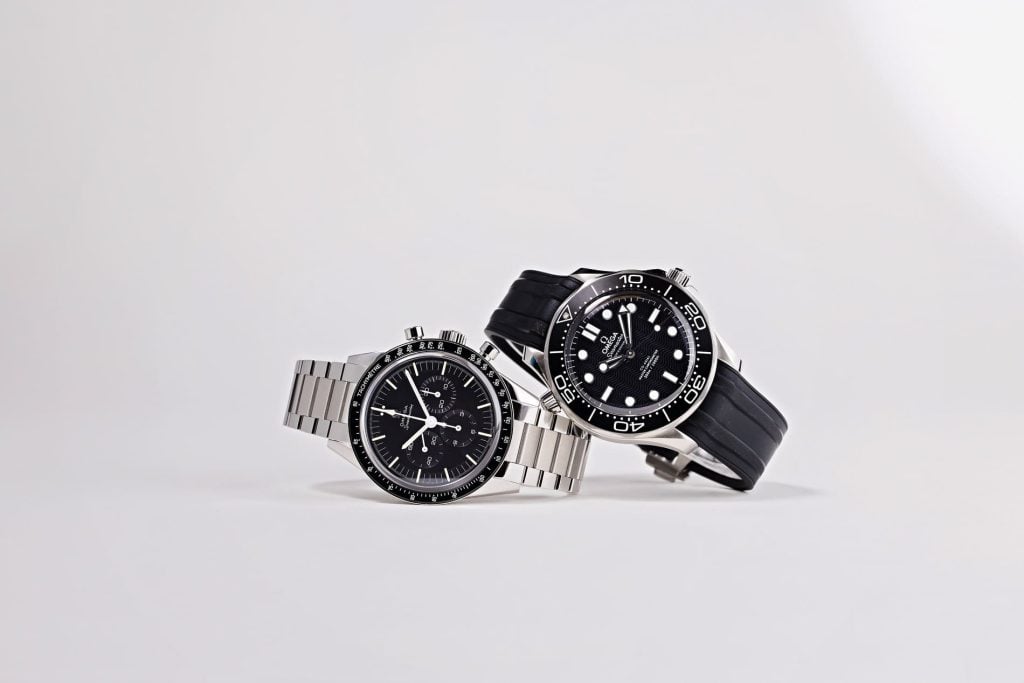
After years of watching these two watches leave our cases, the pattern is clear enough that I’ll say it: most people should buy the Seamaster first. The market agrees, with nearly two-to-one in our own sales. The Speedmaster is the better second watch and, for the right person, an unbeatable first.
“When someone’s buying their first OMEGA, I almost always point them to the Seamaster. It does everything, it costs less, and our own sales show most buyers land there. The Speedmaster is the watch they come back for.”
Joe Alessandrini, CFO at Bob’s Watches
The Seamaster is your watch if:
- It’s your first serious Swiss watch, and it needs to handle everything: the office, the ocean, the gym bag.
- You want zero maintenance ritual: pick it up, put it on, go.
- You’re price-sensitive: at a $4,995 median pre-owned price, it’s the stronger value play, and the Aqua Terra at the same price is the sleeper if you don’t need a dive bezel.
The Speedmaster is your watch if:
- The Apollo story is the reason you’re here. No other watch at this price carries that history.
- You already own a dive watch or don’t swim with a watch on.
- Hand-winding sounds like a feature, not a chore.
Which OMEGA Holds Its Value Better?

Our sales data gives a cleaner answer here than the usual forum debate.
Between the first half of 2025 and 2026, the median sold price of pre-owned Speedmasters in our completed transactions climbed from $5,295 to the $6,600 to $7,000 range. Seamaster medians barely moved over the same stretch, holding within a few hundred dollars of $5,000. On the secondary market, the Speedmaster has been the appreciating line and the Seamaster the stable one, as of October 2026.
Several key factors shape this trend: secondary market prices fluctuate with scarcity, condition, demand, and the presence of a full set, including box and papers. No model can guarantee a profit. The Moonwatch’s climb reflects demand for a specific, slow-changing design; certain references can hold value well while others in the same line drift. Buy the watch you want to wear, and let any appreciation be the bonus.
One more distinction worth keeping straight, because it answers a question we hear constantly: “Do OMEGAs hold value?” Measured against retail, most watches from most brands lose money the day they leave the authorized dealer. On the secondary market, where we operate, both lines have been steady to rising in our data. The depreciation happens between the catalog and the street, not after. That’s the argument for buying pre-owned in the first place, and if you’re on the other side of the trade, you can sell your OMEGA to us directly.
Frequently Asked Questions
OMEGA Speedmaster vs. Seamaster: The Bottom Line
Strip away the specs and the choice is simple. The Seamaster is the watch you stop thinking about, which is the highest compliment a daily watch can earn. The Speedmaster is the watch you think about on purpose, every morning, twenty turns at a time. Our sales team says most buyers start with the first and come back for the second, and that order works.
Whichever side you land on, buy from someone who has handled enough of them to know what right looks like. Our watchmakers inspect and authenticate every OMEGA that crosses our counter at Bob’s Watches before we list it, and the sold data in this article is what we use to price. Argue with us about Hesalite anytime.