A Rolex buying guide has one job: to help you land on the right watch, and that’s exactly what I wrote this one to do. Rolex currently produces 16 watch collections, split between Professional models built for a task and Classic models built for everyday wear. Your budget and your wrist decide the rest, and in this guide I walk you through both.
Across the thousands of Rolex watches I see sold at Bob’s Watches, most first-time buyers end up in one of three places: a Datejust, an Oyster Perpetual, or a Submariner. In the rest of this page I explain why, what every current collection offers, and what each one actually costs on today’s market rather than on a price list.
Key Takeaways
- Rolex makes 16 current collections, divided into Professional (tool) and Classic (dress and everyday) families.
- Real-world entry into Rolex ownership starts around $4,000 for a pre-owned Oyster Perpetual, well below the figure most shoppers expect.
- Our sold data over the last 24 months puts the Datejust, Submariner, and GMT-Master II at the top of demand, in that order.
- Two collections still widely shopped, the Cellini and the Milgauss, are discontinued, and both are climbing in value on the pre-owned market.
- Retail price and market price are different numbers. For some collections the market sits below retail; for a steel Daytona it sits far above it.
Below I’ve laid out every current collection at a glance, the real price tiers of the catalog, a profile of each model line, and honest numbers on what these watches trade for. If you have already chosen your model and want to know how the purchase itself works, start with our guide on how to buy a Rolex instead.
The Rolex Collections at a Glance
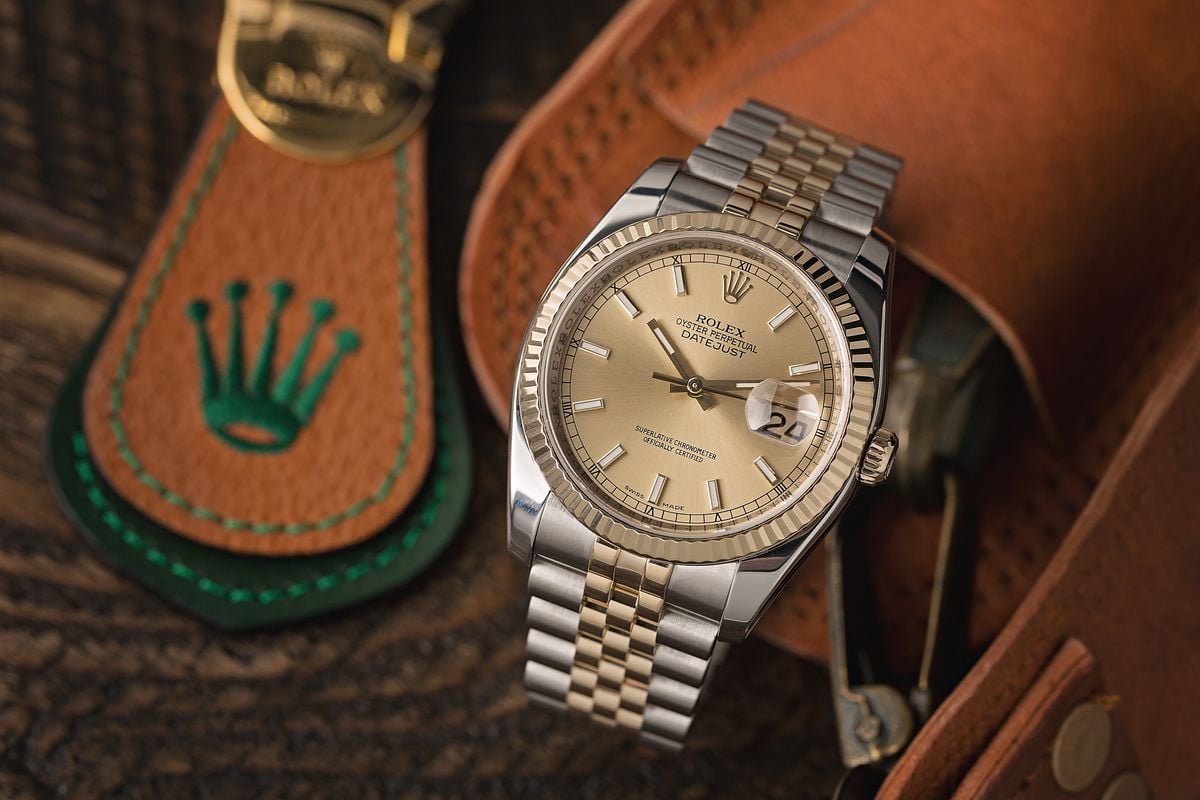
The current Rolex catalog contains 16 collections, from the time-only Oyster Perpetual to the Cosmograph Daytona. In the table below I list all the current Rolex watches for sale, its type, and the realistic starting price on the pre-owned market, based on what these watches have actually sold for at Bob’s Watches over the last 24 months. If you already know the exact reference number you want, our Rolex model directory lets you look up any specific model.
| Collection | Type | Starting market price* |
| Oyster Perpetual | Classic, time-only | From about $4,000 |
| Air-King | Professional, aviation | From about $5,000 |
| Datejust | Classic, everyday date | From about $5,000 |
| Explorer | Professional, expedition | From about $6,600 |
| Explorer II | Professional, expedition GMT | From about $8,600 |
| Yacht-Master | Professional, nautical | From about $8,600 |
| Sea-Dweller | Professional, saturation diving | From about $10,500 |
| Submariner | Professional, diving | From about $10,600 |
| GMT-Master II | Professional, dual time zone | From about $12,500 |
| Day-Date | Classic, precious metal flagship | From about $15,000 |
| Yacht-Master II | Professional, regatta chronograph | From about $17,600 |
| Sky-Dweller | Classic, annual calendar GMT | From about $18,500 |
| Cosmograph Daytona | Professional, chronograph | From about $20,000 |
| Land-Dweller | Classic, integrated sports | From about $22,000 |
| Perpetual 1908 | Classic, dress | From about $26,000 |
| Deepsea | Professional, extreme diving | NA: limited recent data |
*Typical entry point in our sold data, Aug 2024 to Aug 2026. Individual references vary with condition, metal, and provenance.
Buying Your First Rolex: Why and When?

I’ll tell you what I tell buyers on the floor, the right time to buy your first Rolex is when you can pay for it comfortably and you know which watch you want, not when a waitlist finally clears. A Rolex is a mechanical instrument you will wear for decades, and often pass down. Buy the one you will actually wear, in the size that fits your wrist, and treat any future value as a bonus rather than the plan.
There are two roads in: an authorized dealer at retail, often with a wait for steel sports models, or the pre-owned market with immediate availability and prices set by real demand. Both are legitimate. Which road makes sense depends on the model, and in the tier breakdown below I’ll show you where your budget genuinely lands.
Rolex Tiers: Entry, Core, and Flagship

I measure Rolex tiers by real market entry prices, not by the retail list. Rolex does not publish a hierarchy, but two years of our own sold data draws one clearly for me: an entry tier from roughly $4,000 to $10,000, a core tier from $10,000 to $20,000, and a flagship tier above $20,000. The table shows where I see each collection actually start.
| Tier | Collections | Real market entry |
| Entry | Oyster Perpetual, Air-King, Datejust, Explorer | $4,000 to $6,600 |
| Core | Explorer II, Yacht-Master, Sea-Dweller, Submariner, GMT-Master II | $8,600 to $15,000 |
| Flagship | Yacht-Master II, Sky-Dweller, Daytona, Land-Dweller, Perpetual 1908, precious metal models | $17,600 and up |
Where $5K to $10K Actually Gets You
Five to ten thousand dollars buys more Rolex than most shoppers I meet assume. In our sold data, pre-owned Oyster Perpetuals start around $4,000, Air-Kings and steel Datejusts around $5,000, and 36mm Explorers around $6,600. I don’t consider these consolation prizes; the Datejust is the single most in-demand collection we sell, and its typical sold price of about $9,500 sits squarely in this bracket. You can browse every current option in our selection of Rolex watches under $10,000.
The $10K to $20K Range
Between $10,000 and $20,000 is where I see the famous Professional models live on the pre-owned market. Submariners enter around $10,600 and average close to $16,000, Sea-Dwellers start near $10,500, and the GMT-Master II enters around $12,500 with an average sold price of about $19,200. This bracket also opens the door to entry-level Day-Dates in yellow gold from roughly $15,000, which surprises buyers I talk to who assume every gold Rolex costs thirty thousand or more.
Flagship and Precious Metal
Above $20,000 sits the top of the catalog. Steel Daytonas begin around $20,000 pre-owned in our data and average about $37,400 across all metals, the Sky-Dweller averages about $27,400, and the new Land-Dweller has been trading between roughly $22,000 and $35,000 since its 2025 debut. Precious metal Day-Dates run to $50,000 and beyond, and I expect the 2026 off-catalogue Rolesium Daytona to trade at multiples of its retail price for the foreseeable future.
What Style of Rolex Should You Buy?
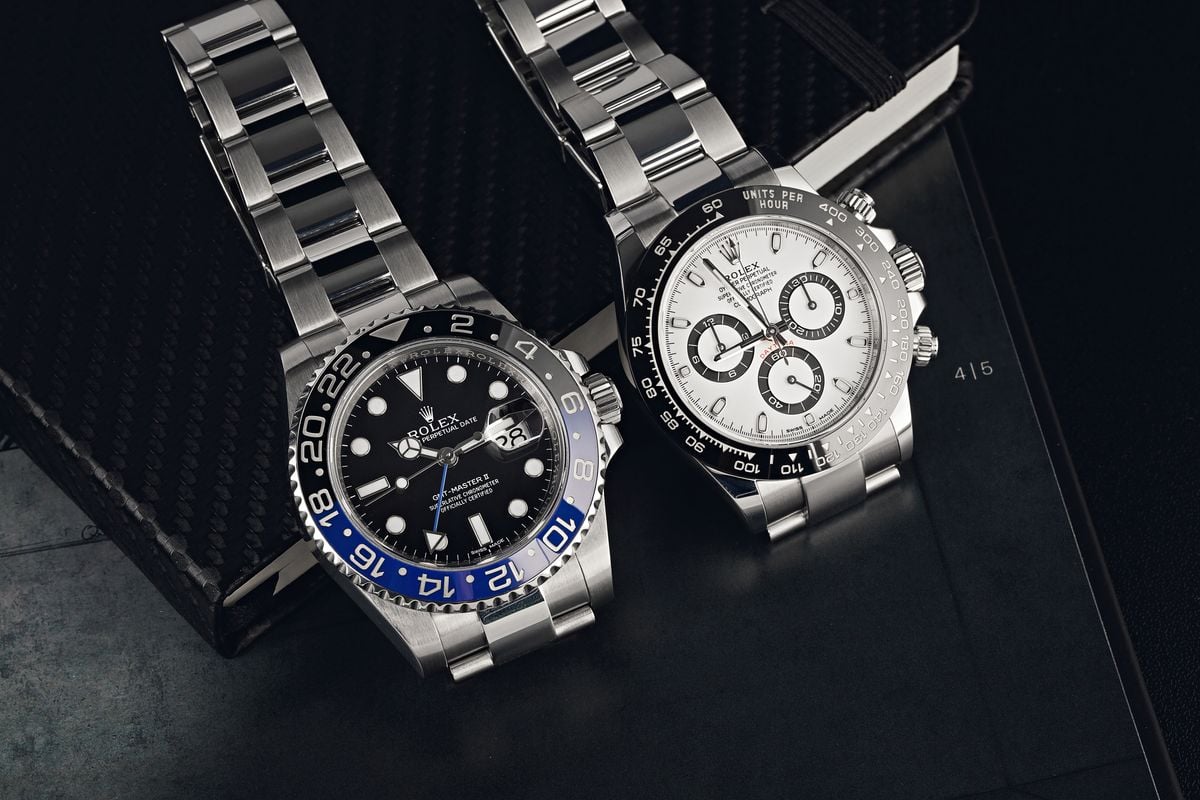
For me, the style question comes down to how you will actually wear the watch. If it will live on your wrist at a desk, at dinner, and on weekends, a Classic model like the Datejust or Oyster Perpetual disappears into all three settings. If you want a watch with a job, a rotating bezel, a second time zone, a chronograph, the Professional models carry that character, and the visual weight that comes with it. Neither choice is wrong, but I’ve found the honest answer to ‘what will I wear every day’ settles most purchases faster than any spec sheet.
Professional vs. Classic: How Rolex Divides the Catalog

Rolex divides its catalog into two families: Professional watches engineered for a specific activity, and Classic watches designed for everyday and formal wear. The Professional side covers the Submariner, Sea-Dweller, Deepsea, Daytona, GMT-Master II, Explorer, Explorer II, Air-King, Yacht-Master, and Yacht-Master II. The Classic side covers the Oyster Perpetual, Datejust, Day-Date, Sky-Dweller, Land-Dweller, and Perpetual 1908.
The split dates back to the company’s mid-century tool watch era, when Rolex built purpose-made instruments for divers, pilots, and expeditions, a history we cover fully in our page on the history of Rolex. Today I’d say the line between the families is softer than it once was; I see the Submariner worn to more board meetings than dive boats. But the division still shapes case sizes, bezels, and bracelets, and I still consider it the most useful first filter when narrowing your search.
Every Current Rolex Collection
The current Rolex catalog runs 16 collections, and I give each one below the same treatment: what it is, the key specs of the current generation, and my read on who it suits and how it moves in our market. Every entry links to a deeper guide, because 200 words is enough for me to point you in the right direction and not enough to cover reference histories. That depth lives in the individual buying guides.
Rolex Submariner

The Rolex Submariner is the most recognizable dive watch in the world, introduced in 1953 and waterproof to 300 meters in its current form.
- Current generation: 41mm case, ref. 126610 with date, ref. 124060 without
- Caliber 3235 (date) or 3230 (no-date), 70-hour power reserve
- Unidirectional Cerachrom ceramic bezel, Oystersteel, two-tone, or gold
The Submariner is our second most in-demand collection, with sold prices averaging about $16,000 and a typical range of $10,600 to $21,000, up about 6% over the last year. In my view it suits the buyer who wants one watch that works everywhere. If that is you, start with our full Submariner buying guide, and when you’re ready to see real examples at real prices, browse our current selection of pre-owned Submariners.
Rolex Sea-Dweller
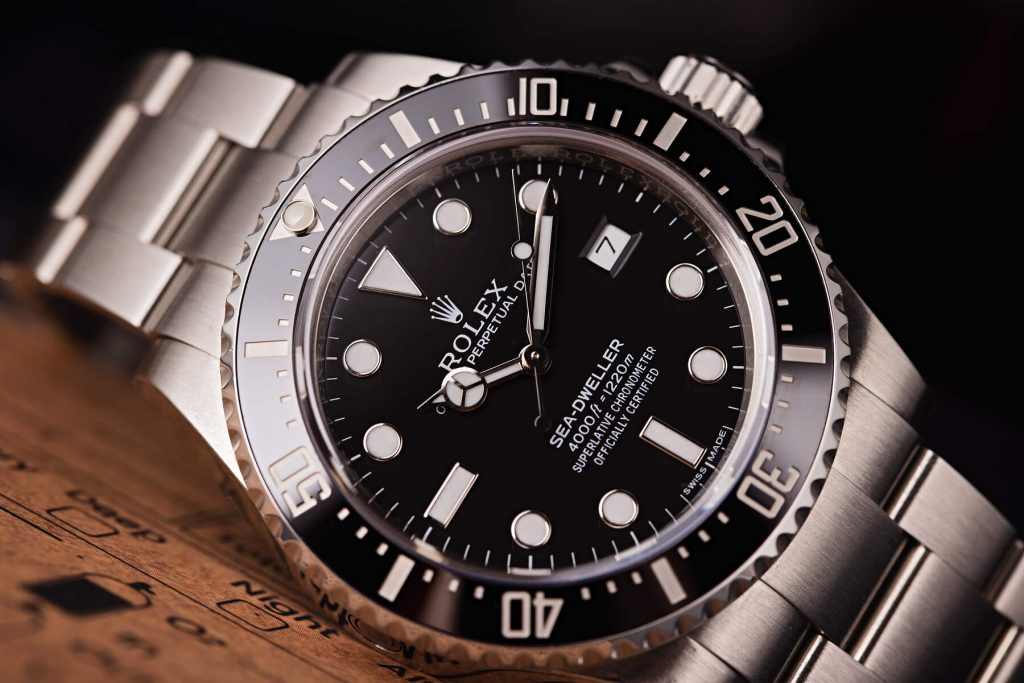
The Rolex Sea-Dweller is a saturation diving watch introduced in 1967, rated to 1,220 meters and fitted with a helium escape valve.
- Current generation: 43mm, ref. 126600, red ‘Sea-Dweller’ dial text
- Caliber 3235, Cyclops date magnifier (added in 2017)
- Oystersteel or two-tone Yellow Rolesor
I’ve watched the Sea-Dweller trade in a tighter range than most Professional models, typically $10,500 to $17,000 in our sold data with an average around $14,100. It suits the diver, real or aspirational, who finds the Submariner too common. The details are in our Sea-Dweller buying guide, and every Sea-Dweller we currently have in stock is a click away.
Rolex Deepsea
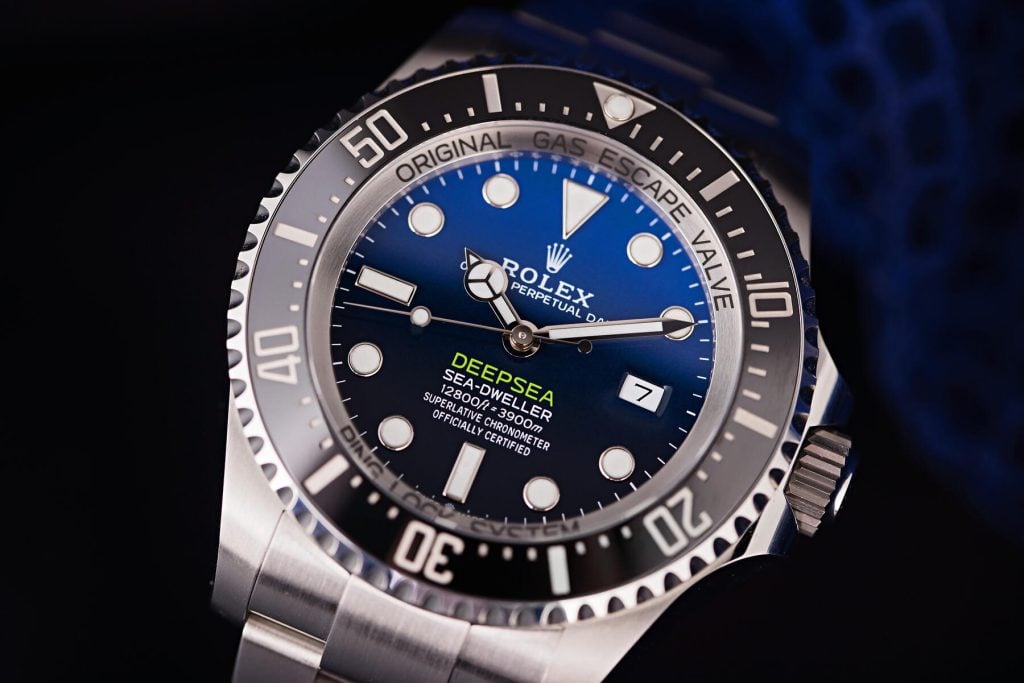
The Rolex Deepsea is the extreme end of Rolex diving, a 44mm watch rated to 3,900 meters built around the brand’s Ringlock case architecture.
- Current generation: 44mm, ref. 136660, Caliber 3235
- D-Blue gradient dial option commemorating the 2012 Mariana Trench dive
- Deepsea Challenge: 50mm RLX titanium, rated to 11,000 meters
The Deepsea is a niche piece with limited recent sold data on our books, so I will not put a market number on it here. It suits the buyer who wants maximum engineering and does not mind the weight. To learn how it compares to its sibling, read our Sea-Dweller vs. Deepsea comparison, or see which Deepsea models are available right now.
Rolex Cosmograph Daytona
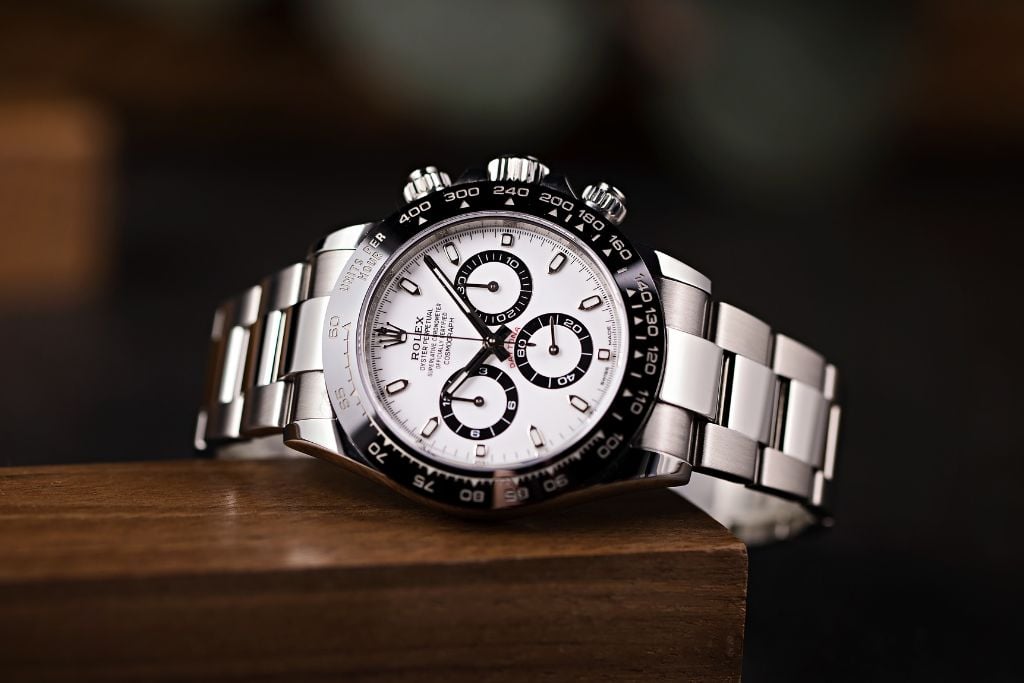
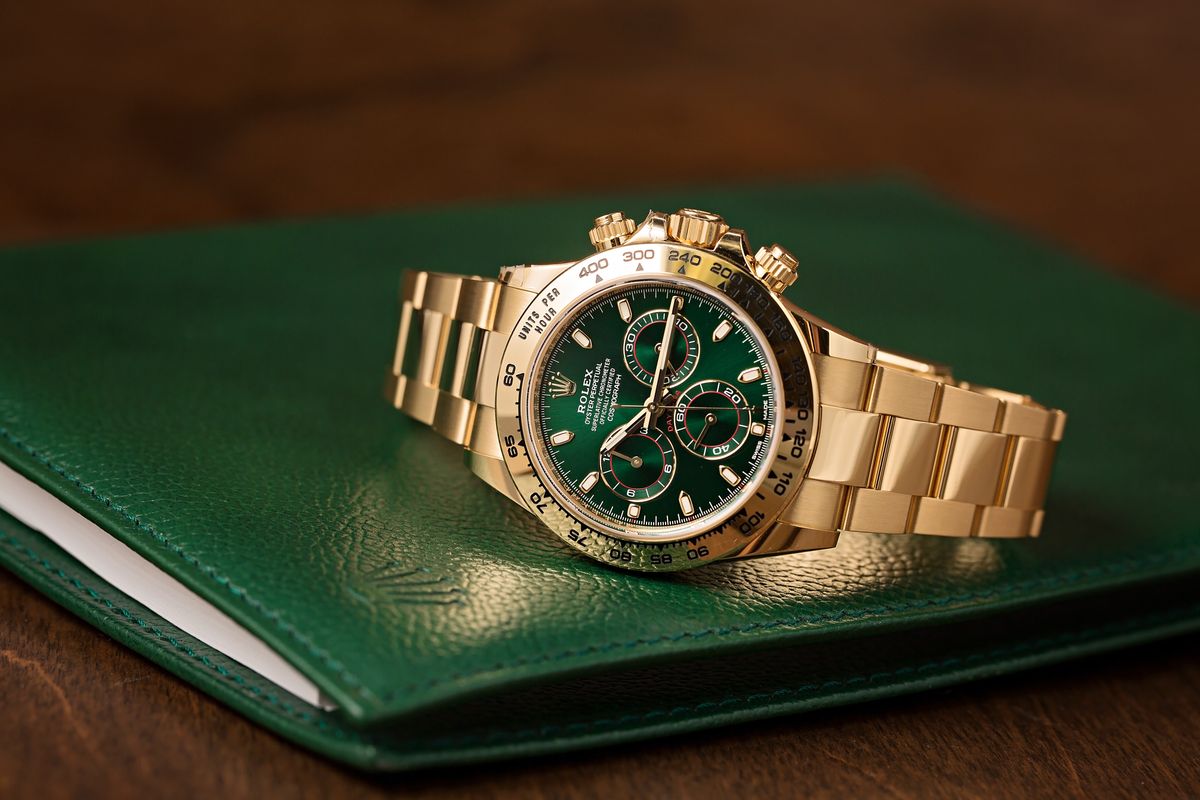
The Rolex Cosmograph Daytona is a chronograph wristwatch introduced in 1963 and named for the Florida raceway, and it is the hardest current Rolex to buy at retail.
- Current generation: 40mm, ref. 126500LN in steel, Caliber 4131 (introduced 2023)
- 72-hour power reserve, Cerachrom bezel with tachymetric scale
- 2026: off-catalogue Rolesium model with white enamel dial and exhibition caseback
Steel Daytonas start around $20,000 pre-owned in our data, and the collection averages about $37,400 across all metals, up about 9% year over year. I’d steer it toward the buyer who wants the single most demanded watch Rolex makes and accepts the premium that comes with it. Reference-by-reference detail is in our Daytona ultimate buying guide, and unlike the retail waitlist, our pre-owned Daytona inventory is available today.
Rolex GMT-Master II

The Rolex GMT-Master II is a dual time zone watch descended from the 1955 original built for Pan Am flight crews, and its two-color bezels carry the most famous nicknames in watch collecting.
- Current generation: 40mm, Caliber 3285, 70-hour power reserve
- Bezel variants include the ‘Batman’ (blue-black), ‘Sprite’ (green-black, left-handed, 2022), and later additions
- The ‘Pepsi’ (126710BLRO) had no 2026 release and many in the industry would tell you it is discontinued; its status is unconfirmed by Rolex
The GMT-Master II ranks third in our demand data, averaging about $19,200 sold with a typical range of $12,500 to $25,500. I recommend it to travelers and anyone who wants color without a full gold watch. Every bezel and reference is covered in our GMT-Master buying guide, and you can compare Pepsi, Batman, and the rest side by side in our GMT-Master II inventory.
Rolex Yacht-Master

The Rolex Yacht-Master is a nautical sports watch introduced in 1992, distinguished by its bidirectional rotating bezel with raised numerals.
- Current sizes: 37mm, 40mm, and 42mm
- 42mm ref. 226627 in lightweight RLX titanium, Caliber 3235
- Everose Rolesor and platinum-bezel Rolesium versions define the smaller sizes
I see a wide range in prices for the Yacht-Master collection because of its metals, from about $8,600 into the high $20,000s in our sold data, averaging around $16,600. It suits the buyer who wants sports watch capability with more polish than a Submariner. The full range is in our Yacht-Master buying guide, or go straight to the Yacht-Masters available now to see how each metal wears its price.
Rolex Yacht-Master II

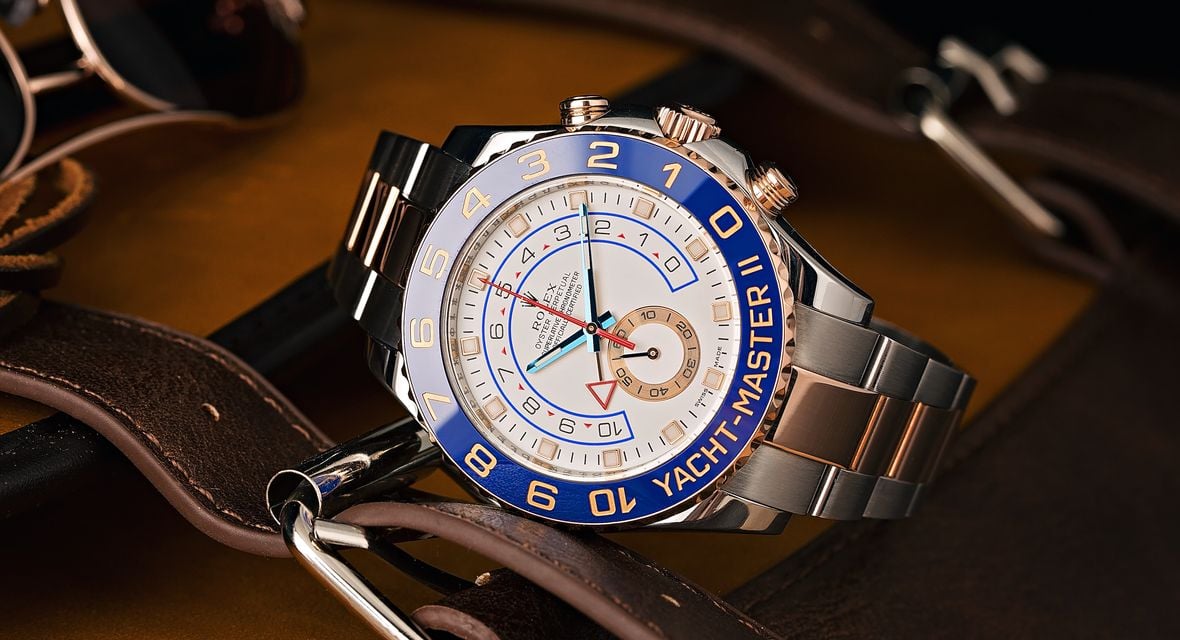
The Rolex Yacht-Master II is a regatta chronograph with a programmable countdown timer, the most mechanically complex sports watch Rolex has made.
- 44mm case with Ring Command bezel that sets the countdown
- Redesigned version introduced at Watches and Wonders 2026
I consider the Yacht-Master II a specialist’s watch, and our data reflects that: sold prices typically run $17,600 to $39,000 and the median slipped about 4% over the last year, the only current collection in our data to decline. It suits the buyer who wants complication and presence over subtlety. We break down the mechanism in our Yacht-Master II buying guide; the current Yacht-Master II selection shows you what that softening market means in actual asking prices.
Rolex Explorer

The Rolex Explorer is the brand’s original expedition watch, launched in 1953 after the first ascent of Everest, with the signature 3-6-9 dial.
- Two current sizes: 36mm ref. 124270 and 40mm ref. 224270 (added 2023)
- Caliber 3230, 70-hour power reserve
- Oystersteel and a two-tone Yellow Rolesor 36mm
To me the Explorer is the sleeper of the entry tier, starting around $6,600 in our sold data with a median near $9,000 and demand up about 11% year over year. It suits the buyer who wants one clean, legible watch with real history and no crowd of imitators on the same wrist at every dinner. Sizes and references are compared in our Explorer ultimate buying guide, and both sizes are represented in our pre-owned Explorer inventory.
Rolex Explorer II
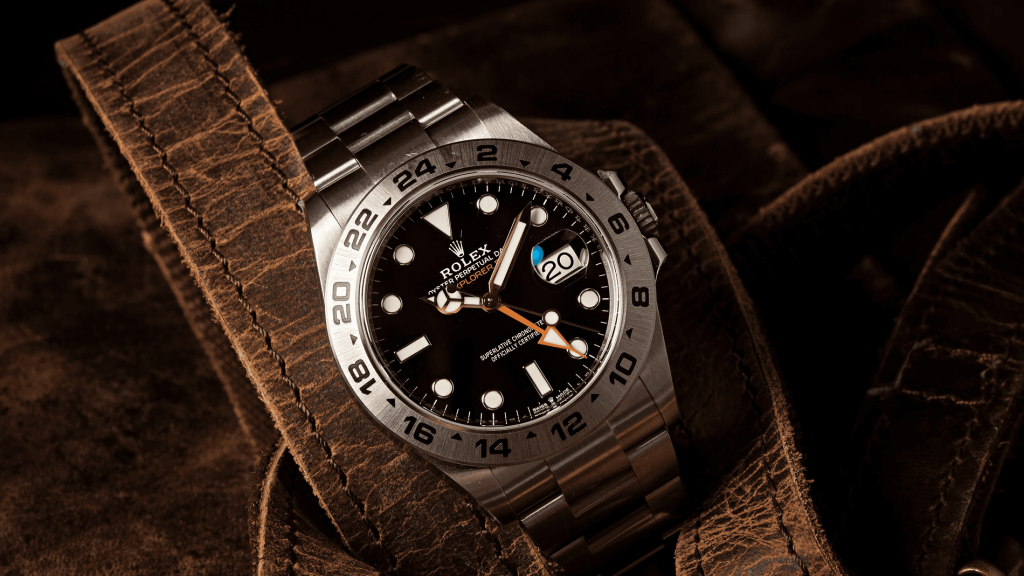
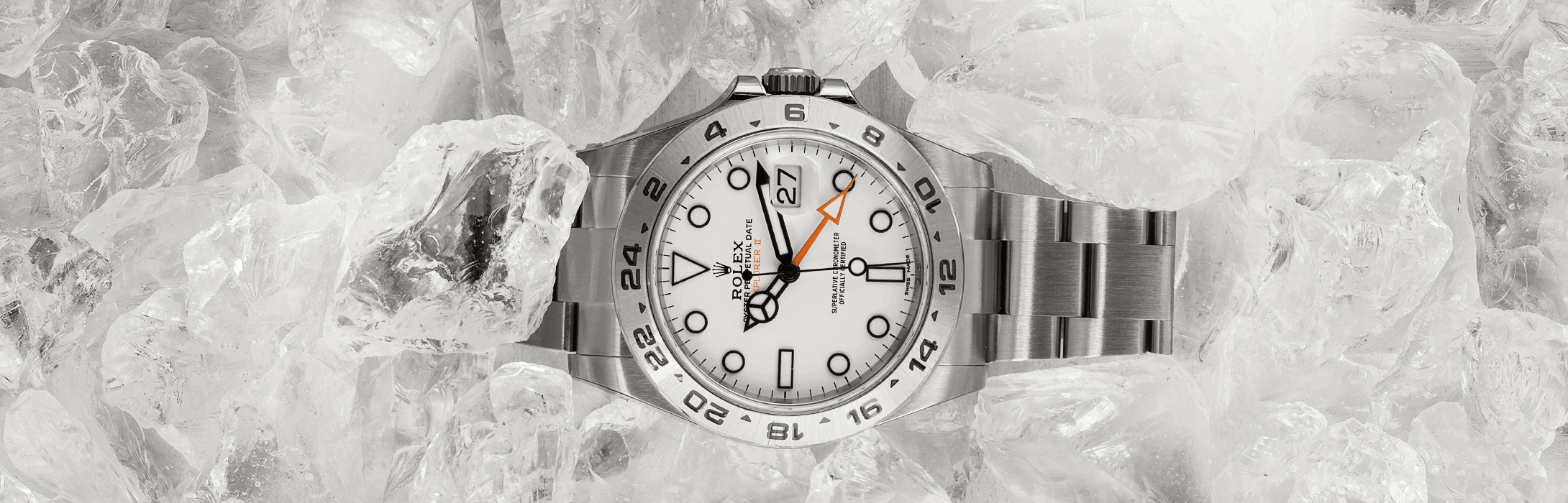
The Rolex Explorer II is a 42mm expedition watch introduced in 1971 for cave explorers, pairing a fixed 24-hour bezel with an independently set hour hand.
- Current generation: ref. 226570, Caliber 3285
- Black dial or the white ‘Polar’ dial, the collection’s signature look
- Orange 24-hour hand carried over from the 1971 original
The Explorer II trades in one of the most predictable bands I track, $8,600 to $13,600 with an average around $11,300. It suits the buyer who wants GMT function without GMT-Master pricing. See how the generations differ in our Explorer II buying guide, then decide between black and Polar in our Explorer II inventory.
Rolex Air-King

The Rolex Air-King is the brand’s aviation watch, a name in continuous use since 1945, now a 40mm sports model with a distinctive 3-6-9 and minute-scale dial.
- Current generation: ref. 126900 (introduced 2022), Caliber 3230
- Crown guards and a redesigned case versus the prior ref. 116900
- Green and yellow Rolex lettering carried from the Bloodhound SSC project dial
I count the Air-King among the least expensive doors into a Rolex sports watch, entering around $5,000 in our sold data and rarely exceeding $9,300. It suits the buyer who likes the tool watch look but wants change back from $10,000. The model’s odd, interesting history is in our Air-King ultimate buying guide, and current and discontinued references sit side by side in our Air-King inventory.
Rolex Oyster Perpetual

The Rolex Oyster Perpetual is the purest expression of the brand, a time-only watch descended directly from the original 1926 waterproof Oyster.
- Current sizes span 28mm to 41mm
- Caliber 3230 in the larger sizes
- 2026 marks the Oyster case centennial: ‘100 Years’ dial models and a multicolored Jubilee-motif 36mm
- The centennial OP 41 in Yellow Rolesor retails at $9,650
I call the Oyster Perpetual the true entry point to the catalog, from about $4,000 pre-owned, and it is also the fastest riser in our data, up about 17% year over year on the strength of the colored dials and the centennial attention. The Overall, Rolex played it conservative this year, but the celebration OP dials are the exception worth chasing. I map colors and sizes in our Oyster Perpetual buying guide, and every dial color we currently have is in our Oyster Perpetual inventory.
Rolex Datejust

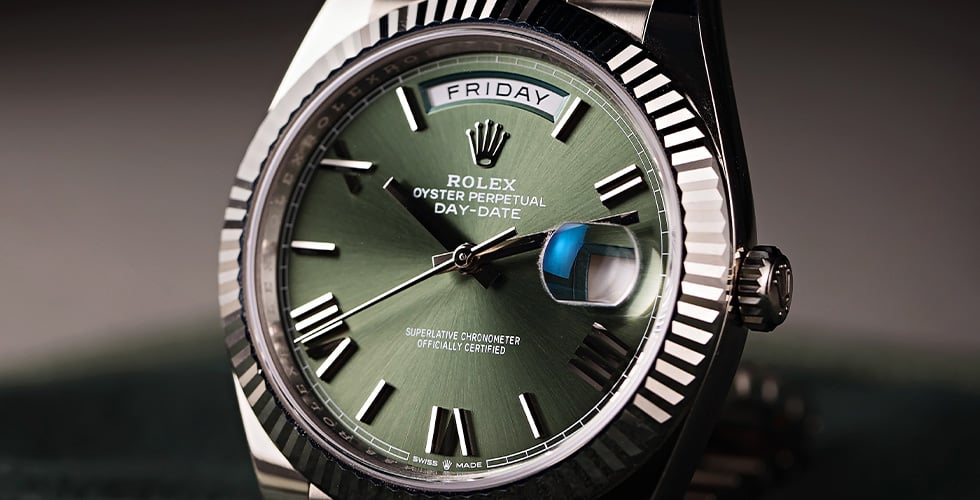
The Rolex Datejust is the definitive everyday luxury watch, introduced in 1945 as the first self-winding wristwatch with an automatically changing date window.
- Current sizes: 31mm, 36mm, and 41mm; Caliber 3235 in the 36mm and 41mm
- Fluted or smooth bezels, Jubilee or Oyster bracelets, the widest dial catalog Rolex makes
- 2026 additions include a green ombré dial for the Datejust 41
The Datejust is, by a wide margin, the most in-demand collection we sell, entering around $5,000 pre-owned, averaging about $9,500, and up 13% year over year. It suits nearly everyone, which is exactly the point, and it is where I steer most first-time buyers who do not arrive with a specific dream watch. Every configuration is untangled in our Datejust ultimate buying guide, and with the widest catalog Rolex makes, our pre-owned Datejust inventory is the best place to see the sheer range of dials, bezels, and sizes in one view.
Rolex Day-Date
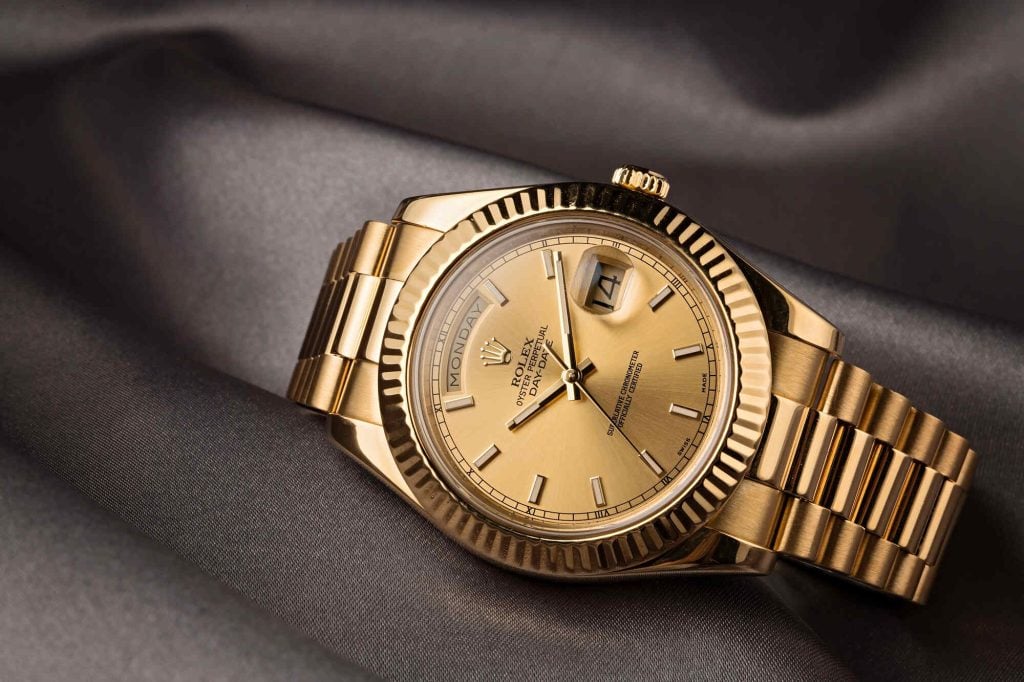
The Rolex Day-Date is the brand’s precious metal flagship, introduced in 1956 as the first wristwatch to spell out the day of the week, and it has never been made in steel.
- Current sizes: 36mm and 40mm; Caliber 3255 in the 40mm
- Yellow, white, and Everose gold, plus platinum; President bracelet
- 2026 ‘Exceptional Watches’ addition: a Day-Date 40 in new Jubilee gold with green aventurine dial
The Day-Date’s spread is the widest in our data, roughly $15,000 for older yellow gold examples up to $51,800 and beyond for modern platinum, averaging about $31,500. I’d point it at the buyer for whom the watch is the statement. I take a closer look at the President in our Day-Date ultimate buying guide; our Day-Date inventory spans that full range, from vintage yellow gold to modern platinum.
Rolex Sky-Dweller

The Rolex Sky-Dweller is the most complicated watch in the current catalog, a 42mm annual calendar with a dual time zone display, introduced in 2012.
- Caliber 9002
- Ring Command bezel controls all settings
- Annual calendar needs one adjustment per year, at the end of February
- Oystersteel, Rolesor, and full gold, on Oyster, Jubilee, or Oysterflex
I’ve watched the Sky-Dweller quietly become a strong performer, averaging about $27,400 in our sold data and up 14% year over year. It suits the buyer who wants genuine complications with Rolex robustness. How the calendar works, and which metal to pick, is covered in our Rolex Sky-Dweller buying guide review, and you can weigh those metals against their prices in our Sky-Dweller inventory.
Rolex Land-Dweller

The Rolex Land-Dweller is the brand’s first all-new collection in over a decade, launched in 2025 as an integrated-bracelet sports watch built around the high-frequency Caliber 7135.
- Sizes: 36mm and 40mm; flat Jubilee integrated bracelet; about 9.7mm thick in steel
- Caliber 7135: 5Hz Dynapulse escapement, 66-hour power reserve, exhibition caseback
- Honeycomb-motif dial cut by femtosecond laser; White Rolesor, Everose, and platinum
The Land-Dweller is the newest thing on this page and I’m still watching the market find its level; our early sold data runs roughly $22,000 to $35,000. It suits the buyer who wants the most technically ambitious movement Rolex has released in a generation. Our hands-on assessment is in our Land-Dweller review, and the Land-Dwellers currently available show you exactly where that market sits this week.
Rolex Perpetual 1908

The Rolex Perpetual 1908 is the brand’s current dress watch line, introduced in 2023 as the successor to the Cellini’s role and named for the year the Rolex brand was registered.
- 39mm case, about 9.5mm thick
- Caliber 7140 with exhibition caseback
- Yellow or white gold, and a platinum version with ice blue guilloché dial
- Dressed with a domed and fluted bezel and leather strap
The 1908 is new enough that I’d call our data directional rather than deep: examples have moved from about $26,000, and I can see demand clearly building. It suits the buyer who wants a Rolex to wear at work rather than with a wetsuit. Until our dedicated 1908 guide publishes, browse current examples on our Rolex 1908 collection page.
Discontinued Collections Still Worth Buying

Two Rolex collections that I still see shoppers search for every day, the Cellini and the Milgauss, are no longer in production, and both remain fully buyable on the pre-owned market. This is something a catalog page on rolex.com structurally cannot tell you: discontinued does not mean gone, and in both cases discontinuation has pushed values up, not down. Our sold data shows the Cellini up about 25% and the Milgauss up about 15% over the last 12 months, the two strongest trend lines I track.
| Collection | Discontinued | Current market range* |
| Cellini | 2020 | $5,300 to $16,000, median about $6,900 |
| Milgauss | 2023 | $10,000 to $14,600, median about $12,000 |
*Typical sold range at Bob’s Watches, Aug 2024 to Aug 2026.
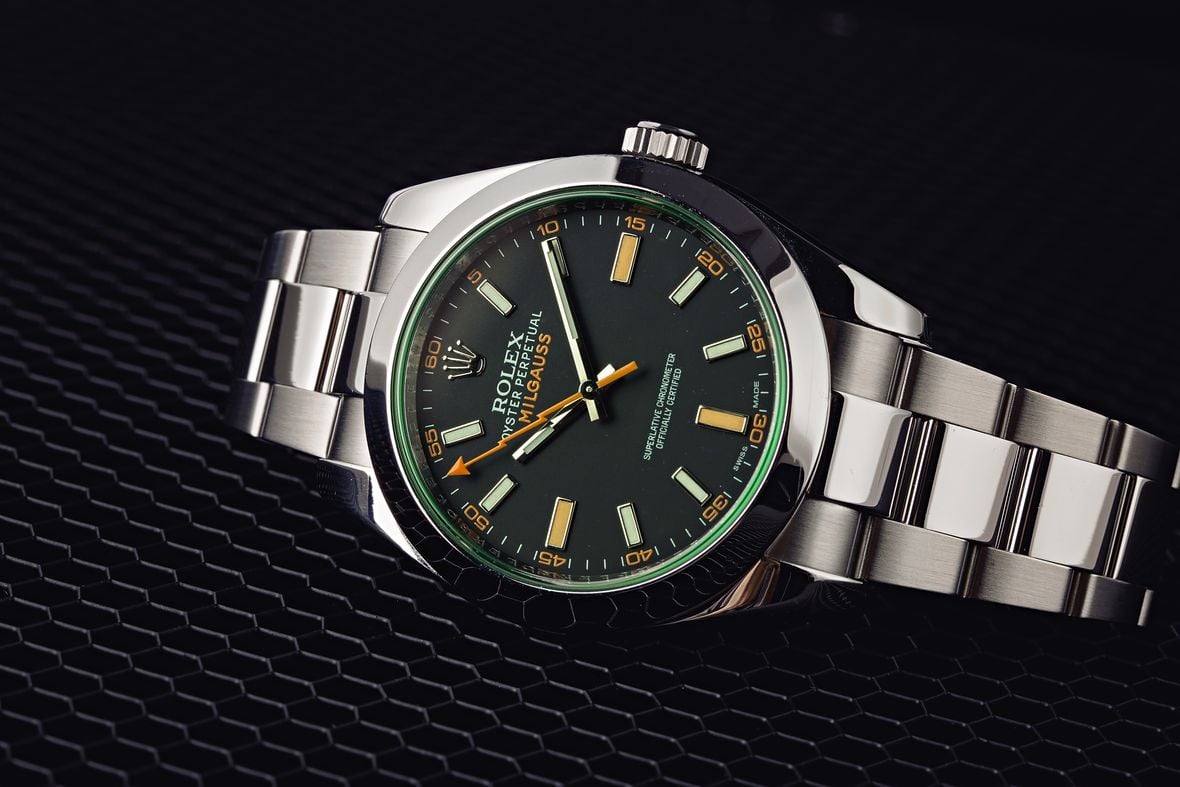
I consider the Cellini, Rolex’s dress line before the Perpetual 1908, the value play of the two: elegant, mechanically simple, and still available under $7,000 in many configurations. The Milgauss, the anti-magnetic scientist’s watch with its lightning bolt seconds hand and green-tinted crystal on the GV, is the collectible play, with a hard ceiling on supply and a devoted following. Full buying guide for the Rolex Milgauss here. Both belong to a broader pattern I see across the vintage and discontinued Rolex market, where the end of production often marks the start of appreciation. And if you already own one of these references and are weighing an upgrade, I’d check what it brings when you sell a Rolex in the current market before you decide to hold.
What Rolex Watches Actually Cost
I’ll be blunt: Rolex watches actually cost what the market pays, not what the retail list says, and the two numbers can sit far apart. Retail is the price at an authorized dealer for the current catalog. Market price is what a watch trades for right now, and for steel Professional models I frequently see it sit above retail, while for many Classic models in precious metal it sits below. The table gives the honest number for every collection, drawn from every Rolex sold at Bob’s Watches over the last 24 months, the same dataset behind our full used Rolex price guide.
| Collection | Average sold price* | 12-month trend |
| Datejust | $9,500 | Up 13% |
| Submariner | $16,000 | Up 6% |
| GMT-Master II | $19,200 | Up 7% |
| Daytona | $37,400 | Up 9% |
| Day-Date | $31,500 | Up 4% |
| Oyster Perpetual | $7,700 | Up 17% |
| Sea-Dweller | $14,100 | Up 4% |
| Yacht-Master | $16,600 | Up 4% |
| Explorer II | $11,300 | Up 7% |
| Explorer | $9,000 | Up 11% |
| Air-King | $7,000 | Up 8% |
| Sky-Dweller | $27,400 | Up 14% |
| Yacht-Master II | $24,300 | Down 4% |
| Milgauss (discontinued) | $12,000 | Up 15% |
| Cellini (discontinued) | $9,500 | Up 25% |
*All metals and sizes combined, Bob’s Watches sold data, Aug 2024 to Aug 2026. Trend compares median sold price in the last 12 months to the prior 12. Last updated August 2026.
“The gap between the retail list and the sold price is the most misunderstood number in this business. Across two years of our own transactions, steel Professional models consistently clear at or above retail while many precious metal Classics trade below it. That spread, not the price list, is what a buyer actually pays.”
Joe Alessindrini, CFO of Bob’s Watches
Why do retail and market diverge? Supply. Rolex allocates steel sports models far below demand, so the market clears above retail on a Daytona and near retail on a Submariner, while a lightly worn precious metal Datejust or Day-Date can trade meaningfully below its original list. That divergence is also why I push back on treating any of this as a portfolio. Rolex’s own chief executive, Jean-Frédéric Dufour, put it plainly to the Swiss paper NZZ: “I don’t like it when people compare watches with stocks.” I agree with him. Certain references can hold value well, and some have appreciated, but not every model does, and nobody should buy a watch they would regret owning if the value of the watch moved the wrong way.
Which Rolex Should You Buy First?
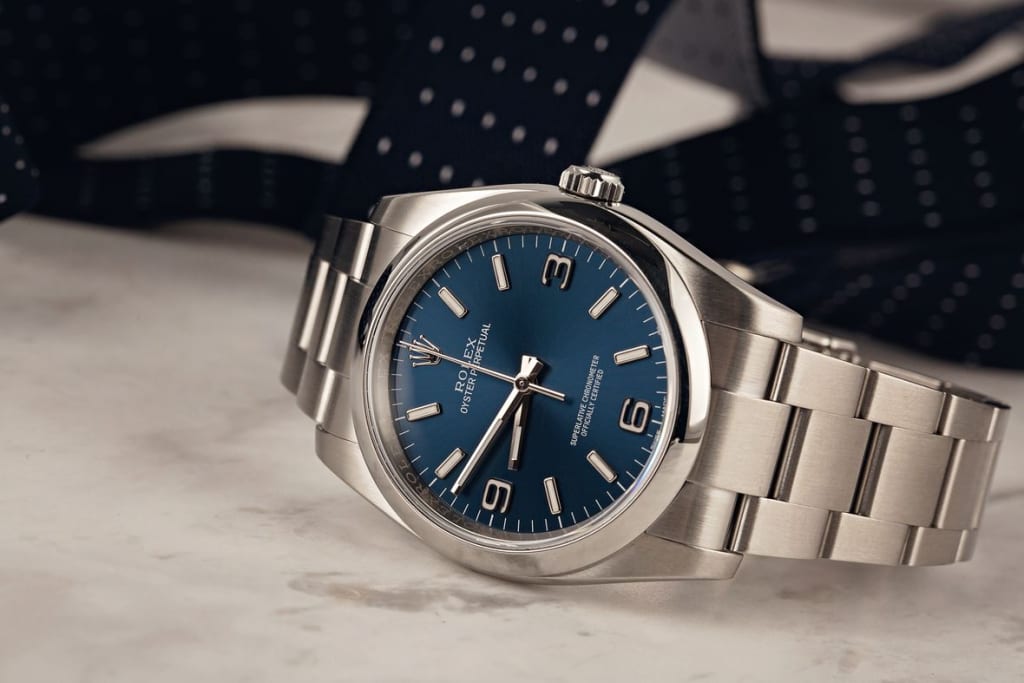
The first Rolex I recommend for most buyers is a Datejust, and the sales floor backs me up: it is the single most in-demand collection in our data, it enters around $5,000, and it is the watch people keep. For the buyer who wants a sports watch first, the Submariner is the default for a reason, and the Explorer is another smart buy for anyone who wants the same heritage at a lower price point. For the tightest budgets, the Oyster Perpetual delivers the full Rolex experience, in the literal case that started the company, from about $4,000.
What I see less discussed is the trade-in side. A meaningful share of the watches that come back to us within a couple of years are impulse purchases: very large cases bought for presence, and hyped references bought at peak premium. The watches that almost never come back are the boring choices, the 36mm and 41mm Datejusts and the Submariner models. Buy the watch you will still want when nobody is looking at it but you.
“The watches we see traded back within a couple of years are almost always the impulse buys, oversized cases bought for presence and hyped references bought at peak premium. The classic configurations, the 36mm and 41mm Datejusts and the no-date Submariners, almost never come back. First-time buyers who choose those keep them.”
Carol Altieri, COO of Bob’s Watches
Rolex Terminology You’ll Encounter
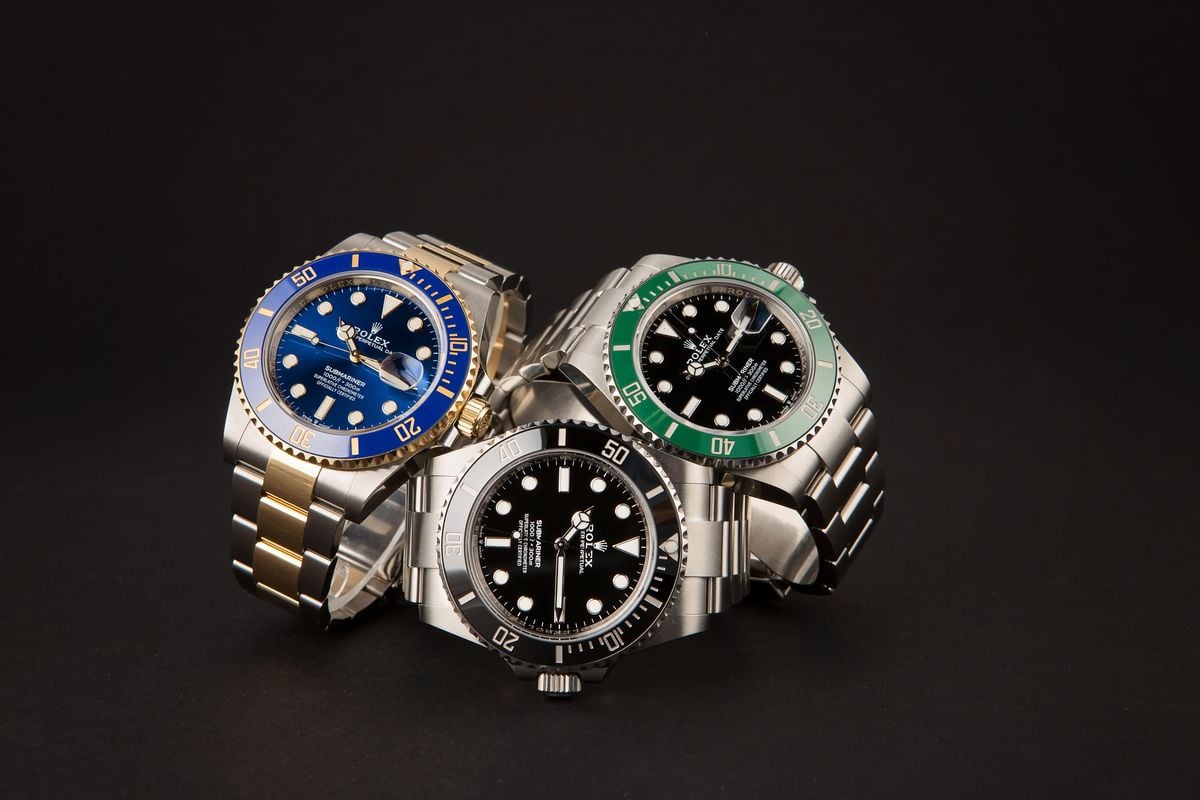
I’ve found Rolex terminology can be decoded with a short list; these are the terms you will actually meet while shopping. Movement-level caliber detail belongs in the individual collection guides, so I keep this list practical.
- Oystersteel: Rolex’s proprietary 904L stainless steel, more corrosion-resistant than standard watch steel.
- Rolesor: Rolex’s name for two-tone, steel combined with yellow, white, or Everose gold.
- Rolesium: Steel combined with platinum, historically on the Yacht-Master and, from 2026, on an off-catalogue Daytona.
- Everose: Rolex’s in-house rose gold alloy, formulated so the color does not fade.
- Cerachrom: Rolex’s scratch-proof ceramic bezel material.
- Chromalight: The blue-glowing luminescent material on modern dials and hands.
- Cyclops: The magnifying lens over the date window.
- Rehaut: The inner ring between dial and crystal, engraved with ROLEX repeating and the serial number on modern watches.
- Jubilee, Oyster, President: The three core bracelets: five-link dress, three-link sport, and the semi-circular link bracelet reserved for the Day-Date and precious metal Datejusts.
- Oysterflex: Rolex’s elastomer-coated metal-blade strap, a rubber strap in feel with bracelet-grade structure.
- Fluted bezel: The ridged gold bezel most associated with the Datejust and Day-Date.
- Superlative Chronometer: Rolex’s in-house certification, accurate to -2/+2 seconds per day, with tightened criteria announced in 2026.
- Reference number: The model number identifying an exact configuration, e.g., 126610LN. Look any of them up in our reference directory.
- Bezel nicknames: Collector shorthand for GMT-Master II colorways: Pepsi (red-blue), Batman (blue-black), Sprite (green-black), Root Beer (brown-gold).
- Bracelet stretch: Wear-induced looseness in older bracelets, a key condition checkpoint on vintage pieces.
- Box and papers: The original packaging and warranty card; desirable and value-additive, but not required for authenticity.