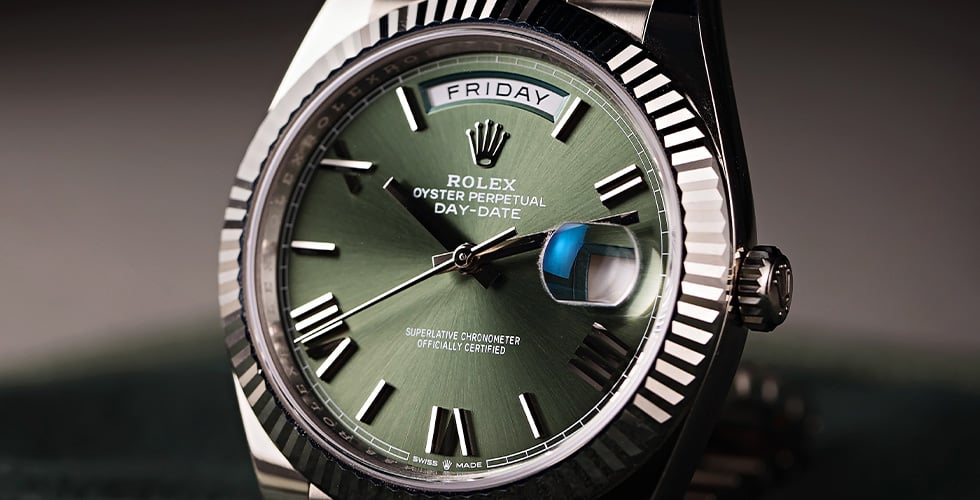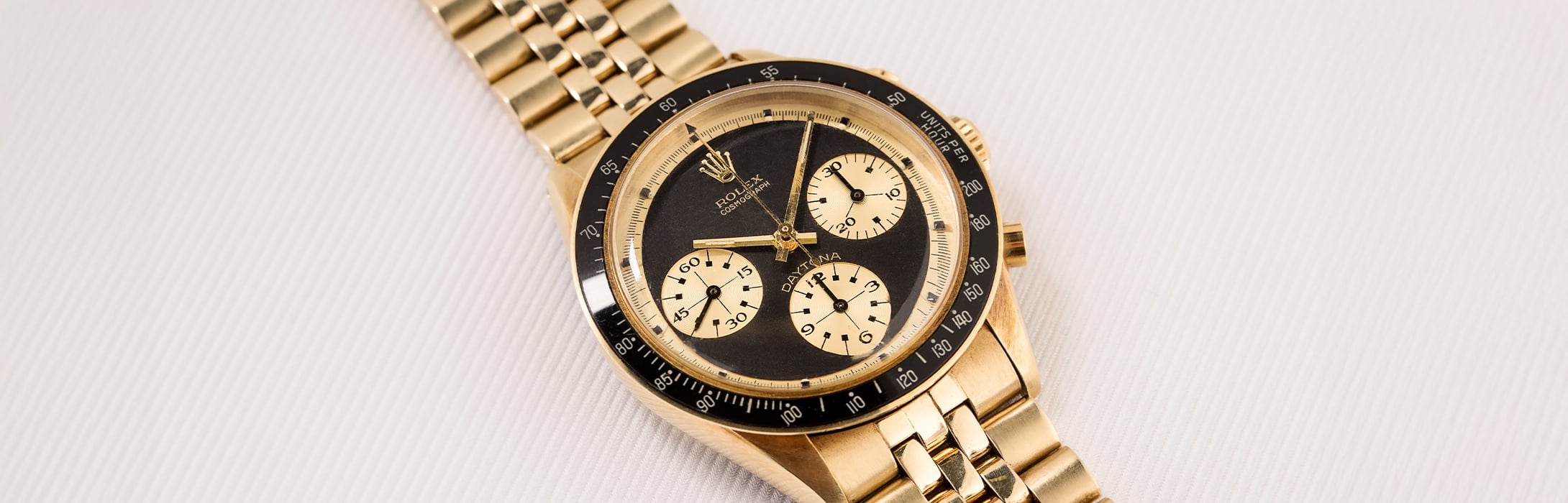

A vintage Rolex dial is the face of a watch produced between the early 1900s and the late 1990s. More than just the part that tells you the time, the dial is the single biggest factor in determining a vintage Rolex’s market value. Collectors and dealers widely agree that the dial can account for up to 90% of a watch’s overall price. A rare or well-preserved dial turns an already desirable Rolex watch into something truly exceptional.
Key Takeaways
- The three main production eras: Gilt, Matte, and Glossy
- How to read and decode lume markings like Radium and Tritium
- The rarest exotic and stone dial variants
- How patina, aging, and imperfections add value
- Tips for identifying authentic dials versus service replacements
Understanding these details is more than an exercise in watch appreciation. It is a deep dive into decades of horological history and craftsmanship. Let’s start with the three distinct eras that shaped the Rolex dial timeline.
The Three Main Eras of Vintage Rolex Dials
Rolex dials have gone through three major design periods since the mid-20th century. Each era reflects changes in manufacturing technology, design philosophy, and the practical needs of the people wearing these watches. Knowing which era a dial belongs to is the first step in understanding its rarity and value.
Gilt Dials (1950s to Mid-1960s)
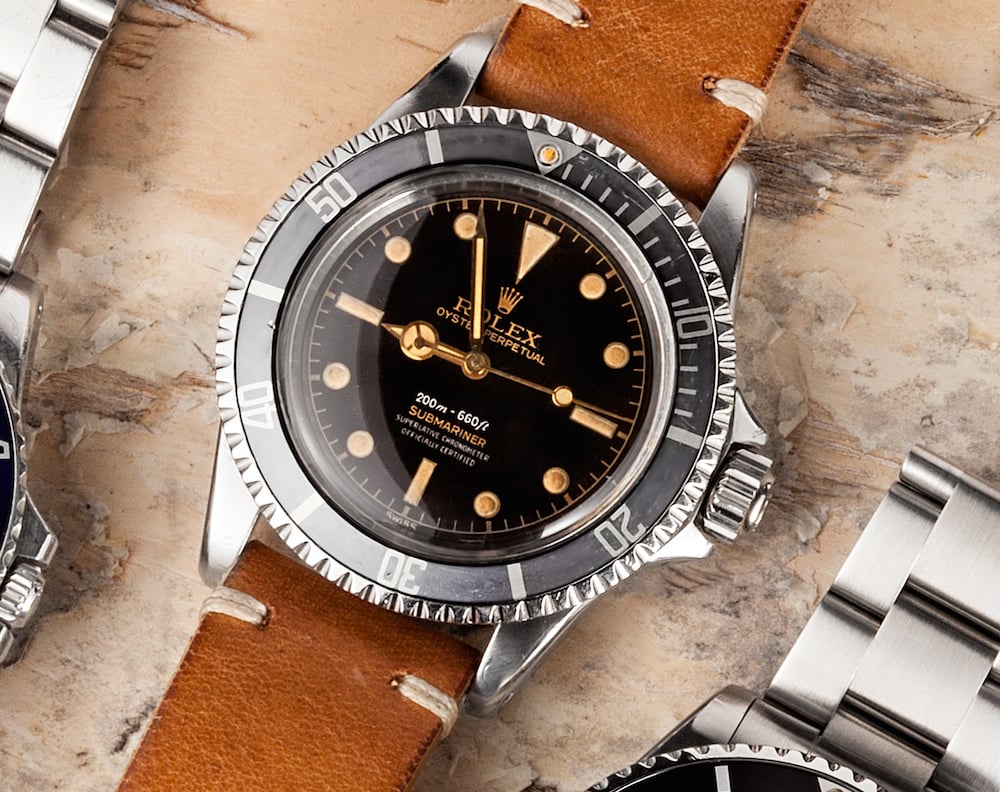
Gilt dials represent the earliest and most collectible era of modern Rolex production. The manufacturing process involved electroplating a brass dial base before painting it with a deep black lacquer. The result was a rich, high-gloss surface with text, indices, and logos rendered in a warm golden tone that stood slightly raised from the dial surface.
These dials are prized for their depth and warmth. The golden relief text combined with the glossy lacquer creates a look that Rolex has never fully replicated in its modern lineup. Gilt dials are found on some of the most iconic references in the Submariner, GMT-Master, and Explorer lines. Because of their age and the delicate lacquer finish, finding one in excellent original condition is increasingly difficult, which only drives demand higher.
Matte Dials (Late 1960s to Mid-1980s)
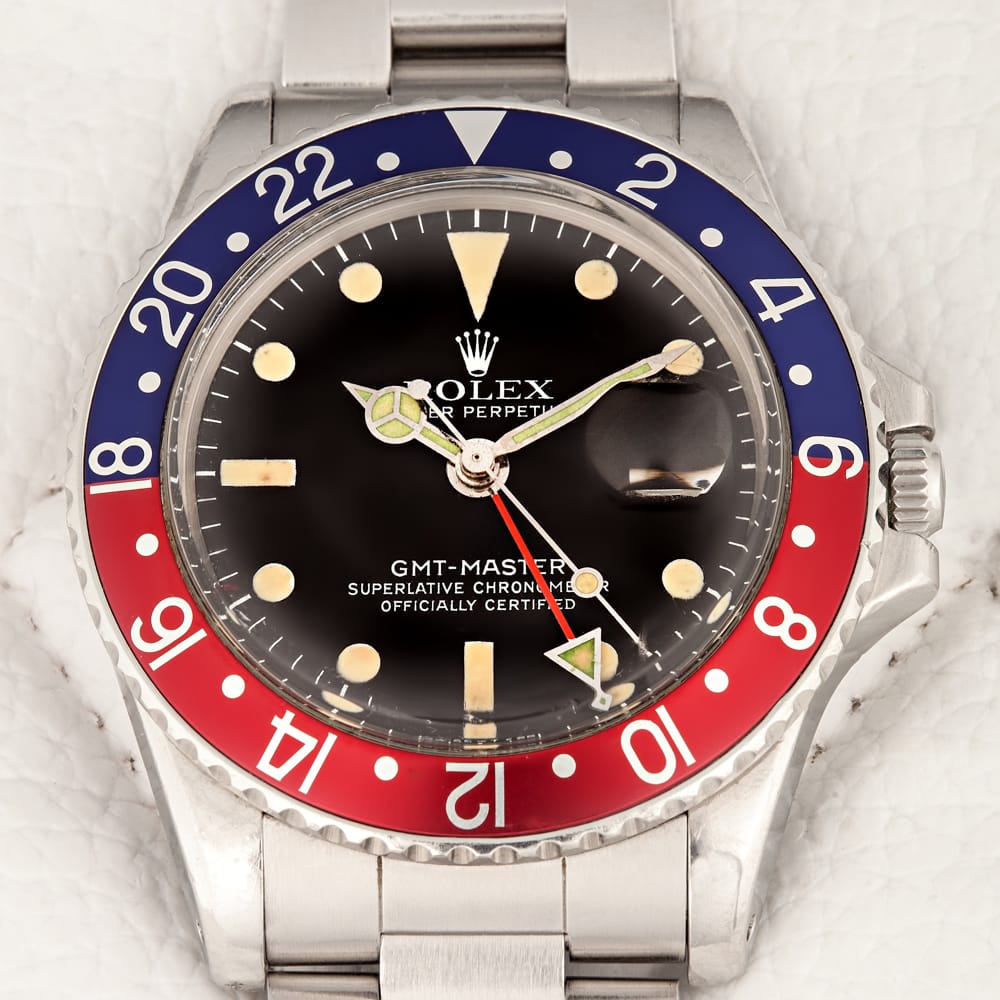
By the late 1960s, Rolex shifted to matte dials with a flat, non-reflective finish. This was a practical decision. Tool watches like the Submariner, GMT-Master, and Explorer were designed for professionals who needed to read the time quickly in challenging conditions. A flat surface reduced glare and improved legibility underwater or in low light.
Matte dials introduced their own collector vocabulary. “Meters First” dials display the depth rating in meters before feet (for example, “200m = 660ft”), while “Feet First” dials reverse that order. These small text variations, which reflected regional standards and production timing, have become significant markers for collectors who want to pinpoint exactly when a dial was produced. The matte era also includes some of the most desirable color and text variations across sport watch references.
Glossy Dials and the Transition to Modernity (Late 1980s to 1990s)
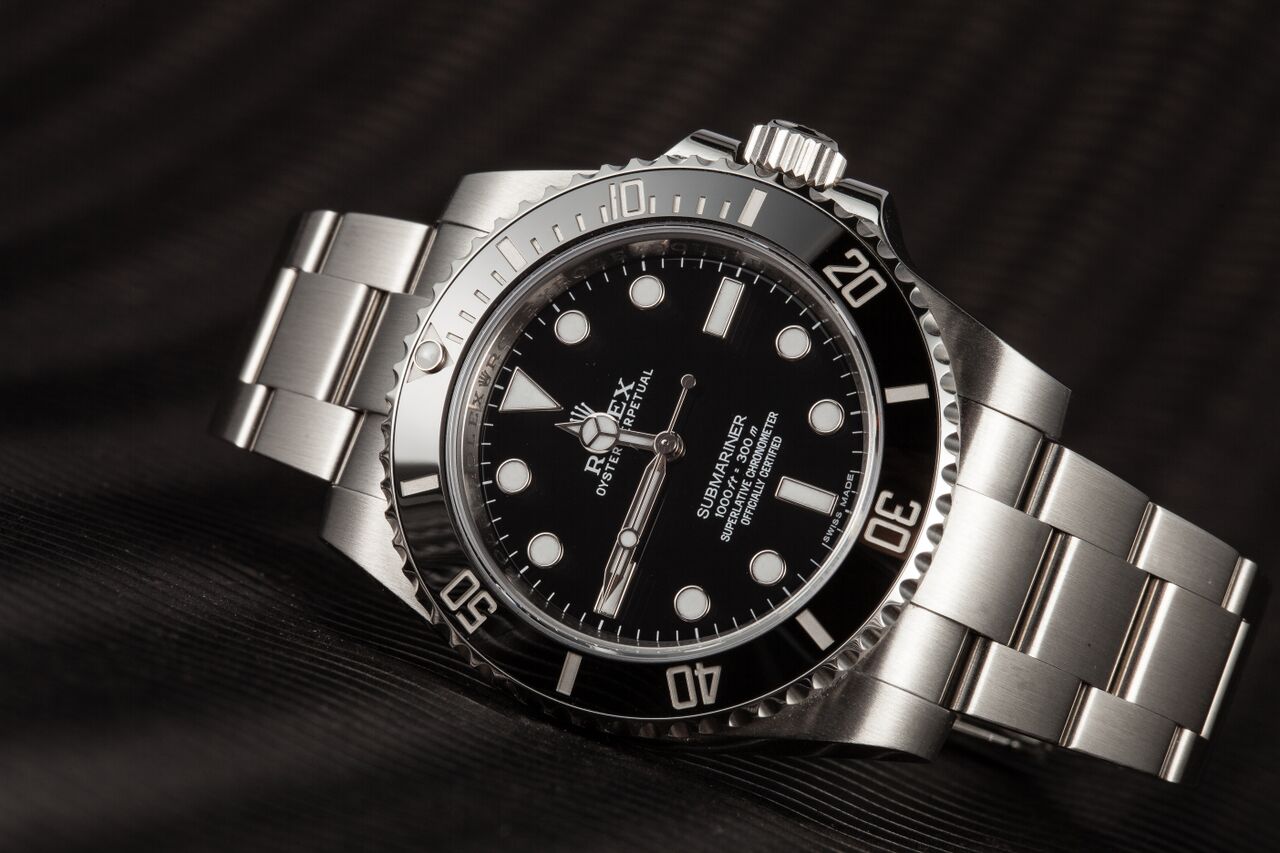
In the late 1980s, Rolex brought back a glossy finish, but with notable updates. The new glossy dials featured white gold surrounds, or borders, around the hour markers. This gave the watches a more refined, jewelry-like appearance compared to the printed markers of the matte era.
This transitional period bridges the gap between what collectors consider “true vintage” and the modern Rolex aesthetic. While these dials are not yet as sought after as gilt or early matte examples, interest is growing as collectors expand their focus. Watches from this era are often more accessible in terms of price, making them a strong entry point for anyone building a vintage Rolex collection.
| Era | Production Years | Key Characteristics |
| Gilt | 1950s to mid-1960s | Glossy black lacquer, golden relief text, electroplated brass |
| Matte | Late 1960s to mid-1980s | Flat finish, improved legibility, “Meters First” and “Feet First” variants |
| Glossy | Late 1980s to 1990s | Return of gloss, white gold marker surrounds |
| Era | Notable Models | Approx. Value Impact |
| Gilt | Submariner 5512/5513, GMT-Master 1675, Explorer 1016 | Highest premiums for original condition |
| Matte | Submariner 1680, GMT-Master 1675 (later), Sea-Dweller 1665 | Strong demand, especially rare text variants |
| Glossy | Submariner 16610, GMT-Master II 16710, Datejust 16234 | Growing collector interest, more accessible pricing |
Decoding Rolex Lume: From Radium to Super-Luminova

One of the most reliable ways to date a vintage Rolex dial is by looking at the small text printed at the very bottom, just above the 6 o’clock position. These markings indicate which luminous material Rolex used on the hands and hour markers, and they changed several times over the decades as safety standards evolved.
Here is a breakdown of each lume era and the corresponding dial markings:
- Pre-1960 (Radium): Marked simply “SWISS” at the bottom of the dial. Radium-based lume was highly radioactive and has often degraded or changed color over the decades, which can contribute to the “tropical” look collectors prize.
- 1960 to 1998 (Tritium): Marked “T SWISS T” or, in later production, “SWISS < 25.” Tritium was far less radioactive than Radium and became the industry standard for nearly four decades. The “T” stands for Tritium.
- 1998 to 1999 (Luminova): Marked “SWISS” once again. Luminova was the first completely non-radioactive luminous material Rolex adopted. This was a brief transitional period, making Luminova-marked dials relatively uncommon.
- 2000 to present (Super-Luminova and Chromalight): Marked “SWISS MADE.” These modern materials glow brighter and last longer than any of the earlier options.
These markings are small but critical. A mismatch between the lume text and the watch’s serial number range is one of the first red flags that a dial may have been replaced or refinished.
Rare and Exotic Rolex Dial Variations
Beyond the standard production dials, Rolex has produced a number of rare variants over the years that command enormous premiums at auction and in private sales. Some of these dials were intentional limited designs, while others became collectible because of small production runs or unique visual characteristics.
Paul Newman Daytona Dials

The Paul Newman Daytona dial is arguably the most famous exotic Rolex dial in existence. Found on certain references of the Cosmograph Daytona from the 1960s and 1970s, the “Exotic” dial features an art-deco style with contrasting sub-dial colors and small hash marks along the sub-dial registers. The name comes from the actor Paul Newman, who was photographed wearing a Ref. 6239 with this dial style.
For years, these dials were actually less popular than the standard Daytona dials. That changed dramatically over time, and today a Paul Newman Daytona is one of the most valuable wristwatches in the world. Newman’s own personal watch sold at auction in 2017 for over $17 million, cementing the dial’s legendary status.
Stella Dials: Lacquered Vibrancy
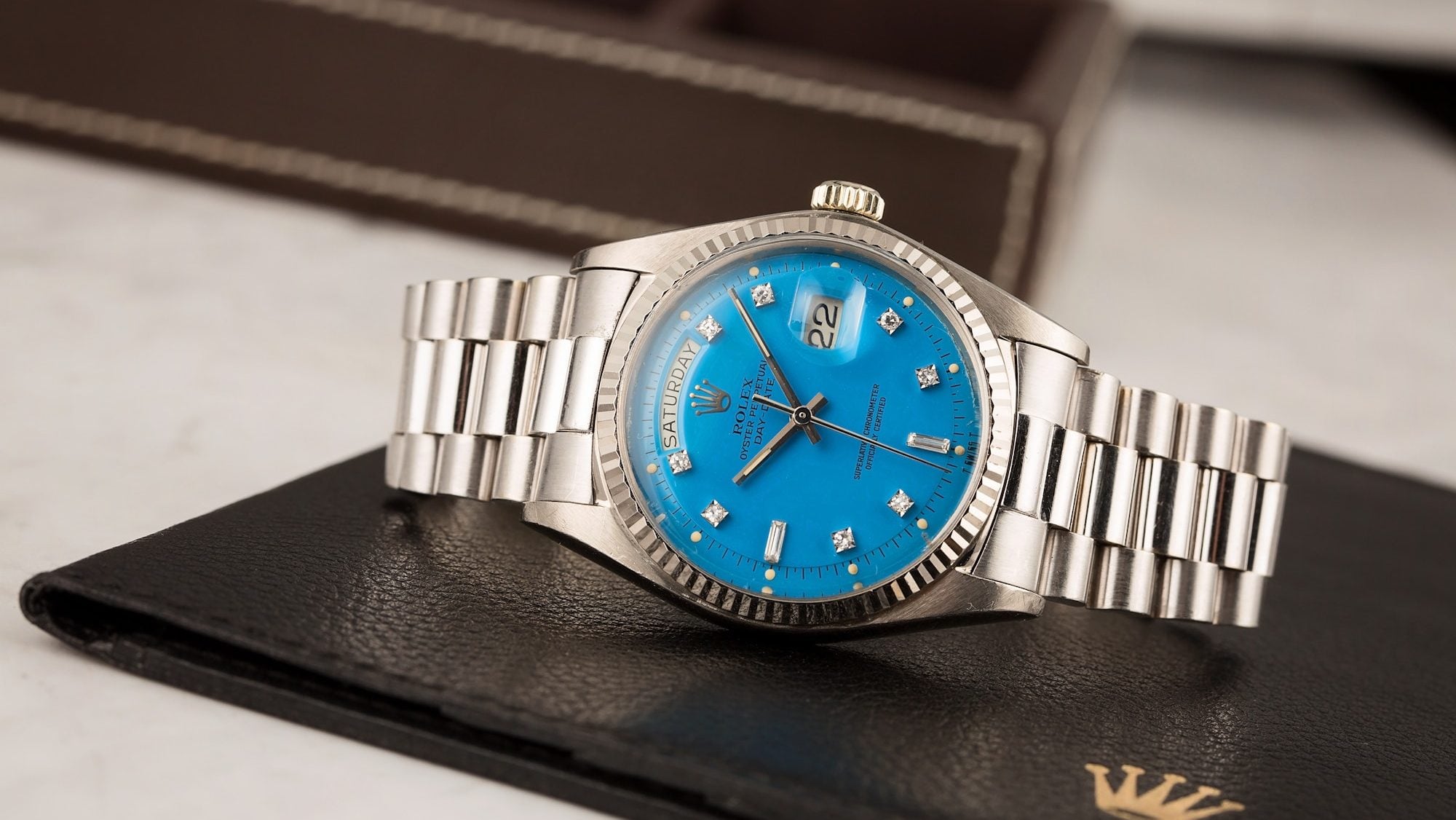
Rolex Stella dials are lacquered enamel dials produced primarily for the Day-Date and Datejust lines. They come in bold, vivid colors like oxblood, pink, turquoise, coral, and green. The name “Stella” is a collector term, not an official Rolex designation, and it refers to the bright, star-like quality of the lacquer finish.
These dials were produced from the 1970s into the early 1980s and were originally marketed in regions where bold colors were culturally popular. Today, Stella dials are among the most visually striking vintage Rolex pieces on the market, and clean examples in unusual colors can sell for multiples of what a standard dial version would bring.
California Dials: A Blend of Numeral Styles
California dials feature a distinctive mix of Roman numerals on the upper half of the dial and Arabic numerals on the lower half. This style is most commonly associated with early Rolex Bubbleback models from the 1930s and 1940s.
The name “California dial” is not exclusive to Rolex. It is a broader horological term used across brands, but Rolex examples are among the most collectible. The mixed numeral style gives these dials a vintage character that is immediately recognizable, even to casual watch enthusiasts.
Sigma Dials: The Mark of Solid Gold

Sigma dials are identified by small “σ” (sigma) symbols printed on either side of the “Swiss Made” text at the bottom of the dial. These symbols indicate that the hour markers and hands were made from solid gold or another precious metal rather than plated or painted alternatives.
Rolex used the sigma designation primarily during the 1970s and into the early 1980s, and it appeared on precious metal models like the Day-Date and gold Datejust. While sigma dials are not as flashy as Stella or Paul Newman variants, they represent a specific and collectible production period that knowledgeable collectors actively seek out.
The World of Rolex Stone Dials

Rolex has a long history of using natural gemstones and minerals as dial materials, particularly on its Day-Date and Datejust models. Stone dials are cut from slabs of raw material, meaning that each one has a slightly different pattern and texture. No two stone dials are exactly alike, which adds to their appeal among collectors who value individuality.
Here are some of the most notable stone dial materials Rolex has used:
- Lapis Lazuli: A deep, vibrant blue with flecks of gold-colored pyrite. One of the most iconic and desirable stone dial options.
- Onyx: Solid black with a smooth, polished surface. Understated and elegant.
- Malachite: Rich green with natural banding patterns. Highly distinctive and immediately recognizable.
- Tiger’s Eye: Warm brown and gold with a chatoyant, or cat’s eye, shimmer effect.
- Meteorite: Cut from actual meteorite material, these dials feature a unique Widmanstatten pattern formed over millions of years in space.
- Ferrite, Bloodstone, and Ammonite: Extremely rare materials that appeared in very limited production runs or as special order prototypes. These are among the hardest vintage Rolex dials to find on the open market.
Stone dials require careful handling. The natural materials can be more fragile than painted or lacquered dials, and damage is essentially irreparable since each piece is unique. A pristine stone dial on a vintage Day-Date is a serious collector’s piece.
Iconic Textures and Patterns

Not every collectible vintage Rolex dial relies on rare materials or exotic designs. Rolex also produced a range of textured dials that have become highly collectible in their own right. These textures were achieved through different manufacturing techniques and were often specific to certain model references or production windows.
Here are some of the most recognized vintage Rolex dial textures:
- Linen: A cross-hatched, fabric-like texture most commonly found on Datejust references 1601 and 1603. The pattern gives the dial a subtle depth that changes depending on the angle of the light.
- Tapestry: Vertically striped dials with a fine ridged pattern. Tapestry dials gained pop culture recognition when the character Patrick Bateman wore a gold Datejust with a champagne tapestry dial in the film American Psycho.
- Buckley: Dials featuring large, painted Roman numerals instead of applied metal markers. The name comes from the Buckley dial’s association with certain Datejust and Day-Date references.
- Honeycomb and Waffle: Early 1950s textures with a raised, grid-like pattern. These are found on some of the earliest Explorer and Milgauss models and are highly prized due to their age and scarcity.
Each of these textures represents a specific moment in Rolex’s production history. Collectors often focus on a particular texture as a sub-specialty, tracking down every reference and color variation within that category.
Double-Signed and Logo Dials
Some of the most unusual and valuable vintage Rolex dials carry a second name or logo alongside the Rolex branding. These double-signed dials were produced through partnerships with authorized retailers, corporations, and military organizations.
Retailer-Signed Dials

Rolex allowed select authorized retailers to add their name to the dial, typically printed below the Rolex crown logo. The most famous retailer signatures include Tiffany and Co. and Cartier. A Rolex Tiffany dial, for example, can command a premium of two to five times over an identical watch without the co-branding, depending on the model and condition.
Corporate and Military Logo Dials

Rolex also produced dials featuring corporate logos and military insignias for special clients. Some well-known examples include dials bearing the Domino’s Pizza logo (awarded to franchise managers who hit sales targets), the UAE national emblem (produced for Middle Eastern heads of state), and the Comex logo. Comex, the legendary French deep-sea diving company, had its name placed on Submariner and Sea-Dweller dials issued to its professional divers. COMEX Rolex watches are among the most collectible tool watches in the world due to their genuine professional provenance.
Desirable Imperfections: Patina and Aging
In most categories of luxury goods, signs of aging lower the value. Vintage Rolex collecting is different. Certain types of natural aging and wear are not just tolerated but actively celebrated, adding character, rarity, and often a significant price premium.
Tropical Dials

A tropical dial Rolex is one where the original color has shifted over time due to prolonged UV and sunlight exposure. The most common transformation is a black dial fading to a warm chocolate brown, though blue and grey dials can shift to purple, tobacco, or caramel tones. The chemical reaction occurs in the dial’s paint, and the degree of color change varies from watch to watch. A rich, even tropical fade is one of the most sought-after characteristics in the vintage market.
Spider Dials
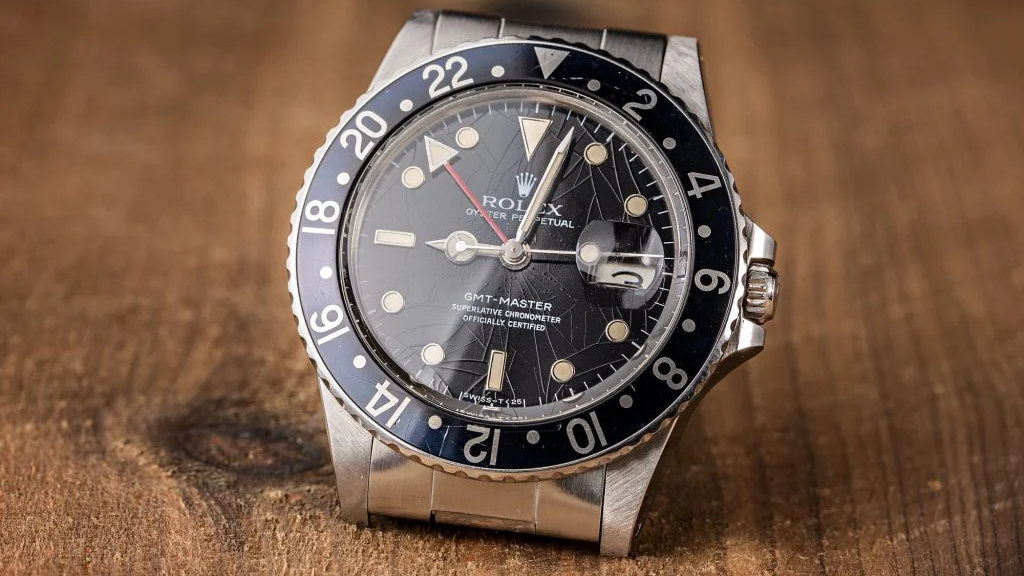
Spider dials display a network of fine cracks across the lacquer surface, sometimes called “crazing.” This pattern occurs when the lacquer ages and contracts differently than the metal base underneath. The effect resembles a web or cracked earth, and it is most commonly found on glossy and gilt-era dials. Well-defined spider cracking on an otherwise clean dial can significantly increase a watch’s desirability.
Ghost Dials and Bezels

Fading does not only happen to the dial itself. Rolex ghost bezels and dials refer to pieces where the original color has washed out to a pale grey, lavender, or nearly white tone. On a GMT-Master or Submariner bezel, this ghosting creates a faded pastel effect that pairs beautifully with an aged dial. Ghost pieces have become some of the trendiest finds among younger collectors entering the vintage market.
Panna and Cream Dials

White and silver dials can also age in desirable ways. The most famous example is the Explorer II Ref. 16550, where the originally white dial sometimes ages to a warm cream or ivory tone known as “panna” (the Italian word for cream). These dials are highly collectible and command strong premiums over examples that have stayed bright white.
Collector’s Guide: Identifying and Authenticating Dials

When buying a vintage Rolex, confirming that the dial is original to the watch is one of the most important steps. A replaced, refinished, or mismatched dial can reduce the value of a luxury watch by 50% or more, even if the replacement was done by Rolex’s own service department.
Here are the key things to check when evaluating a vintage Rolex dial:
- Service dials: When Rolex services a watch, they sometimes replace the original dial with a newer production version. Service dials are legitimate Rolex parts, but they lack the vintage character and period-correct details that collectors value. Look for modern fonts, updated lume markings, or a finish that looks too clean for the watch’s age.
- Dial feet positioning: The small metal pins (called “feet”) on the back of the dial must align with the specific movement inside the case. Incorrect positioning suggests the dial was not originally paired with that movement or case.
- Redials versus originals: A “redial” is a dial that has been refinished or repainted to look new. Redials often have slightly uneven text, inconsistent font spacing, or lume plots that do not match the original style. Purist collectors strongly prefer original, unrestored dials, even if they show signs of age and wear.
- Serial and dial era matching: Every Rolex has a serial number that corresponds to a specific production year. The dial variant should match that era. For example, a “Meters First” dial should not appear on a watch with a late-1970s serial number, since Rolex had already transitioned to “Feet First” text by that point. A mismatch here is a clear sign that something has been swapped.
When in doubt, consult with experienced dealers and collectors, and always request detailed macro photographs of the dial before purchasing a vintage Rolex sight unseen.
The Future of Your Rolex Collection

Owning a Rolex with a vintage dial is about more than just telling the time. It is about holding a piece of mechanical art that carries decades of history on its face. Whether you are chasing a rare stone dial, searching for the perfect tropical Submariner, or simply appreciating the golden warmth of a gilt dial, the dial remains the soul of the watch and the most important factor in its long-term value.
At Bob’s Watches, we specialize in sourcing and authenticating the most desirable vintage Rolex examples on the market. If you are looking to add a rare variant to your collection, explore our full selection of Rolex timepieces to find a piece that speaks to you.